The interesting thing about Crown Automotive Group is how much of buying a car happens around the car. There is the vehicle you want, the vehicle you already own, the money still owed on that vehicle, the loan for the next one, and the signatures that make the whole arrangement legal. The showroom contains the shiny object. The transaction contains the work.
- Crown's current directory lists four dealerships around Richmond, selling Acura, BMW, and MINI.
- Asbury's Clicklane connects shopping, trade-ins, financing, and digital paperwork.
- Online purchases have a seven-day or 1,000-mile return window, with conditions.
Crown's proposition is to put those moving pieces within reach of the same buyer, whether that buyer prefers a browser or a desk. It is a regional dealership business owned by Asbury Automotive Group. It sells new and used vehicles, arranges financing, buys cars from their owners, and keeps vehicles running through service departments and parts sales. The useful question is how well those pieces fit together.
A smaller map tells a better story
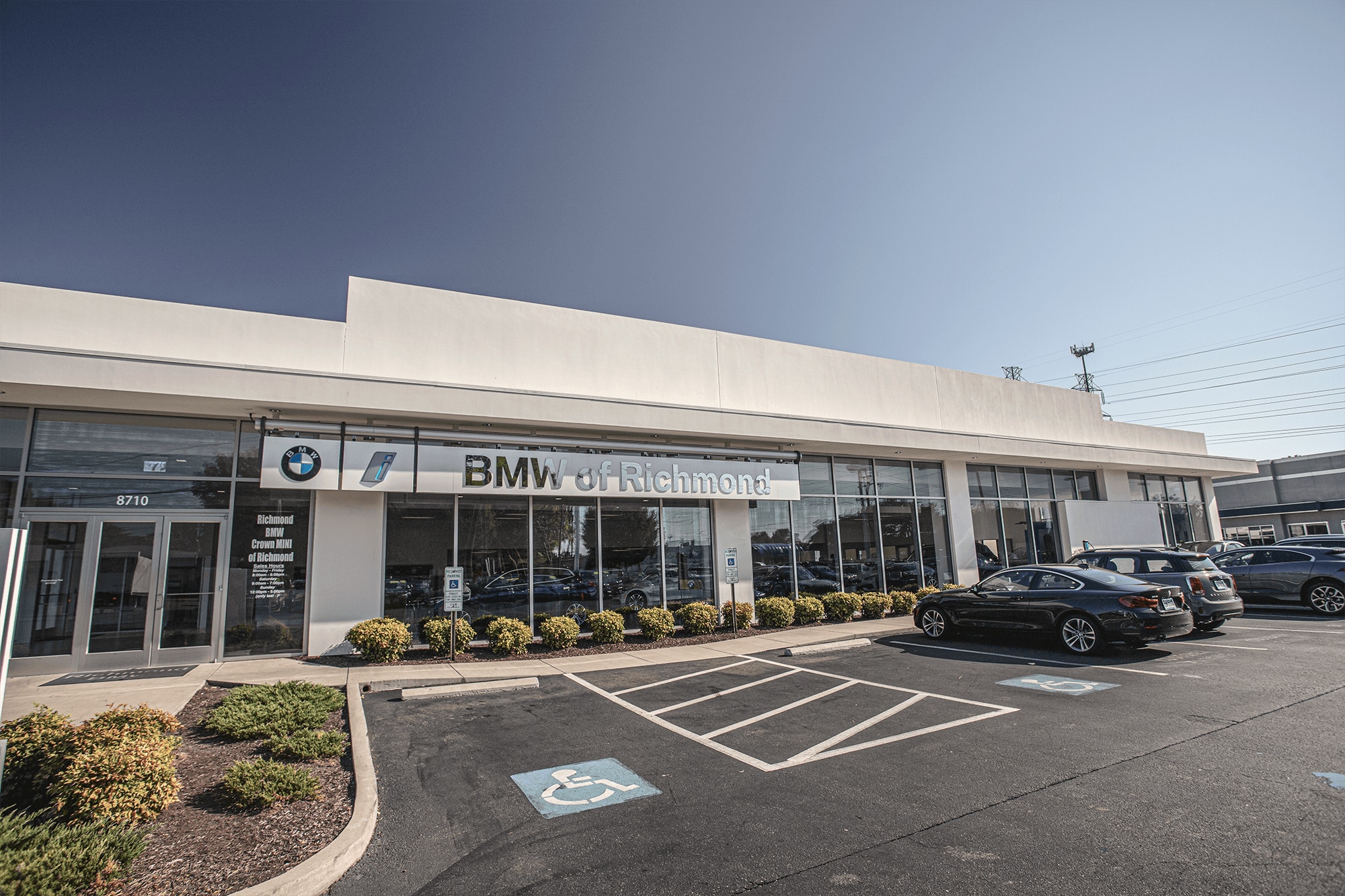
Start with West Broad Street. Crown Acura Richmond is at 8704. Richmond BMW is at 8710. Crown MINI of Richmond is at 8712. Three brands sit within a few address numbers of one another. Across the metropolitan area, BMW of Midlothian completes the four-store directory. This is an unusually compact way to encounter a dealership group: three neighboring doors and another across town.
Older descriptions paint a larger map, with North Carolina dealerships and collision centers. In December 2022, Asbury sold nine North Carolina stores to Hudson Automotive. Reporting identified locations in Greensboro, Durham, and Fayetteville. Crown's present website describes a Virginia group. Anyone shopping from an old directory should check the current locations before setting off. A familiar dealership name can outlast the ownership arrangement behind it.
The deal before the digital deal
The business predates its corporate parent relationship. A June 1998 announcement identified Royce Reynolds as Crown's founder and owner since 1972. It described an agreement under which Asbury would take a 51 percent interest. Asbury's subsequent annual reporting dates Crown's initial acquisition to December 1998. The distinction matters: 1998 marks a change in ownership, rather than the beginning of the company.
Reynolds explained the appeal in practical terms. The combination brought Asbury's financial resources together with Crown's management and sales experience. He named customer and employee satisfaction among the priorities. That is a useful glimpse of the bargain behind dealership consolidation: a local business gains a larger company's backing while retaining a name customers recognize. It also explains why Crown belongs in automotive retail, rather than vehicle manufacturing.
The browser has to finish the job
In December 2020, Asbury announced Clicklane, developed with Gubagoo as an evolution of its earlier PushStart tool. The ambition was specific: carry a customer through an actual purchase online. The launch described trade valuations, loan payoffs, payments incorporating local taxes and fees, a lender marketplace, and signatures through DocuSign. A searchable inventory was only the beginning.
That distinction gives Crown its most interesting competitive position. It offers manufacturer franchises and local service facilities alongside a digital transaction. A buyer can explore new, used, or certified pre-owned inventory and decide how much assistance to use. Against a conventional showroom visit, the attraction is preparation and convenience. Against an online used-car seller, the attraction includes access to new-car franchises and nearby brand specialists.
- 01Choose the car
- 02Value the trade
- 03Arrange payment
- 04Sign + deliver
A simplified view of the advertised Clicklane process. Timing and approval depend on the transaction.
Crown advertises a transaction that can take 15 minutes. Treat that as a company claim about completing the buying process, rather than a promise that a car arrives in a quarter of an hour. Delivery is a separate operation. Credit decisions, documents, vehicle availability, and the buyer's choices still determine what happens next. Convenience becomes meaningful when the actual terms are visible.
The price of changing your mind
There is no single price for Crown's offering. The car, finance agreement, service work, and any selected protection products each carry their own costs. Compare the total transaction, including taxes, fees, interest, and optional items. A smaller monthly payment alone says little about what the purchase ultimately costs. Crown's payment tools let shoppers adjust the term and money down, making that distinction particularly relevant.
The published Clicklane guarantee gives online purchasers seven days or 1,000 miles, whichever comes first. The conditions deserve equal attention: the buyer pays to return the vehicle to the dealership, and it must come back in the required condition. A traded-in vehicle may already have been sold or reconditioned; the terms provide for the agreed trade allowance when it cannot be returned.
“Your satisfaction is our mission”
Crown's Clicklane page
The guarantee helps address the discomfort of buying before living with a car. It becomes less useful for someone who quickly exceeds the mileage allowance or faces an expensive return journey. Read the terms before arranging delivery. The ability to reverse a purchase has value, but the logistics remain real.
An inspection needs an explanation
Crown's history also contains a concrete lesson about trust. In March 2017, the Federal Trade Commission finalized a consent order with Asbury, doing business as Crown and Coggin, settling charges over inspection advertising that inadequately disclosed unrepaired safety recalls. The order restricted unqualified safety and inspection claims and required clear recall disclosures where applicable. This was a historical advertising case, not evidence about a particular vehicle offered today.
The practical lesson survives: ask what an inspection covers and check the specific vehicle's recall status. Broad reassurance cannot answer a VIN-specific question. For a business trying to make a complicated purchase feel simple, explaining the exceptions is part of the product.
After the keys, another visit
Crown's relationship with drivers continues through maintenance, repairs, and parts. Richmond BMW advertises factory-trained technicians and original equipment parts. Customers include people replacing a family car, enthusiasts seeking a particular brand, owners selling without buying, and drivers who simply need their existing vehicle serviced. These visits give the dealership more than one opportunity to earn revenue and retain a customer.
The idea another business can copy is straightforward: connect the chores surrounding the thing you sell. Make the valuation, payment, paperwork, and follow-up easier to navigate. Crown illustrates both the appeal and the demands of that approach. The website can organize the purchase. The dealership still has to deliver the car, explain the agreement, and answer when it needs attention.