A film editor can know exactly where a scene should breathe and still be defeated by a software menu. Robb Wilson encountered that predicament while working in sound editing, as film production moved from analog tools to digital ones. Experienced editors had an understanding of timing acquired over decades. New computers threatened to make a different qualification decisive: knowing how to operate the computer.
Wilson recalls designing editing interfaces that resembled the equipment those veterans already understood. The familiar controls helped them move into digital work and gave younger editors a way to learn established techniques. It was a practical response to an awkward bargain. Progress had arrived carrying a new instruction manual, and the people with the most experience were being asked to start again.
That episode offers a useful way into Wilson’s career. Today he is the co-founder and CEO of OneReach.ai, working on systems that coordinate AI agents. The vocabulary has changed considerably. The human difficulty remains recognizable: a person knows what needs doing, while a machine insists on being approached in its own particular way. Wilson has spent his working life trying to shorten that negotiation.
A Toronto education in asking differently
Long before enterprise AI, there was a Toronto neighborhood. Wilson has described growing up in a close community that included the philosopher Marshall McLuhan. The connection sounds tailor-made for a technology biography, but his recollection is less about receiving a grand theory than about being allowed room to develop one’s own ideas.
He credits McLuhan, his mother, and other adults with giving him space rather than pressing him into prescribed childhood rules. Looking back, he associated that freedom with his willingness to approach problems differently. His account gives the familiar founder story an interesting adjustment. The formative gift was permission to explore, with no business plan required.
The adult version of that curiosity has several outlets. Wilson builds surfboards and undertakes work on his home as well as designing software. There is something appealingly literal about the combination. A surfboard eventually has to meet water. A house has to accommodate people. Both impose a useful discipline on anyone inclined to mistake a pleasing diagram for a finished design.
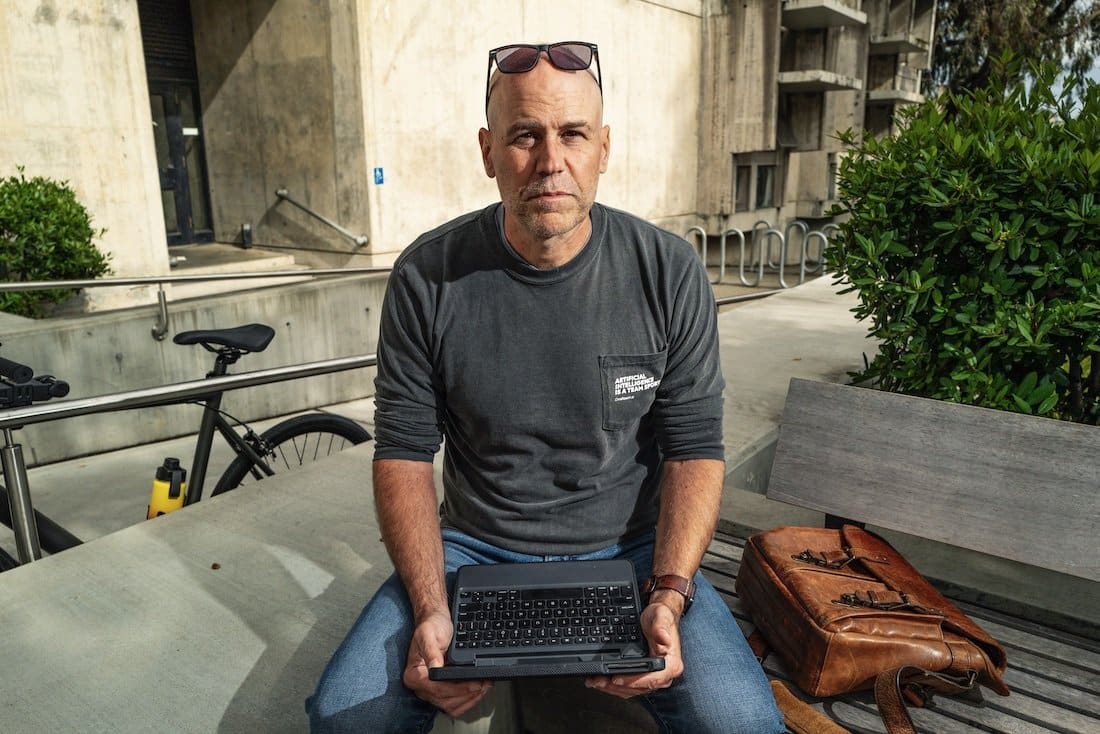
Making an experience worth having
By 2010, that concern with use had become a book. O’Reilly published Effective UI, credited to Jonathan Anderson, John McRee, Wilson, and the EffectiveUI team. Its subject was the design and development of applications that people could engage with and understand. This was the era of web, mobile, and desktop experiences, with their proliferating interfaces and promises of convenience.
Wilson’s author biography at the time described him as a co-owner of UX Magazine, a technology research consultant, and a former creative executive at Time Warner. Those roles put business, editorial work, and design in the same orbit. The point of contact was the person trying to get something done. A technically accomplished application could still waste that person’s afternoon.
EffectiveUI also supplied an organizational apprenticeship. Wilson helped build the agency before moving on to OneReach.ai; the business became part of WPP. His later work with former collaborator Anthony Franco on the WISER Method and AI First Principles carries that relationship forward. Their published methodology addresses how organizations put AI into daily operation, making design choices part of a continuing management task.
That is a consistent thread across otherwise different projects. Publishing helps people name a problem. Consulting exposes the compromises inside an organization. Product work forces those ideas into something that must function repeatedly. None of those activities guarantees a good result. Together, they explain why Wilson tends to discuss AI in terms of the whole experience surrounding it.
One voice, fewer errands
Conversation is an inviting interface because people already know how to use it. Getting a computer to participate usefully is considerably harder. In his 2024 discussion with Richie Cotton, Wilson described conversational AI as a new entrance to software people already have. Rather than adding a separate assistant to every product, he argued for an interface that can reach the capabilities behind them.
“I don’t want 20 Alexas in my house. I just want one.” The line makes his preference unusually tangible. Opening a garage door can be a capability within a wider system. It need not demand another personality, another destination, or another relationship to maintain. A household with twenty assistants sounds suspiciously like a committee meeting that follows you into the kitchen.
His argument also gives familiar software a different job. Applications can expose useful functions to a conversational layer, allowing people to ask for an outcome without remembering where every control lives. The attractive part is the reduced burden on the user. The demanding part falls behind the interface, where context, reliable information, and execution have to be assembled.
“I don’t want 20 Alexas in my house. I just want one.”
Robb Wilson / DataFramed, 2024
The work behind the conversation
OneReach.ai’s current platform, GSX, is presented as a system for building, orchestrating, and governing AI agents. Its advertised components include communication management, contextual memory, model management, and human supervision. Those categories make the scale of Wilson’s undertaking clearer. A conversation requires somewhere to go, something accurate to draw upon, and a way to handle the consequences of an action.
Consider a simple request to change a delivery. Understanding the sentence is only an opening move. A useful system would also need the order, the available options, permission to make a change, and confirmation that the change happened. Even this ordinary hypothetical request involves several kinds of coordination. An eloquent reply alone leaves so much unfinished.
Wilson’s commercial position is attached to that unfinished work. The company sells the infrastructure connecting agents and enterprise operations. His public argument therefore deserves to be read with its business context in view: he is advocating an approach he also builds. That alignment makes his priorities legible. He wants attention paid to how systems operate together, after the impressive demonstration has ended.
A book becomes an ongoing conversation
Age of Invisible Machines appeared in 2022, with Josh Tyson as co-author. A revised second edition followed in April 2025. Its expanded title describes a guide to orchestrating AI agents and making organizations more self-driving. The progression is revealing: the interface remains important, while the ambition extends into the running of the organization behind it.
The Invisible Machines podcast gives Wilson and Tyson room to test such ideas in conversation. Their guests have included economists Joshua Gans and Avi Goldfarb, alongside people working in enterprise data and technology. These discussions widen the frame beyond what a model can produce. They ask what changes when prediction gets cheaper, information becomes more accessible, and institutions have to adjust their habits.
In their December 2025 episode looking toward 2026, the pair discussed consumer agents, agent runtimes, knowledge, and simulation. Predictions belong to the future until events catch up with them. What the episode establishes about Wilson is his direction of travel: he expects AI to become involved in the connections between people and organizations, well beyond the isolated chat window.
His writing continued through 2026. July brought an article on agent runtime environments; September brought a transcript explaining agentic orchestration. The subjects are more architectural than theatrical. For a public voice in a field fond of startling demonstrations, he spends a conspicuous amount of time discussing the supporting structure.
When the customer brings a machine
A further twist appears in his conversations with Celonis: customers may arrive with AI agents of their own. Wilson imagines people delegating tasks such as finding offers, disputing bills, or arranging account changes. The business would then be receiving requests generated by software acting for the customer. A service channel designed around human patience could face a very different pace.
He also emphasizes simulation: testing possible interactions before exposing them to the world. A digital representation of a business needs context if it is to be useful. The suggestion ties his future-facing arguments back to a designer’s ordinary responsibility. Before a system starts making consequential choices, someone needs to understand what it will encounter and how it might behave.
His July 2025 London Fintech Podcast appearance developed related themes of purpose, shared knowledge, and control. The appeal is easy to understand. A business could examine possible outcomes before acting. The difficulty is equally plain: the representation has to reflect the business closely enough for its answers to matter. Simulation gives a decision somewhere to rehearse; reality still supplies opening night.
Room for the people doing the work
Wilson has described running small teams within a flat organization, with room for individual work and collaboration. He says people who need his input can get time with him. His stated leadership priorities are vision, empathy, and flexibility. In a company concerned with coordination, those choices put human access alongside technical access.
He is now based in Berkeley with his family. His ambitions for automation reach beyond saving time inside a company: he has spoken about freeing people to pursue creative work. That hope leaves an obligation attached to the technology. Useful time has to reach the people whose lives are supposed to improve.
Return to the film editor who understands the rhythm of a scene. The computer can either become another obstacle or help that understanding travel further. Wilson’s career keeps returning to that choice, through agencies, books, podcasts, and AI infrastructure. The machines may grow more capable. His measure of the experience still begins with the person sitting in front of them.