A customer walked into a video store in Lahaska, Pennsylvania, and helped change Rob Schimek’s life. The customer was Barry Ashmen, a marketing professor at Rider University. Schimek was finishing an associate degree at Bucks County Community College and wondering what came next. Ashmen encouraged him to apply to Rider, then helped with the paperwork. Among the shop’s rentals, a rather consequential introduction had taken place.
His parents had saved to open the store. Schimek was the third of six children; his father drove long-haul trucks, and his mother worked at a travel agency. Years later, he would lead insurance businesses across continents. Yet his account of how he got started returns to someone who noticed a young person’s possibilities and made the next step easier.
Today, Schimek is the Singapore-based founder and Group Chief Executive Officer of bolttech. His business connects insurers, distribution partners and customers. That makes the video-store encounter an apt beginning for a profile, though it would be too tidy to pretend one conversation explains an entire career. What followed required decades of work, a move across the world, and a willingness to begin again.
The accountant before the founder
Schimek graduated from Rider in 1987 and began his career at Deloitte. He became a certified public accountant and, eventually, a partner. His financial-institution clients included MetLife, Prudential and Merrill Lynch. These were substantial organizations with intricate obligations. Understanding their accounts meant understanding businesses whose promises could extend far into the future.
There is a particular education in that work. Insurance joins a sale made today to a service that might be needed years later. Distribution, pricing, claims and capital have to fit together. A pleasing presentation cannot reconcile a balance sheet. The discipline offers useful preparation for a founder who will later have to persuade both technology investors and insurance executives that his plans can survive contact with the details.
After 18 years at Deloitte, Schimek joined AIG in 2005. His responsibilities expanded from finance into running businesses: chief financial officer of its global property and casualty operations, leadership of Europe, the Middle East and Africa, then the Americas, and ultimately president and CEO of its worldwide commercial insurance businesses. He also earned an MBA at Wharton.
His résumé therefore contains an unusual prelude to startup life. He had already occupied the offices that many ambitious people spend a career trying to reach. When he went into insurtech, he brought experience of the institutions a young technology business would need to work with. He could speak to an insurer about its constraints without first asking someone to translate the vocabulary.
- 1987Rider graduate; begins at Deloitte
- 2005Joins AIG in a senior finance role
- 2018Moves to Singapore; joins FWD
- 2020Launches bolttech with its founding team
A second beginning in Singapore
In 2018, Schimek joined FWD as managing director and group chief operating officer. Richard Li, whose business interests include insurance and telecommunications, recruited him. Schimek moved to Singapore. The combination of those two industries would matter: a phone company already has a relationship with customers who own something fragile, expensive and remarkably good at meeting the pavement.
Schimek has described Li’s idea for a property and casualty business that could draw on telecommunications relationships. His own experience contributed an emphasis on keeping the business light in the capital it needed to carry insurance risk. Bolttech launched in 2020. From the outset, the opportunity involved connecting existing capabilities: customers on one side, protection products on another, and technology to bring them together.
The practical starting point is refreshingly ordinary. Someone buys a device. The retailer or mobile operator can offer relevant protection in the same journey. The customer need, the distribution relationship and the insurance capacity do not have to belong to a single company. They do have to cooperate. A good deal of the work sits behind the offer that appears on a screen.
That helps explain why Schimek talks about enabling the insurance industry. The company needs insurers as partners. Its proposition depends on making their products available through additional businesses, at useful moments in a customer’s day. A revolution would make a fine conference slogan; a working connection is more useful when somebody has just broken a phone.
A phone, a home, and the space between
There are two important strands to the business Schimek has been assembling. In the United States, its insurance exchange connects carriers, agencies and other distributors with products they can offer customers. Across Asia and Europe, device protection has been an important route into embedded insurance. He has spoken about bringing those capabilities closer together.
A carrier offering home insurance, for example, may want access to motor coverage from another provider. A telecommunications partner may want protection beyond the handset. These are different starting points for the same commercial question: how can a business offer something relevant without building every capability itself? Schimek’s answer involves access to a wider network.
Expansion brings less photogenic work. New markets have their own licensing requirements, customer habits and partner relationships. Acquisitions can add local operations and expertise, as bolttech’s purchase of Poland’s Digital Care did. In a 2024 conversation about the business, Schimek discussed the difficulty of taking an exchange into new jurisdictions. Software travels rather more easily than permission to sell insurance.
“A four-year old fintech can help a 150-year-old insurer.”
Rob Schimek, 2024
The remark captures his preferred relationship with incumbents. Established insurers bring experience, products and risk capacity. A newer company can bring distribution technology and specialist services. The partnership succeeds when those contributions produce something a customer can actually use. Company age, on its own, settles very little.
The numbers, with their labels attached
In June 2025, bolttech closed a US$147 million Series C round at a valuation of US$2.1 billion. Sumitomo Corporation and Portugal’s Iberis Capital joined the investor group. Sumitomo also entered a joint venture with bolttech to deliver embedded insurance programmes and related services for partners in Asia. The investment relationship came with a commercial project.
The closing was announced onstage at Insurtech Insights in New York. For Schimek, the audience was particularly relevant: insurers, potential partners and investors gathered in one place. Fundraising is often presented as a solitary founder’s victory. This announcement showed how much of bolttech’s strategy involves assembling organizations that have reasons to work together.
June 2025
at that round
By mid-2026, bolttech’s reported footprint covered more than 39 countries, with over US$85 billion in quoted premiums. The label matters. Quoted premiums measure insurance opportunities passing through the platform; they are a different measure from revenue or policies purchased. The valuation likewise belongs to the company. Keeping the categories straight makes the growth story more intelligible.
For a leader trained in accountancy, this distinction ought to feel familiar. Large figures earn their place in a story when the reader understands what they count. The more revealing question is what the network allows partners to do: reach customers, add products, or arrange protection through a relationship already in place.
The meeting may involve a treadmill
Schimek’s working habits add a less conventional detail to the executive portrait. In a 2021 personal essay, he described joining meetings on a treadmill or exercise bike. A business spread across time zones produces a fragmented calendar. He had chosen to fit training into that calendar, including stretches of time spent thinking through projects while moving.
He also said he generally trained without music, podcasts or headphones. For someone running an international technology business, the absence of another incoming voice seems almost luxurious. His sporting record includes participation in the Ironman World Championships and marathon events in polar settings. These are pursuits with schedules and preparation of their own.
“Sport isn’t how I switch off. It’s how I switch on.”
Rob Schimek, 2021
It would be easy to turn this into advice for every executive. The more interesting point is that it is personal. He describes a way of arranging his own attention. Some people reserve their thinking for a desk; Schimek sometimes brings a moving belt. Anyone receiving the meeting invitation might reasonably wonder whether the agenda includes an incline.
Remembering who opened the door
Schimek’s connection to Rider continued well beyond graduation. He joined its board in 2014 and became chairman in 2017. He also helped develop a co-op programme at Chartis that offered more than 30 Rider accounting and finance students annually the opportunity to work in New York. That is a practical form of alumni involvement: a route from classroom study into a workplace.
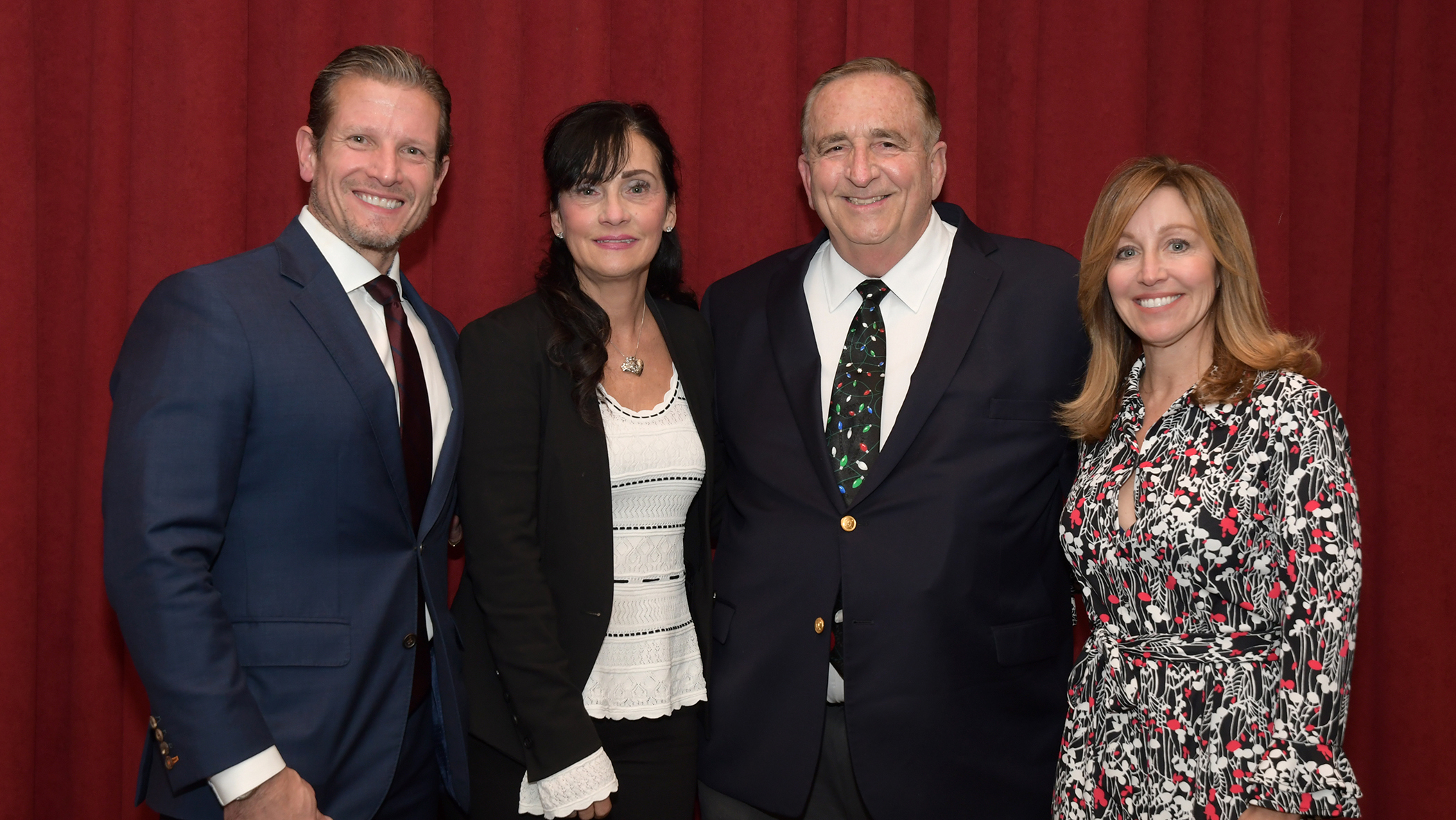
In December 2019, he and his wife, Janet, announced a US$1 million gift creating two endowed scholarships. The names honored Ashmen, the professor from the video store, and Dennis Wasniewski, his early mentor at Deloitte. Students with financial need would receive the benefit. A private debt of gratitude had acquired a public, continuing purpose.
In his January 2026 discussion of insurance’s future, Schimek returned to another kind of access: making protection available through the businesses people already use. He discussed changing risks, customer expectations of service and prevention, and artificial intelligence as a tool that can extend human capability. The ambition remains substantial. The work still comes down to whether a connection proves useful.
The video-store encounter belongs to his biography, rather than a corporate strategy deck. Its appeal lies in its specificity. A professor met a student, saw a possible next step and helped him take it. Decades later, Schimek remembered the name. For someone whose business is built around connections, that is a good detail to keep.