Before Rob Resnick had a record deal, he had a practical objection to recording studios: they cost money. In middle school, playing in rock bands, he began assembling a studio in his basement. The equipment was modest. The permission it gave him was considerable. A band could make something, listen back, dislike it and try again, without watching the clock in somebody else’s room.
Years later, the producer known as Rez would help turn Timeflies into a touring act with a weekly YouTube appointment and albums on the charts. Then he would found TapRoom, a social video-chat app organized around places and tables. A basement studio and a virtual bar make an unlikely pair. Look closely, though, and both concern a very ordinary ambition: making it easier to get together and do something.
Resnick’s career offers an appealing complication to the familiar musician-turned-founder story. Technology was already inside the music. It was in the recording setup, the production software and the videos that brought listeners back. By the time he started a company, he had spent years working on the relationship between a screen and the people on its other side.
The studio under the bed
At Tufts University, Resnick’s recording operation occupied the space beneath his lofted bed. He studied music and philosophy, graduating in 2011. His musical education encompassed classical composition, piano and guitar; at Tufts, it also included drums. A dorm room could therefore accommodate both a student and a small production department, provided neither demanded much headroom.
He and Cal Shapiro played in The Ride, a campus funk band. Resnick played drums; Shapiro sang. The group earned an opening slot at the university’s Spring Fling, on a bill that included Asher Roth, Ludacris and The Decemberists. As members graduated, The Ride dissolved. Resnick and Shapiro kept making music together.
The early break involved another student, Jared Glick, and a recording the pair had largely discounted. Glick sent their song “Fade” to music blogs. The response encouraged them to make more. There is something pleasingly untidy about this beginning: the music that prompted a serious effort was material its creators thought they had already outgrown.
That sequence matters. A collaborator heard potential, put the work in circulation and let other people respond. The producers could keep improving in private; listeners supplied a reason to bring the next recording outside. Even in a career so closely associated with software, the useful intervention came from a friend.
Tuesday became a place
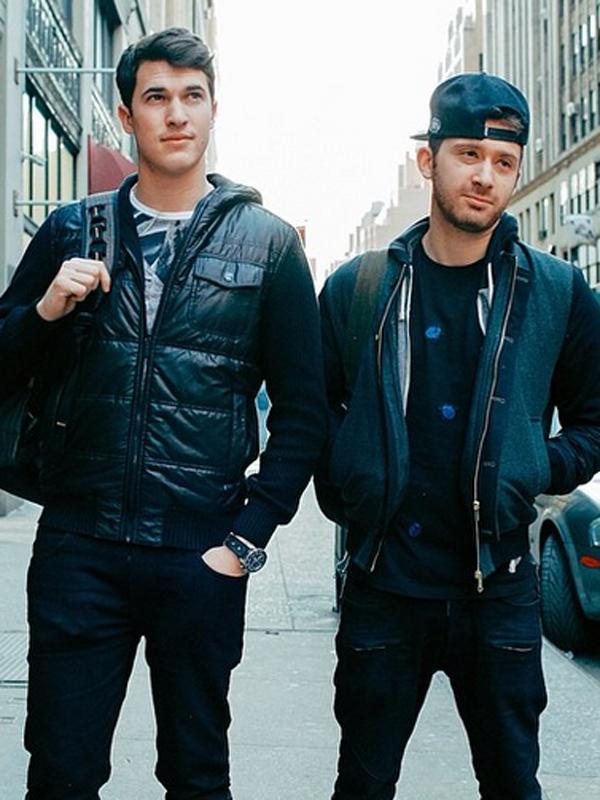
Timeflies formed in 2010. Their recurring YouTube series gave the duo a recognizable rhythm: a day of the week, a new performance, another occasion to check in. Covers, remixes and freestyles let audiences encounter familiar music through Resnick’s production and Shapiro’s voice. The videos offered a way into the partnership before a listener had bought a ticket.
The range was part of the invitation. Timeflies could move among pop, hip-hop and electronic sounds, with room for material as unexpected as “Under the Sea.” The pleasure lay partly in recognizing what had been borrowed and hearing what the duo would do with it. A familiar song became a meeting point between their musical interests and somebody else’s.
The weekly deadline also had a less glamorous side. In 2016, Resnick described Mondays as the main recording day, followed by Tuesday checks with the video team and promotion on Twitter. A release schedule gives fans a habit. It gives the people making the releases a recurring evening of unfinished business.
His account of the name Timeflies was similarly amused. Friends had heard the pair remark on how quickly time passed when asked whether they would ever finish a song. The joke stuck. It is a useful detail to keep beside the polished videos: the group with a weekly appointment had named itself after its difficulty keeping track of time.
“Tuesdays are bad, but Mondays are really bad.”
Rob Resnick, on the weekly recording routine, 2016
The credits behind the chorus
After graduation came The Scotch Tape, released in 2011. The self-released album reached number two on the iTunes pop chart. In 2012, the One Night EP also found a substantial audience, reaching number one on that chart. These were recordings made by musicians who had already developed a way to reach listeners themselves.
At parties, the pair had tried slipping their own tracks into DJ sets to see whether people continued dancing. It was a wonderfully economical review process. The dance floor was already occupied; the question was whether it would remain so. Later came sold-out appearances at Manhattan’s Terminal 5, a room with space for 3,000 people.
The music accumulated collaborators as well as listeners. “All the Way” was co-produced with Benny Benassi. After Hours, released in 2014, included work with T-Pain, Fabolous and Katie Sky. The album debuted at number eight on the Billboard 200. Just for Fun followed in 2015. The duo’s working vocabulary had expanded well beyond the equipment under a college bed.
Resnick took the production seriously as musicianship. “I find electronic music not to be given enough credit,” he said in 2013. His training let him discuss the musical decisions beneath the sound. The computer belonged in the same conversation as the guitar and piano. For a producer, the apparent ease of a finished track can conceal rather a lot of choices.
- 2011The Scotch Tape
- 2012One Night EP
- 2014After Hours
- 2015Just for Fun
Learning when to hand over the wheel
A production partnership requires decisions about whose instincts to follow. Resnick described his own ear as leaning toward melody and pop, with Shapiro hearing things through a more lyrical, soulful sensibility. Over time, they learned to let one another take the lead when a song benefited from it. Collaboration included knowing when to stop insisting.
The move from Manhattan to Los Angeles brought another change of setting. After the major-label albums, Timeflies returned to independence and a more flexible pattern of releases. Their 2016 single “Once in a While” became a substantial streaming success. The duo’s self-built Los Angeles studio offered a familiar arrangement in a different city: two musicians making and revising work together.
Success on YouTube had created an additional question. Resnick wanted the original music to compete for listeners in its own right. In 2015, he spoke about wanting to compete “for Grammys and for ears, really.” The aspiration was specific. Attention gathered around a video series was valuable; he also wanted people to care about the songs outside that weekly frame.
These are distinct jobs. A recognizable format helps people arrive. A song has to persuade them to stay. The tension makes the later app more interesting: its founder had already worked through the difference between giving an audience a destination and giving that audience an experience worth returning for.
A night out, with a different address
TapRoom’s origin begins with a friend’s wish in March 2020. The friend wanted an app for having a drink together, with the possibility of meeting new people too. Familiar faces on FaceTime were only part of the desired evening. There should also be somebody to encounter, the sort of possibility an ordinary place quietly supplies.
Resnick became TapRoom’s CEO and founder. Its invitation was to meet at recognizable bars or coffee shops through video chat. The app launched on iOS in May 2020, with Clove Group LLC listed as its developer. Its chosen geography gave an online gathering a setting: people could pick a place, find company and sit at a virtual table.
The idea invites a small thought experiment. Compare receiving an unexplained call link with being invited to a favorite coffee shop. The second invitation carries a mood before anyone speaks. TapRoom borrowed that social shorthand. A camera supplies a face; a place can help explain why the faces have assembled.
TapRoom’s early additions concerned the small mechanics of company. Private tables let a group keep a conversation to itself. Icebreakers supplied prompts. Scheduled events gave people a time to return. A photobooth offered a souvenir. Named communities, called Taps, made groups easier to find. The feature list reads rather like the concerns of a host preparing for guests.
Somebody still has to make the room
The support page carried the same informal sensibility: suggestions were welcome electronically or in person at a bar. It also explained how to report or block another user. A welcoming room needs ways to deal with an unwelcome encounter. Hospitality, even when translated into interface buttons, has practical work to do.
In May 2020, Resnick discussed the new app alongside music and technology in a conversation with Michael Peres. In July 2024, he returned to his earlier musical path in an interview with Michael Vilardo, discussing Montclair High School, Tufts and his switch from engineering to music. The later conversation brings the career back to an early choice about what he wanted to make.
The basement studio, the recurring video and the virtual table each give that question a different answer. Their scale differs. So does the equipment. But the human detail keeps recurring: a band that needs somewhere to record, friends with a track to share, a listener expecting Tuesday, somebody asking where everyone should meet.
Resnick’s story is especially engaging at those points, before an audience has arrived and before an evening has acquired its shape. Somebody has to make the recording possible. Somebody has to send the song. Somebody has to issue the invitation. He has found several ways to give the gathering a start.
The rooms, records and conversations
Continue with the music, the app and Resnick’s interviews.