Steve Syatt had an audience before he had a television property. It was a family audience, which comes with certain advantages: no commissioning meeting, no distribution agreement, and immediate feedback. The bedtime stories he made up for his son David became Shushybye, a place where characters manufacture dreams and send them to children. His daughter also became a testing ground for the ideas. Long before the characters needed a licensing partner, they needed to hold a child’s attention.
There is a pleasing occupational complication here. Syatt founded SSA Public Relations in May 1989. He knew the work involved in getting entertainment noticed, and his agency’s experience included children’s brands such as Pokémon and Bob the Builder. Eventually, he would have his own characters to introduce. The publicist would be responsible for something more personal than a client brief: a fictional world that had begun at home.
Shushybye’s geography suggests that its creator enjoys a naming opportunity. There is Nap Valley, naturally, along with Snore Shore and Slumber Heights. Snoozles, Dozie and Zeez belong to a society organized around making dreams. Conductor McCloud handles deliveries. Even an imaginary kingdom, it seems, needs logistics. The premise gives bedtime an offstage production crew, busy preparing something a child might want to see.
That mixture of play and practical organization runs through Syatt’s career. He has worked on the business of an audience and the pleasure of having one. Shushybye lets those interests occupy the same room. The characters can sing, appear in a book, perform on a stage or turn up on a screen, while remaining inhabitants of the same little place above the clouds.
The Shushy Fund had a very earthly job
Getting that place built required savings. For five years, Syatt put money into what he called a Shushy Fund. It paid for books, recordings, plush toys and costumes. The name is funny; the list of expenses is thoroughly ordinary. A character may live in the clouds, but somebody still has to manufacture its feet.
He also built a recording studio at home. His “music room” contained a Pro Tools system, microphones, guitars, keyboards and an analog tape deck. The detail matters because music was part of the product from the outset. A tune was another way into the world, something that could travel beyond a reading and remain familiar when the characters returned.
The work involved collaborators with distinct jobs: Frank Caruso on illustration, Gerald O’Brien on production and arranging, Robb Zenn on engineering, and Michael North and Randi Soyland on vocals. Syatt supplied the concept, writing and songs. An idea associated with one name still needed other people’s hands and ears. That division of labor helps explain how family stories became things a stranger could buy, hear and recognize.
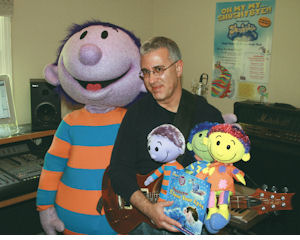
The early package made the proposition tangible. A Dream Box brought together a book, a five-song CD and a six-inch plush doll. A parent could take the world home in several forms at once. There was a story to read, music to replay and a character that did not require batteries or a broadcast schedule. It was an introduction small enough to carry out of a bookstore.
A sellout without a payday
In 2005, Syatt manufactured 3,000 Dream Boxes and placed them on consignment at Borders stores in California. He took part in more than 100 in-store events. The boxes sold out. He said he made no money on the arrangement, which gave the retailer 40 percent of sales. He treated the exercise as a way to establish the brand.
That is an unusually useful wrinkle in a founder’s story. A sold-out product can sound like a complete business verdict. Here, selling everything and making money were separate outcomes. The immediate return was exposure and experience with an audience. It would be careless to turn that into advice for every new business; it does, however, show the trade Syatt was prepared to make for this one.
By 2007, partnerships included toy company Jakks Pacific, sleepwear licensee Adorable Kids and publisher St. Martin’s Press. Pat Magnarella and Chris Allen’s management company represented the Dream Band. Syatt had worked outward from books and music toward the wider entertainment business. “I’m doing everything backwards,” he said. There is a certain charm in hearing an experienced brand publicist describe his own sequence that way.
The book Shushybye: Close Your Eyes paired his writing with Caruso’s illustrations and a read-along, sing-along CD. Its glow-in-the-dark cover made even the outside of the book participate in the setting. The object was doing several jobs: telling a story, supplying a soundtrack and giving the characters a place on a child’s shelf. Television would add another entrance to the same world.
The early Borders experiment, as Syatt described it in 2007.
The publicist keeps his day job
Syatt’s earlier working life included broadcast journalism in Boston, which he has called his hometown, followed by entertainment marketing, promotions and public relations. His agency grew around the relationship between publicity and business development. International television distribution became a core part of its work. That background put him close to the people and decisions that determine how a program travels.
SSA’s promotional experiments included renting cinemas to show half-hour children’s series and publicizing the screenings locally. Consider the change of setting: something normally encountered on a television becomes an event with a seat and a start time. The tactic makes attention specific. A family has somewhere to go. The program has an occasion around it. Publicity can involve arranging the encounter as well as describing the entertainment.
In 2011, Syatt said he had never considered abandoning public relations for Shushybye. He liked talking with the media, and David was working full time at SSA. The child who had helped inspire the characters had become a colleague in the agency. Their shared professional life gave the original family connection a second, less fantastical setting.
He described keeping his creative writing outside the client workday. Experience also moved between the two businesses: after getting Shushybye onto Comcast’s video-on-demand service, he helped clients do the same. His own licensing and publishing experience could inform the advice he offered others. The overlap had practical value, alongside the obvious scheduling demands of running an agency while writing songs and stories.
“I’m doing everything backwards.”Steve Syatt, on building Shushybye, 2007
A tune with room for the grown-ups
The Shushybye music ranges across rock, pop, rhythm and blues, swing, country and Latin styles. Syatt writes with parents and grandparents in the audience, too. Michael North performs the songs. Children’s entertainment often arrives with adults attached; this music makes a place for them in the listening rather than treating them only as the people operating the player.
A 2007 version of Shushybye Baby comprised 26 seven-minute episodes combining live action and animation. In 2011, The Dreamsters was announced for KCET, beginning with an hour-long Mother’s Day special. These were different lengths and settings for a musical idea that could also work in books and live performance. The songs gave the characters continuity as the format changed.
Syatt’s stated ambitions extended to children’s appreciation of the arts and use of imagination. In discussing The Dreamsters, he connected that ambition with reductions in school arts programs. He wanted the show to contribute something to that space. The aspiration helps explain why a creator working in bedtime stories would also make a program organized around performance and creative play.
In July 2018, he signed a co-production agreement with European entertainment company Studio 100. The announced plans involved animation, live shows and theme parks, with subsidiary m4e handling production. Syatt described a larger partner’s international production, distribution and licensing relationships as a way to build the property. For someone who already advised entertainment businesses, it was a familiar commercial question made personal: which partner could take these characters further?
Still on the air, above the clouds
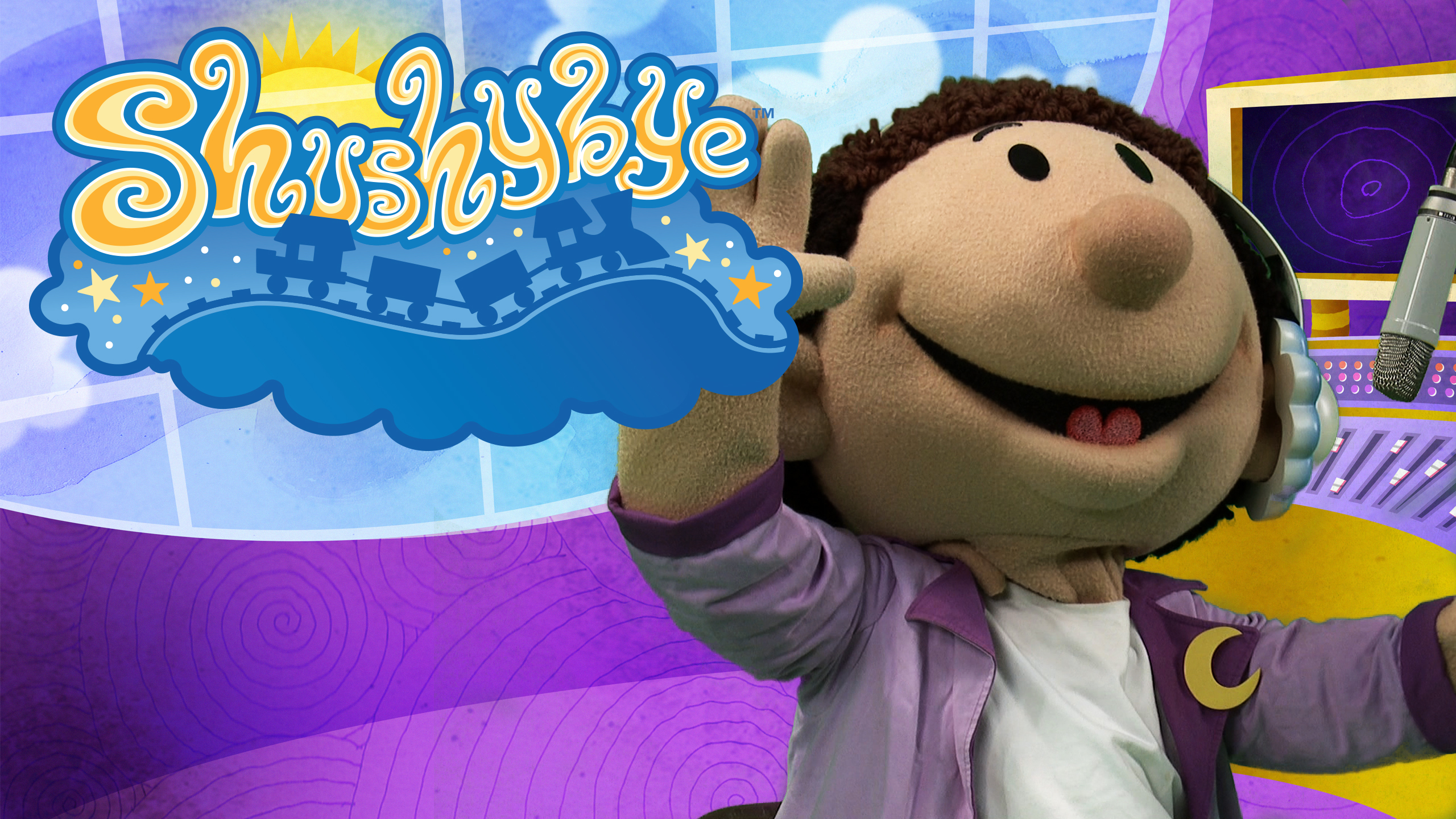
The world has since acquired its own radio station. On the Shushybye Radio MOON-FM podcast, Syatt appears as Shushy Steve, hosting music and encounters with the characters. Its fictional charts are the Bedboard charts. A radio format supplies room for recurring personalities, requests and small happenings across the kingdom. The joke has enough structure to keep producing new jokes.
A March 2026 episode was devoted to lullabies; an October episode brought Halloween preparations and a story featuring Conductor McCloud. The conceit continues through the seasons, letting listeners return to a familiar place with something different happening there. On the current Shushybye website, the series is promoted as available on Tubi, alongside books, recordings and a concert film.
His agency work has continued in a different register. A May 2021 announcement launching Albert Whitman Media listed Syatt as its press contact. The publisher’s new subsidiary was intended to develop screen programming from books and digital literacy services. In September 2026, a Dominion Harbor patent-portfolio acquisition announcement again carried his name at SSA. The assignments span material far beyond his own fictional characters.
His published advice about public relations places considerable responsibility on the client: clarify the objective, supply information, make executives available and answer drafts promptly. He also asks agencies to understand the businesses they represent and respect reporters’ work. It is a working relationship that requires participation on both sides. Publicity has a less glamorous dependency than its name suggests: somebody needs to answer.
“The best clients are those who communicate regularly with their pr reps,” Syatt writes. It is an apt thought to place beside the stories, songs, bookstore appearances and broadcasts. Across both parts of his career, an introduction needs someone willing to keep the conversation going. In one setting, that means a client returning a call. In the other, Shushy Steve has another record to play.