The line arrived disguised as a complaint. One of Badshah’s cousins was irritated with his girlfriend: she was always going on about Saturday. Badshah heard the phrase and kept it. “Saturday Saturday” became a song in 2012, slipped into a Hindi film two years later, and gave the former civil engineer the sort of career problem no classroom prepares you for: how to make the whole country repeat something you first overheard at home.
This is the useful key to Badshah. The sunglasses, cars and immaculate streetwear offer the easy reading. Listen longer and a different figure appears: a collector of phrases, an enthusiastic mathematician, a meticulous arranger of mass feeling. Aditya Prateek Singh became Badshah by understanding that a successful pop line should sound both inevitable and newly discovered. You hear it once and suspect you knew it already.
His records have supplied wedding entrances, nightclub peaks, film montages and school-bus singalongs. Yet the catalogue contains another story beneath the noise. It is about structure: how a child who ran a tiny comic-lending business, a student who briefly wore a St Stephen’s College identity card, and an engineer trained at PEC Chandigarh learned to build three-minute rooms that millions of people could enter together.
The hook had a blueprint
Badshah’s first rap was about his mathematics teacher. His classmates approved; the teacher, unsurprisingly, did not. Rebellion had found a meter. He loved maths, briefly enrolled at St Stephen’s to study it, then moved to Chandigarh for civil engineering at his father’s urging. The switch looked conventional. The education around the education was anything but.
At PEC, friends introduced him to the British Asian current running through Panjabi MC, Rishi Rich and Jay Sean. He spent time in the computer lab following music beyond India. Punjabi melody and Western rap no longer seemed like separate territories. They could share a beat, trade clothes, meet in the middle. He finished the degree, tried conventional work and discovered that competence is not the same thing as belonging.
His account of composition still sounds like an engineer describing a reservoir. He absorbs Punjabi, Hindi, French, South Indian, Korean and Turkish music, then lets those stored sounds recombine. He says he does not force the best tunes; they arrive as unconscious humming. The method is less mystical than it sounds. Fill the system, leave room for an unexpected output, recognise it when it appears.
“Rap is poetry, it’s expressing yourself.”Badshah on what sits beneath the cars and spectacle
Fifteen borrowed minutes
Before Badshah, there was MC Cool Equal, a name so earnestly clever that its owner now supplies the laugh for you. He formed a college duo called Northern Click with a friend. At one festival, they persuaded the band Euphoria to lend them 15 minutes onstage. The crowd responded, so the pair kept stretching the allotment: 15 became 20, then half an hour. Eventually Palash Sen came on and joked that they might as well do the whole show.
It was a small victory with a durable lesson. Permission gets you onto a stage; attention keeps you there. Badshah joined the loose Punjabi rap collective associated with Mafia Mundeer, wrote, produced and learned the hard algebra of credit. By 2012 he had separated from that orbit. “Saturday Saturday” became the proof that his ear worked under his own name. In 2014, its appearance in Humpty Sharma Ki Dulhania, followed by “Abhi Toh Party Shuru Hui Hai,” moved him into Bollywood’s bloodstream.
Then came “DJ Waley Babu,” “Wakhra Swag,” “Kar Gayi Chull,” “Kala Chashma,” “Mercy,” “Genda Phool” and “Paani Paani.” The numbers grew enormous, but they do not fully explain the durability. Badshah writes close to conversation. His best-known lines do not ask listeners to admire verbal architecture from the pavement. They hand over the keys and invite everyone upstairs.
Two rooms in the same house
Commercial success gave Badshah a peculiar double life. One room holds the film song, built to serve a scene and reach an audience quickly. The other holds the album cut, where he can be more personal, abrasive or curious. He has never permanently chosen between them. In 2018, O.N.E. (Original Never Ends) formalised the album side. In 2020, The Power of Dreams of a Kid returned to a more independent hip-hop vocabulary with collaborators including Sikander Kahlon, Fotty Seven and Bali.
The tension has kept him useful. Pop prevents private cleverness from becoming a hiding place. Rap prevents the pop craftsman from mistaking familiarity for expression. Badshah has admitted that independent music provides street credibility more readily than material reward, but younger rappers also make him work harder. Competition, in this reading, is another input.
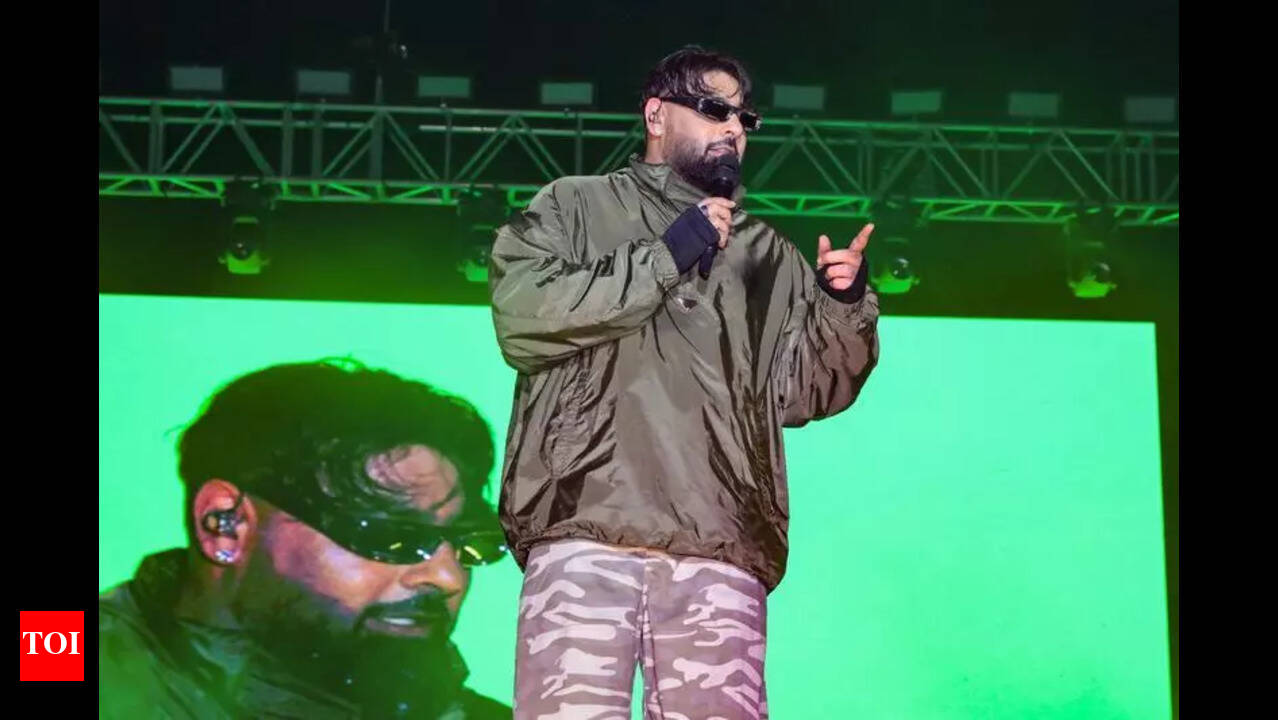
His stage persona is deliberately louder than Aditya. He calls it the cousin everybody waits for at a party, the arrival that turns up the volume. Offstage, the biography keeps producing quieter evidence: the Delhi room where a mattress leaned against a wall as makeshift soundproofing; a laptop and controller arranged on a single bed; the old St Stephen’s card preserved after barely a month at the college. The artifacts are modest, almost stubborn. They stop the alter ego from floating away.
A guest list as a map
Ek Tha Raja, released in 2024, gathered 16 tracks and an unusually broad set of collaborators: Arijit Singh, Raftaar, Seedhe Maut, DIVINE, Karan Aujla, Nikhita Gandhi and others. Shah Rukh Khan narrated the announcement. Badshah had sent a last-minute request through Khan’s manager, asking for a handful of lines. The returned audio ran to roughly half an hour, with the actor trying the words in multiple emotions and offering to do more.
The anecdote delights Badshah because it demonstrates the habit he respects most: work beyond the minimum. The album itself functions as a map of Indian popular music after old boundaries became porous. Playback singers share space with rappers; Punjabi stardom meets Delhi crews; a famous voice introduces a record designed to move outside film. Badshah’s role is partly artist and partly host, seating people who might change the atmosphere when placed at the same table.
Engineering finished; music becomes the serious occupation.
“Saturday Saturday” establishes a hit under his own name.
O.N.E. arrives as his debut studio album.
“Voodoo” joins Hindi, Spanish and English with J Balvin and Tainy.
Ek Tha Raja turns a collaborator list into a statement.
Pentertainment 0075 opens its doors.
“Chimna” becomes his first Marathi hip-hop release.
From product to institution
Badshah has tried businesses with the cheerful appetite of somebody willing to tell you about the failures. Clothing, hospitality, nightlife and beverages have remained in his orbit. A television music channel burned money and closed. A pharmaceutical venture did not work either. The admissions are useful. Entrepreneurship in celebrity profiles is often presented as a clean row of logos. His version includes the expensive education.
Pentertainment 0075
Launched in March 2025 with Universal Music India support, the label combines “pen” and “entertainment.” Its stated brief is to release Badshah’s independent work and develop emerging artists, beginning in hip-hop but not ending there.
Pentertainment 0075 is the venture that fits the whole biography. Its name joins writing with show business, the private act and the public machine. The first single, “Dear Aditya,” also turned toward the person underneath the brand. Badshah described the label as a return to his roots and a leap from comfort, built to find artists who deserve a platform across genres.
A hitmaker starting a label is not automatically noble; it is a business with contracts, priorities and pressure like any other. But it creates a revealing test. Badshah already knows how to place his own signature inside a crowded song. Can he make room for somebody else’s signature and resist rewriting it in his image? The answer will matter more than another branded cap or restaurant opening because it determines whether a career becomes an institution.
Let the passport keep its language
His international ambition is unusually explicit. He wants Indian music to receive global recognition, not because the work requires foreign approval, but because recognition opens doors. The 2022 single “Voodoo,” made with Colombian artist J Balvin and Puerto Rican producer Tainy, moved among Hindi, Spanish and English over dembow percussion. The point was not to sand away origins. It was to see whether two strong local identities could meet without either pretending to be generic.
Badshah has also been realistic about the timescale. He has noted that Spanish-language pop required decades of artists knocking before its current global reach, and that he may not personally enjoy the final reward of the Indian effort. In February 2026, he appeared in Los Angeles at the NBA All-Star Celebrity Game, a compact image of that outward push. Six months later he moved in the other direction, releasing his first Marathi hip-hop track.
“Chimna,” made with Divya Kumar, Marathi folk artist Nagesh Morwekar and producer Hiten, begins with traditional lines before entering a contemporary rap frame. Its video was filmed in Kolhapur among wedding processions, workers and wrestlers training in an akhada. Badshah called regional Indian music a goldmine. The metaphor is slightly dangerous, suggesting extraction. The record works better as an exchange: arrive with a large platform, invite local voices in, and let the place remain audible.
“I’m that cousin who you wait for at a party. A person who turns up the volume!”Badshah, describing the stage version of himself
For years, turning up the volume was sufficient job description. It carried Badshah from a college slot to film soundtracks, television chairs, North American stages and videos watched on a planetary scale. Now the more interesting work begins after the speakers peak. A label has to listen. A collaborator has to be given room. A regional experiment has to carry more than a visiting star’s name.
The engineer of hooks has spent two decades proving he can calculate where a crowd will move. Pentertainment asks for a different calculation: how much structure to provide, how much control to release, and how to build a platform sturdy enough for voices unlike his own. Badshah built the party by hearing a chorus inside ordinary conversation. His legacy may depend on whether he can hear the next artist before the rest of us do.