Buying back your own company is an unusually expensive way to demonstrate that you still like the place. In 2015, Rob Nunziata and his brother Joe joined a group that did exactly that. FBC Mortgage, the Orlando lender they had co-founded a decade earlier, was coming back from Sterne Agee. Executives, employees and former investors participated alongside them. An exit had acquired a return address.
The transaction gives Nunziata’s career a useful opening scene. He has spent much of it working with people who were already close: a brother in mortgage lending, a neighbor in software, fellow investors in downtown property. Those connections led into businesses with very different daily concerns. A loan has to close. A marketing account has to be monitored. A storefront needs a tenant.
His working life has since moved beyond the FBC co-CEO title. Today he identifies himself as founder of RGN Family Office, while ActiveComply lists him among its co-founders and board members. To understand how he reached those roles, start with the business he helped build twice.
A company worth buying again
Nunziata studied at the University of Florida’s Warrington College of Business from 1990 to 1994, earning a bachelor’s degree in business administration. Before FBC, he worked at First Horizon National Corporation. Mortgage lending was also a family business: his father, Salvatore Nunziata Jr., had founded American Heritage Mortgage, where many future FBC employees had worked.
Rob and Joe co-founded FBC in Orlando in 2005. Sterne Agee bought the lender in 2012. Three years later, the brothers and their fellow buyers formed Pine Court Holdings to take it back. The acquisition group crossed the usual dividing lines between management, staff and investors. These were people with an existing connection to the company, purchasing a business they already knew.
“Our team is very excited about the re-acquisition of the company.”
Rob Nunziata · February 2015
The buyback was complete by April 2015. The name and Orlando headquarters stayed. That continuity matters in a relationship business: changing ownership can be a considerable event without requiring customers to learn a new name over the door.
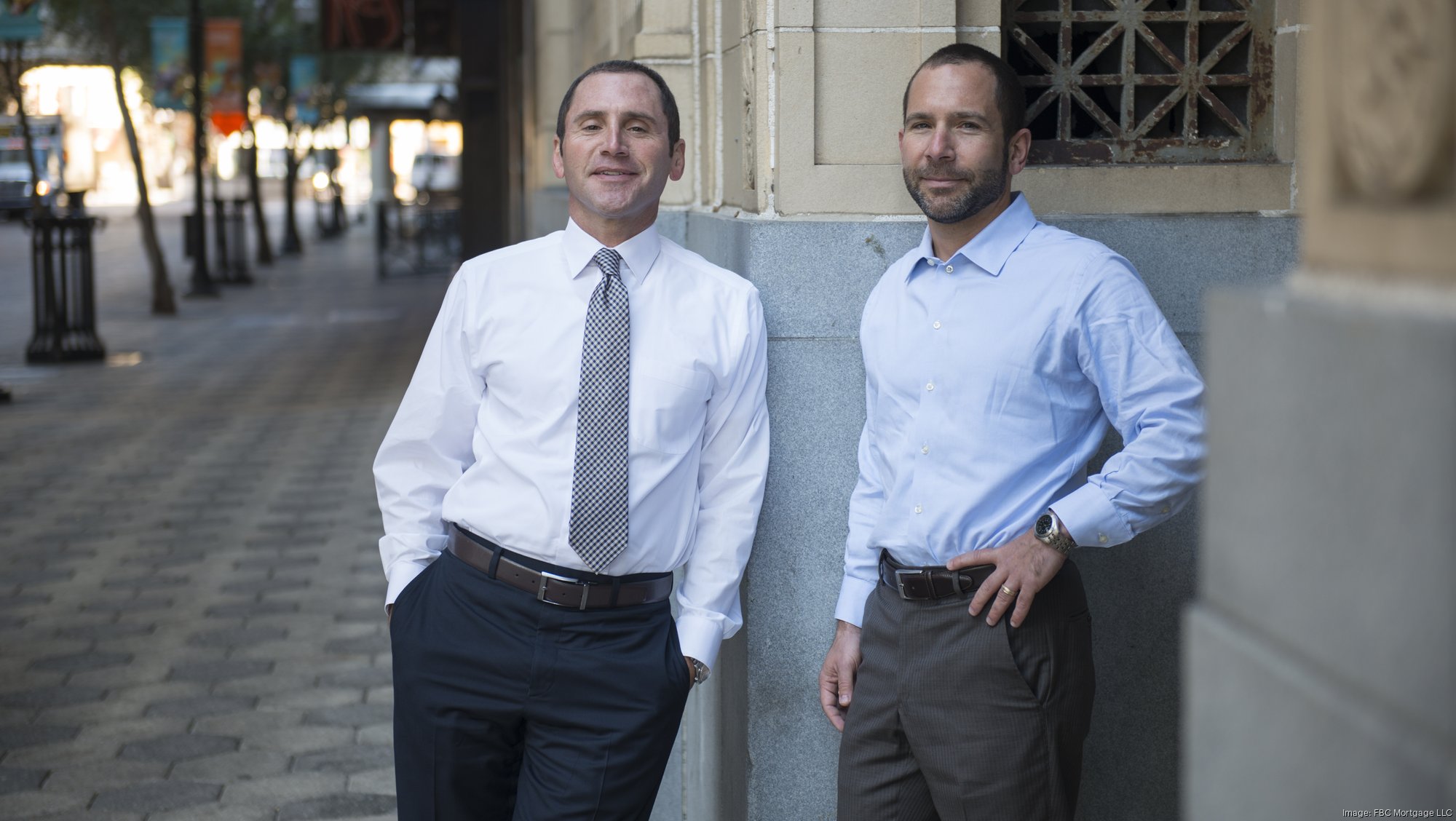
By 2017, the brothers had received EY’s Florida Entrepreneur Of The Year award in Financial Services. FBC’s headcount had grown from an initial team of about 15 to more than 700. The award recognized a shared effort, and Rob’s account of the growth emphasized the expanding team and its offices across several states. The family connection had become a much larger organization.
- 2005FBC founded
Orlando, Florida - 2012Sold to
Sterne Agee - 2015Bought back through
Pine Court Holdings - 2017EY Florida award
Financial Services
The houses behind the numbers
Part of Nunziata’s job involved building relationships with the people building houses. FBC’s partnership with Park Square Homes created an in-house mortgage service, PSH Mortgage. The arrangement brought the builder and lender into closer contact during the homebuying process. Rob emphasized the potential to improve communication between the two companies. It is an unglamorous benefit, familiar to anyone who has waited for two businesses to call each other.
The partnership also gave buyers access to FBC’s online application technology. For Nunziata, lending and technology were already meeting inside an established mortgage business. A builder needs progress on a sale; a lender needs a complete application. Getting those activities to move together is practical work, with consequences for the person waiting to move in.
In early 2023, he described FBC’s 2022 originations, including joint ventures, as approximately $8 billion. Roughly 70 percent of that volume involved new construction. He also discussed builders paying for temporary mortgage rate buydowns as buyers adjusted to higher interest rates. The figures explain why builder relationships occupied so much of the company’s attention. They were a substantial part of the work.
These were the sorts of operating details Nunziata encountered before he helped start a software company. Years spent running a lender gave him a close view of what happens between a customer’s first inquiry and a finished transaction, including all the communication that a company has to supervise along the way.
His alma mater registered the company’s progress too. The University of Florida’s 2018 Gator100 program placed FBC Mortgage at No. 17 and listed Nunziata as a 1994 business graduate. It connected the business back to the education that preceded his lending career, while describing a company whose reach had spread well beyond Florida.
That recognition sits alongside the builder partnerships in his record. One concerns the company’s growth; the other shows how people used it. The mortgage business required both an organization capable of expanding and a process that worked for the next customer buying a house.
The next business was next door
ActiveComply began in 2018. Its co-founders were Nunziata and Mike Prince, who were neighbors. There is something pleasingly economical about that origin: a mortgage executive and a future software partner already had a connection before the business did. Their company addressed the compliance work surrounding financial institutions’ online activity.
A lender’s public presence extends beyond its main website. Employees have social accounts. Branches have pages. Marketing travels through platforms that were designed to make publishing easy. Keeping track of the resulting material takes work, particularly when a company needs to review disclosures, retain records and find accounts that have escaped its notice.
ActiveComply built tools around those tasks, with products covering social media, websites and remote workspaces. Its customers include mortgage lenders, banks and credit unions. The business grew from the financial world Nunziata knew into software sold to other institutions facing similar chores. The customer could recognize the problem without needing a grand explanation of why it mattered.
Three areas described in the company’s 2025 investment announcement.
By September 2025, ActiveComply reported more than 130 customers nationwide and announced a growth investment from Level Equity. The announcement paired funding with a leadership change: Asif Alam became CEO. Nunziata and Prince jointly welcomed the backing for product development and expansion. A business that began between neighbors now had an institutional investment partner.
A desk can become a business problem
Nunziata’s discussion of remote work in February 2023 gives a particularly concrete view of his software interests. He talked about protecting customer information when mortgage employees worked away from an office, and about using technology to inspect and document those workspaces. His attention went to details such as screen visibility, loan files and the cost of visiting dispersed employees.
These are small matters until someone has responsibility for checking them across a company. A private workspace is easy to describe and harder to verify. Nunziata’s interest was in giving employers a practical way to see and record the conditions under which work happened. The ordinary desk, usually ignored in a founder’s story, had become part of the product opportunity.
The connection to his earlier career is straightforward. Running a lending business involves coordinating people and information across locations. ActiveComply offered another way to work on that coordination. The experience of the operator remained relevant even as the product being sold changed.
The neighborhood, on a larger scale
Nunziata’s interest in Orlando extended to the buildings around its businesses. In 2018, he and Joe were investing in downtown property, including a $4 million purchase involving the historic Church Street train depot. Their plan included asking residents what they wanted downtown through an online retail survey. A food hall attracted the strongest response, Rob said.
The brothers had also converted the historic First National Bank building, previously used by Valencia Community College, into a Walgreens. The property work brought a different set of decisions: which uses could draw people in, and which tenants would make sense for a changing downtown. Resident preferences became material for the pitch to potential retailers. Even a property investor occasionally benefits from asking the neighbors.
In 2022, another Orlando connection took a more public form. FBC agreed to a ten-year, $19.5 million naming deal for UCF’s football stadium. Nunziata, a University of Florida graduate, spoke enthusiastically about partnering with Orlando’s hometown university. His business geography had room for a different college’s football crowd.
The agreement linked an Orlando-founded lender with an institution many employees had attended. Rob thanked the athletics officials involved in arranging it. For a business built through partnerships, a stadium supplied a very visible one: thousands of people encountering the company name during an activity that had little to do with applying for a mortgage.
Knowing when to hand over the keys
In September 2024, Nunziata moved from ActiveComply’s CEO position to executive chairman, with Colby Berger taking over as CEO. The company’s current leadership page identifies Rob as a co-founder and board member. His public profile also introduces RGN Family Office. The sequence shows his responsibilities changing as the businesses around him develop.
FBC has changed its public identity too. It joined Acrisure in 2022 and became Acrisure Mortgage on July 1, 2025. The stadium name changed with it to Acrisure Bounce House. Those developments belong to the lender’s continuing history; Nunziata’s present work has moved beyond his former co-CEO role.
His career contains several ways to stay involved: buy the company back, start another with someone nearby, invest in the street, remain on the board. Each asks for a different amount of day-to-day attention. Together they make a more interesting account than a single title held indefinitely.
The 2015 return remains the revealing turn. It put Rob Nunziata back beside people who knew the business and wanted another stake in it. Later came new partners and different products. For all the changes in ownership and job description, the work kept bringing him back to familiar people with another practical thing to build.