The trouble with a restaurant conceived by two lawyers is that the customers have not agreed to the terms. Rick Rosenfield and Larry Flax wanted to bring the adventurous pizzas of California’s restaurant scene to a broader public. Their early menu entertained rabbit sausage, lamb sausage and other ideas that sounded rather pleased with themselves. The diners wanted barbecue chicken. They kept ordering it. Eventually, the order tickets made an argument the founders could hardly dispute.
Rosenfield had left a criminal-defense practice to help open California Pizza Kitchen in Beverly Hills in 1985. He and Flax had borrowed money, personally guaranteed a lease and persuaded friends to invest. The business would grow to more than 260 locations around the world before they left executive leadership in 2011. Yet the opening chapter is full of revisions. The menu needed them. So did the founders’ understanding of the job they had just bought themselves.
A restaurant in the fine print
Chicago’s South Side came first. Rosenfield grew up there, attended the University of Illinois and studied law at DePaul. His next stop was the Justice Department in Washington, where he worked in the Criminal Division’s appellate section, writing briefs for cases before the Supreme Court. He remembers being 24 and going to hear oral arguments. For a young lawyer, it was an unusually good seat.
In Los Angeles, he became a federal prosecutor and met Flax. They went into criminal defense together. The restaurant business became their recurring alternative future: an idea discussed, a new client with a substantial retainer, another postponement. Leaving a successful profession is easier to contemplate when nobody has just offered to pay you to remain in it.
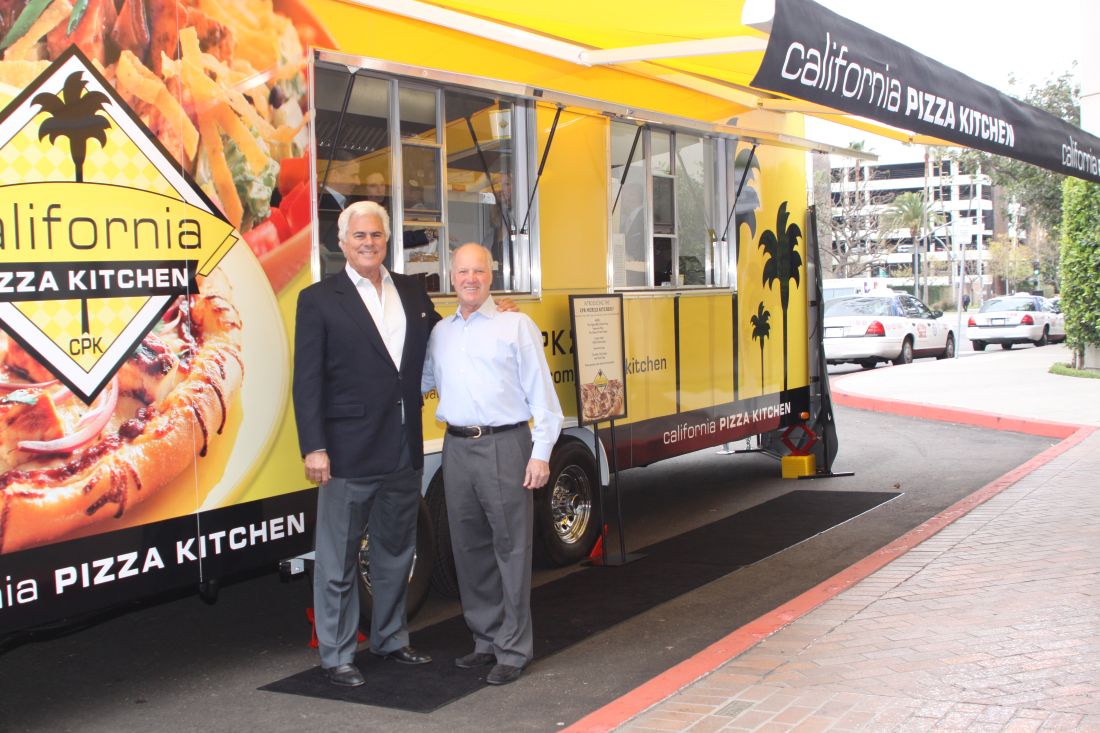
After a lengthy trial in San Francisco, the partners finally acted. A pasta cafeteria Rosenfield had seen in Chicago supplied an initial direction. A visit to a similar operation in Glendale supplied a more useful observation: people buying pasta were also taking a slice of pizza. On the drive back to their office, the pasta idea gave ground to an individual pizza, a visible oven and the emerging California approach to toppings.
Their friend Bob Mandler, the restaurateur behind Chin Chin, helped them picture the room. They committed before they had a finished menu or even a name. Then the arithmetic intervened. The original construction estimate omitted kitchen equipment, computer systems, training and inventory. The $250,000 they had borrowed was heading toward a project costing roughly twice as much. Twenty-two prospective backers said yes when the founders sought more money. The wager now belonged to their friends, too.
The customer edits the menu
California-style pizza already had a history. Alice Waters’s Chez Panisse and Wolfgang Puck’s Spago had helped make room for unconventional ingredients. Rosenfield and Flax saw an opportunity to make that sensibility accessible to families who were not arranging an evening around a celebrity restaurant reservation. Their shorthand was “Spago for the masses,” an ambition Rosenfield would later find rather too optimistic about the masses’ appetite for exotic toppings.
The early sales reports were less ambiguous. “If we sold 200 pizzas, 170 of them were barbecue chicken,” Rosenfield recalls. Those are his remembered figures, rather than an audited market study, but the direction is plain. Familiar flavors gave people a reason to try the unfamiliar format. Thai chicken and club-sandwich ideas would fit that logic. An ingredient could be surprising without making dinner feel like an examination.
Barbecue chicken pizzas in one remembered sales mix. The customers were writing their own menu.
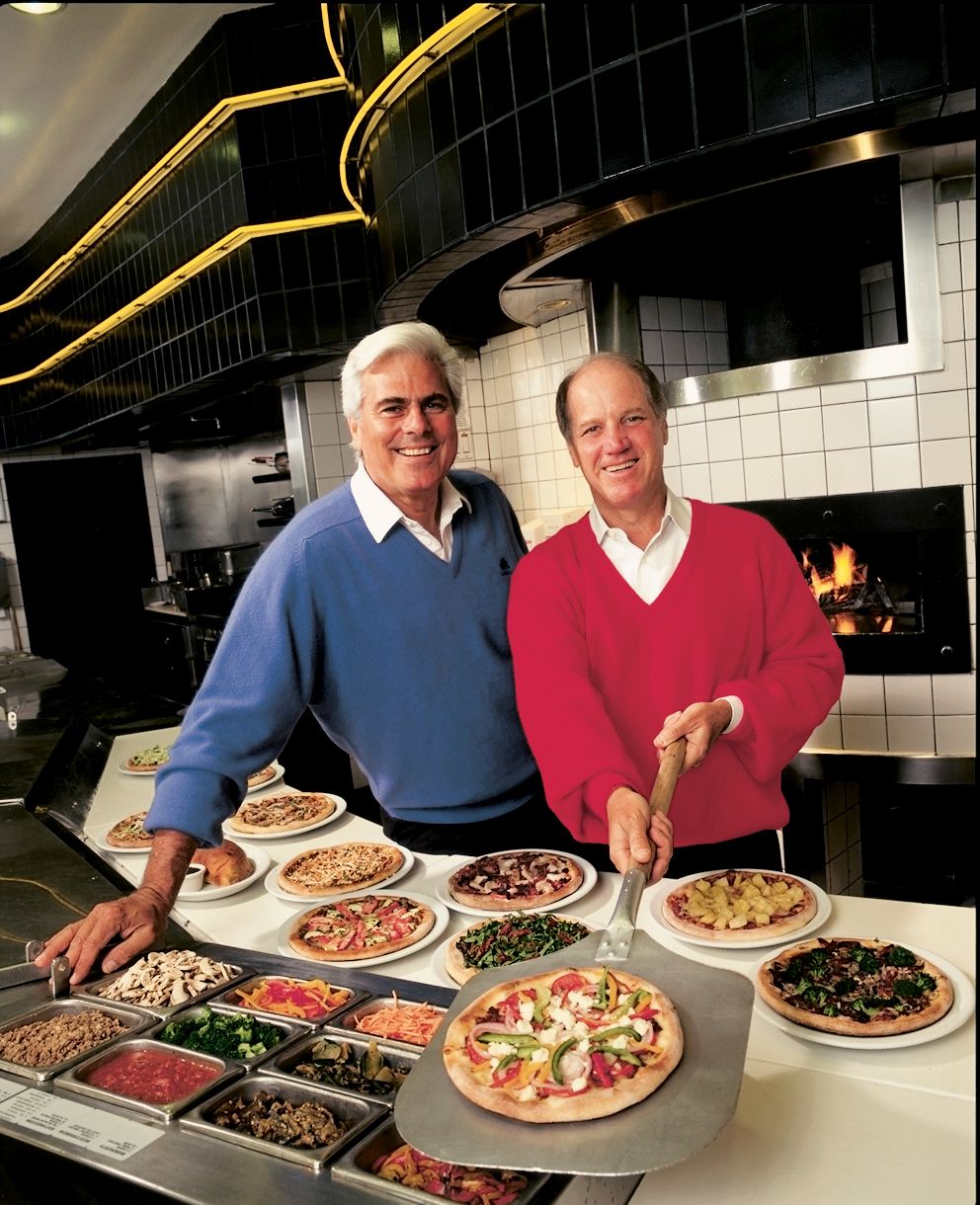
The room mattered as well. CPK put the kitchen and hearth where guests could see the work. Rosenfield connects that choice with the way visitors gather in a kitchen at home. It also put cooks in public view and made cleanliness part of the performance. A restaurant with an open kitchen has volunteered for inspection before anyone has ordered.
Shopping centers offered another opening. CPK expanded into places including the Beverly Center, Topanga Plaza and Atlanta’s Lenox Square. The founders believed a sit-down restaurant could attract people to a mall in its own right. A family could go shopping and have a meal that required more commitment than carrying a tray. Location strategy and menu strategy were meeting the same customers.
Two lawyers, one decision
Rosenfield and Flax had brought a long working relationship into an unfamiliar trade. They argued, as lawyers tend to do when provided with either an issue or sufficient time. Rosenfield describes their rule after an argument: once a choice was made, it belonged to both of them. Neither could reserve the pleasure of prosecuting the other if it failed.
“We never, ever once did ‘I told you so.’”
Rick Rosenfield
That arrangement left room to be wrong together. It also helps explain why Rosenfield resists the solitary-founder version of the story. The partnership supplied confidence neither believed he would have had alone. Interviews became conversations in which they finished each other’s sentences. The business had two people available for the difficult phone call.
Inside the restaurants, authority needed a similar adjustment. The founders eventually gave their operating values the name ROCK: Respect, Opportunity, Communication and Kindness. Rosenfield puts particular emphasis on the final word. A person could be productive and still make everyone around them dread the working day. Promotion was supposed to recognize how people treated one another along with the work they did.
RRespect
OOpportunity
CCommunication
KKindness
The company called headquarters its Restaurant Support Center, an instructive choice of name for an organization that could easily have confused distance from the dining room with importance. Rosenfield pictured an inverted pyramid, with the people serving guests at the top. In practice, training and promotion from within were ways to make the idea travel beyond the founders’ immediate reach.
A blank check with consequences
Growth brought partners who had their own plans. PepsiCo took a controlling interest in 1992. CPK then had roughly 25 restaurants; the prospect of inexpensive capital made a much faster opening schedule appear possible. Rosenfield remembers encouragement to consider 50 or even 100 new locations a year. The available money was easier to multiply than experienced managers and well-chosen sites.
The resulting expansion exposed weaknesses in the organization supporting it. Layoffs and cost cuts followed. Rosenfield recalls trying to reassure managers about the founders’ commitment to quality while decisions made elsewhere had already undermined the claim. A manager’s skeptical reaction stayed with him. A founder could still believe his own promise while employees had acquired reasons to doubt it.
PepsiCo’s eventual departure created another chance. Bruckmann, Rosser, Sherrill & Co. acquired its interest in 1997. CPK went public in 2000. In 2003, after another period of expansion, the board asked Rosenfield and Flax to resume the co-CEO responsibilities. Their return put them back inside the daily business of a company whose growth had repeatedly complicated its management.
- 1985The first Beverly Hills restaurant
- 1992PepsiCo takes a controlling interest
- 2003The founders return as co-CEOs
- 2011Golden Gate Capital completes its acquisition
Golden Gate Capital completed its acquisition in July 2011, paying $18.50 a share, approximately $470 million in total. That figure describes the company transaction, not Rosenfield’s personal proceeds. G.J. Hart subsequently took over executive leadership. The founders had helped turn one restaurant into an international business; they would now have to find a way to spend their days without running it.
Rome after California
Rosenfield continued opening restaurants. He and Flax developed Bottlefish in Brentwood, a seafood venture with a visible kitchen and a wine display that gave the bottles rather good accommodation. Esther returned to greeting guests. The business later closed. Experience had given Rosenfield a longer list of things to consider before an opening; it had not supplied a guarantee.
On a trip to Italy after CPK, he and Esther had encountered Roman-style pizza sold al taglio, by the cut. That became the basis of ROCA: Rome supplied the first two letters, California the last two. The dough was cold-fermented for 48 to 72 hours. Rectangular portions offered an alternative to the full-service restaurant Rosenfield had originally imagined returning to.
Portability was part of the attraction. A smaller shop serving pizza that could travel suited the shift toward takeout and delivery. ROCA began with a Glendale pop-up in 2021, then opened at Palisades Village in March 2023. It closed later that year. The later ventures belong in the same life as CPK. Their endings keep the account honest about how much a founder can control.
The people in the dedication
In 2026, Rosenfield published The California Pizza Kitchen Story: How Two Federal Prosecutors Changed the Way America Eats Pizza. His public appearances have taken him back through the early risks and the corporate arguments. A CBS Saturday Morning interview in July put the memoir beside the familiar restaurant name. An October appearance at the Florida Restaurant Show is scheduled to put him in conversation with the trade again.
He now lives in Palm Beach with Esther. His official biography lists three children and two grandchildren. Larry Ellison, a friend from their South Side childhood, contributed an endorsement to the book. The connections stretch from the neighborhood where Rosenfield grew up to the restaurant workers who have sent him memories of their time at CPK.
Esther had been the first hostess at the original restaurant. Her place in the book’s dedication recognizes both the financial leap and the work of welcoming the first guests. That is a useful place to leave Rosenfield’s story: at the door, before a restaurant has become a chain, when every person arriving still has to decide whether to come back. Even a very persuasive lawyer has to let dinner make that argument.
Read, watch, follow
- Rick Rosenfield’s website and memoir
- Follow Rick on LinkedIn · Instagram
- Watch: CBS Saturday Morning interview
- Thirty Minute Mentors: the full conversation
- Menu ideas, open kitchens and the October 2026 appearance
- Listen: The Kara Goldin Show
- The people and values behind CPK
- Explore the California Pizza Kitchen profile