In an operations centre in Houston, a customer gave Rick McConnell a fairly direct job description. The company had more than 4,000 applications spread across cloud providers. Keeping track of them had become an undertaking that even a roomful of people could struggle to manage. “Rick, this is what you need to fix for us,” he recalled being told.
There is a useful economy to that request. Nobody was asking for another graph to admire. They wanted their sprawling collection of software to become manageable. McConnell, who became Dynatrace’s chief executive in December 2021, has made that predicament the centre of his working life. More software creates more things to watch. Eventually, the watchers need help.
His proposition sounds almost impolite in an industry that enjoys adding things: what if the next purchase actually reduced the work?
A financial engineer keeps his curiosity
McConnell’s first job after college involved programming IBM mainframes in FORTRAN at an investment bank. The title was financial engineer. Decades later, after holding finance and executive positions, he said he still did “really love the technical aspect of things.” His advice on running a growing organisation was similarly plain: “You’ve got to trust your team.”
Those two interests give his career a useful tension. Understanding the machinery matters; so does letting other people run it. A chief executive who insists on personally resolving every technical question would soon become a rather expensive queue.
His education combines a BA in quantitative economics with an MBA, both from Stanford. The pairing puts numbers and organisations in the same frame. His subsequent jobs repeatedly brought him to businesses where a clever product had to become something many more customers could buy, use and depend upon.
At Latitude Communications, he served as president and CEO. Its MeetingPlace software combined audio and web conferencing, putting meetings into corporate networks long before video calls became an everyday domestic furnishing. Cisco announced an agreement to buy Latitude in November 2003 for approximately $80 million. The acquisition closed in January 2004.
McConnell joined Cisco through that transaction and held senior roles there until 2011. His work included its Communications and Collaboration business. The setting changed from a conferencing company to a much larger supplier, with the accompanying challenge of turning separate capabilities into something customers could deploy together.
- 2004Latitude joins Cisco
- 2011Moves to Akamai
- 2021Takes the Dynatrace role
- 2026Arize joins Dynatrace
The second billion has different instructions
Akamai became his next long assignment. From 2011 to 2021, his responsibilities covered products and development, the Web Division and, finally, the Security Technology Group. During that decade, Akamai’s revenue grew from roughly $1 billion to nearly $3.5 billion. He helped build a security business that reached more than $1.3 billion in revenue.
These were company achievements, made by teams over years. They also explain why a board looking for someone to guide the next stage of a software business would call him. He had worked across product development and commercial operations, rather than spending his entire career on one side of the conversation.
When he took over Dynatrace on December 13, 2021, he inherited a company approaching $1 billion in annual recurring revenue. His predecessor, John Van Siclen, had led it since 2008, through a platform reinvention and its 2019 stock-market listing. McConnell’s assignment began with an established business and an existing engineering organisation. The task was to extend what they had built.
That distinction matters in a technology biography. The incoming CEO gets a photograph and an announcement. The software brings years of decisions, experiments and accumulated expertise with it. McConnell’s record made him a candidate to expand that work, while the engineers’ record gave him something worth expanding.
First, ask a few hundred people
One early piece of work was conversational. Through meetings, town halls and individual exchanges, McConnell gathered input from hundreds of employees, customers, investors, partners and analysts. In April 2022, he described how those conversations had informed refreshed statements of mission, purpose and vision.
Company mission statements can have the texture of hotel stationery. This one set a demanding destination: a world where software works perfectly. McConnell explicitly described that perfection as aspirational. Customers, he argued, nevertheless expect the software they use to function without interruption. The gap between an ambitious destination and an ordinary customer expectation was precisely the point.
The accompanying mission focused on delivering answers and intelligent automation from data. That wording helps explain his approach. Collecting information is an intermediate step. The hoped-for result is a system that identifies a problem and helps someone act on it before a customer has to complain.
“This level of perfection is aspirational”
Rick McConnell, writing about Dynatrace’s vision in 2022
There is a human problem inside that technical ambition. A growing business has to explain why its work matters to people who build it, sell it and use it. Listening before rewriting the company’s statements gave McConnell a way to connect those audiences. The conversations themselves were part of the work.
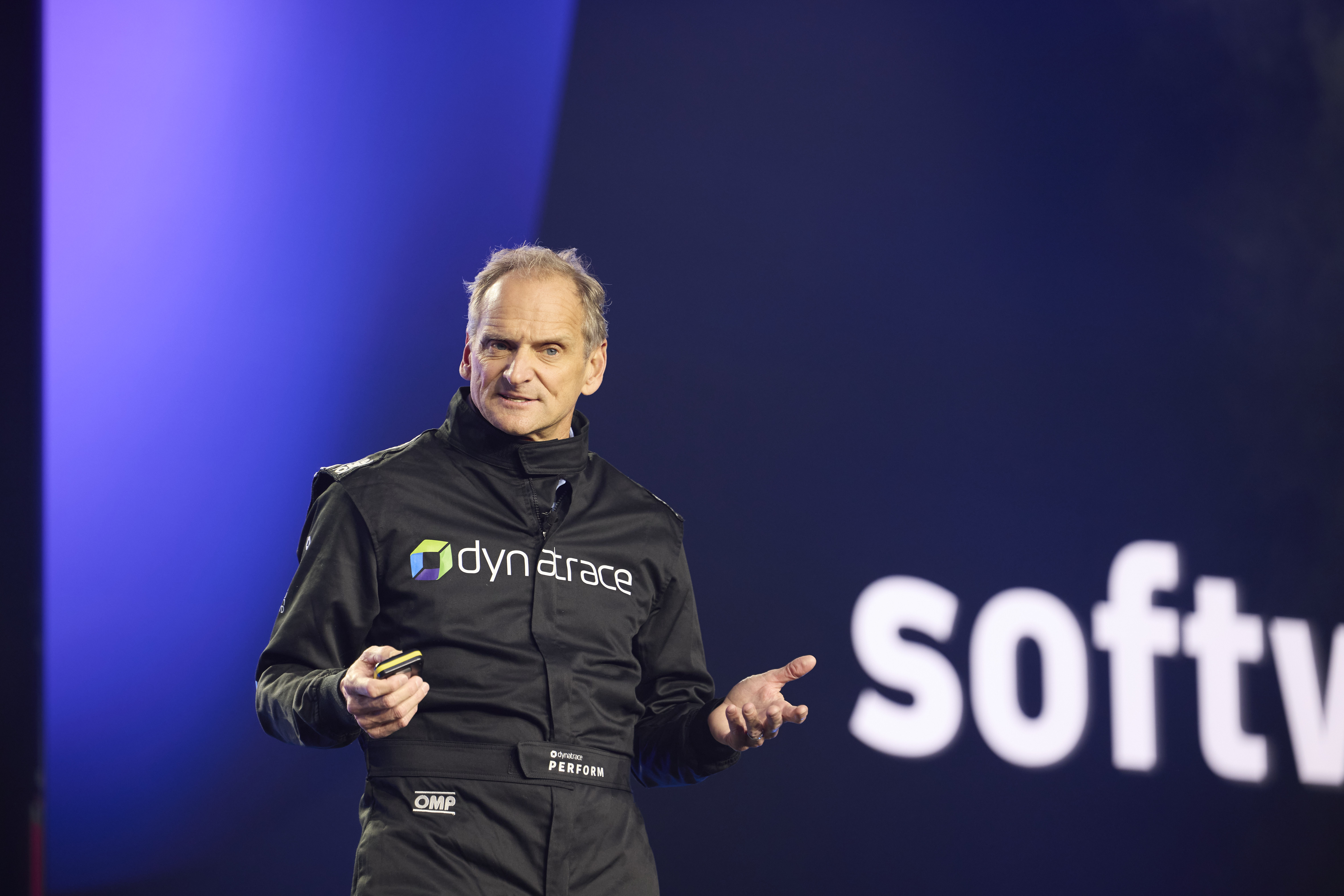
Mountain View, with an Austrian centre of gravity
McConnell lives in Mountain View, California. He is married, has three children, and enjoys running and cycling. Those are modest personal details, but they place an actual person behind a job that is otherwise easily described entirely in recurring revenue and product names.
His company requires a wider map. Dynatrace was founded in Austria, and founder Bernd Greifeneder remains its chief technology officer. In an August 2024 television interview, McConnell emphasised that more than 95 percent of the company’s research, development and innovation efforts took place in Europe. He pointed to the region’s universities and technical talent as an advantage.
For a California-based executive, that is a useful corrective to the familiar technology story in which every important idea seems to originate beside the same motorway. His role links a global commercial organisation with an engineering base whose history and expertise predate his arrival. Distance is part of the job description.
A lakehouse with a practical purpose
In October 2022, Dynatrace introduced Grail, its data lakehouse technology. The name sounds suited to an expedition. The practical objective was to bring observability, security and business data together while preserving the context that makes individual records meaningful.
Logs record events. Metrics measure behaviour. Traces follow a transaction through different components. Looking at one category alone can leave an operator with only part of the explanation. Grail initially powered log management and analytics, with a design intended to support queries without the repeated indexing and archive handling that complicate investigations.
The commercial argument follows the technical one. If different teams use separate tools and disconnected data, somebody has to reconcile their findings. A unified platform promises to reduce that work. McConnell returned to this theme in March 2025, writing about observability’s expanding audience: developers, reliability engineers, platform teams and business executives.
What happened?Metrics
How much?Traces
Which path?
A conceptual view of McConnell’s platform argument, rather than a product architecture diagram.
The attraction is easy to understand. Every additional integration is another thing someone must maintain. Every separate investigation consumes time. His strategy asks buyers to consider the labour surrounding their tools alongside the capabilities printed on the box.
Now the software writes more software
AI has raised the stakes of that argument. In 2026 conference discussions, McConnell described a world in which agents produce more code and take on more operational work. He argues that this increases the need to observe software: an AI application must run reliably, and its output must also be evaluated for correctness.
The distinction creates a fresh management problem. A service can be available and still supply an unsatisfactory answer. Teams need ways to connect the behaviour of models and agents with the applications and infrastructure beneath them. McConnell’s bet is that observability will become part of how organisations govern that activity.
A July 2026 product announcement showed how the company intended to proceed. Its Cloud SRE Agent coordinates remediation across cloud environments and brings findings into an auditable record. Other announced capabilities addressed incident investigations and custom agents. Human oversight and governance remained explicit requirements. That detail gives the automation pitch a more concrete shape: teams need to understand what an agent did, see the context behind its actions, and retain control over the process.
Dynatrace put money behind the argument. In August 2026, it announced an agreement to acquire Arize in a cash-and-stock transaction valued at $915 million. The deal brought together Dynatrace’s operational observability and Arize’s AI evaluation capabilities. Arize co-founders Jason Lopatecki and Aparna Dhinakaran would join, with Lopatecki reporting to McConnell.
The acquisition closed on October 1. Arize would continue supporting its Phoenix open-source platform and AX enterprise platform, with integration into Dynatrace planned over time. That timing is significant: completing a transaction and completing a combined product are different milestones. McConnell now has the organisational work of joining those capabilities ahead of him.
Up 17% year over year. Revenue for the quarter was $555 million. ARR is an annualised subscription metric; quarterly revenue measures a different period.
The room still needs an answer
The financial results give his strategy a measurable backdrop. For the quarter ended June 30, 2026, Dynatrace reported $2.136 billion in annual recurring revenue and $71 million in GAAP operating income. Scale and profitability sit alongside the newer questions about how AI applications will be built and operated.
There is a practical limit to how much a chief executive can settle with a vision statement. Integrations must work. Customers must find the answers useful. Engineers need room to solve problems that cannot be resolved in an earnings call. His early emphasis on listening, and his stated belief in trusting the team, belong in that daily work.
The Houston request remains a good test. Imagine explaining a new capability to the people facing thousands of applications: does this help them understand what happened, decide what to do and carry it out? That is the standard implicit in McConnell’s pitch. As software multiplies, the people responsible for it still want their working day back.
Read, watch, follow
- Rick McConnell on LinkedIn ↗
- His essays at Dynatrace ↗
- Dynatrace website ↗
- Watch: CNBC Europe interview ↗
- Read the 2022 career interview ↗
- The 2021 CEO transition ↗
- His 2022 mission essay ↗
- His 2025 observability essay ↗
- Grail launch, October 2022 ↗
- Cisco completes the Latitude acquisition ↗
- European engineering roots ↗
- Arize agreement, August 2026 ↗
- Arize completion, October 2026 ↗
- Results for the quarter ended June 2026 ↗
- 2026 technology conference discussion ↗
- 2026 strategy discussion ↗
- Perform 2025 photograph ↗