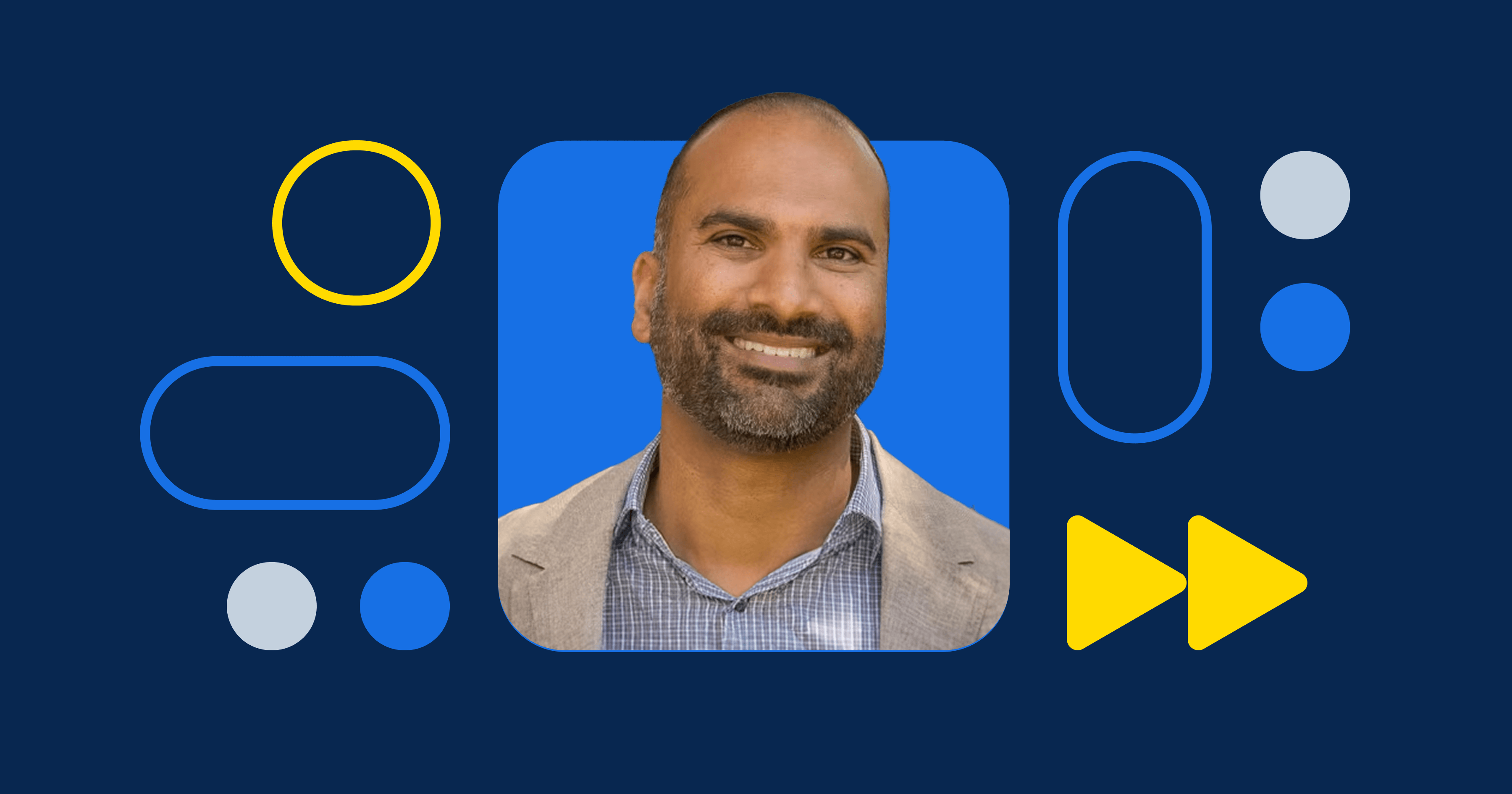
The operator's operator.
From Udupi to Palo Alto
He was born in Udupi, a coastal town in Karnataka better known for its temple architecture and its dosa restaurants than for software founders. His paternal grandfather, G. Laxminarayana, chaired Indian Bank. His late father, Dr. Subramanya Rau, was an oncologist who picked up a gold medal in medicine at Stanley Medical College in Chennai before settling in California. Family lore had a clear bias toward the technical and the credentialed.
He did his BS and MS in Industrial Engineering at Stanford, Phi Beta Kappa, Terman Scholar. Industrial engineering is the discipline that turns messy real-world systems into models you can actually optimize. You can hear it in the way he talks about platforms - layers, throughput, where the constraint sits.
The VMware education
VMware in the mid-2000s was the place to learn how a platform compounds. He ran product management and worldwide marketing, helped take the company public in August 2007, and watched what happens when a hypervisor stops being a tool and starts being a tax on every workload. That lesson stuck.
People who graduate from VMware tend to carry one conviction with them: when the layer below you becomes a platform, the layer above you has no choice but to move. He has been positioning himself one rung ahead of that move ever since.
SignalFx: a streaming bet
In February 2013 he and Phillip Liu started SignalFx with a thesis sharper than the pitch deck made it sound. Monitoring tools were still polling and aggregating. Modern apps were streaming. The mismatch was going to crack the moment containers and microservices arrived in serious volume. They bet on a streaming analytics core, raised from a16z and Charles River and General Catalyst, and waited for Kubernetes to do the rest of the work.
Kubernetes did the rest of the work. By 2019, Splunk was looking at the same shift from a less comfortable angle - log search alone was not going to hold the observability category. The acquisition closed for $1.05 billion in cash and stock. Rau became VP of Observability inside Splunk, which is corporate-speak for being handed the strategic question Splunk could no longer answer in-house.
Why Contentful
The Contentful board did not pick a content executive. They picked an infrastructure operator. Read the move two ways. One: composable content is now an enterprise infrastructure decision, not a marketing decision. Two: the existential threat and the existential opportunity in CMS right now is the same word, AI, and you want someone who has done a platform pivot before in the room.
His public framing has been consistent. Personalization at scale requires more content than any marketing budget can fund. AI changes the cost curve on producing that content. The companies that win are the ones with the structured layer to organize, govern, and distribute it. Contentful, in his telling, is the structured layer. Whether that bet pays out is the next four years of his life.
The pattern
Three category bets, same shape. A platform shift the incumbents are slow to read. A technical primitive that makes the new shape cheap. A go-to-market built around developers first, buyers second. He is not the loudest CEO in the Valley. He does not need to be. He has the receipts.
Three bets, one playbook
Bars are illustrative, not financial. The point: each bet is one layer up the stack.