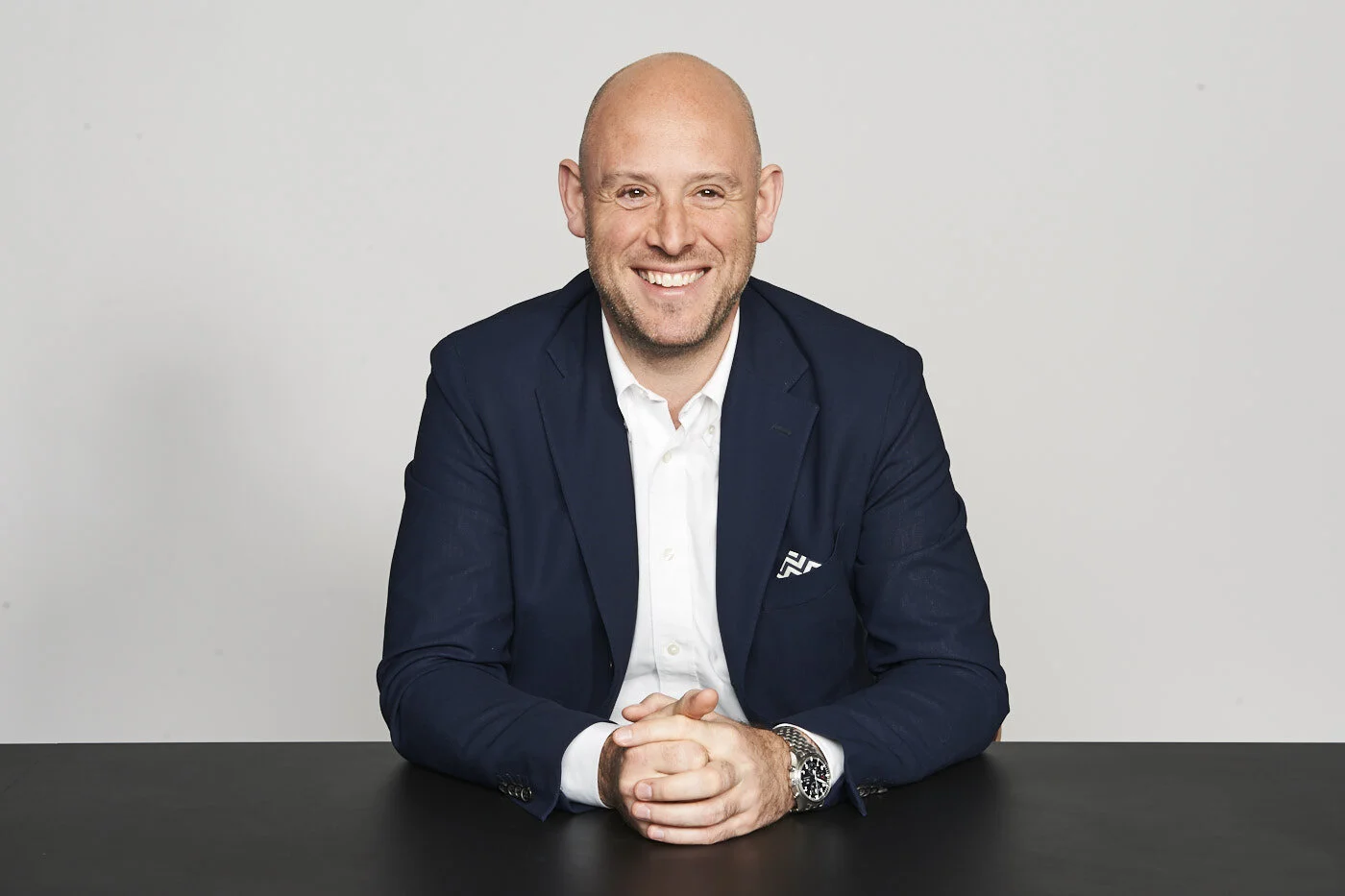
Richard Moross called his first business Pleasure Cards. With the benefit of hindsight, the name has possibilities that a respectable stationery company might prefer to avoid. He has been cheerfully explicit about regretting it. But the mistake was more interesting than an unfortunate sign above the door. Moross had spotted something useful inside an idea that people did not particularly want. Building MOO meant deciding which part to keep.
His starting proposition was simple enough. People handed out business cards at work. Outside work, they increasingly had mobile numbers, email addresses and online identities to exchange. Why should they not have a card of their own? The eventual company would turn that question back toward professional life. Along the way, Moross would learn that being right about an object does not automatically make you right about its customers.
A name with unfortunate possibilities
Before there were cards, there were other people's companies. Moross studied Philosophy and Politics at the University of Sussex, graduating in 2000. His early employers included the BBC and Sorted.com. From 2002 to 2004 he worked as a strategic planner at the design business Imagination. The ingredients of MOO were already accumulating: an interest in what technology could make accessible, and a respect for how carefully designed things could feel.
Getting an idea funded required another kind of introduction. His account of meeting investor Robin Klein includes a 7:30am appointment and a presentation containing 200 slides. That is a substantial amount of business card before breakfast. Through a chain of family connections, he had found someone prepared to listen. By August 2004, the venture had £150,000 of backing from Klein and his son Saul.
Pleasure Cards combined a social-networking idea with printing. After roughly 18 months, it needed a different direction. Moross has acknowledged that the brand, model and team changed substantially as the business became MOO. Keeping the printed card while revising the company around it was an act of discrimination. Persistence alone would have left him faithfully pursuing the wrong arrangement.
“I'm a planner at heart.”
Richard Moross
He has described himself as someone who looks ahead. That disposition helps explain the revision. The original plan could be changed without surrendering the desire to build a business. He also treated becoming a chief executive as something to learn, taking courses and seeking guidance. The person who starts a company, in his telling, has no automatic entitlement to remain qualified for every subsequent version of the job.
A little picture, a different conversation
MOO launched with Flickr in September 2006. People could turn photographs from their online accounts into small, physical cards. A different image on each card gave the pack an unusual quality: it could behave like a tiny portfolio. The web supplied the pictures. Print gave them somewhere else to go.
By 2008, the behavior around MiniCards was part of their appeal. Customers could spread out a selection and let somebody choose an image. A photograph of a trip, an artwork or a product gave the exchange a subject beyond the contact details. That is a modest intervention, but a precise one. It puts a conversation within reach of an object usually expected to do little more than identify its owner.
Moross captured the distribution advantage in a sentence: “Everything we manufacture is handed from one person to another.” A product designed to be given away carries its maker into the next meeting. In 2007, MOO shipped 10 million MiniCards to 180 countries. The little format had traveled considerably farther than the first investor presentation.
CardsA personal calling-card idea
FlickrOnline pictures, printed
customersAn existing need comes into focus
The customers were already there
The Flickr launch supplied attention and enthusiasm. It did not settle every question about the business. There is a difference between an appealing experiment and something customers will need again. At Le Web in 2009, Moross described moving the company's attention toward products people needed, rather than continually dreaming up things they might like. Professional business cards offered a familiar reason to order.
For a small company, the proposition was practical. Good paper, design choices and a straightforward ordering process could make professional presentation easier to obtain. The buyer already understood the purpose of the object. MOO could concentrate on making that purchase feel worth choosing.
Looking back in his 2025 conversation with Kara Goldin, Moross described an early burst of product invention: stickers, greetings cards, note cards and unfamiliar formats. Some were interesting without having an obvious market waiting for them. Standard business cards made a different kind of connection. The company had found customers already shopping for a recognizable product and could offer its own quality, design and service.
The distinction sounds almost embarrassingly obvious once it has worked. Before it works, a familiar category can look like a retreat from an original ambition. Moross has acknowledged that investors helped push him toward business cards when he initially resisted. His story leaves room for the adviser whose useful contribution is an argument.
Keep the printer within earshot
MOO also brought a physical complication to the internet business. Orders had to become objects. Paper had to be printed, checked, packaged and delivered. In its Shoreditch years, machines operated downstairs from Moross's office. Keeping production close allowed the company to inspect materials and packaging, try things quickly and connect customer service with the work happening on the floor.
Growth exposed less glamorous problems too. Early customers entered Japanese and Hebrew text before the website supported the characters properly. American demand raised questions about shipping and local production. A Rhode Island operation became an important investment. In 2010, MOO also committed substantial time to fixing its technology platform. Each decision involved work that an attractive card could conceal but could never replace.
“I think you can build quality that scales.”
Richard Moross
Scale has since become a matter of established operations rather than an early promise. MOO's 2024 figures put some dimensions around that work. They also resist the temptation to turn a founder's career into an uninterrupted upward line: revenue eased while adjusted operating earnings improved.
The education of a founder
Moross's other education has involved people. In a 2013 interview, he described the shift from the individual demands of being a student to the collaborative work of a small company. Business depended on relationships. It is a lesson that becomes harder to put into practice when your own taste has helped make the product distinctive.
One of his accounts of delegation is admirably concrete: he removed Illustrator from his computer so his art director could do her job. The software had offered a convenient route back into work he needed to entrust to someone else. Uninstalling it gave the decision a little enforcement.
He has also spent time around boardroom tables outside MOO. He served as a non-executive director at Ladbrokes from 2012 to 2016 and at N Brown from 2016 to 2023. Those appointments sit alongside mentoring earlier entrepreneurs and involvement in the Young Presidents' Organization. In 2015, he received an MBE for services to entrepreneurship. The career contains both the person with the product idea and the executive learning how other businesses operate.
His interests still return to design. His personal website links to MINIMAL/LIST, a design blog, and describes a wish to make professional design accessible through technology. The ambition has a useful everyday scale. Plenty of small businesses need to look considered long before they can employ a design department.
There is a revealing contrast in the daily routine he has described. A founder concerned with how paper feels also receives an email showing the bank balance, a habit encouraged by Klein. The message keeps the available cash in view alongside all the things the company might like to make. In a business selling carefully finished objects, the arithmetic needs its own place on the desk. Moross can admire an idea and still have to pay for the machinery, materials and people that give it a physical form.
Twenty years, and another introduction
There are lighter ways to measure progress. In MOO's launch week, an engineer set up an order notification using Mr Hankey's “Howdy-ho!” from South Park. First it sounded for all orders. Then only paid ones. Eventually it had to be switched off. Somewhere between the first notification and silence, a gratifying little signal had become an office nuisance.
Moross also has a disarmingly practical use for expensive stationery: he has admitted slipping a Luxe card under a restaurant table to stop it rocking. He likes London, would like to spend more time in Rome, and has talked about cooking his way through a Rachel Roddy book. These are small details, but they give the design enthusiast a life beyond the sample pack.
The next version of the business reaches beyond cards. In his June 2025 annual-report message, Moross set out plans for more branded merchandise, new paper products and further development in North America. His stated design purpose also encompasses materials, manufacture and what happens to products when people finish using them. Making an object desirable brings responsibilities along with the sale.
In September 2026, MOO marked twenty years by returning to customers' experiences behind their orders. That feels appropriate for a company whose products live inside other people's introductions. Moross began by imagining a personal card and spent years revising the business that could make it useful. The card has kept its small, demanding assignment: give somebody a reason to remember you after the conversation ends.
Read, watch & follow
CONTINUE THE CONVERSATION
- Richard's personal website ↗ · MINIMAL/LIST design blog ↗
- LinkedIn ↗ · Twitter / X ↗ · Instagram ↗
- Explore MOO's company profile ↗ · About MOO ↗
- Watch: learning business in a first job (2013) ↗
- Listen: The Kara Goldin Show (2025) ↗
- Business, pleasure and pasta: the 2021 interview ↗
- A conversation about scaling MOO (2014) ↗
- MOO annual report: 2024 results (PDF) ↗
- MOO's paper-themed birthday party (2024) ↗
- Twenty years of MOO moments (2026) ↗