Richard Laver’s son gave him a bracelet with a phrase that would eventually cause trouble in the beverage aisle. It called his father a lucky f*ck. For a family, this was affectionate shorthand. For a company, it was rather more paperwork. Laver liked it enough to put it on an energy drink. The words had already done something a branding workshop might spend weeks attempting: they made a complicated life sound like something you could carry on your wrist.
There was considerable history behind the joke. In 1985, at twelve, Laver survived the crash of Delta Flight 191. His father died. Years later, he experienced homelessness. By the time he was building companies and raising a family, luck had acquired a meaning that could accommodate terrible events and gratitude for being here. His son’s gift caught the contradiction with the economy available to children who know their parents well.
That is a demanding backstory for a can. It also explains why Laver returns so often to the same modest instruction: keep going. There is mischief in the packaging, but the sentiment underneath has a longer shelf life.
A bracelet with a vocabulary problem
Laver launched Lucky in August 2023. The original name, Lucky F*ck Energy, sounded like a dare, and he was quite prepared to defend it. He had considered changing it before launch. The bracelet gave him a reason to keep it. A politer substitute, he felt, would lose the particular spirit of the gift.
It is easy to imagine a name of that sort beginning with a meeting about young consumers. Laver’s began with a son looking at his father’s life. That sequence matters. He could explain why the word belonged there without first explaining a marketing segment. Whether a retailer wanted it there was a separate and increasingly practical question.
Lucky eventually became Lucky Energy. The visual joke survived in the tape covering the offending word. An edit that might have looked sheepish became part of the identity. There is a certain elegance in making your compromise visible. It saves everyone the bother of pretending the first version never existed.
The summer holiday stayed on the calendar
Before Lucky, there was Kate Farms, the company Laver co-founded in 2012 with his wife, Michelle, and named after their daughter. His account of that business includes the work of making a product, finding a market and learning which responsibilities he should keep. He later stepped back from daily operations while another leader, Brett, built the management team. Laver described himself as particularly suited to the beginning: innovation, formulation and imagining where a product could go.
Then came a new company, with all the familiar invitations to let work consume the calendar. Michelle had other arrangements. During an early Lucky interview, Laver was in Spain. The family had promised their daughter time on the beaches of Spain and France, and his wife was unwilling to put the summer on hold for another beverage venture. He worked late afternoons instead.
Asked about getting to Europe, he joked, “I took a little boat.” The exchange has the pleasant effect of letting a person into a founder biography. He can discuss an extraordinary past and still make an ordinary joke about a journey. The holiday remained a holiday, even with the company following him abroad.
“Stay curious and help others”
Richard Laver · advice to entrepreneurs, 2023
Family appears throughout his public account of himself. His biography describes life with Michelle and their five children in Austin and Park City. It also describes charitable work, including efforts to feed families in the mountains of Mexico. These details give his talk about gratitude an everyday setting. There are people to look after, plans to keep, and uses for success beyond the pleasure of announcing it.
A private story meets the public shelf
Making that outlook legible to a stranger required more than printing the founder’s history on a label. Movetic, the creative agency behind Lucky’s early identity, developed a visual system and the materials a young beverage business needs to introduce itself: packaging, photography, apparel, posters and sales pieces. Its imagined audience included ordinary people alongside active ones. You could have a demanding day without having a demanding sport.
That is an interesting choice in an aisle so fluent in the language of performance. Laver wanted the brand to make people smile and to encourage them. The invitation was emotional as well as commercial. A shopper might encounter the joke first and the life story much later, if at all. The packaging had to work in that order.
His connection to storytelling also interested investors. DMG Ventures described a founder able to attract people and build a brand around his own experience. It pointed to marketing appearances at events such as Coachella and the US Open. The latter is a fitting setting for someone who played professional tennis and says Rod Laver is his cousin. A former court had become somewhere to meet a different audience.
The company behind the sunglasses
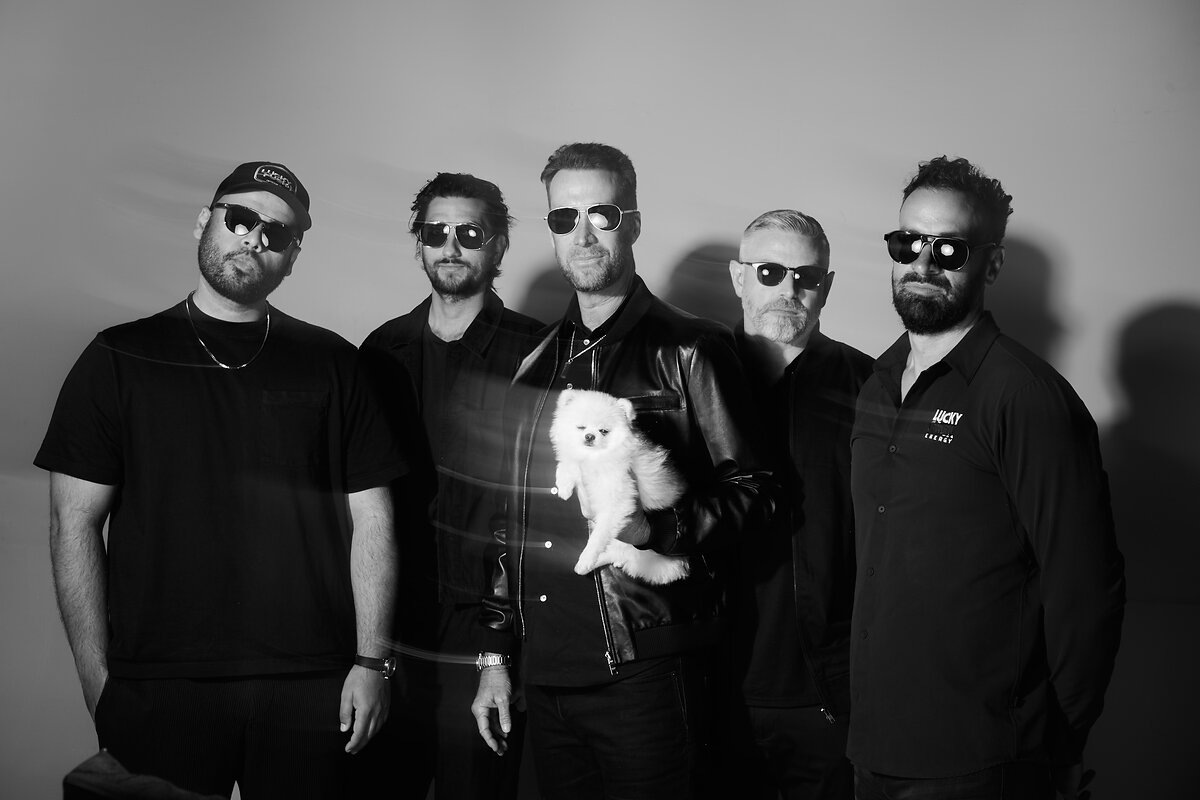
There is a fine team photograph from 2024 in which Laver stands in the middle holding a small white dog. Around him are colleagues in dark clothes and sunglasses. The dog contributes a useful degree of skepticism to the proceedings. A corporate photograph can sometimes suggest that everyone has been assembled to approve a spreadsheet. This one leaves open the possibility of a record deal.
The actual enterprise was becoming substantially more complicated. In September 2024, Lucky announced an $11.75 million Series A. A $14.2 million Series A1 followed in March 2025, led by Maveron. Former Red Bull North America chief executive Dan Ginsberg joined the board. Laver had attracted people who had seen beverage companies operate beyond their introductory act.
By March 2025, Lucky reported roughly 10,000 retail doors and 110 direct-store-delivery contracts. Those are two different kinds of accomplishment. A store gives the product a place to be found. A distribution relationship helps put it there. The second is much less likely to appear in the joke on the front of a can, and quite necessary to the continued usefulness of the first.
Announced round sizes · company financing, not personal wealth
In November 2025, Lucky announced a $25 million Series B led by Paine Schwartz Partners. James Brennan and Bob DeBorde joined its board alongside Ginsberg. The company reported more than 15,000 retail locations and described plans to expand its retail relationships, marketing and team. A private family expression now had a rather public set of obligations.
Laver’s language about ambition was direct. In June 2025, he described a goal of reaching $100 million in revenue over the following eighteen months. It was a target, with the uncertainty that belongs to one. His reasoning involved moving quickly, bringing in partners and taking the openings he saw in distribution. Calling a business Lucky does not relieve its founder of making decisions about timing.
Another reason to open the cooler
By early 2026, the work included recruiting executives for the next stage. Ray Faust arrived as chief commercial officer after roles at OLIPOP, HEINEKEN USA and Coca-Cola Refreshments. Dan Zacka and Steve VanWettering took senior sales and distribution positions, respectively, coming from Congo Brands. The company also announced expansion with H-E-B and EG America. Behind the irreverence sat people whose jobs involved turning an account into a reliable presence in a store.
The products supplied further introductions. April brought SLUSH, a line built around Blue Razz, Cherry Slush and Strawberry Slush. The flavors reached for the familiarity of frozen drinks and corner-store afternoons. For Laver, taste and emotional connection belonged together. A name could explain the company; a recognizable flavor could give a customer a much quicker way in.
Gummies extended Lucky into a format that did not require carrying a can. It was another test of how much of the brand could travel with the customer. The practical question was simple enough: could the same identity belong to a different object? For a founder who had already let the name evolve, the business was continuing to ask what had to stay recognizable.
Growing up, with the same heart
On October 7, 2026, Lucky introduced another visual chapter at the NACS Show in Las Vegas. Working with Dayjob, it moved toward black-and-white packaging, with flavor providing the color. The new mission was concise: “Every day is a miracle.” The company planned a fourth-quarter rollout and projected 17,000 retail locations by year-end.
The shift makes a revealing endpoint for this chapter of Laver’s career. The earliest name carried an affectionate obscenity. The newer mission could sit comfortably on a family kitchen wall. Both come from the same place: his conviction that another day is something to use. He has allowed the expression to grow more public while keeping its origin close.
There will be more shelves to win and more ordinary work to do after the trade-show lights go down. Laver has built a company that asks people to think differently about luck, and then had to perform the distinctly deliberate work of running it. Somewhere before the investors, the appointments and the announcements was a bracelet from his son. It remains a better opening than most pitch decks.