The grocery aisle was a detour. Kate Farms began with a girl who could not tolerate the tube-feeding formulas available to her, grew into a medical-nutrition company, and is now making another push into everyday shopping. A chocolate protein shake at Walmart is the visible part. Behind it sits a business that had to learn prescriptions, hospital purchasing and the paperwork between a patient and dinner.
That route matters. Plant-based nutrition is easy to describe as a consumer preference. For Kate Farms’ original customers, the practical questions were more demanding: Could they tolerate the formula? Could it supply the nutrition they needed? Could they get it regularly? A company built around those questions has a different assignment from one competing only for space in a gym bag.
The first customer was Kate
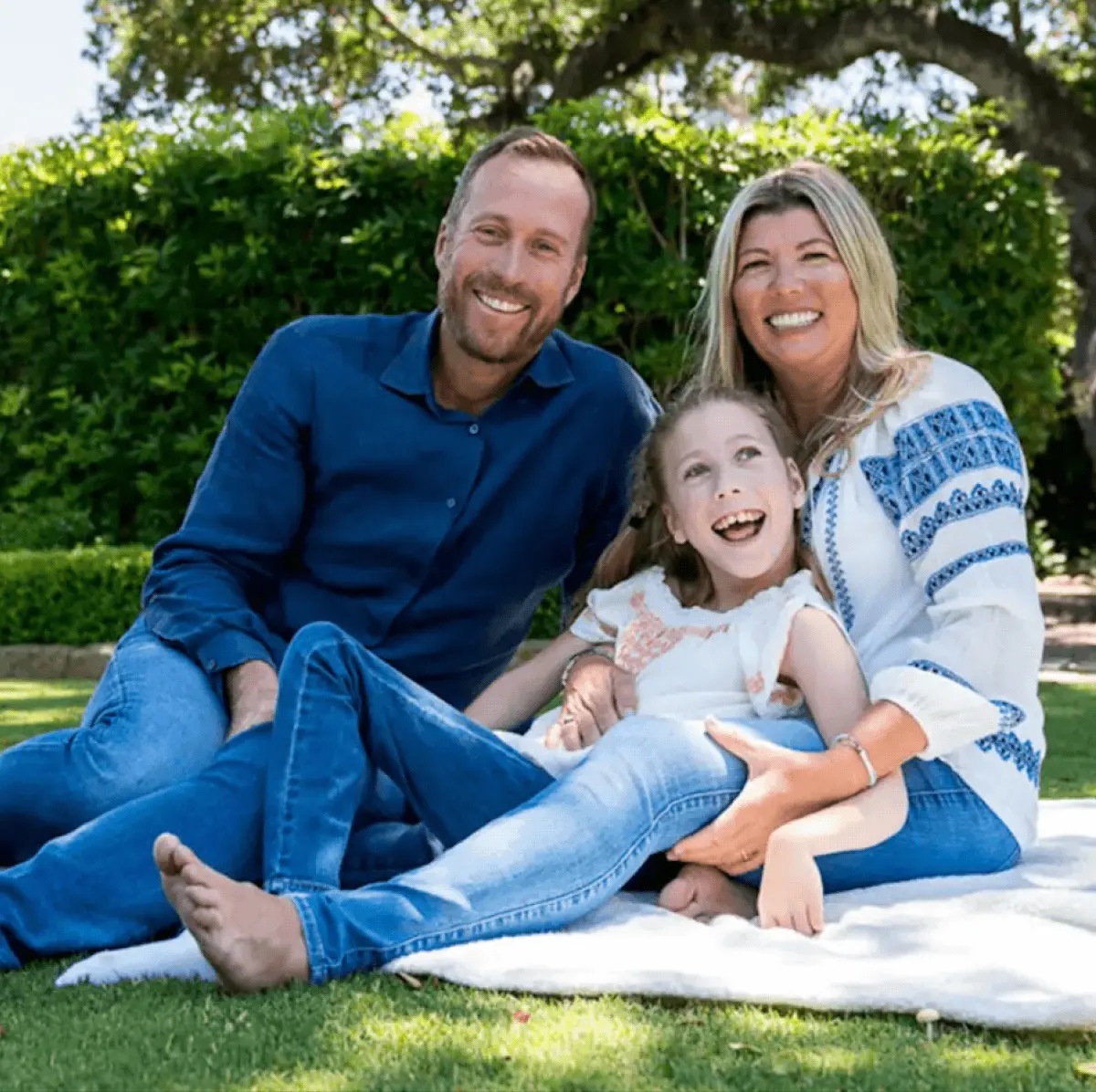
Richard and Michelle Laver founded Kate Farms in 2012 after trying to solve their daughter’s feeding problem. Kate had cerebral palsy and required tube feeding. The existing formulas were not working for her. In the company’s telling, her parents worked with a vegan chef through more than 70 blender attempts before finding an organic, plant-based recipe she tolerated.
The failure came before the business: a prescribed feeding routine was failing to nourish their child adequately. That experience explains the company’s focus on ingredients and tolerance. It does not establish that conventional formulas fail everyone, or that plants alone explain an individual improvement. It establishes why this family kept trying.
“By saving Kate, we saved the whole family.”Richard Laver · founder
Laver, a former professional tennis player, uses that line in his company biography. It catches something the phrase “nutrition supplement” misses. When eating is difficult, feeding can organize the entire household. A workable product affects parents, schedules and shared meals as well as the person whose name is on the prescription.
The buyers changed the plan
The commercial turning point came later. In a Digital Shelf Institute interview, marketing chief Catherine Hayden recalled that CEO Brett Matthews called customers placing large online orders. Many were buying for medical needs. She estimated retail supplied about 95 percent of revenue when, in late 2017, he closed that channel to pursue medical nutrition.
The replacement involved a medical sales team, hospital formularies and reimbursement infrastructure. Hayden’s account describes a deliberate redirection, rather than a retail collapse. What changed management’s mind was what customers said they needed. The useful business lesson is straightforward: investigate unusually heavy purchasing before assuming you understand the market.
Hospital access required its own commercial machinery. A Premier group purchasing agreement, effective August 2020, gave member organizations access to negotiated pricing and terms for Kate Farms’ pediatric and adult products. It was a route into purchasing systems, not a promise that every member would buy. Getting onto the menu of available suppliers is a different task from winning a shopper’s attention.
A carton has a job description
Kate Farms now spans medical formulas and everyday shakes. Standard 1.0, for example, is designed for supplemental or sole-source nutrition and can be consumed orally or through a feeding tube. The listed product provides 325 calories and 16 grams of protein per carton. Its organic pea protein and vitamin-and-mineral blend serve a nutritional specification, not simply a flavor preference.
The pediatric range includes Standard 1.2, with 300 calories and 12 grams of protein, and peptide formulas using hydrolyzed pea protein. Pediatric products address children’s requirements rather than treating them as scaled-down adults. Blended Meals add fruit-and-vegetable combinations in pouches. The broader portfolio also includes Glucose Support 1.2 and Renal Support 1.8 for particular medical nutrition needs.
These differences make the brand name an inadequate shopping instruction. A person looking for extra dietary protein, a child needing growth support and an adult receiving tube feeds are asking different things of lunch. Product choice depends on the intended use, age, nutrient requirements and clinical situation. The company’s professional comparison tool sorts formulas across those dimensions.
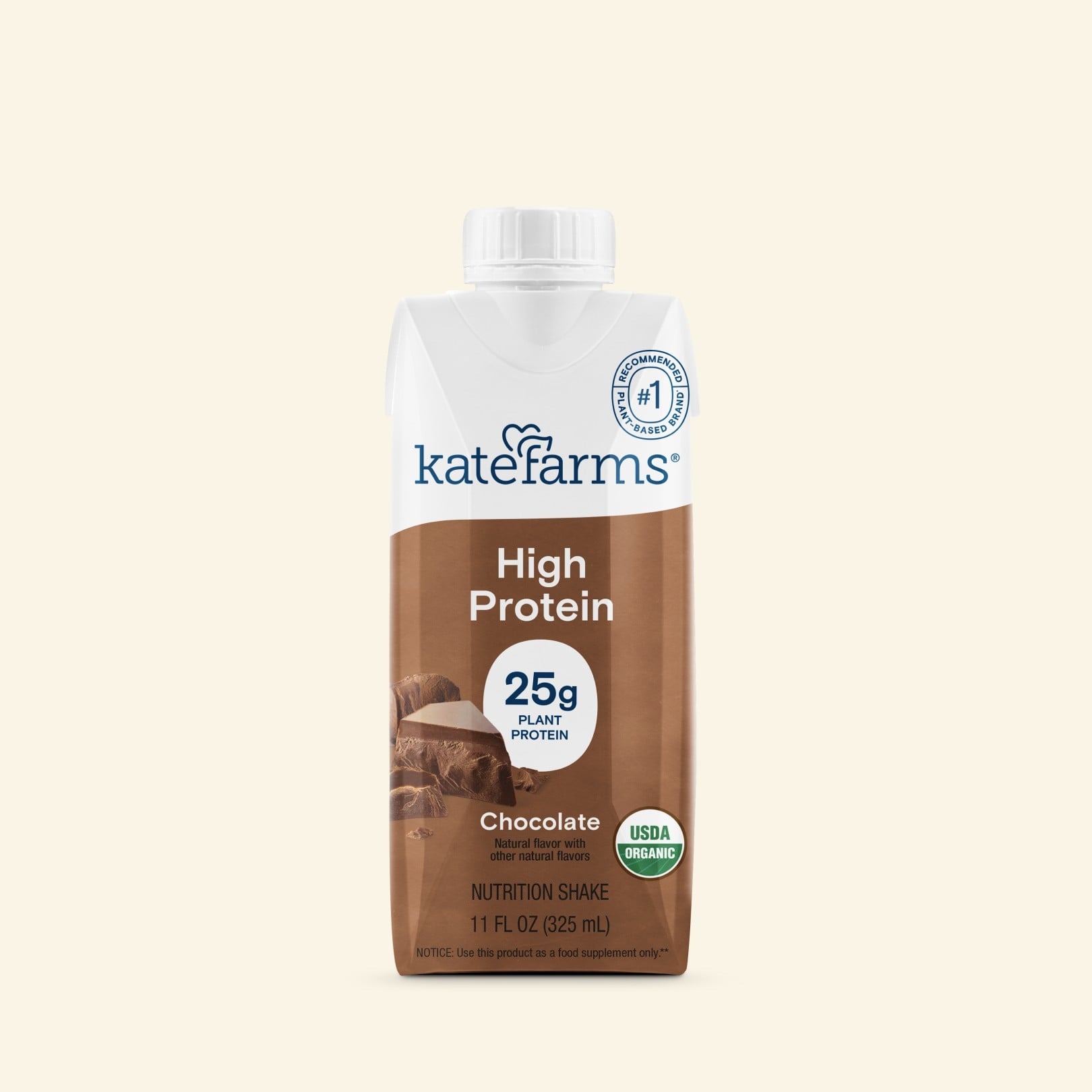
In July 2025, High Protein Nutrition Shake broadened the brief again. Its launch formulation supplied 25 grams of plant protein, six grams of fiber, 160 calories and zero sugar. Kate Farms positioned it around muscle support and nutrition needs associated with weight-management journeys, including people using GLP-1 medicines. That is a different nutritional assignment from a calorie-dense formula intended to help someone obtain enough energy.
The distinction is useful for customers and consequential for marketing. “More protein” is not the same promise as complete daily nourishment. A familiar logo cannot make two products interchangeable. The growing range gives people more options, but it also puts more responsibility on labels, explanations and professional advice.
The bill is part of the product
Kate Farms earns money through product sales: medical suppliers, hospitals, its own online store, subscriptions, Amazon and retailers. Direct purchasing gives customers a relatively simple checkout. Medical reimbursement can make a recurring supply affordable, but adds several organizations to the transaction.
The online catalog makes the stakes tangible. Listed one-time prices include $72 for 12 cartons of Standard 1.4 and $148 for 12 cartons of Peptide 1.5. Those work out to $6 and about $12.33 per carton. The figures below are arithmetic from posted case prices, not prescribed quantities, insurance quotes or a claim that the products provide equivalent nutrition.
Per carton · 12 per case · before subscription discounts
Illustration: three cartons daily for 30 days = $540 or $1,110.
At repeated daily use, even a small unit-price difference becomes a household budget question. Subscription pricing can reduce the direct bill, but the larger question for medical users is whether a plan covers the prescribed formula. Comparing sticker prices alone also misses differences in calories, composition and the reason a particular product was selected.
Kate Farms says coverage depends on the insurance plan, diagnosis, route of feeding and share of daily calories supplied by formula. It cannot bill insurance directly. A home medical supplier handles benefits verification and billing. The company’s patient advocates help people navigate that process; coverage eligibility is not a guarantee that a particular claim will be paid.
A practical starting point is a conversation with the treating clinician about the appropriate product and whether a trial sample makes sense. Kate Farms supplies samples at healthcare-provider or medical-supplier request. For coverage, prescriptions and supporting records then go to a supplier. Asking early about medical-necessity documentation can prevent an order from stalling between offices.
Read the denominator
Medical credibility demands more than an appealing origin. One pediatric study highlighted by Kate Farms reviewed records of patients who had switched formulas, supplemented by caregiver questionnaires. Six of seven patients with documented weight-for-age scores improved; nine of ten responding caregivers reported better tolerance. The abstract appeared in a 2020 nutrition-journal supplement.
Those are encouraging observations from small groups. A retrospective review and parent reports do not establish that every patient will respond similarly, or isolate which ingredient caused a change. The percentages sound much bigger than the denominators. Both belong in the conversation.
Caregivers reporting better tolerance in the small pediatric chart review.
Promising observation. Limited sample.
Research also extends into oncology. A National Cancer Institute trial listing describes investigation of a Kate Farms pea-protein oral supplement during chemoradiation for locally advanced head-and-neck cancer, with feeding-tube placement among the questions being studied. A trial listing documents a research question and protocol. It does not, by itself, establish a successful result.
The competitive field is substantial. Abbott’s Jevity offers complete tube-feeding nutrition. Nestlé’s Compleat Organic Blends includes a plant-based, organic option made with whole-food ingredients. Kate Farms therefore cannot rely on “plant-based” as an exclusive distinction. Its case rests on the particular formulation, available formats, patient experience and ability to supply the right product through the right channel.
Danone buys into the medical business
Expansion had financial backing well before the acquisition. Kate Farms’ Series B reached $60 million at its January 2021 final close, with Main Street Advisors joining Goldman Sachs and Kaiser Permanente Ventures. A $75 million Series C followed in September 2022, led by Novo Holdings with existing investors participating. Together, those two announced rounds represent $135 million, rather than a complete accounting of every dollar raised.
Danone completed its purchase of a majority stake on July 1, 2025. The combined North American medical-nutrition business brought Kate Farms alongside Nutricia, Real Food Blends and Functional Formularies. Matthews became chairman and chief executive of that combined operation. These brands now share an owner, an important distinction when mapping the alternatives in medical feeding.
Danone described the combination as a way to expand availability across hospitals, homes, online shopping and retail. That is the strategic logic: a larger organization can bring distribution and specialist nutrition experience to a brand with an established patient following. Whether that translates into easier access is something customers experience through availability and service, not an acquisition announcement.

Back on the shelf, with homework done
In July 2026, Kate Farms announced expanded Walmart distribution and a CVS launch for High Protein Nutrition Shake. It expected availability to exceed 6,800 combined stores by August. That number was a rollout target in the announcement. The new vanilla flavor, the company said, followed more than 800 flavor iterations and 611 taste tests. Even vanilla apparently had to audition.
The company also reports its nutrition is used in more than 1,500 hospitals and medical settings. The retail return therefore arrives with a medical business already in place. It can reach a shopper looking for convenient nourishment while maintaining separate routes for people whose formula is part of daily care.
There are clear conditions for the approach to work: an appropriate formula, acceptable tolerance, reliable supply and an affordable route to purchase. A particular ingredient sensitivity, incompatible nutritional requirements or absent insurance benefits can change the answer for an individual. The copyable company lesson is to build around those conditions. A clever recipe opens the conversation; getting the next case to the kitchen keeps it going.
Keep exploring
Kate Farms website ↗ · Compare medical formulas ↗ · Coverage guide ↗ · News and company updates ↗
LinkedIn · X · Instagram · Facebook · TikTok
Watch: Brett Matthews on Nemours’ Well Beyond Medicine ↗
Watch: Tube-feeding how-to videos referenced in Kate Farms’ guide ↗
Listen: Catherine Hayden on the retail-to-medical pivot ↗