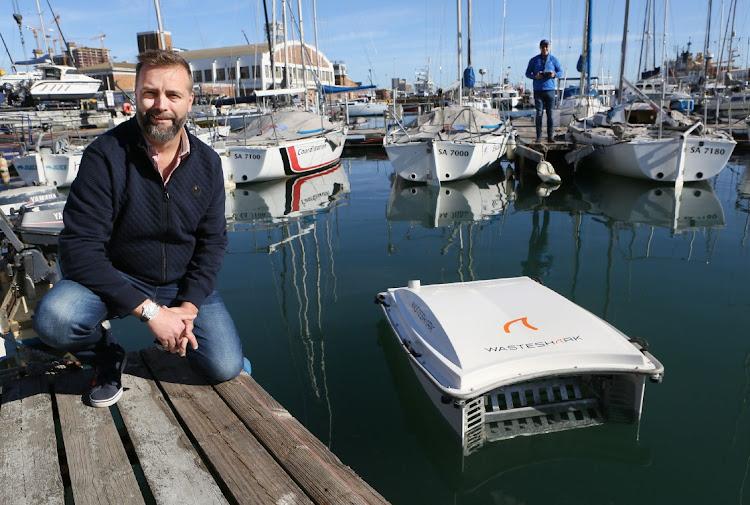
Richard Hardiman was drinking coffee at Cape Town’s V&A Waterfront when he became interested in a pool net. Two workers were using it to fish floating rubbish out of the harbour. One boat, two people, a job that would need doing again. There was plenty to look at on the waterfront. He found himself watching the cleanup.
His first response was the sort of thought that can make a person very unpopular with whoever is actually doing the work: surely there was a better way. Hardiman had no maritime or technological background. He did, however, have experience asking questions, presenting ideas and starting businesses. The scene followed him away from the coffee.
“The idea wouldn’t go away for months,” he recalled. That persistence eventually produced WasteShark, a small surface vessel built to gather floating debris. It also took a South African broadcaster into Dutch canals, robotics workshops and conversations with harbour operators. A leisurely coffee had acquired rather demanding consequences.
A second act, without a microphone
Before there was a WasteShark, there was a voice Cape Town listeners knew. Hardiman began in journalism, moved into radio and presented on KFM. He also co-founded 2oceansvibe Radio. His broadcasting life came with the nickname “Hardiman the Partiman”, which sounds more likely to introduce a Friday afternoon playlist than a discussion of marine waste.
The distance between those careers is part of the interest. Radio rewards the ability to hold attention and make an idea understandable. A founder approaching customers with an unfamiliar floating robot has considerable use for both. There is no engineering qualification hidden inside a microphone, but there can be years of practice in explaining why someone should care.
In 2009, Hardiman completed a Postgraduate Diploma in Business Administration at the University of Cape Town’s Graduate School of Business. He credits the course’s classes and group work with giving him the grounding and confidence to run a business and put a team together. The waterfront idea arrived in a working life already making room for entrepreneurship.
His environmental identity developed along the way. He describes himself as an accidental environmentalist, an unusually modest job description for someone selling water-cleaning technology. “I wanted to solve that inefficiency rather than a pollution problem,” he has said. The possibility of improving a repetitive task drew him in; its environmental consequences gave the work a larger purpose.
A shark with a household job
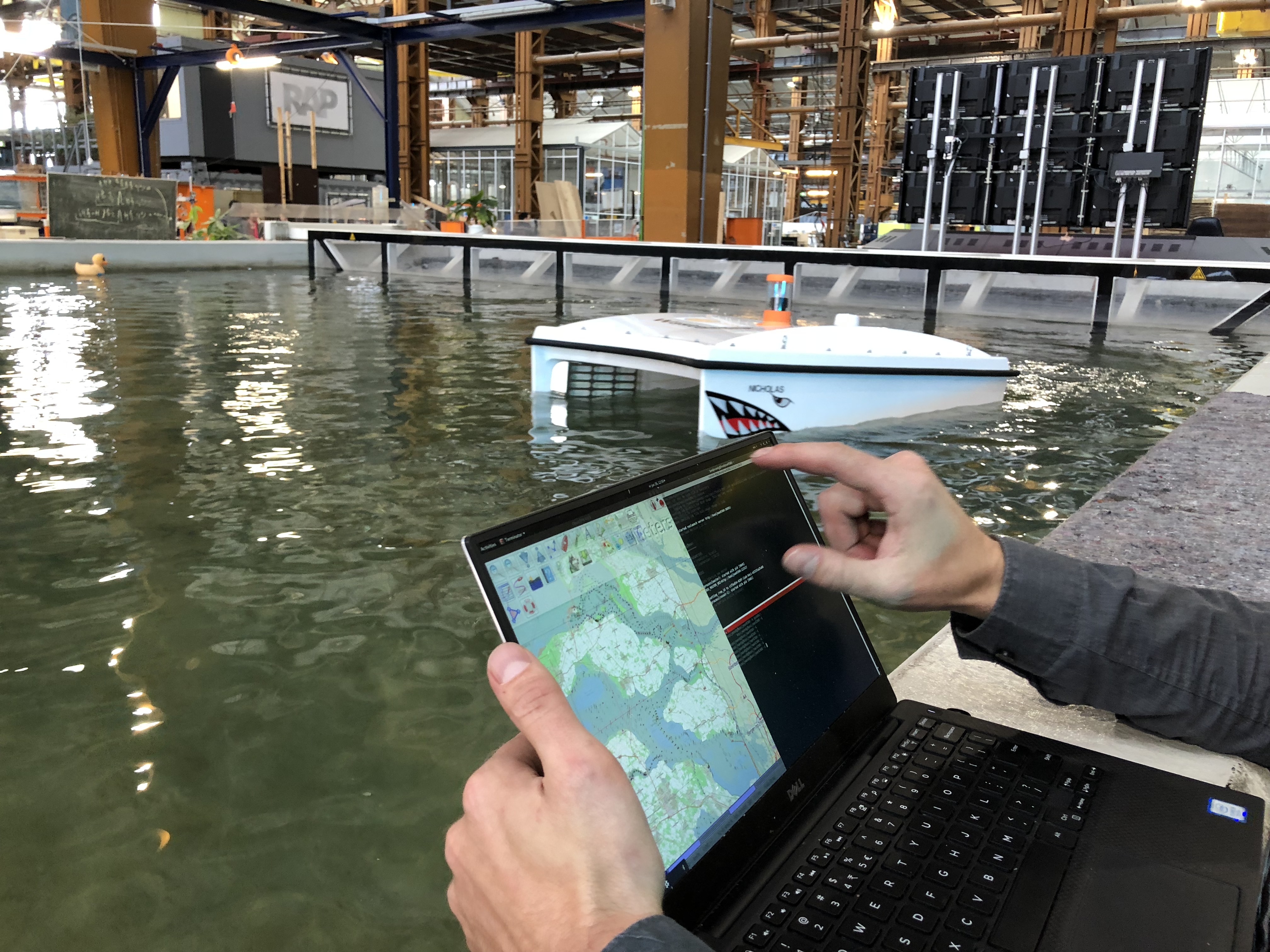
The early version belonged to the garage rather than the showroom. Hardiman used plumbing pipes in his prototypes and his phone as a remote control, drawing on things he could learn from YouTube. There is a pleasing lack of ceremony about those materials. The question was whether something could move through water and do useful work.
A robot vacuum offered a familiar comparison. A floor becomes dirty, a machine follows a route, somebody empties it, and the job begins again. Hardiman saw a similar opportunity on water. Calling WasteShark a “Roomba for water” helped describe an unfamiliar vessel through a chore people already understood.
Its other influences were less domestic. WALL-E, Pixar’s small rubbish-collecting robot, supplied an image of a machine patiently cleaning up human leftovers. The whale shark supplied a physical principle: a broad mouth through which material passes as the animal swims. WasteShark’s name carries that reference, although its appetite runs to floating litter and biomass.
The comparison also helps set the scale of the undertaking. Hardiman’s company concentrates on places such as harbours, marinas, rivers and sheltered waterways. These are locations where floating waste can be gathered before it travels farther. The scene that caught his attention contained the beginnings of a market as well as a machine.
“The idea wouldn’t go away for months.”Richard Hardiman, recalling the waterfront observation
Rotterdam supplies the missing pieces
In 2016, Hardiman joined the PortXL maritime accelerator in Rotterdam. It put the developing idea inside a port ecosystem with potential customers, mentors and technical partners. RanMarine was founded there that year. For an entrepreneur arriving from Cape Town, the programme offered people who could help answer the questions a garage prototype could only raise.
One connection led to Eindhoven. His PortXL mentor, Eddy Allefs, was associated with Nobleo Technology, whose robotics and mechatronics capabilities fitted the work RanMarine needed. Hardiman has described the relationship as a natural fit. The route from observation to product ran through other people’s expertise.
That is an essential part of his story. The familiar founder photograph tends to place one person beside one invention, leaving an entire engineering organisation outside the frame. Hardiman’s own account gives room to the network: mentors who made introductions, partners who helped develop the vessel and customers who supplied working conditions for it to meet.
The first commercial WasteSharks were deployed in 2017. In December of that year, he spoke at TEDxCapeTownSalon under the title “The accidental environmentalist”. The former presenter now had a different subject for a public stage. He wanted to explain his team’s journey and encourage others to think differently about what they might attempt.
Rotterdam later became a family move as well as a business base. Hardiman and his family relocated there in 2020. A city with a maritime accelerator and engineering connections had become home. His Cape Town origins remained visible in the company’s story, but the practical work of building it had acquired Dutch surroundings.
The awkward business of eating rubbish
A water-cleaning robot has a rather inconvenient obligation: it must go towards the things a sensible boat operator might steer around. Balloons and string can interfere with propulsion. A vessel sent to gather debris has to continue moving in the presence of debris. The nuisance is also the assignment.
That makes reliability part of the environmental work. A machine that needs attention every time it encounters a difficult patch of rubbish has handed its operator a new chore. RanMarine’s development has included changes to propulsion and protection around moving parts, with the team working through the compromises between keeping debris out and retaining useful thrust.
The human operator matters too. WasteSharks have been offered in remotely operated and autonomous forms; the available mode depends on the model. A busy port presents different demands from a quiet pond. Routes, traffic, launching and emptying the basket all belong to the actual task, however appealing the idea of a robot doing the rounds may be.
Hardiman has explicitly connected accessible controls with employment. In his early account of the business, he wanted people without a technical background to be able to operate the equipment. “The WasteShark is a drone, but it’s designed for humans.” That sentence gives the pool-net scene a useful sequel: the people doing the work remain part of the design brief.
A customer for the cleanup
Hardiman’s environmental argument includes a commercial one. He believes businesses can produce useful environmental innovations and sustain them through customers who pay for the work. AACSB recognised him as an Influential Leader in 2019. Its profile connected his environmental ambition with his interest in building commercially viable businesses.
The customers have helped broaden the setting. RanMarine’s reported users include municipalities and port organisations, but also Disney World and Universal Studios in Florida. In a 2022 conversation, Hardiman described vessels helping gather debris from daily fireworks shows. Even a carefully managed spectacle has a less photogenic job waiting after the applause.
There is a practical logic to those applications. The waterfront operator already has something to maintain. The robot offers another way to carry out that maintenance. Its collection basket provides a visible result, while water-quality sensors can add information about conditions that a glance across the surface will miss.
For Hardiman, collecting data expands the original proposition. A machine moving through a waterway can gather measurements as it works. Equipped vessels can record parameters such as temperature, oxygen levels and depth. Cleanup and monitoring become related jobs performed on the same water, giving customers a reason to look beyond the rubbish they can see.
RanMarine’s reported footprint, ten years after its Rotterdam founding. A company-reported figure describing where its products are developed and deployed.
More jobs for the same boat
By September 2026, Hardiman was signing his tenth-anniversary account as RanMarine’s Founder & President. The company’s current team page names Mike Foss as CEO & Chairman. Hardiman’s story now includes a change of title within the business he founded, alongside a continuing interest in what its vessels might do next.
His proposed next chapter is a common vessel platform with interchangeable payloads. The jobs he identifies include oil remediation, surveying sediment and depth, water-quality sensing and sampling. A marina could have several reasons to use the same floating platform, changing its equipment as the task changes. He calls the ambition a “Swiss army knife” for water management.
The attraction is easy to understand. A customer buying specialised equipment for each problem must make several purchases and manage several tools. A vessel that can take on different duties offers a more flexible arrangement. Each duty still needs engineering, testing and a useful result out on the water. Hardiman’s original question has multiplied into a set of related ones.
The pool net remains a good place to end because it keeps the story at human scale. Two workers had a job to do. A passer-by watched long enough to become curious. Years later, Hardiman’s plans still return to the work itself: what needs collecting, what needs measuring, and how a vessel might help. Coffee, it turns out, can be a fairly expensive way to take an afternoon off.