The lonely protein is one of modern medicine's most useful fictions. It lets a scientist draw a clean diagram: bad protein here, clever molecule there, disease interrupted. The trouble is that proteins are inveterate socializers. They assemble, separate, recruit partners and change their behavior when a mutation rearranges the guest list. Rezo Therapeutics was built around that messier picture.
- Rezo maps disease-altered protein networks, then looks for interfaces a small molecule can modulate.
- Its SSD platform combines wet-lab proteomics and genetics with structural biology, chemistry, bioinformatics and AI.
- The company launched publicly with $78 million and is building an undisclosed precision-oncology pipeline.
- Its sharpest disclosed operating win: moving from under 30% to 93% coverage of a protein-complex benchmark.
The company began in 2021 around work from the Quantitative Biosciences Institute at the University of California, San Francisco. The founding group is unusually crowded: systems biologist Nevan Krogan; chemical biologist Kevan Shokat; cancer-network researcher Sourav Bandyopadhyay; structural biologist Natalia Jura; and veteran biotech executives George Scangos and Norbert Bischofberger. It is less a garage origin story than a scientific ensemble cast.
When Rezo emerged publicly in November 2022, it brought a $78 million Series A led by SR One, a16z Bio + Health and Norwest Venture Partners. The money was intended to turn roughly two decades of academic network-mapping work into a drug company. Its name for that machine is Sequence to Systems to Drugs, or SSD.
First, map the handshakes
A conventional target hunt may begin with a mutated gene, find the protein it encodes and screen for molecules that block it. Rezo widens the frame. Its scientists use techniques including proximity labeling, mass spectrometry, CRISPR screens and single-cell genomics to see how mutations change interactions across a cell. The output is not merely a list of suspicious proteins. It is a map of who touches whom, under which disease condition, and what changed.
Genetics and proteomics identify disease-linked changes.
Interaction networks expose new dependencies and interfaces.
Structure and chemistry turn a network clue into a molecule.
That middle step is the wager. A mutation may not create an obvious pocket on one protein, but it may create or destroy an interaction with another. The interface can become a tumor-specific vulnerability, a resistance mechanism or a biomarker. Rezo then applies structural prediction and chemistry to decide whether a small molecule can inhibit a harmful interaction or restore a useful one.
“Proteins rarely act in isolation.”Rezo Therapeutics, on the premise beneath its platform
This places Rezo among technology-enabled drug developers such as Recursion, Relay Therapeutics, Schrödinger, Isomorphic Labs, Cellarity and A-Alpha Bio. The distinction is one of evidence and emphasis. Rezo starts with experimentally mapped protein-protein interactions, connects them to disease genetics, predicts the resulting structures and feeds those structures into small-molecule discovery. It is not selling a general-purpose AI subscription. The intended product is medicine; the software and data are the factory.
Then the map became too large for the machine
The first publicly documented failure was computational, not clinical. Protein-complex models are expensive in memory, and the biological assemblies Rezo wanted to inspect were often too large for a serial structure-prediction setup. On the 2024 CORUM collection of known human protein complexes, Rezo reported that a serial Boltz-1x model could score less than 30 percent. Most of the map was technically present and practically unreachable.
The response, developed with NVIDIA's BioNeMo team, was to change how the workload ran. Fold-CP distributes the model's context across accelerators, while cuEquivariance speeds the geometry-heavy operations used in molecular modeling. Rezo says the combined approach produced high-quality predictions for complexes as large as 6,500 residues and brought 93 percent of CORUM within range. That is not proof of a drug. It is proof that the company can ask its model about a much less convenient class of biology.
The unglamorous economics of asking bigger questions
Bigger questions produce bigger cloud bills. Rezo's structural workloads may need thousands of CPU instances or hundreds of specialized accelerators, but not forever. Keeping that capacity idle would be absurd. Finding it on demand across regions, surviving interruptions and moving terabytes of sequence data without maintaining a large infrastructure team is the real engineering problem.
With Union.ai orchestrating workloads on Google Cloud, Rezo uses discounted spot instances with retries and an on-demand fallback. For multiple-sequence alignments, it provisions local solid-state drives, downloads about 1.5 terabytes from cloud storage, runs the batch and releases the hardware. The company says that change took one monthly bill from roughly $10,000 to hundreds of dollars. Other workloads dynamically expand from zero to 500 TPUs across four regions.
The copyable idea is not “use more AI.” It is to match every stage of a scientific workflow to the cheapest suitable hardware; treat interruption as a design assumption; cache work that should not be repeated; and delete idle capacity. A small biotech can rent the shape of a supercomputer for an afternoon without becoming a data-center operator.
This pattern works best for large, bursty, fault-tolerant batch jobs. It is less compelling for small or steady workloads, latency-sensitive experiments, pipelines that cannot resume safely, or regulated data that cannot move across regions. Cheap prediction also does not replace wet-lab validation. A beautifully folded hallucination is still a hallucination.
A new operator, and the oldest biotech test
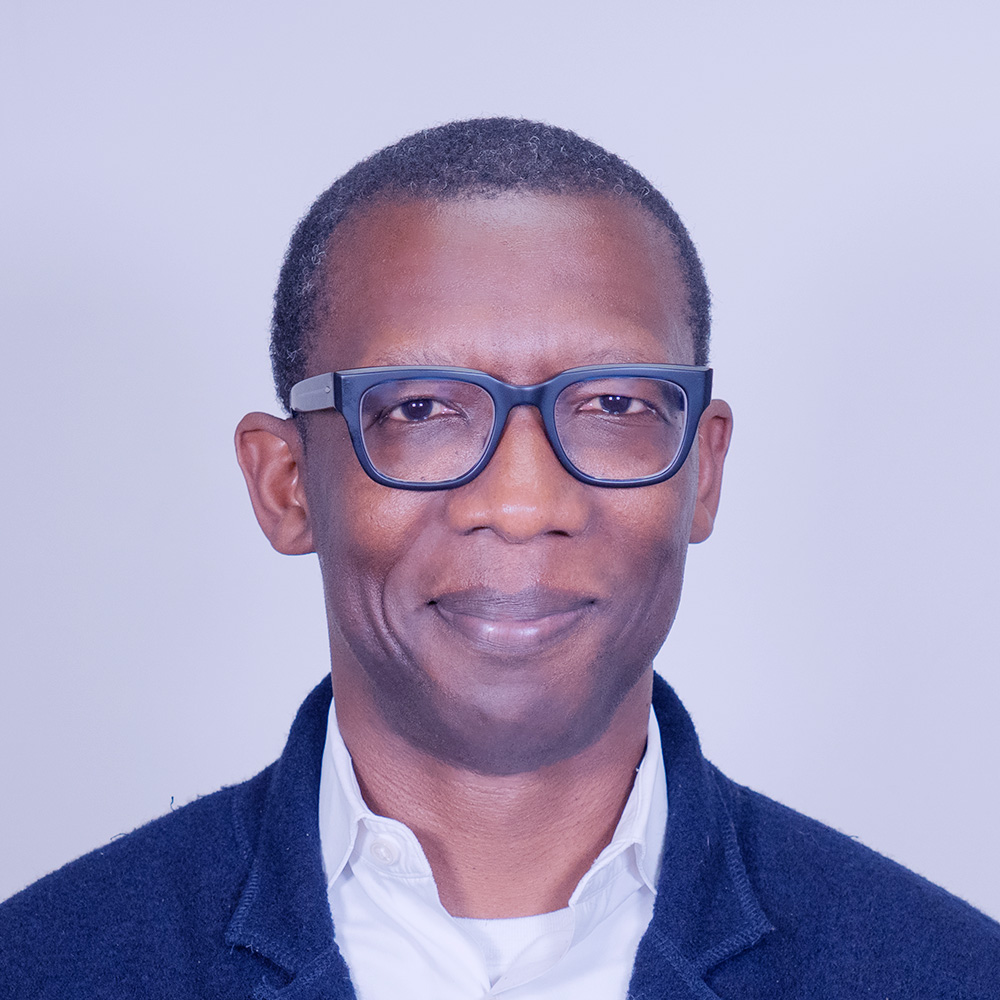
In August 2025, Rezo appointed Derek Hicks chief executive. Hicks had spent more than 25 years across Pfizer, Spark Therapeutics and Intellia Therapeutics, much of it in business development. Krogan, the founding CEO, moved to President. The change is legible: the academic platform had been built far enough to need an operator experienced in partnerships, portfolio choices and the long handoff from discovery into development.
The public record does not yet name a drug candidate or a clinical trial. Rezo describes multiple therapeutic programs and an initial focus on solid tumors, especially disease biology shaped by mutation-specific interactions and drug resistance. Its users today are its own biologists, chemists and computational scientists. Potential biopharma collaborators are the external customer. Patients come last, and only if the chain of evidence holds.
That is the old test beneath the new machinery. Network maps can improve target selection. AI can make enormous complexes inspectable. Elastic cloud infrastructure can buy more predictions for the same dollar. None of those conveniences can tell us whether a molecule will be safe and effective in people. They can only improve the quality and quantity of the bets entering that test.
Rezo's most interesting claim, then, is modest by biotech standards. It is not that the company has solved drug discovery. It is that studying the relationship between proteins may reveal choices hidden by studying either protein alone. The lonely culprit made for a clean diagram. The network may make for a better drug.