A warehouse has an unusually honest relationship with its customer. The truck either fits or it doesn’t. The loading area either works or it becomes tomorrow’s argument. A building can look perfectly respectable from the street and still make a tenant’s working day unnecessarily difficult. Rexford Industrial built its business around noticing those differences.
- Own industrial space inside established Southern California markets.
- Make older or underused buildings work better for tenants.
- Now, sell selected assets and demand more from every investment dollar.
The Los Angeles company buys, leases and improves warehouses, manufacturing buildings and distribution properties. Its chosen territory is infill Southern California: established places where industry already operates, rather than an open-ended search for the next development frontier. That choice makes local knowledge unusually important. It also means the company’s fortunes remain tied to one region.
01 / The address is only the beginning
Consider the distinction between a building and a useful building. Rexford’s annual report describes converting single-tenant properties into smaller units, improving loading access and updating fire and life-safety systems. A divided building can reach businesses that could never occupy the whole thing. Better truck access can remove a daily operational nuisance. The improvements are physical, specific and testable.
The commercial logic follows. More functional space may attract more prospective tenants, support occupancy and increase rent. Smaller units can command higher rents per square foot while spreading the landlord’s exposure across several businesses. The attractive address supplies the opportunity; the work inside the property determines how much of it the owner can capture.
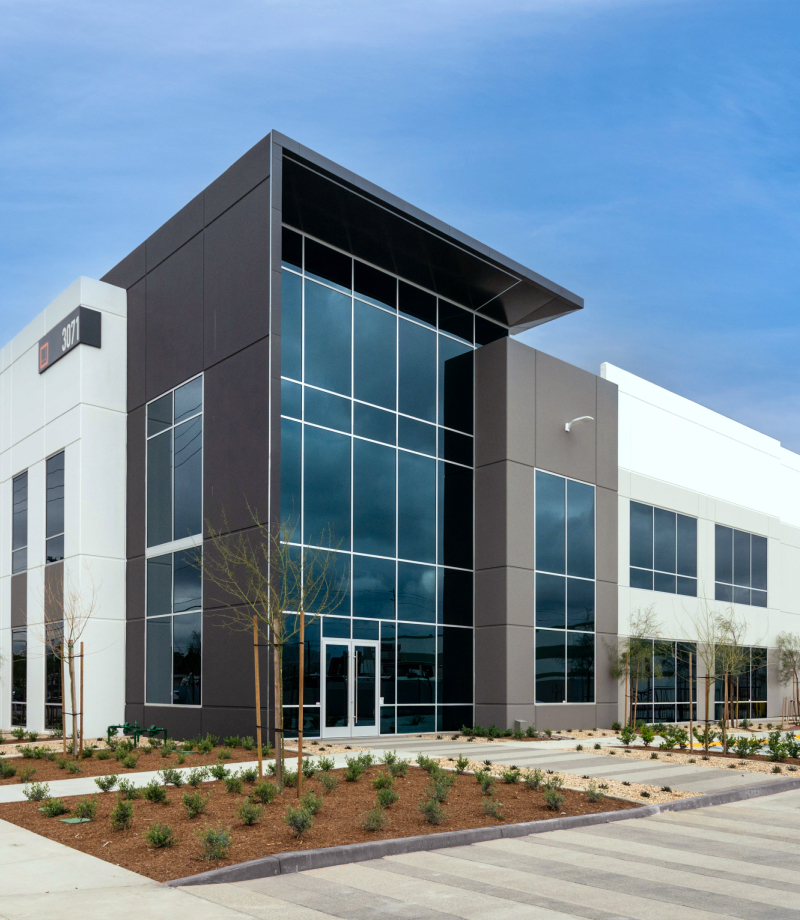
This is where Rexford fits in the market. It is an industrial landlord with acquisition, construction, leasing and asset-management expertise. It earns most of its money from rent. A business looking for premises can browse its property listings and discuss a lease. An investor encounters the same collection of buildings through a publicly traded REIT, NYSE: REXR.
02 / A neighborhood business at public-market scale
Rexford’s predecessor dates to 2001, when Howard Schwimmer and Richard Ziman co-founded the business. Its 2013 public offering sold 16 million shares at $14 each. Public capital gave a locally focused property operation a different capacity to buy. By September 2026, the company reported 384 properties, roughly 44 million square feet and more than 1,400 customers.
Those customers need places to make, store and move things. Historical tenant disclosures include Tireco, L3 Technologies and Cubic. The broader demand spans manufacturing, logistics and other industries. For these businesses, the decision is practical: usable space, an appropriate location and a lease that makes economic sense.
Other landlords compete for that decision. Prologis offers warehouses across Los Angeles and surrounding markets. Terreno Realty also specializes in infill industrial property, but across six coastal US markets. Rexford’s distinction is its exclusive regional focus and its emphasis on extracting value from individual assets. That focus is a trade-off investors should understand.
Illustration of the strategy, not a guaranteed sequence or return.
03 / The inheritance in the industrial park
There is a less obvious ingredient: the seller. In a 2016 Nareit interview, Schwimmer described purchases arising from generational changes in ownership. An industrial property built decades earlier could pass to heirs who had little interest in being landlords. For a buyer with local broker relationships, an ordinary succession became a transaction opportunity.
At that time, he said about 72% of transactions since the IPO had involved lightly marketed or off-market properties. That historical figure explains the method, rather than today’s acquisition mix. Find owners, understand the building, maintain relationships. Anyone can study a map. Knowing when a particular owner wants to sell takes different work.
04 / Then the arithmetic changed
In March 2024, Rexford bought 48 properties from Blackstone Real Estate for $1 billion. The portfolio totaled approximately 3 million square feet. The transaction showed how far the operation had grown from its beginnings.
By November 2025, the company was announcing a revised capital allocation framework after engagement with Elliott Investment Management. Acquisitions and development would face tougher scrutiny, including comparison with repurchasing Rexford’s own shares. Laura Clark, previously CFO and then COO, became CEO in April 2026. The company reported no acquisitions during 2025.
“We challenge the status quo.”Rexford’s published defining principles
The revealing transaction came in September 2026: a roughly $1.2 billion sale of 22 properties to an EQT Real Estate affiliate. These were different assets from the Blackstone purchase. Their in-place rents stood 28% above current market rates, and their remaining leases averaged 2.7 years. A rent check could look healthy today while pointing toward a less comfortable renewal.
Market rent = 100. Index illustrates the disclosed 28% premium; it does not forecast renewal rents.
05 / The price of changing course
The reset carried visible accounting consequences. Through September 2026, Rexford recorded $703.4 million of property impairments, primarily associated with shorter expected holding periods under its expanded sale plans. Impairments reduce accounting values; they are not equivalent to a cash construction bill.
Meanwhile, third-quarter same-property cash net operating income fell 1.1%, and cash rents on comparable new and renewal leases declined 3%. Scarce locations had not eliminated pressure on rental economics. The company also reported $161.1 million invested in five repositioning and development projects stabilized during the first nine months, with a 7.7% weighted average unlevered stabilized return on cost.
Read that return measure carefully. Unlevered means before the effect of financing; stabilized means the projects have reached the operating condition used for the calculation. It is a property-level measure, rather than a promise about a shareholder’s return. Construction spending, the time without rent and the eventual lease all matter. A renovation that looks modest can still demand an expensive interval of patience.
For a prospective tenant, the same discipline starts with a different checklist. How will goods enter? Where will they wait? Can the space accommodate the business as it grows? These are questions to bring to a property visit. A landlord’s investment presentation cannot answer them for a particular operator.
06 / What travels beyond Southern California
Rexford’s decisions suggest a useful lesson: identify the customer’s actual constraint, improve it, then keep checking the return against other uses of the money. That reasoning applies well beyond warehouses. A bigger portfolio can obscure the question of whether the next investment improves the business.

It requires conditions Rexford cannot manufacture: tenants willing to pay, improvements that justify their cost and financing that leaves room for error. If competing space becomes plentiful, demand weakens or redevelopment consumes too much capital, local expertise has less power. Rexford’s next chapter will depend on how carefully it prices those limits.