Moving an appointment sounds like the smallest possible task. In RethinkBH’s account of its old scheduling workflow, it could take 15 to 20 clicks. That is an oddly revealing number. A company devoted to helping people had discovered that the apparatus around help could become a job of its own. In September 2026, it announced a redesign: drag the appointment, drop it, get on with the day.
- RethinkFirst sells support infrastructure to clinics, schools, employers, and health plans.
- Its specialty combines behavioral expertise, practical content, and the administrative work around care.
- Its next test is usability: fewer workarounds, clearer decisions, and support people actually access.
There is a larger story inside that small gesture. Behavioral health technology is often presented through impressive abstractions: scale, intelligence, outcomes. RethinkFirst’s business becomes easier to understand when you follow a mundane task. Someone needs guidance. Someone needs to record what happened. Someone needs to pay for it. Each handoff creates an opportunity for confusion, and a potential customer.
Autism training finds several doors
Founded in 2007 by Daniel Etra and Eran Rosenthal, Rethink began with autism treatment training and caregiver support. Its original ambition was to make evidence-based instruction available beyond the people who already possessed specialist expertise. In 2010, it introduced school offerings for special needs and behavior management. The setting changed; the need for usable guidance remained.
That expansion gave the company several institutional buyers. A school district could buy instructional resources. A clinic could buy tools for delivering and documenting therapy. An employer could fund help for a parent struggling with caregiving. A health plan could buy analytics about treatment. RethinkFirst’s distinctive market position is this breadth around a specialist domain. The same family’s needs can touch all four budgets.
Care + operations
Learning + behavior
Coaching + navigation
Decision support
The unglamorous work pays the bills
RethinkBH serves applied behavior analysis, or ABA, practices. Its tools connect clinical records, data collection, scheduling, session notes, and insurance billing. A therapist can record progress; a supervisor can examine it; an administrator can manage the claim. The attraction is the relationship between those jobs. Information entered during care should remain useful when the office has to account for that care.
This is a subscription software business with services attached, rather than a consumer app purchased on impulse. RethinkBH advertises starting prices as low as $20 per user per month, while its general pricing guidance calls for a tailored quote. Buyers need to price their actual users, modules, and services. A starting figure is an invitation to investigate, not a complete budget.
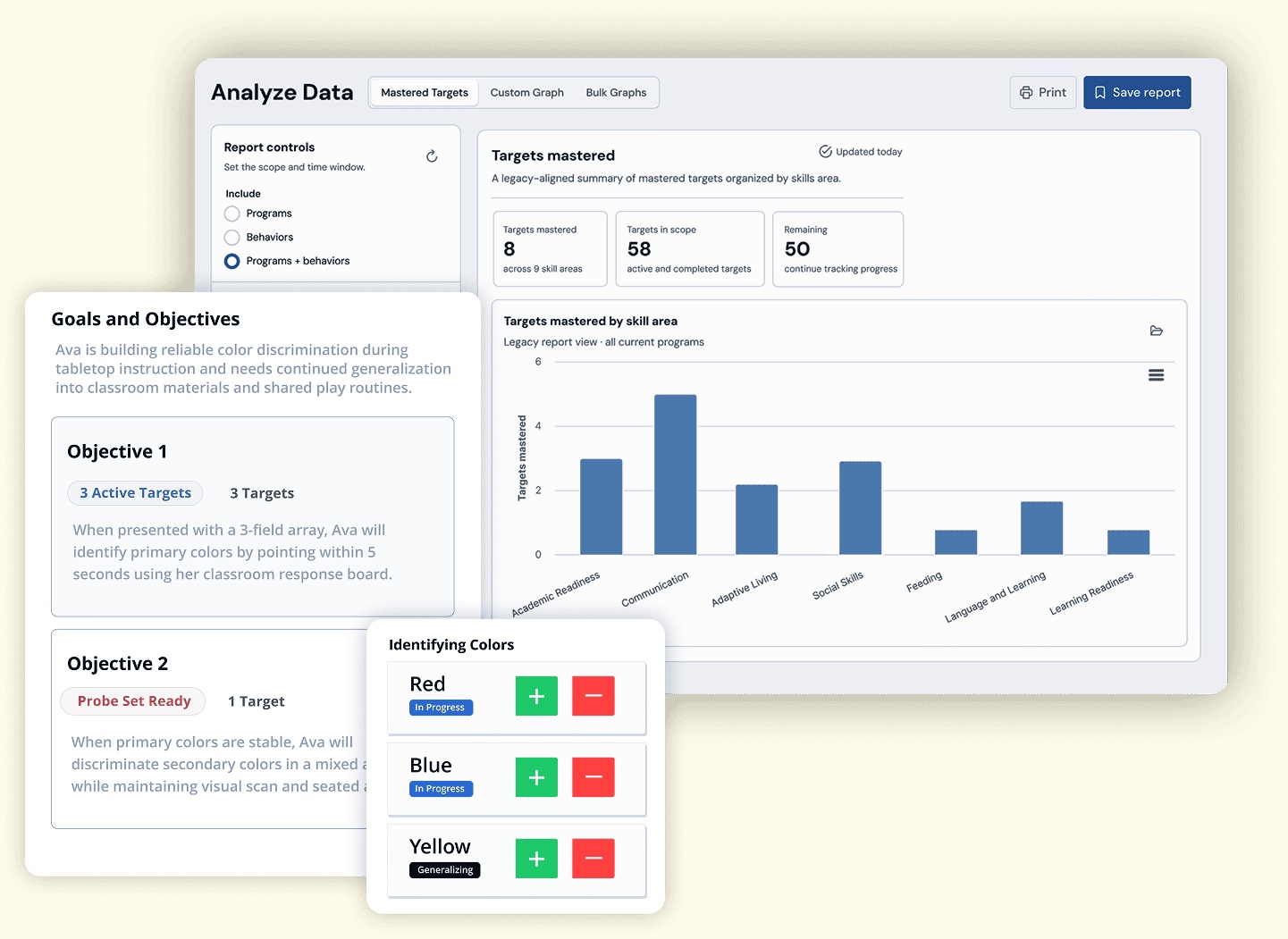
CentralReach is a direct alternative in ABA practice software. RethinkBH makes its case through connected workflows and pricing by user. Its parent company adds another dimension: a portfolio extending into education and employee support. That breadth distinguishes the corporate strategy, although a clinic still has to judge the clinic product on everyday performance.
A lesson plan, a coach, a next step
RethinkEd brings curriculum, behavior information, interventions, and professional learning into school settings. Its current range includes Vizzle for special education, wellness and mental health resources, and targeted interventions through NavigatED. The proposition is practical: give teachers both material to use and a way to understand whether support needs adjusting.
RethinkCare approaches the workplace through neurodiversity, disability, parenting, and caregiving. Employees can use digital learning, consultations, coaching, and navigation. Volvo appears among its customer testimonials. The employer buys access; the employee must still find a reason, and a comfortable route, to use it. Eligibility alone does not settle that question.
Acquisitions have expanded the available help. Whil brought mindfulness and resilience resources in 2021. Joshin, acquired in August 2025, brought disability and neurodiversity support, including personalized navigation and accommodations assistance. These additions reveal the direction of travel: more content, but also people who can help a user negotiate the next step.
The return has conditions
In March 2026, RethinkCare publicized a Forrester Consulting study it had commissioned. Forrester interviewed four customer decision-makers and constructed a 50,000-employee composite. The model assumed $630,000 in annual licensing, a 3% productivity improvement for engaged employees, and rising engagement within a target population. It estimated 119% return over three years.
The useful reading is conditional. Some savings came from retiring overlapping vendors. If an employer has little overlap, that part shrinks. If people do not engage, the productivity case weakens. The lesson for benefits teams is to examine adoption and duplication alongside the purchase price. A program can be well stocked and still sit unopened.
When the data becomes advice
RethinkFutures takes the company into health-plan decision support. A 2023 publication overview describes models using 48 variables to predict goals mastered, drawing on 31,294 individuals across 615 companies. That is a specific research task. It should not be mistaken for a promise to predict every dimension of an autistic person’s life or wellbeing.
The company’s newer AI efforts also address administrative work: assisted notes, billing, and an operational dashboard launched in March 2026. Its ethics policy says professionals should retain control over critical decisions. That makes human review part of the intended product. An alert earns its keep when someone can understand it and act appropriately.
Count the workarounds
Dinesh Senanayake became CEO in March 2026. In his introductory interview, he offered a useful constraint: Businesses always have more ideas than capacity.
His answer was closer customer contact and sharper priorities. The September clinic redesign, developed with clinicians from more than 20 ABA organizations, supplies a tangible example of that approach.

“Businesses always have more ideas than capacity.”Dinesh Senanayake · March 2026
What can another company copy? Start with the workarounds customers have invented. Follow one task across its handoffs. Count repeated entries and unnecessary decisions. Then test whether a change helps the person doing the work. RethinkFirst’s story invites that scrutiny: the appointment still needs moving, and the person waiting for help has better things to do than watch someone click.