The first Brightline office was, in a sense, a list of phone numbers that did not answer the problem. Naomi Allen's young son had begun showing signs of anxiety. She did what competent parents are told to do: she searched directories, joined waitlists and tried to locate a professional who could tell her what came next. The machinery of American healthcare responded with names, delays and more names. Allen already knew digital health. What surprised her was how little a directory resembled care.
The bright version, quickly
- Brightline treats children and teens with therapy, psychiatry, medication support and psychological testing, while involving parents in the plan.
- It raised about $212 million, reached for national virtual coverage, then stopped new clinical intake in 45 states in 2024.
- Today it concentrates clinical care in five states, operates five New York clinics and runs a separate free coaching program across California.
- Its useful lesson: in complex care, coordination and local clinical depth can matter more than the size of the service map.
In 2019, Allen and physician-entrepreneur Giovanni Colella founded the business first known as Emilio Health. The name honored Colella's father, whose life had been marked by mental illness. The company later became Brightline and assembled a tidy answer to a messy family problem: behavioral coaching for everyday friction, therapy for clinical needs, psychiatry when medication belongs in the plan, and a shared record so parents are not employed as unpaid switchboard operators.
That last detail is the quiet differentiator. A general teletherapy marketplace can introduce a family to a therapist. Brightline wants to remain useful when the therapist suspects ADHD, when a psychiatrist needs to join, when a school asks for testing, or when a parent needs practical help between appointments. Its competitors include pediatric specialists such as Bend Health, Little Otter, Fort Health, Daybreak Health and Hazel Health. But the more stubborn alternative is still the old route: a pediatrician's referral, a stack of disconnected practices and the hope that somebody has an opening.
“So often, families don't know what's going on with their child.”Naomi Allen, speaking at the opening of Brightline's Brooklyn clinic
A national map is a marvelous sales slide
The timing looked almost fated. Brightline raised $20 million in 2020 as the pandemic made video visits ordinary and family strain impossible to ignore. A $72 million Series B followed in 2021, led by GV. In March 2022, KKR led a $105 million Series C; a later extension took that round to roughly $115 million and total funding to about $212 million. Private-market records put the post-money valuation near $705 million.
The pitch was national pediatric behavioral care delivered through employers and health plans. The distribution made sense. A working parent loses focus when a child is in crisis, and a benefits department can buy access for thousands of families at once. Brightline said it could support members across all 50 states. Investors funded the network, the technology and the sales machine required to make that sentence true.
What failed first was not interest. It was the assumption that geographic availability and clinical access were close enough to count as the same thing. Licensure varies by state. Provider supply varies by specialty. Insurance networks vary by plan. A child who needs psychological testing cannot complete the whole process through a laptop. Higher-acuity care asks for denser clinical teams and more reliable handoffs. National reach made the front door visible; it did not guarantee that every useful room existed behind it.
The map got smaller so the care could get deeper
The correction was expensive in human terms. Brightline cut roughly 20 percent of its workforce in late 2022 and again in 2023. In September 2024 it announced another restructuring, ended new intake in 45 states and dismantled much of the national employer-focused operation. Allen called the week hard. The company kept five core markets and committed to a hybrid model built around clinics, virtual follow-ups and patients with more complex needs.
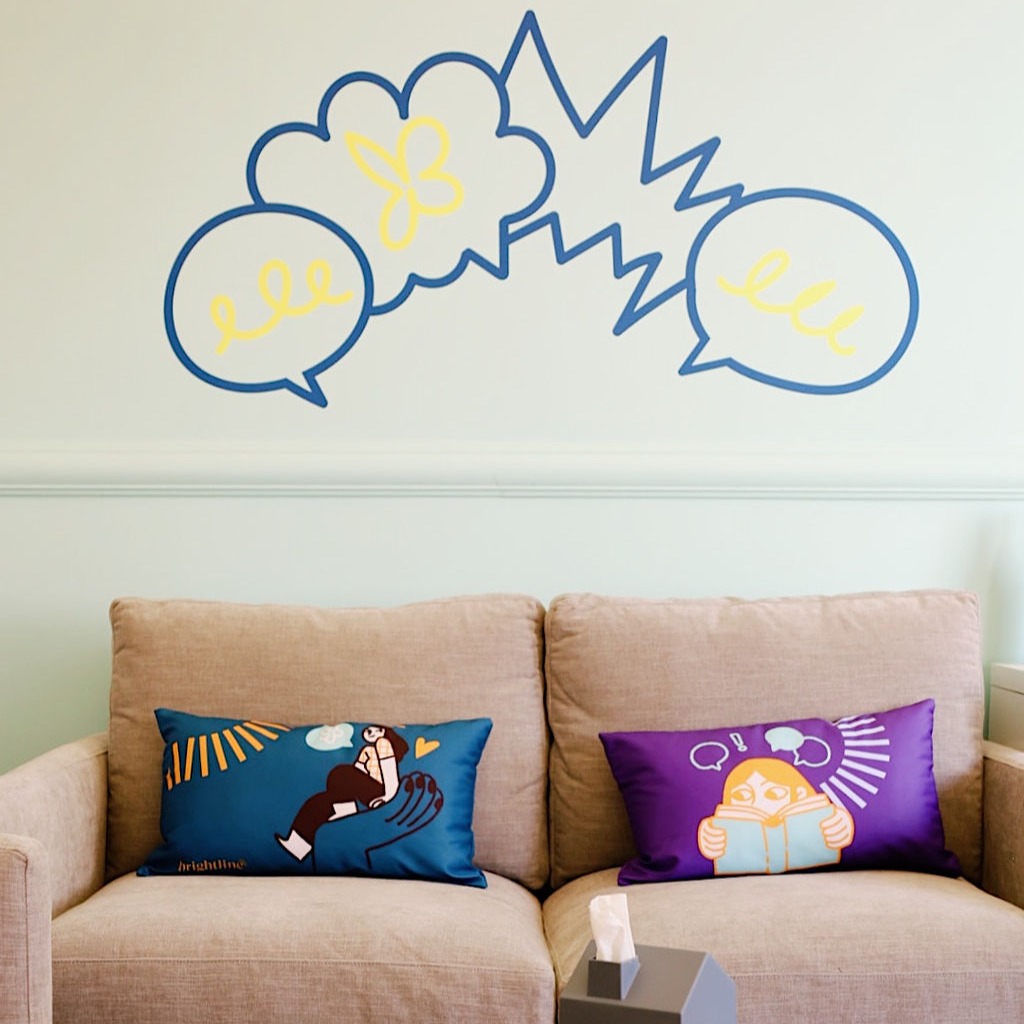
The clinic was hiding in the roadmap
Brightline says hybrid care had always been the intention; Covid simply pulled the virtual part forward. In April 2025, the company opened its first physical clinic in Brooklyn. Long Island and Manhattan followed. By 2026, its location page listed five New York sites: Brooklyn Heights, Columbus Circle, Lake Success, White Plains and Albany. Families can still meet clinicians online in New York, New Jersey, Connecticut, Massachusetts and Washington. The clinic is not an apology for telehealth. It is the physical component telehealth could not convincingly impersonate.
Psychological testing explains much of the move. Parents often arrive with behavior they can describe but no diagnosis that unlocks treatment or school support. Brightline's clinics test for autism, learning differences, executive functioning, school readiness and giftedness. They also let prescribers see some patients in person and give care teams a local referral network. A family may choose an initial clinic visit and virtual follow-ups. The point is optionality with continuity, not a forced return to commuting.
There is also a second Brightline, operationally speaking. BrightLife Kids launched with California's Department of Health Care Services in January 2024. It gives families with children ages 0 to 12 free online coaching, secure chat, peer communities and resources without insurance or a referral. State reporting counted about 21,000 registrations by June 2024; Brightline now describes reach in the hundreds of thousands. It is prevention and navigation rather than the same clinical product sold in the Northeast. That distinction is sensible. A tantrum, a sleep problem and suspected autism do not require identical doors.
Company-reported therapy outcomes. Useful signals, not a substitute for an independent clinical trial.
What another operator can actually copy
The lazy conclusion is “open clinics.” That only works when a company has local patient density, payer contracts, licensed clinicians and enough capital to carry leases and underused appointment slots. A hybrid model is particularly awkward in a sparse market: every fixed site becomes an expensive monument to theoretical demand. It also fails families outside the footprint. Brightline does not accept Medicaid, and out-of-network or self-pay care can be costly. The company lists therapy at $200 to $350 per session, psychiatry at $225 to $350, and psychological testing starting at $2,000. Insurance may reduce those figures, but insurance is never a synonym for simple.
What is portable is the diagnostic discipline behind the pivot. Watch the handoffs. Count how often a customer needs a service you cannot deliver. Separate low-acuity coaching from clinical treatment instead of blurring the two. Concentrate supply where the same care team can handle more of the journey. And when a distribution channel begins deciding the product, ask whether it still serves the patient. Brightline's employer channel offered reach, but its reset placed payers, health systems, pediatricians and local referrals closer to the operating center.
Leadership changed with the model. In December 2025, Kari O'Rourke became CEO after operating roles at Imagine Pediatrics, Cortica, Landmark Health and CVS Health. Allen moved to executive chair, focusing on strategy and partnerships. It was a revealing hire: an operator experienced in scaling physical and hybrid care replaced the founder who had proved the need and financed the first map.
Brightline's story is sometimes told as digital health coming back to earth. A better description is healthcare becoming specific. A family does not wake up wanting telehealth or a clinic. It wants to know why a child cannot sleep, why school has become intolerable, whether medication belongs in the plan, and whom to call next Tuesday. The useful company is the one that can answer the next question without sending the parent back to the directory.