BREAKING   Chris Gaeta builds one operating system for K-12 mental health FOUNDER   EMT to Gen Z VC to CEO INSITE HEALTH   Serving hundreds of NJ schools 2030   Goal: nation's largest K-12 wellness platform QUOTE   "We aren't dealing with widgets - we're dealing with kids" BREAKING   Chris Gaeta builds one operating system for K-12 mental health FOUNDER   EMT to Gen Z VC to CEO INSITE HEALTH   Serving hundreds of NJ schools 2030   Goal: nation's largest K-12 wellness platform QUOTE   "We aren't dealing with widgets - we're dealing with kids"
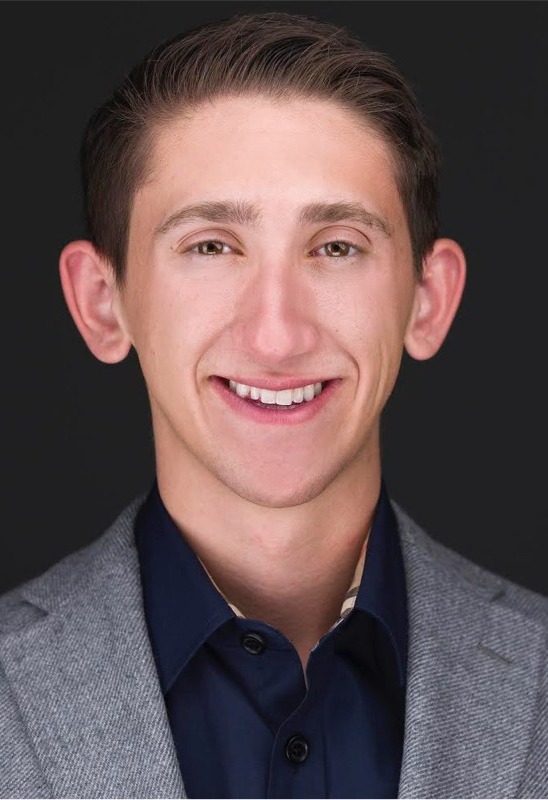
Christopher Gaeta, founder and CEO of InSite Health
The golf co-captain who built a behavioral-health company before he picked up his diploma.
Person / Founder / Operator

Christopher Gaeta

He asked 80 school administrators what was breaking. They all said the same word. So he built the fix.

FOUNDER & CEO - INSITE HEALTH - EVESHAM TWP, NEW JERSEY

250K+
Patients served at Grapefruit
80
Administrators he interviewed in 2022
6+
Vendors a district once juggled
2030
The target year for #1

One platform, not a junk drawer of vendors

Walk into a school district's mental-health back office in 2021 and you would have found a junk drawer: a screening tool from one company, a teletherapy contract from another, a crisis hotline from a third, billing from a fourth. Six logins, six invoices, zero continuity. Christopher Gaeta looked at that mess and saw the product. InSite Health, the company he founded in 2022, sells districts a single thing instead: an operating system for student wellness that folds screenings, on-site therapy, and psychiatric care into one stack.

His pitch leans on a metaphor any principal understands. "You wouldn't task that doctor with being the contractor, the electrician, and the plumber," Gaeta says. A superintendent is the doctor. They should not also be the general contractor for a fragmented mental-health supply chain. InSite plays specialist - it owns the back-end so the district can do the job it was hired to do.

The conviction is hard-won. Gaeta deliberately built the clinical muscle in-house rather than reselling someone else's, recruiting national experts in child psychiatry and behavioral threat assessment. The reason is blunt: "We aren't dealing with widgets; we're dealing with kids." Quality is not a feature line. It is the entire premise.

You wouldn't task that doctor with being the contractor, the electrician, and the plumber. - Gaeta, on why districts shouldn't run their own care back-end
The Mission, In One Line

Accessible, high-quality behavioral health care for kids - met wherever they are: clinic, school, or community.

The Origin

Before the platform, there was a stethoscope and a study hall

Gaeta did not arrive at health tech through a pitch deck. He arrived through the back of an ambulance. He grew up wanting to be an emergency-room doctor and worked as an EMT, drawn to what he calls "hands-on healthcare" - the unglamorous, adrenaline-soaked, fix-it-now end of medicine. That instinct never left. It just changed addresses.

At Swarthmore College, where he graduated in 2023, he kept one foot in clinical reality and one in the operator's chair. He worked as a clinical researcher at the Children's Hospital of Philadelphia on emergency-medicine and gastrointestinal studies, and edited the Journal of Collegiate Emergency Medicine Services. He was also, improbably, co-captain of the men's golf team - the kind of person who can read a green and a cap table in the same afternoon.

The detour into venture capital came next. As a healthcare-focused associate at VU Venture Partners, he sat on the investor's side of the table long enough to learn what a scalable health business actually looks like. Business Insider named him a top Gen Z venture capitalist in 2021, and the Philadelphia Business Journal floated him for its inaugural Under 25 list. Then he did the thing most investors only talk about: he left the cap table to go build.

Receipts

  • Top Gen Z Venture Capitalist - Business Insider, 2021
  • Philadelphia Business Journal, inaugural Under 25 list nominee
  • Contributor: CNBC, U.S. News & World Report, Yahoo Finance
  • Former Editor-in-Chief, Journal of Collegiate Emergency Medicine Services
  • Co-captain, Swarthmore College men's golf
  • Regional Advisory Board, Big Brothers Big Sisters of Southern NJ
We aren't dealing with widgets. We're dealing with kids. - Why InSite builds clinical capability in-house
The Timeline

How the line was drawn

First, the ambulance
Works as an EMT, set on becoming an ER doctor - hands-on healthcare as a first language.
College years
Clinical researcher at Children's Hospital of Philadelphia; Editor-in-Chief of the Journal of Collegiate Emergency Medicine Services.
2020-2021
Leads Grapefruit to 250,000+ patients; pipes telehealth into public schools during COVID return-to-class.
2021
Named a top Gen Z venture capitalist by Business Insider; investing at VU Venture Partners.
2022
Founds InSite Health after 80 administrator conversations point to one gap: behavioral health.
2023
Graduates Swarthmore; InSite closes a $2.95M seed round.
2024
Opens Andover Township, NJ clinic with $300K in Sussex County ARPA funds.
2024-2025
Extends care to adults and families - outpatient psychiatry, therapy, intensive programs.
On scaling: "Depth over breadth" - go deep in a region, partner with local nonprofits and hospital systems, don't spread thin.
On the biggest barrier to care: interstate provider licensure. "It is an incredibly complex and expensive process."
On where it's headed: healthcare is having its banking "mobile check deposit moment" - automation quietly killing friction.
The Long Game

Depth over breadth, all the way to 2030

Most founders want a map of the whole country. Gaeta wants a few regions done right. His stated goal is to build the nation's largest K-12 wellness platform by 2030 - and his chosen method is the opposite of a land grab. "Depth over breadth," he says. Invest heavily in regional operations, partner with local nonprofits and hospital systems, and earn the right to expand instead of buying it.

He has clear ideas about what is holding the entire field back, and they aren't abstract. The single biggest bottleneck, in his telling, is interstate provider licensure - the bureaucratic gauntlet a clinician must run to practice across state lines. Federal-level licensure, he argues, would erase months of delay and tens of thousands of dollars in cost, and pour supply into a system starved for it.

On technology, he is bullish but unsentimental. COVID, he says, advanced telehealth adoption by a decade in about two years. The next leap is AI in the back office - scribes and copilots that handle clinical documentation and operational drag - followed, eventually, by asynchronous tools that reshape parts of the therapy experience. The human clinician relationship stays. The paperwork goes. He likes the banking analogy: nobody misses driving to the branch to deposit a check.

His workforce playbook is just as deliberate. Facing a national shortage of mental-health professionals, InSite competes on mission and on subtracting administrative misery - weekly regional case reviews, professional development, mentorship and buddy systems, guest experts on the topics clinicians actually face now: technology addiction, school refusal, social anxiety. He notes that gaming rarely shows up as a primary diagnosis but surfaces inside anxiety and depression, and that social-media posts increasingly appear in intake. He's even watching classroom cell-phone bans as a live policy experiment in youth mental health.
FACT 01

Co-captained Swarthmore's men's golf team while running a healthcare company.

FACT 02

Started as an EMT chasing an ER-doctor career before going the founder route.

FACT 03

Says he has one of the largest LinkedIn networks in digital healthcare.

FACT 04

Tracks classroom cell-phone bans as a real-world youth-mental-health study.

FACT 05

Sits on the regional advisory board for Big Brothers Big Sisters of Southern NJ.

FACT 06

Contributor bylines span CNBC, U.S. News & World Report, and Yahoo Finance.

It is an incredibly complex and expensive process. - On interstate licensure, the barrier he most wants gone
The Through-Line

From the ambulance to the operating system

Trace it backward and the logic is clean. The EMT wanted to fix things with his hands. The researcher wanted to know what actually worked. The investor learned what scales. The founder put all three together and pointed them at a problem that 80 administrators kept naming. InSite Health is what you get when someone who believes in hands-on care decides the most useful thing he can build with his hands is a system - one that gets a kid in front of a clinician without the district having to play plumber.

He is young, fast, and unusually clear about what he refuses to compromise on. The widgets line is the whole worldview in five words. Whether InSite becomes the largest K-12 wellness platform in the country by 2030 is unwritten. The conviction behind the attempt is not.

The Links

Where to follow the work

in / Share X / Post f / Share IG / Visit