The least glamorous moment in a sale is the handoff. A salesperson closes a deal; then somebody has to schedule the job, assign the crew, locate the latest document, photograph the work, collect a signature, send an invoice and make the numbers agree with QuickBooks. Results Software has spent most of its life in that handoff. It calls itself a CRM, but the more accurate description is an operating layer for companies whose customer relationships turn into real work.
That distinction explains both the product and its strange corporate biography. Sam Saab, an electro-mechanical engineer turned consultant, launched Results with his wife, Mayya, in 2002. His consulting practice had already spent years building specialized systems. Results separated the reusable software from that services business and packaged an observation Saab kept seeing: a contact database is only useful if it follows the customer past the sale.
In 2017, Abacus Data Systems acquired Results while expanding into accounting software and cloud services. The public pitch sounded sensible. Results brought a QuickBooks-connected CRM; Abacus brought hosting, engineering resources and a larger professional-services portfolio. Saab described the deal as a response to customers who wanted to stop maintaining their own servers.
“The 2017 acquisition ... was a growth strategy - not an exit strategy!”Sam Saab, writing in 2022
Then the integration story snapped. Saab says the acquirer later favored another product, shelved the ResultsCRM line by the end of 2018 and terminated the partnership. The first thing to fail was not the software's central idea. It was the product's priority inside its new owner.
A five-year detour with a product hidden inside it
Saab did not immediately republish the old code under a new flag. He honored a noncompete, partnered with industry veteran Randy Johnston and started DoMore in 2019. The DoMore platform arrived in 2020 as a configurable business-management foundation. When the noncompete expired and Saab reacquired Results in 2023, that newer platform became the engine for an all-new Results product.

The comeback was more than a brand recovery. Saab reunited the three directors who had run Results before the acquisition - Mike Honig, Jessica Solis and Paul Salemi - and reintroduced the system as a mobile-first product. It could run in the cloud across devices, but it retained an on-premises option for companies with infrastructure or compliance reasons to keep software local.
One decision reveals the company's operating philosophy. Customers with perpetual licenses had endured the acquisition, the shelving and another ownership change. Results offered them a full credit for what they had paid toward the subscription version. That was not free: the company sacrificed near-term conversion revenue. It also acknowledged that a license may sit on a balance sheet, but trust sits in a customer's memory.
The software between the promise and the payment
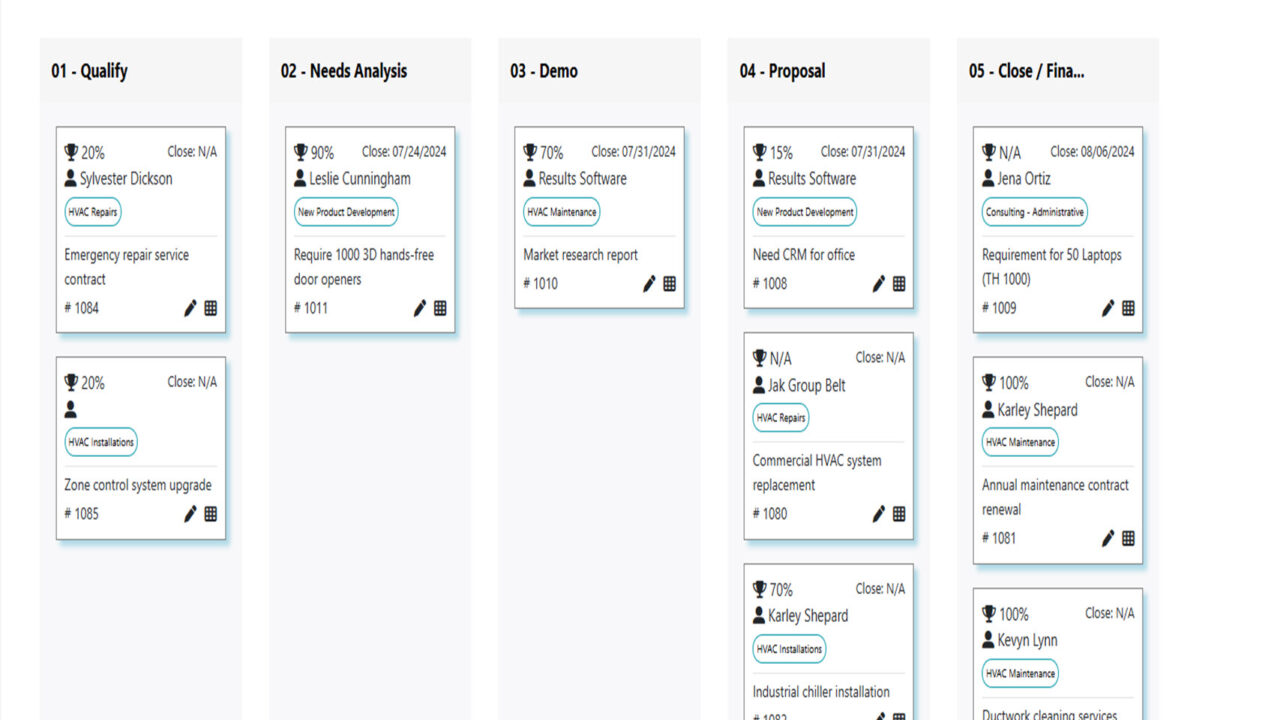
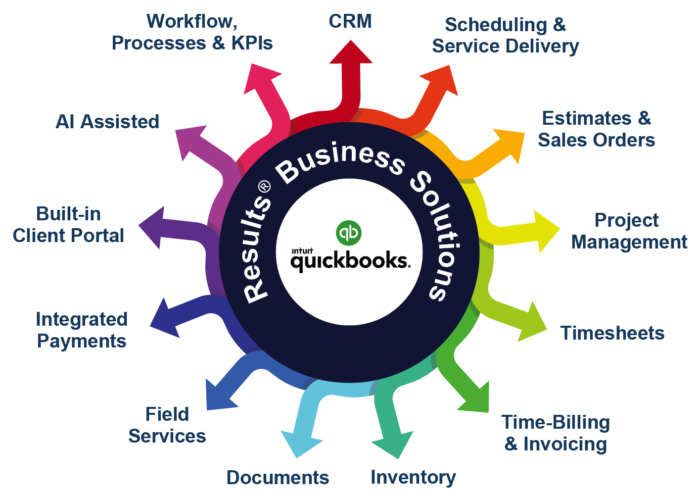
Results now combines contact and opportunity management with projects, scheduling, field service, documents, inventory, estimates, orders, billing, payments, timesheets and reporting. A technician can open a job on a phone, check instructions, record time, add products used, capture before-and-after photographs, collect a customer's signature and trigger follow-up work. The office sees the same record without waiting for paperwork to return in a truck.
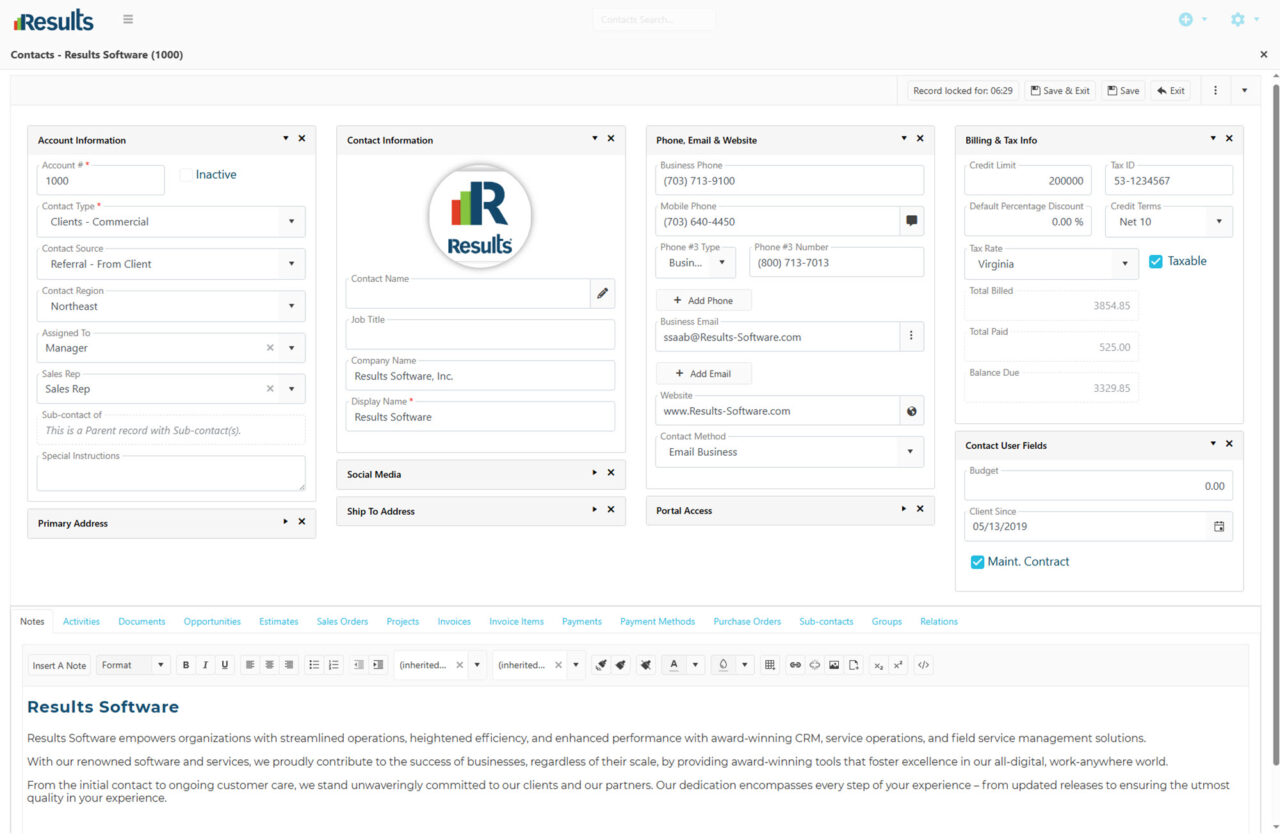
For managers, the promise is less cinematic: fewer duplicate entries and fewer meetings held only to ask which spreadsheet is current. The platform's dashboards, configurable workflows and permissions connect sales, service and finance without forcing every employee into the accounting system. Results argues that this can reduce the number of QuickBooks licenses a company needs while keeping the ledger current through two-way synchronization.
QuickBooks is the wedge. Results integrates with Online and Desktop editions, including international versions, and has added exports from its timesheets to QuickBooks Desktop Payroll. It also connects with Outlook, Gmail, Avalara AvaTax, Jotform, SMS, WhatsApp and Calendly. In 2026, Results added Ask Claude, an assistant that can find and summarize information already stored in the platform. The feature is useful only to the extent that the underlying records are clean - a refreshingly ordinary constraint for an AI feature.
Who buys the unglamorous middle
The best fit is a growing service business that has outgrown paper and spreadsheets but does not want a sprawling enterprise implementation. Results names field-service operators, contractors, professional-services firms, custom manufacturers, distributors and project-based businesses. Public references include A-1 Guaranteed Heating and Cooling, Advanced Mechanical, Circle T Construction, Syneco Systems, Kontor Business Support and Roll-A-Shade.
Their problems are variations of the same fracture. A-1 Guaranteed described an office overwhelmed by paper files. Advanced Mechanical reported eliminating paper and double entry while giving field crews real-time data. Syneco wanted account documents available to several employees in several locations and used reminders to renew expiring accounts on time. These are not “digital transformation” in the abstract. They are the Tuesday-afternoon consequences of missing information.
Relative product emphasis
Against Salesforce, HubSpot, Zoho or Microsoft Dynamics, Results is smaller and more opinionated about operations after the sale. Against Jobber, Housecall Pro or ServiceTitan, it reaches further into general CRM, projects and customizable business workflows. Against a homemade stack, it asks customers to trade specialist choice for one shared record. The unusual piece is not any single module. It is the refusal to draw a hard line between CRM and service delivery.
That position also explains why Results is difficult to compare on a feature checklist. A lightweight CRM may win on simplicity. A dedicated field-service app may have deeper routing. An enterprise suite may offer a larger marketplace. Results wins only when the seams themselves are expensive - when an estimator copies a customer into a job system, a dispatcher calls the office for a document, or finance reconstructs an invoice from field notes. Its unit of value is the avoided handoff. Buyers should therefore map where information is retyped before comparing logos or counting menu items.
What it costs - and what you are really buying
Results sells subscriptions by module and billing period, then layers in integrations and services. Its public catalog currently lists products from $22 to $158 depending on the module and variant. CRM appears at $29 to $39; field-service editions at $29 to $59; Business at $74 to $99; and the broader Platform at $119 to $158. A storefront also displays annualized combinations reaching $1,428. Configuration, data migration, implementation and training depend on the customer's scope.
The business model is a mix of recurring licenses and hands-on services. Its partner program adds another layer: referral, certified and premier tiers for consultants, accountants, QuickBooks advisers, MSPs and integrators. Partners can earn on new and renewal licenses, receive demonstration environments and, at higher tiers, sell implementation and training. Results gains distribution; customers get a local adviser who already understands their books and processes; partners add recurring revenue.
The part worth copying
There are five moves here that travel well. First, choose a boundary where customers re-enter the same data and own that handoff. Second, integrate deeply with the system of record instead of demanding its replacement. Third, turn implementation knowledge into reusable workflow templates. Fourth, give channel partners an economic reason to remain involved after the introduction. Fifth, when a relaunch asks old customers to pay again, price the history into the offer.
The acquisition lesson is less cheerful. A larger owner's resources matter only while the product remains strategically important. Founders evaluating a sale should examine roadmap control, product sunset clauses, customer migration plans and what happens if priorities change. Saab thought he was buying acceleration. The experience changed his mind because the platform lost attention, not because the original customer problem vanished.
Likely to work
- QuickBooks remains the accounting core
- Sales turns into projects or field work
- Teams re-enter data across tools
- Workflows need configuration
Likely not to work
- You only need a simple contact list
- A specialist stack already runs cleanly
- You use a different accounting core
- No owner will lead data cleanup
Results is not the automatic answer for a two-person sales team, a company committed to another accounting platform or an enterprise that wants a vast marketplace of specialist add-ons. An all-in-one system also concentrates migration risk: dirty data, unclear ownership and inconsistent processes do not become orderly because they share a login. The software works best when an operator is willing to decide how the business should actually move.
That makes Results Software a curious survivor. It is old enough to remember CRM before the cloud, new enough to ship native mobile apps and AI assistance, and stubborn enough to keep an on-premises option. Its most compelling feature is still the same observation from 2002: closing a sale is not the result. The result is the work getting done, documented, billed and remembered the next time the customer calls.