A cough is a remarkably poor witness. It tells you something is wrong, then declines to identify the culprit. Hoarseness is scarcely more cooperative. Reflux can contribute to both, but so can other conditions. For a company selling answers, that ambiguity is an opportunity. For the patient, it is another appointment.
Restech built its business around this problem of location. Its Dx-pH system measures pH in the upper airway, where suspected laryngopharyngeal reflux, or LPR, may trouble the throat and voice. The distinction sounds like medical geography. In practice, it changes what a clinician can observe. A measurement farther down the esophagus answers a different question.
- The tool: upper-airway pH monitoring for suspected LPR.
- The expansion: acquisitions added RF therapies and a nighttime wearable.
- The catch: clinical guidelines qualify the diagnostic and treatment claims.
A little light behind the uvula
In its account of its beginnings, Restech describes gastroenterologists asking its engineers for a pH sensor that would work outside the esophagus. Conventional equipment was designed for liquid measurements. The requested sensor had to function in a much less obliging environment. Founded in 2003, the company developed technology for measuring pH in both liquid and aerosolized material.
The physical arrangement is almost modest enough to overlook. A thin probe passes through the nose; its tip rests behind the uvula. A blinking light helps the clinician position it. A transmitter communicates with a recorder worn by the patient, who marks meals, symptoms and sleep. In the workflow Restech described in 2018, the sensor takes two readings each second during a 24- to 48-hour study.
Those event markers matter. A graph becomes more useful when the clinician can compare its changes with what the patient was doing. The current product page describes Reflux Cloud, a reporting platform that maps recorded events to symptoms. The instrument collects a record; the clinician still has to decide what the record means.
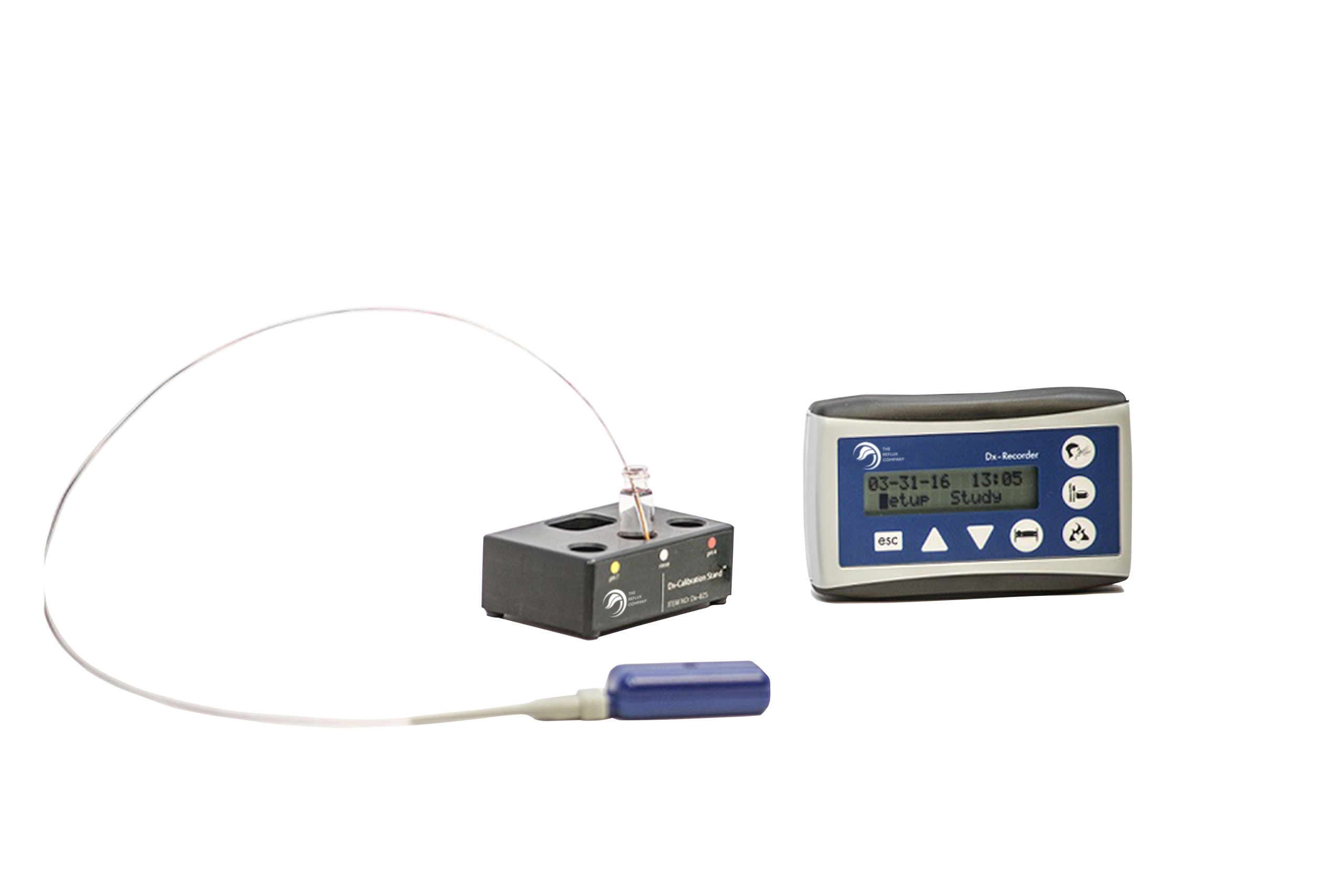
Recording specifications, not measures of diagnostic accuracy.
Buying the next question
Once you have sold a test, the customer asks what happens next. Restech expanded into that answer through acquisitions. In April 2018, Respiratory Technology Corporation, its legal name, acquired Mederi Therapeutics assets, adding Stretta for gastroesophageal reflux disease, or GERD, and Secca for bowel incontinence. The price was undisclosed.
Stretta delivers controlled radiofrequency energy through a catheter to tissue around the lower esophageal sphincter and gastric cardia. It is intended to improve the barrier against reflux. Secca applies RF therapy at the other end of the digestive tract, targeting the anal sphincter. These were extensions into treatment, rather than inventions Restech had produced from scratch.
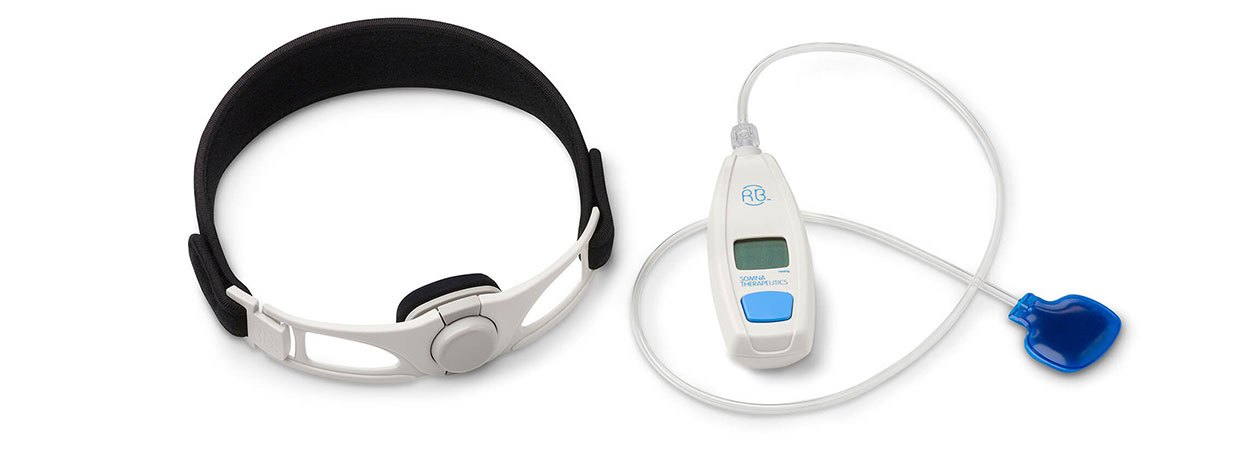
Then came Somna Therapeutics assets in June 2020. The principal addition was Reflux Band, an external device worn around the neck during sleep to reduce reflux reaching the throat. Its original name, Reza Band, honored inventor Reza Shaker. The later name made the sales proposition considerably easier to guess.
“This acquisition provides a unique opportunity to expand our reach across the clinical spectrum.”Debra Krahel, Restech CEO · April 2018
The test was ready. The postage was not.
The same year brought a less glamorous lesson in product adoption. Restech introduced PepsinCheck, the U.S. consumer version of RD Biomed’s Peptest. This saliva-based test looks for pepsin, a stomach enzyme. RD Biomed had developed Peptest in 2007. According to the May 2020 launch announcement, shipping costs and waiting times had impeded its adoption in America.
Restech changed the journey: U.S. shipment, processing at American laboratories, and results returned in about a week. The adjustment concerned distribution as much as diagnostics. A reader building a specialist business can copy that habit: investigate the inconvenient steps surrounding the product. An invention can be perfectly portable while its service model remains stubbornly overseas.
The commercial logic joins clinical equipment and supplies sold to medical practices with consumer-facing tests and devices. ENT specialists and gastroenterologists are central users of Dx-pH. Hospitals, outpatient facilities and distribution partners matter to the therapeutic side. Restech’s 2019 Italian agreement with Innovamedica explicitly brought its diagnostics alongside the distributor’s existing Stretta and Secca experience.
The graph does not get the last word
Here the attractive business story meets a demanding clinical one. Measuring upper-airway pH is a technical distinction, not automatic proof that reflux caused a cough. The American College of Gastroenterology’s 2022 guideline does not routinely recommend oropharyngeal or pharyngeal pH monitoring for extraesophageal symptoms. It also questions salivary pepsin testing in that setting.
Stretta has its own disagreement. The same ACG guideline could not recommend it as an alternative to medical or surgical antireflux treatment because efficacy data were inconsistent. The American Society for Gastrointestinal Endoscopy’s 2025 guidance leaves a narrower opening: confirmed GERD, a small hiatal hernia, suitable valve anatomy, and other endoscopic or surgical fundoplication options unavailable or infeasible.
Competing approaches therefore include esophageal pH-impedance testing and wireless pH monitoring on the diagnostic side; medication, fundoplication, TIF and magnetic sphincter augmentation on the treatment side. They are different tools for different decisions. Restech’s appeal lies in its specialized measurement and less invasive treatment options. Their usefulness depends on patient selection, interpretation and the evidence for the particular intervention.
A relaunch needs a factory
The latest chapter belongs to The Reflux Company, founded by Thomas Ball in 2025. Its public portfolio now includes Restech Dx-pH, Stretta, Reflux Band and PepsinCheck by Peptest. That presentation connects the older technologies under a newer business. Ball had previously served as Restech’s vice president of clinical affairs.
In April 2026, the new company announced a fully subscribed $1 million seed round, with closing expected in early second quarter, and MAAB Group participation. MAAB’s assignment includes distribution, market access and commercial development in Asia, particularly China. That is the new company’s financing, rather than a historical Restech round.
June brought a manufacturing partnership with Nissha Medical Technologies for Stretta’s relaunch. The announcement said manufacturing was underway and targeted January 2027 for release. As of this October 2026 profile, that date remains a plan. The practical promise is specific: restore access by getting production running. Between a clever catheter and a patient receiving treatment sit factories, clinical judgment and a calendar. Every one has a vote.
Stretta relaunch target announced in June 2026. Planned, not completed.