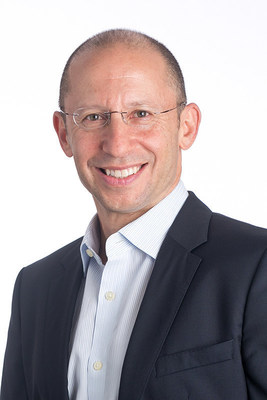
A solar panel, considered from the street, is a remarkably simple thing. It catches light. It makes electricity. But between the person admiring the neighbor’s roof and the person signing a solar contract lies a small procession: a sales conversation, a credit decision, a design, a permit, an electrician and an installer. Joe Bono, who had once run Quiznos shops in the Bay Area, thought that procession looked less like manufacturing and more like a franchise.
In 2008 he launched Solar Universe. Its local franchisees would sell and install residential solar systems; a central company would supply the brand, training, purchasing leverage, financing connections and software. It was a curious piece of translation. A sandwich shop had taught Bono how to standardize a service while leaving the front counter in local hands. A roof, however, is more idiosyncratic than a lunch order. Each sale brought a different house, utility, permit desk and customer.
The short version
- What it sold: a shared operating system for local solar businesses, delivered through franchises and later a wider partner network.
- Who paid: franchise owners paid fees and royalties; homeowners bought solar systems through local operators.
- What changed: the company bought direct-sales firm Gen110 in 2013, added smart-home controls in 2015, and became REPOWER America in 2017.
- Where it ended up: Soligent acquired the franchise and distribution network in 2018.
The sandwich-shop insight
Bono’s original argument was that a local owner could earn a homeowner’s confidence while a central organization handled much of the repeatable work. Franchisees could lean on training, vendor relationships and a software platform that tracked a job from lead capture to proposal, permit assembly, invoicing and financing. They were the people who met customers and put systems on roofs. The center was the machinery behind the meeting.
That division also explains the money. The company raised a $7 million Series B led by RockPort Capital in 2011 to grow the network. Its model asked aspiring local operators to supply much of the capital for their own territories. An Entrepreneur franchise listing later put the initial fee at $35,000 and total initial investment at $96,800 to $188,000, with a 4% royalty and 2% advertising royalty. Bono had described royalties of about 3% in 2011, so these are dated terms, not a price card for today.
“I call our business model a network partnership.”Joe Bono, describing the original franchise model in 2011
The 2011 network counted 24 franchises. Its competitors included companies that sold and installed systems under more centralized brands, as well as unaffiliated neighborhood contractors. Solar Universe offered a third arrangement: common tools and a common name, with the person across the kitchen table still running a local business. For homeowners, that meant help navigating rebates, utility requirements, system design and installation. For electricians and contractors, it offered a way into solar without building every business function from scratch.
The hard part moved off the roof
Solar Universe built an online design center in 2013 to make the early shopping process less cumbersome. But someone still had to persuade the people who were not shopping. Web ads and conventional marketing could catch an existing intention. They were weaker at creating one. The company’s answer was to acquire Gen110, a California sales organization known for targeted, face-to-face outreach.
Gen110 studied which homes might make sense for solar, then sent representatives to talk with their occupants. The company had more than 70 employees and 11 California offices around the time of the deal. Solar Universe executives spoke of customer acquisition as the industry’s new prize. That is the striking turn in this story: a business built to support installers bought a company that specialized in finding people for them to install for. The problem at the front of the pipeline had become as urgent as the work at the end of it.
There is a useful lesson here for any service business with expensive, infrequent purchases. Better fulfillment cannot save a calendar with no appointments. Solar Universe did not abandon its web funnel; it added another route to a customer whose electricity bill might be high but whose search history contained no solar query. The tactics could be copied: know the ideal customer, make the first conversation useful, and keep the sales promise tied to the crew that delivers it. They work best when the economics of each project can bear the cost of personal outreach.
From the roof to the rooms below it
In 2015 Solar Universe adopted the REPOWER by Solar Universe name and made a small but telling change to its offer. Each new system came with a smart-home kit: a solar-compatible app, temperature monitoring, lighting controls and alerts. An agreement made Enphase the primary supplier of the microinverter-based solar system. The full announced package also included door and window sensors and a wall-mounted control center.
The pitch expanded from making electricity on the roof to managing energy inside the home. It gave the homeowner something to touch and use after the installers left. Yet this was still a service network, not a semiconductor manufacturer. Enphase supplied the specialized electronics; REPOWER coordinated the offer and the local delivery. The distinction matters because the company’s advantage lay in assembling a sale, a system and a workforce, rather than inventing a better solar cell.
The company said it had 42 offices and more than 50 megawatts installed by 2015. These figures describe a network, not a corporate installation crew. The people selling and fitting the systems were dispersed. That arrangement saved the center from opening every branch itself, but it also made reputation a shared asset. One poor local job could tarnish the badge worn by every other office. Training, quality control and the fit between the sales promise and the actual installation were not details; they were the product.
The franchise became a network
By September 2017 the company had renamed itself REPOWER America. The announcement described a marketplace connecting sales originators, installers, suppliers and financiers, with software to move projects between them. It reported nearly 200 trusted local contractors and more than 80 megawatts of installed capacity. A year later, when Soligent’s Solar Engine subsidiary acquired the franchise and distribution network, Soligent said REPOWER had completed more than 10,000 projects.
The new owner brought equipment distribution, logistics, engineering and finance services to the table. That was a natural destination for a network whose value came from making small installers act with some of the resources of a large one. The original franchise fee was only one way to pay for a common backbone. The later marketplace idea widened the circle to partners who did not need to resemble a traditional franchisee.
REPOWER’s history is most useful when read as a sequence of bottlenecks. First, local contractors needed a repeatable operating system. Then the system needed more customers, so the company bought a direct-sales team. Then the solar offer needed a place in the connected home, so it bundled controls with the panels. Finally, the network needed deeper supply and finance capabilities, which Soligent supplied through acquisition. None of those steps made a roof less steep. They made the business around the roof easier to assemble.
Further reading and connections
The original company site and social accounts are historical touchpoints; the announcements below trace the business as it changed names and owners.