The odd thing about naming a company is that the word begins empty. In Renu Upadhyay's case, the business behind it was anything but. It had products people knew, engineers who had spent years refining them, 26,000 customers, more than 34 million managed endpoints and a corporate family tree involving VMware, Broadcom and KKR. Then, in April 2024, it acquired a new word: Omnissa.
Upadhyay helped introduce that name before becoming the independent company's senior vice president and chief marketing officer. The assignment was not the usual cosmetic exercise of repainting a familiar shop. VMware's end-user computing business was being separated and sold to KKR. A unit with roughly two decades of operating history was becoming a standalone company with 4,000 employees and $1.5 billion in annual recurring revenue. The sign above the door changed while everyone was still carrying the furniture.
There is a tidy tension in her role. Marketing wants attention; workplace software is doing its job when attention can go elsewhere. A laptop enrolls. An application appears. A battery problem is caught before it ruins a call. The employee continues with the work they were hired to do. Success looks pleasantly uneventful.
“The focus really needs to come back to the human experience.”
That sentence, offered during a conversation about artificial intelligence, is a useful key to Upadhyay's career. She has worked around mobile devices, wireless networks, collaboration tools, virtual desktops, endpoint management and security. The machinery kept changing. Her question remained stubbornly ordinary: what is all this technology doing to the person's day?
An engineer learns to translate
Upadhyay studied engineering at the University of Mumbai, then earned an MBA at the University of San Francisco. Her professional route began in product management at Nokia in 1998, when the mobile phone was becoming a mass-market object but had not yet swallowed the camera, map, office and half the human social calendar. She later worked at Classmates.com and Cingular Wireless, the carrier that became part of AT&T.
At Cisco, from 2007 to 2013, her work crossed mobility and collaboration. Good Technology followed, then a short chapter leading marketing at enterprise mobile-app company Magnet Systems. In 2016 she joined VMware's end-user computing group. The titles grew from senior director of product marketing to vice president of product and technical marketing, then vice president of marketing. The domain grew with them.
A career following work into the cloud
Product marketing suited the hybrid education. It rewards technical comprehension, but punishes the urge to show all of it. Upadhyay had to understand how the system worked and then explain why anyone should care. At VMware she was responsible not only for customer messaging and content, but sales and technical enablement, pricing strategy, programs and campaigns. Her version of marketing was already an operating system, not a coat of polish.
Her published work from the period shows the widening lens. In 2016, while at Magnet, she wrote about enterprise communication moving into mobile apps. At VMware, she wrote about joining identity and device management, then about an intelligence-driven digital workspace, Horizon subscriptions and the employee-centered demands of hybrid work. The nouns changed quickly. The practical concern moved more slowly: people needed access without turning every ordinary task into a negotiation with IT.
That is a difficult promise to dramatize. Consumer marketing can put the object in a hand and make it gleam. Enterprise workplace software sits behind a login, carries policy and becomes visible mainly at moments of irritation. Upadhyay learned to tell the story through consequences. A new hire receives the right applications on the first day. A help desk sees a failing battery before the employee does. A security team patches a device without waiting for it to return to the corporate network. The feature matters, but the rescued hour is the plot.
By 2022, she had spent nearly six years talking regularly with end-user computing customers. Their anxieties were not mysterious. Companies wanted to keep talent, give new employees a decent first encounter with workplace technology and reduce help-desk costs. IT departments were losing talent of their own while complexity climbed. Security could not be traded away for flexibility. The common request was less theatrical than “digital transformation.” It was: please make this simpler.
The company was new. The memory was not.
Omnissa presented a deliciously difficult brand problem. It needed the energy of a beginning without behaving like an amnesiac. Workspace ONE and Horizon were established product families. Customers did not need a marketer to tell them their own history. They needed to know what independence would preserve and what it would change.
The resulting story held two ideas together: continuity and room to move. Omnissa could point to a 20-year track record, yet promise the focus and agility of a company devoted entirely to digital work. It would invest in AI, partners, open APIs and simpler ways to buy. The corporate transaction became a product argument. Independence meant attention.
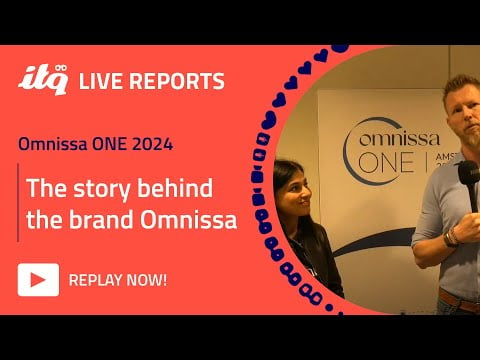
Upadhyay later described the work in concrete terms. Within the first year she built a global marketing organization of 130, introduced a channel program and set expectations around accountability, collaboration and execution. The numbers matter because they rescue “brand” from the mood board. A company identity requires people, measurement, partner relationships, demand systems and a thousand unglamorous decisions that never appear in the launch film.
The work earned her a place among the Large Enterprise finalists for the 2025 Bay Area CMO ORBIE Awards. The more telling recognition may be the organization she emphasized. In public posts, Upadhyay routinely names colleagues and redirects individual praise toward the team. After becoming a finalist for a channel award in 2026, she wrote that the team recognition meant more because it reflected what they had built together. The C-suite is full of singular nouns. Companies are stubbornly plural.
A brand launch can fit on a calendar. Belief takes longer.
AI, with a nutrition label
The next story Upadhyay is helping Omnissa tell concerns the autonomous workspace: systems that can configure, heal and secure themselves. Enterprise software enjoys a futuristic adjective, but she speaks about autonomy with conspicuous guardrails. Customers want AI's speed while keeping administrators in control. Trust and transparency cannot be left for the appendix.
One of her most effective explanations is borrowed from the grocery aisle. Omnissa has described disclosures for AI actions as “nutrition labels.” When the platform does something on an administrator's behalf, it should show what happened and allow the administrator to opt out. The phrase makes an abstract principle legible. Ingredients first, appetite second.
This restraint is not resistance. Upadhyay has discussed Omni, an assistant designed to let IT administrators check device and deployment status or consult knowledge articles through conversation. She has also described turning existing workflows into agents, beginning with vulnerability management. The ambition is considerable: shorten the distance between finding a security problem and fixing it. Still, the employee and administrator remain the test.
Her argument also begins with the untidy present. Customers may use 15 to 20 point tools for endpoint tasks such as patching and security updates. More software can mean more manual work, higher cost and more places for a threat to hide. AI is useful if it reduces that patchwork. If it becomes tool number 21, the future has merely added another password.
The future sends questions from the classroom
In 2026, Upadhyay visited the Institute of Technical Education in Singapore and Sungkyunkwan University's business school in Korea. She came away interested in the contrast: one institution focused on practical technical skills, the other on future business leaders. Both were already negotiating the same changing relationship between people and technology.
There is something apt about a CMO returning to campus after spending a career following work from the handset to the cloud. The future of work is usually announced in a ballroom under expensive lights. In reality, it also forms when a student asks an inconvenient question that the current vocabulary cannot quite answer.
Upadhyay's own vocabulary has become plainer as the technology has grown more complex. Listen to customers. Reduce friction. Preserve trust. Give people control. A company named for a new chapter can still be judged by an old standard: does it help someone do the work?
Omnissa's word is no longer empty. It now carries a company, a portfolio and the expectations of thousands of employees and customers. Upadhyay's part in filling it has been less like writing a slogan than building a dictionary in public. The definitions are still being revised. That is what happens when a brand belongs to people other than the person who named it.
Her career offers a neat answer to the old quarrel between brand and product. She has rarely had the luxury of choosing. The product has to justify the language, and the language has to help a sprawling market see the product as one coherent thing. At Omnissa, that coherence stretches across devices, apps, identity, experience and security. The CMO's job is to make the connections visible without pretending the complexity has vanished.