An assigned desk is a wonderfully persuasive object. It has a number, a person attached to it, perhaps a place on a handsome floor plan. To a property manager, it looks occupied. But a chair can have an owner without having a sitter. Between those two conditions lies a surprisingly expensive piece of corporate fiction.
- FM:Systems connects the office inventory with evidence of how people use it.
- Its customers buy workplace software, analytics and sensors to make space and maintenance decisions.
- Acquired in 2023, it announced its move into the OpenBlue brand in April 2025.
The office has two versions of the truth
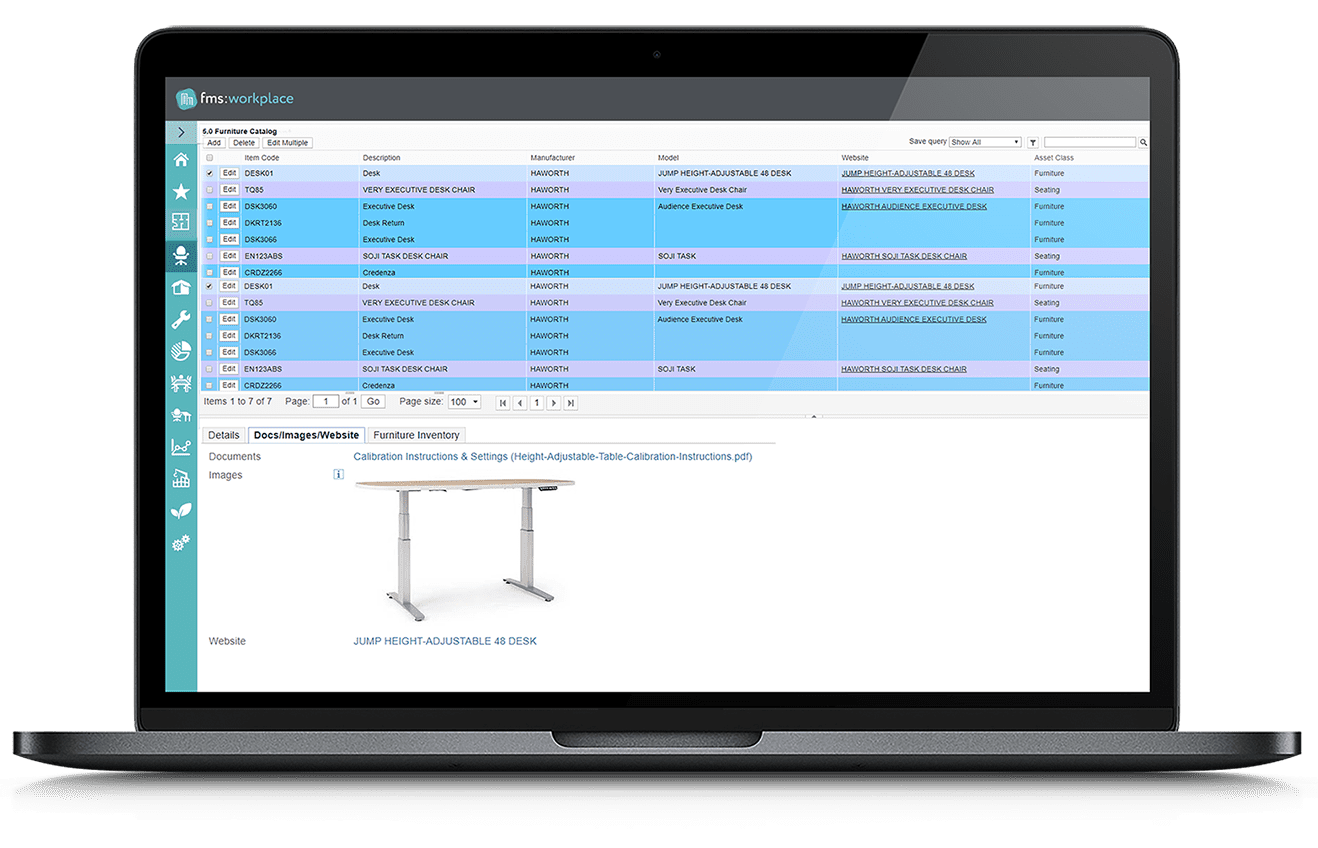
FM:Systems occupies that gap between the administrative office and the lived one. Its software helps facilities and real estate teams map space, organize moves, maintain assets and understand occupancy. Employees see the more agreeable end of the machinery: booking a desk or room before making the journey to work. Managers see a portfolio that can be questioned.
The distinction matters. A reservation describes an intention. A sensor records activity. A floor plan describes capacity. Put them together and an organization can ask whether it needs another floor, a different mix of rooms, or simply a less flattering account of the space it already has.
The company’s origins are pleasingly domestic. Michael Schley began the business in a back room of his Houston home in September 1984. Its first application, FM:Forecast, helped planners estimate current and future space needs. The first license followed in 1986. Long before hybrid work became a management argument, Schley was asking how much room an organization really required.
Forty thousand desks, one awkward discovery
Consider an anonymous multinational bank in a case published by FM:Systems. Before the pandemic, it installed an initial 40,000 passive-infrared desk sensors. Its real estate was expensive, and the team wanted to identify space it could sublet, sell or repurpose. The experiment gave empty chairs a voice.
Underused desks became huddle rooms and breakout areas. Unneeded space could be sublet. The vendor’s account puts the initial sensor investment at approximately $1.3 million and reported annual savings above $45 million within 18 months. It says the deployment subsequently expanded to around 100,000 desk sensors worldwide.
Anonymous bank case, published by FM:Systems in 2021. Sensor spending is not the total project cost; these are customer-case claims, not a universal return.
The useful detail is the sequence. The bank measured use, changed the office and released surplus space. The sensors supplied evidence; the property decisions supplied the savings. Buying the measurement without the authority to change the lease or the layout would leave a very well-informed bank paying much the same bills.

The software was there. The agreement was missing.
A healthcare technology customer provides the less glamorous, more transferable lesson. By 2016, it had used FMS:Workplace at major locations for five years. Yet sites collected information differently. A central strategy could not get a reliable view from local habits. The first thing to fail was consistency.
The organization reviewed alternatives and stayed with FM:Systems, citing scalability, configuration flexibility and more economical pricing. Its published case describes a centralized deployment covering 23 sites, 52 buildings and over 9.7 million square feet. The practical lesson is plain: agree on what each site measures before expecting the dashboard to settle a portfolio argument.
A separate space-technology customer began with another immediate problem: employees needed dependable desks. It rolled out reservations for workers with a regular desk and hybrid workers using shared spaces, then consolidated utilization information. That order is worth copying. Give people a useful daily service while building the evidence for longer-term property decisions.
A booking button with a building behind it
The product family now bears OpenBlue names. Workplace is the integrated workplace management system, or IWMS. Employee handles room and desk booking. Insights analyzes workplace data. Sensors supply occupancy and environmental measurements, while visitor-management capabilities expanded through the 2021 acquisition of WizzPass.
Workplace also reaches into maintenance, assets, capital projects and sustainability. AutoCAD and Revit integration connects drawings and building information with operational records. The commercial model is enterprise software, including cloud SaaS, supported by implementation and a partner network. Buying it involves a tailored sales conversation about buildings, square footage and existing processes.
Its market includes alternatives such as IBM TRIRIGA, Planon and Eptura’s workplace products. FM:Systems’ distinctive proposition is the combination of space management, employee workflows and measured utilization within a broader facilities system. Named customers include HSBC, Samsung, Banner Health and Boston University. These are organizations whose property questions extend well beyond finding a free chair.
Why the thermostat belongs in this story
In July 2023, Johnson Controls acquired FM:Systems for a base price of $455 million, with additional payments contingent on earnout milestones. That is a company purchase price. It should never be mistaken for customer spending or a fundraising round.
The fit becomes clear when information meets machinery. An April 2025 integration connected Metasys building alarms to FMS:Workplace maintenance tickets, using configured alarm types and priorities. On April 30, FM:Systems announced its OpenBlue rebrand. In August 2026, Johnson Controls added further AI capabilities to the wider OpenBlue ecosystem, including an assistant for approved workflows.
“In demos, they love the 3D”Kurt von Koch, former FM:Systems CEO, speaking to Facilities Dive in 2023
Von Koch’s observation came with a telling qualification: customers returned to two-dimensional views to get work done. The lesson suits the whole business. A workplace platform earns its keep when someone can act on what it shows. For the reader facing a lease renewal, start with three questions: what space exists, what use is observed, and which decision can change? The empty desk becomes interesting when its answer reaches the budget.