A hospital can have a ventilator and still have a problem. The ventilator is somewhere. The person who needs it is somewhere else. Between them lies a corridor, perhaps another floor, and the expensive assumption that somebody remembers where it went. A machine designed to save time has acquired a small entourage of people spending time looking for it.
At Calderdale and Huddersfield NHS Foundation Trust in West Yorkshire, the pandemic made equipment visibility urgent. The Trust needed to keep track of supplies and devices across two sites, around the clock. It chose Securitas Healthcare’s AeroScout with Cisco Spaces. The interesting part of that decision was overhead: the wireless infrastructure could contribute to locating things, as well as connecting them.
- Start with the ceiling: supported Cisco equipment supplies data to a common cloud platform.
- Give the data a job: find equipment, see room occupancy, understand space use or onboard guests.
- Check the building: hardware compatibility, maps, radio placement and licensing determine what works.
A second career for the access point
Cisco Spaces is the cloud platform that makes those additional jobs possible. Formerly Cisco DNA Spaces, it connects information from Cisco networking and collaboration products with sensors, maps and applications. Its expertise sits at the junction of indoor location, wireless networking and operational software. The buyer may be an IT department; the beneficiary may be a nurse, a facilities manager or a visitor searching for a meeting room.
The proposition is economical in conception. Buildings already contain equipment purchased for connectivity and collaboration. Spaces gives supported equipment another purpose. An access point can participate in location services. A collaboration device can supply occupancy or environmental information. A floor plan becomes a digital map on which those observations acquire meaning. A temperature reading without a room attached is merely a number having a lonely afternoon.
This is also why the platform belongs in enterprise software rather than the consumer-app aisle. Its customers operate hospitals, campuses, offices, shops and venues. They need deployments that connect to existing systems and work across locations. Cisco’s installed hardware gives Spaces a route into those organizations, though having Cisco equipment does not make every application automatic.
Conceptual workflow. Each outcome has its own infrastructure and license requirements.
The pandemic moved a project up the list
“Asset tracking was always on our roadmap,” said Luke Stockdale, the Trust’s director of digital transformation and innovation. That short sentence explains something a product brochure cannot: an organization may understand a problem long before it decides the problem deserves immediate attention. COVID-19 compressed that interval.
The deployment joined Cisco Spaces data to AeroScout through the Firehose API. Tags could make equipment visible; wireless devices could also be tracked by their network identifiers. The first weakness was ordinary inventory visibility under extraordinary pressure. Scarcity made searching more consequential. In the published customer account, the benefit was having equipment available where clinicians needed it and giving staff more time for care.
A machine can be available on the inventory sheet and unavailable to the person who needs it.
THE OPERATIONAL PROBLEM
Frankfurt University Hospital supplies a related example. Its difficulty was limited transparency in patient movement and medical-device locations. It piloted patient tracking in cardiology and used BLE asset tracking with Cisco infrastructure. Cisco’s account reports better visibility, reduced waiting and less equipment-search time. These are useful descriptions of a workflow change; they should not be converted into an invented percentage saving.
A booked room is an expression of hope
In an office, the discrepancy is less dramatic but familiar. A calendar says a room is reserved. A person standing outside it wants to know whether anybody is inside. Space planning adds another layer: a floor may look busy at one hour and spend much of the week doing a convincing impression of an architectural photograph.
At C Spire, the telecommunications and technology company in Mississippi, Spaces connects interactive maps, room availability and workplace analytics. Employees can use displays to find and hold available meeting rooms. Collaboration devices supply presence and environmental measurements. The case study describes ventilation and temperature adjustment according to occupancy, giving the meeting-room system a role beyond arranging video calls.
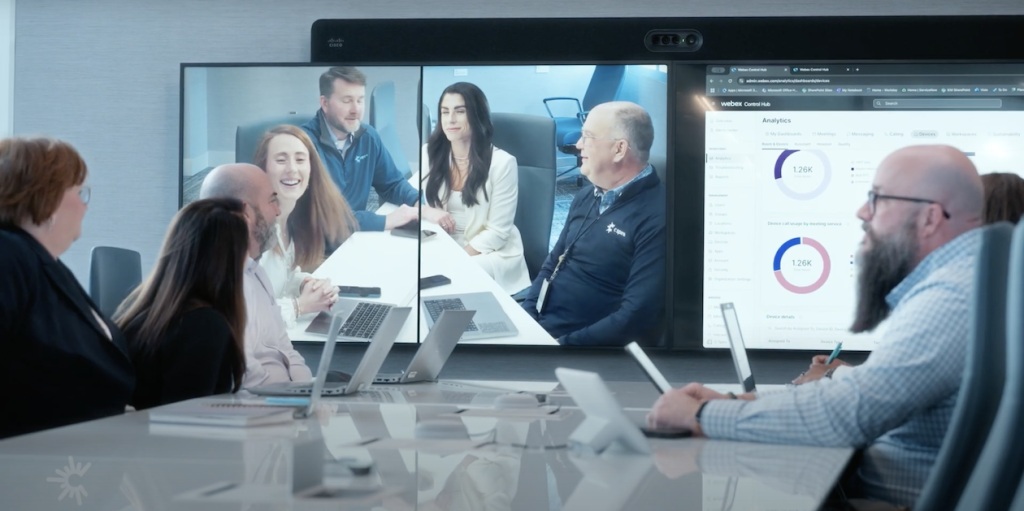
C Spire also intends the office to demonstrate smart-building technology to its own customers. That is a pleasingly practical arrangement: the showroom is the place where employees actually work. The same installation has to make sense as a workplace before it can persuade a visitor.
The shopper and the wheelchair share a foundation
Retail seems a long way from clinical equipment, until one notices the common question: what is happening in this physical place? Ahold Delhaize’s customer story combines OpenRoaming, a Spaces SDK inside its mobile app, visitor personas and contextual engagement. Its existing Cisco infrastructure helped make Spaces an attractive deployment choice.
The retailer could distinguish patterns such as frequent weekend visits from daily visits, then connect that context to customer engagement. The case study describes CRM integration and push notifications. The relevance comes from joining location and existing customer systems, rather than expecting a wireless signal alone to explain a shopper’s intentions. Cisco’s early platform guidance also required clear opt-in and opt-out for customer-experience applications collecting personal data.
The applications vary because the operating question varies. Detect & Locate helps IT teams label and find connected devices. Space Utilization Analytics examines how areas are used. Environmental Analytics gathers conditions. Space Explorer and indoor navigation help people move through buildings. Partner applications add industry-specific workflows. The shared foundation is location and sensor data with enough context to become usable.
In 2026, the tag joined the family
In July 2026, Cisco introduced its native Cisco Asset Tracking offering. It combines tags, a management dashboard and a mobile experience built around activating, searching for, navigating to and finding an asset. NFC simplifies tag onboarding; supported location technologies include Wi-Fi, Bluetooth Low Energy and ultra-wideband, with iOS Nearby interactions for close-range finding.
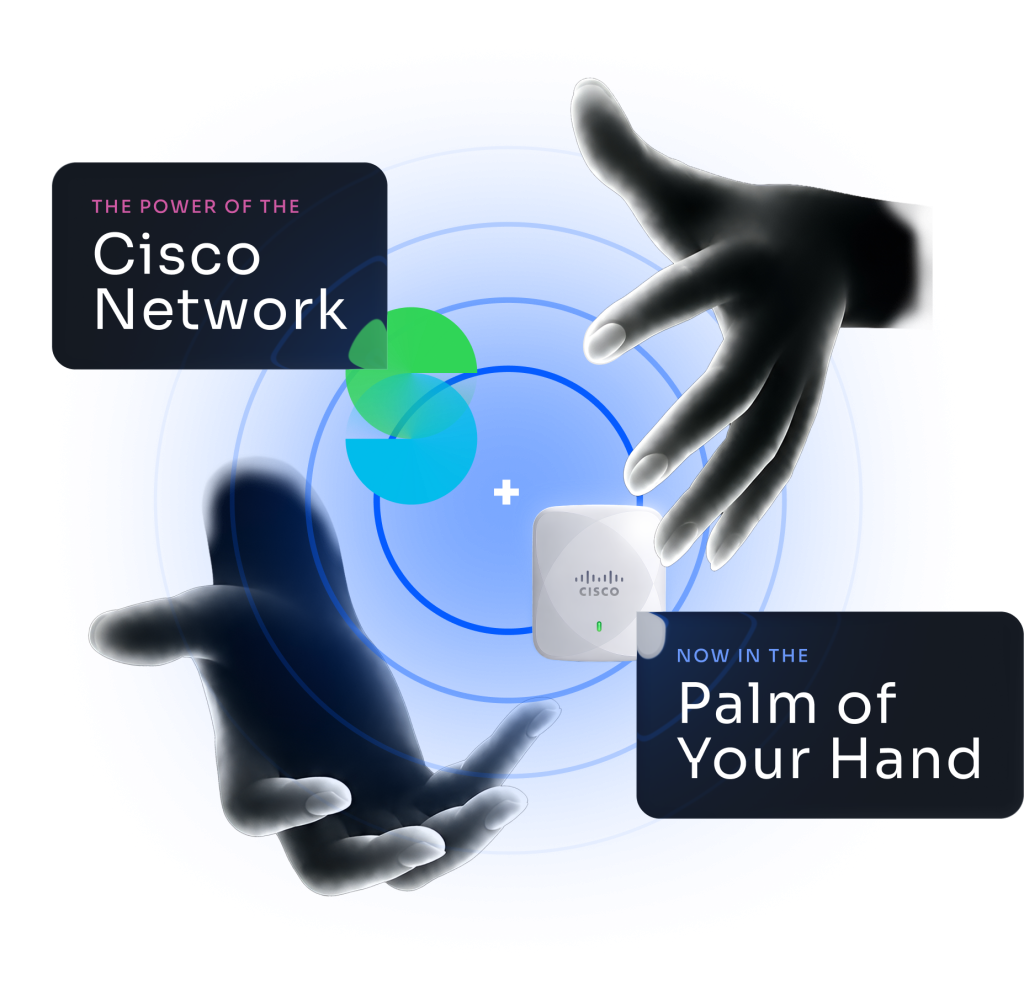
The native offering expands a platform that already supported partner tracking systems. Cisco says its tags can work with ecosystem applications and its applications can support third-party tags. That matters to an enterprise with existing equipment and workflows: replacing everything at once would weaken the appeal of reuse.
The broader history explains the direction. Cisco announced its acquisition of July Systems in 2018, bringing in cloud-based mobile experience and location-services technology. Cisco DNA Spaces appeared in 2019. In 2022, the name became Cisco Spaces as networking and collaboration signals fed a wider smart-building proposition. Hybrid work helped make occupancy and workplace experience more prominent in that expansion.
The invoice includes more than software
Spaces earns its place through enterprise subscriptions and Cisco’s licensing channels. Current packaging includes Advantage within supported Cisco Wireless Advantage and Meraki Advanced subscriptions, with separate and add-on paths too. The native asset dashboard is included with Advantage; Cisco Asset Tags and the mobile app require Premier. A license included in a networking package is still an entitlement to inspect, not a reason to assume every feature is available.
There is one tangible historical price: Cisco’s rebranding page advertised a $10,000 pilot covering 100,000 square feet. Treat that as a rebranding-era pilot offer, not today’s universal tariff. A real project also has maps, deployment work, tags, integrations and potentially hardware changes to account for. Reusing infrastructure can reduce duplication; the amount saved depends on what is already installed and what the building must do.
For 100,000 sq ft on Cisco’s rebranding page.
A pilot price, not a current deployment quote.
Nor is Cisco alone in this market. HPE Juniper Mist offers indoor location, asset visibility, engagement and analytics using its own wireless infrastructure and virtual BLE approach. Dedicated real-time location systems and separate workplace tools remain alternatives. The sensible comparison starts with the installed network, the required accuracy and the workflow. A comparison of feature lists can wait until those are settled.
The wall gets a vote
Cisco’s May 2026 UWB deployment guidance makes a refreshingly concrete admission: a network designed for connectivity may not be designed for location. A strong connection to one access point does not establish that enough suitably placed access points can calculate a stable position. Geometry, obstructions and installation details affect the result. The floor plan can be correct on a screen while a moved access point changes the actual radio environment.
The practical lesson to copy is modest. Choose one recurring inconvenience, establish a baseline, and validate the installation against it. A hospital could measure equipment-search time. An office could compare room availability with actual occupancy. Cisco’s adoption guidance asks for a rollout champion, validated deployment and time for communications. Somebody must make the new information part of the working day.
Spaces is most persuasive where supported infrastructure, a measurable problem and a team able to act on the data meet. Poor maps, unsuitable placement or a dashboard nobody uses erode the proposition. The ceiling may have useful things to say. The return arrives when someone downstairs changes what they do.