At four in the morning, Renee Wang had finished someone else’s homework. Her then-boyfriend was struggling to debug a Visual Basic game. Wang, a psychology student with no coding experience, had offered to help. She downloaded the development environment, took her laptop to a coffee shop and began searching for answers. By the time she got the game working, she had found an occupation of her own. There are more ceremonious entrances into the technology business. This one came with a very late closing time.
“I never coded before but I wanted to help,” she recalled. The attraction was immediate: a problem, an attempt, a result she could see. She began helping other computer science students. Each assignment offered another reason to keep learning. A favor had become a habit.
Years later, Wang would leave Google, sell her Beijing home and build Castbox, the podcast app. The home sale is the detail that sticks. It has a price, a location and the satisfying finality of handing over keys. Her career, though, becomes more interesting when the decisions refuse to stay final. After committing so much to audio, she would have to work out which parts of that business deserved more investment and which lessons could travel elsewhere.
A degree in people, an education in software
At Peking University, Wang studied psychology and statistics. Her practical education spread into coding, design software and 3D modelling. By her junior year, she was taking contract work and building apps through a small studio. Earning money had a purpose beyond the money itself: financial independence offered a way to choose her own life.
She joined Umeng, a young mobile analytics company later acquired by Alibaba, as a frontend engineer. The job put her inside the mobile internet’s early expansion. Google offered another vantage point. Across four years, including work in China, Japan and Ireland, she helped app developers with products, operations and monetization. A mobile app could cross a border much faster than its maker could learn the local customs.
Wang used the job as an opportunity to study. She recorded Android development videos in her spare time. In Ireland, she recalled leaving with her colleagues and returning around seven in the evening to continue working. The office had become a classroom with unusually generous opening hours.
Her later conversations about entrepreneurship kept returning to that education: how users arrive, how a product keeps them, how it earns enough to continue. Writing software answered only part of the problem. Working with developers gave her a view of what happened after software met the market.
An apartment becomes a runway
Getting into Google had taken persistence. Wang prepared for interviews and applied repeatedly. Leaving meant walking away from a job she had worked hard to obtain, and from a life that had taken her overseas. Friends questioned the decision. She wanted to try running her own company.
In 2015, she founded Guru. Castbox followed in early 2016, addressing a problem she knew as a listener: finding and organizing spoken audio across languages and apps. She used podcasts for news and Japanese study. The daily inconvenience gave her something concrete to work on.
Her early financing was concrete too. Without an established investor network, she sold her home in Beijing to support the company. “At that time, I didn’t have an alternative solution,” she said in 2018. In the beginning, she also slept in the office. The familiar startup vocabulary of runway suddenly had a domestic meaning: somewhere else had to become home.
“At that time, I didn’t have an alternative solution.”
Renee Wang, on selling her Beijing home, 2018
In April 2018, Castbox announced a $13.5 million funding round led by SIG China. The business had moved beyond the stage when its founder’s apartment could serve as its financing plan. But outside capital brought its own question: what sort of audio company was she going to build?
- 2015Leave Google. Start Guru.
- 2016Release Castbox. Focus on listening.
- 2025Lead a broader entertainment and AI portfolio.
Career milestones, not a chart of revenue or audience growth.
Let the listeners talk back
A podcast is easy to begin and surprisingly difficult to search. A useful sentence can sit halfway through an hour-long episode, well beyond the assistance of its title. Castbox developed in-audio search, turning speech into searchable text so listeners could find terms inside recordings. Wang’s team was working on that problem by 2017. The ambition suited a former Google employee: help people locate information that already exists.
There was another gap after the listening. Someone finished an episode, wanted to discuss it and left for Reddit or another service. Wang looked at Chinese apps where content and discussion shared an address. NetEase Music and other services offered examples of users gathering around what they heard.
Castbox explored comments, timestamps, live audio and virtual gifts. The company was applying ideas familiar in one market to listeners elsewhere. Wang was also clear about choosing her territory. Despite the Chinese engineering base and the ideas borrowed from Chinese apps, she did not plan to take Castbox into mainland China’s crowded audio market.
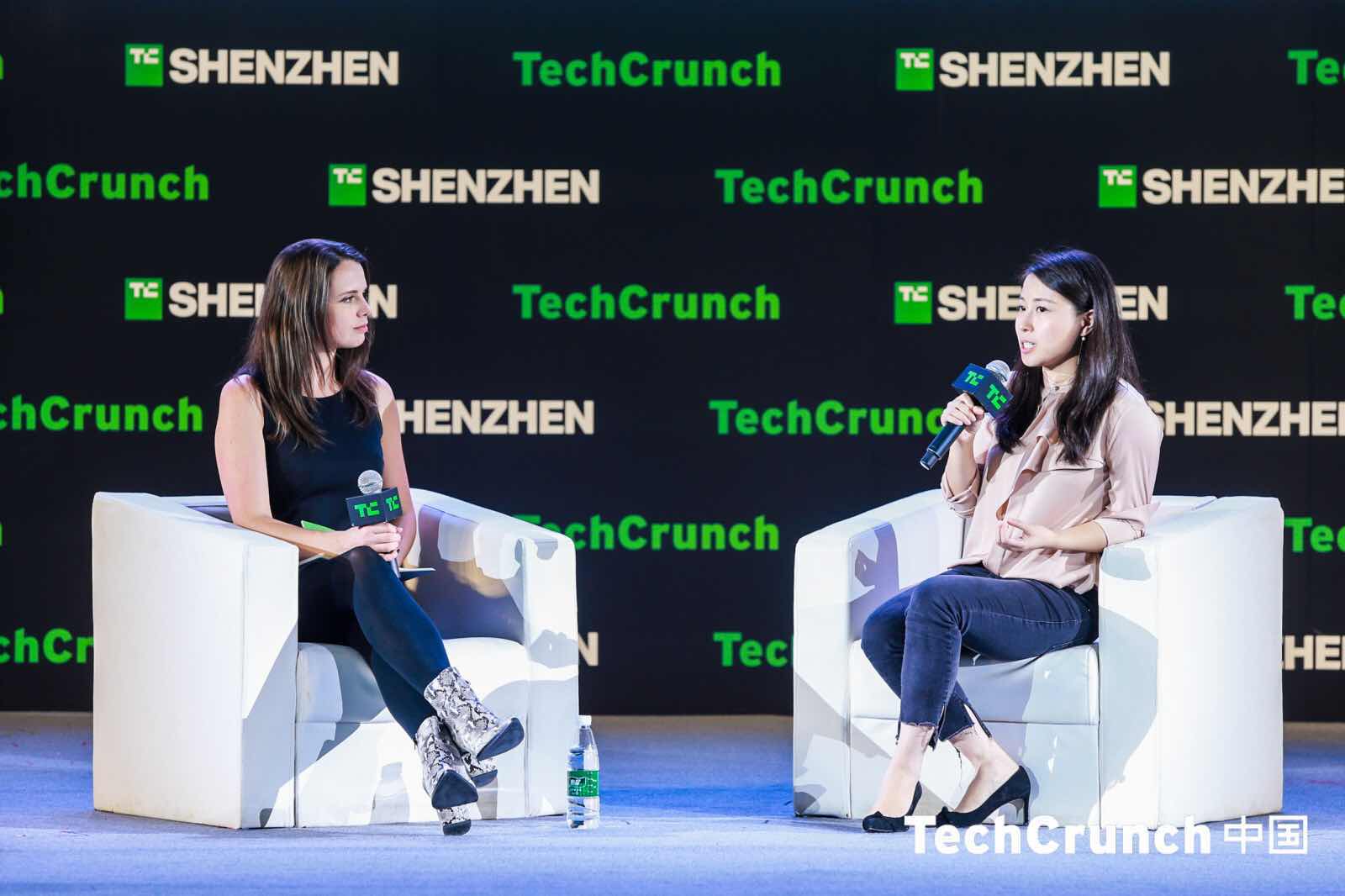
She saw audio as something people could carry through an ordinary day. Driving, walking and other activities left room for listening. “It’s kind of like a companion,” she said. That view helped explain her interest in live participation and feedback: a companion has a rather different job from a folder full of recordings.
For creators, the same approach offered a closer relationship with listeners. Feedback could arrive inside the app. A host could learn how an episode landed without assembling reactions scattered across several websites. Wang’s product thinking kept moving along the listening journey, looking for the point where someone had to leave to finish what they had started.
The awkward matter of getting paid
A pleased listener is valuable. A paid creator still needs a transaction. Wang explored several answers, including premium shows and ways for audiences to reward hosts. In 2018, she argued that paid content would become a larger part of podcasting’s business. Advertising was already familiar; payment by listeners offered another possibility.
Contentbox, a related blockchain project, proposed tokens and an in-app wallet to help people support podcasters. The experiment belonged to a period when audio companies were testing how attention might become income. A person listening, sharing or sending a gift could participate in a different set of incentives from a person hearing an advertisement.
For Wang, monetization was familiar work from Google. Yet running a platform meant dealing with both sides of it: listeners wanted useful, convenient audio, while creators needed reasons to keep producing. Features had to serve a business as well as an audience. An elegant player could get someone through a commute. It could not, by elegance alone, pay for the next episode.
Knowing which contest to leave
By 2019, Wang was describing a change in strategy. Larger companies were putting substantial resources into podcasts. Castbox moved away from competing primarily through content and toward technology and a distinct user experience. Search and social features offered areas where an independent company could make choices of its own.
That decision matters in a biography built around commitment. Selling a home makes it tempting to read everything afterward as proof of unwavering belief. Wang’s later work involves adjustment. The company could keep serving listeners while reconsidering the economics around them.
The wider organization expanded into a portfolio of entertainment products, games and AI applications. In a 2024 conversation with ZhenFund’s Monica Xie, Wang discussed the commercialization difficulties of a single product and the transition toward a broader business. Castbox’s experience became part of what the organization knew how to do.
Why × Why Me
Why?
Is there a real demand?
Why me?
Does this team have an advantage?
Product selection: real demand × team advantage.
By 2025, Guru’s reported portfolio included more than 50 apps across 175 countries and over one billion cumulative downloads. Those figures describe the broader portfolio, rather than Castbox’s podcast audience. The scale of the question had changed: Wang was now organizing a company capable of testing and operating many products.
Its filter was “Why × Why Me”: identify demand, then ask whether the team had a reason to be the one meeting it. Shared design, engineering and operations supported the portfolio. The approach gave her accumulated experience somewhere to go beyond the original app.
Still a student, now with a company
Wang enrolled in the National University of Singapore’s Executive MBA programme in Chinese in 2022, receiving its Overseas Entrepreneur Scholarship. She singled out classes on the global economy and business decision-making. The latter addressed the fallibility of judgment and the value of remaining open to other people’s views. Running a company had left plenty to study.
Her public conversations also make room for the ordinary mechanics of leadership. In an Onward Nation interview, she discussed Google Calendar and Google Keep, reflection, trusted teams and the skills of managing people, money and direction. These are less cinematic details than an apartment sale. They take up considerably more of a working week.
In April 2025, she delivered opening remarks as Guru Network CEO at an AI innovation competition co-organized with NUS. More than 200 teams had registered. Eight finalists pitched their work. Wang, whose own entry into programming had begun with a borrowed problem, was now part of an event inviting students to find problems of their own.
Her career has never followed the wording on her first degree. Psychology led to software; developer work led to an audio company; an audio company helped produce a wider entertainment business. Through those changes, learning remained practical. There was work she wanted to do, something she did not yet know, and a reason to sit down and find out.
Keep listening
Conversations, profiles and the work itself.
- Castbox website
- Renee on LinkedIn
- Watch: Wang on audio and AI
- Listen: From Founder to CEO
- Read: NUS entrepreneur profile
- Read: Going global
- Read: Social audio conversation
- Read: The Beijing home sale
- Read: Creator payments
- Read: Castbox’s technology strategy
- Listen: ZhenFund conversation
- Read: NUS–Guru AI challenge
- Read: 2025 product strategy