A warehouse is a place where abstract promises meet concrete floors. The order is either there or it is not. The picker finds it or does not. A truck leaves on time, or somebody starts making phone calls. For Renee Truttmann, that blunt operational truth has supplied a career's worth of material. As Chief Marketing Officer of Made4net, she sells software, but her real subject is consequence: what happens when a business can finally see its inventory, direct its labor, connect its machines and change course without bringing the whole building to a halt.
Truttmann has spent two decades in supply-chain technology marketing, a stretch that includes work around Blue Yonder and its earlier JDA identity, BluJay Solutions, Iptor, DSI and Fleetworthy. These are not household names, which is part of the point. The technology beneath distribution rarely asks for applause. It asks to be accurate at 2 a.m., teachable to the next shift and sturdy during the seasonal peak.
Her current brief is broad enough to resemble a small company inside the company. Made4net says she is responsible for go-to-market strategy, branding, product, communications, partnerships, digital and demand generation. Seven disciplines, one job title. The common thread is translation. A feature must become an operational improvement. An operational improvement must become a financial case. A financial case must become a decision that survives contact with procurement, the warehouse floor and the executive meeting.
The useful art of explaining a machine
Enterprise software marketing is often punished for knowing too much and trusted for knowing too little. Product detail can turn a sentence into a parts catalogue; broad language can sand every distinction away. Truttmann's public vocabulary tends to stay close to the work. She talks about receipts, picks, inventory movement, labor activity, stockouts and congestion. Even when the subject is artificial intelligence, the nouns still belong to a warehouse.
That grounding is visible in her argument for modernization. The contemporary warehouse, she says, faces volatile demand alongside rising costs and sharper service expectations. Managers need live visibility across inventory, labor, equipment and order flow because small issues have a habit of becoming expensive bottlenecks. Flexibility is not presented as a mood. It is the ability to alter plans while freight, people and promises are already in motion.
“The real breakthrough comes when technology elevates people, not replaces them.”Renee Truttmann, on AI and automation in warehouse operations
Her distinction between repetition and judgment is particularly useful. Robots, sensors and algorithms can smooth throughput, optimize a path or identify an exception. People still troubleshoot, verify, decide and adapt. In one example she has highlighted, drones perform cycle counting while people retain responsibility for inventory adjustments. The machine brings speed; the worker brings judgment. The future of work, in this telling, looks less like a vanishing act and more like a better division of labor.
The operating argument
The bars show dependency, not performance: each layer relies on the operational foundation beneath it.
She arrived when everyone discovered the supply chain
Truttmann joined Made4net's management team as Vice President of Marketing in March 2021. The timing was almost indecently appropriate. Supply chains had escaped the trade press and entered ordinary conversation. Empty shelves, delayed orders and factory interruptions had made logistics visible by making it fail. Companies were examining the systems and processes they had previously treated as plumbing.
In announcing her arrival, Truttmann said businesses were putting a “laser focus” on supply-chain technology and processes. She described Made4net through functionality, a modern and flexible platform, end-to-end integration and what the company calls supply-chain convergence. It was a concise map of the challenge: the warehouse can no longer behave like an island when commerce asks stores, distribution centers and home delivery to share the same promise.
A rebrand followed, built around the phrase “speed-to-pivot.” The expression is corporate, but the need is physical. A warehouse changes when the order mix changes, when a new customer arrives, when labor is tight, when a robot joins the floor or when a retailer turns hundreds of stores into fulfillment points. Made4net CEO Duff Davidson later credited Truttmann with playing an integral role in that rebrand and with persistently arguing that supply-chain execution software should be easier, faster and less expensive to implement.
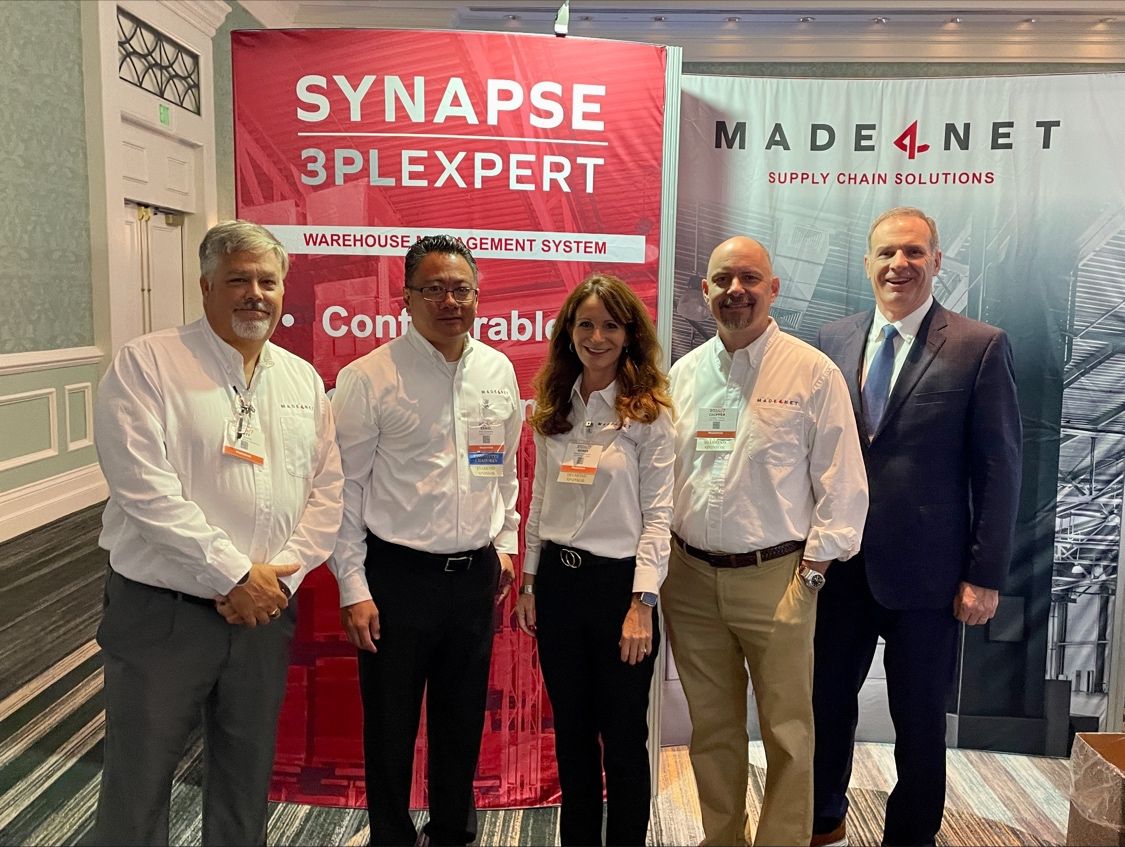
In September 2022, Supply & Demand Chain Executive named her a Women in Supply Chain award winner. The recognition covered leaders whose accomplishments, mentorship and example support the supply-chain profession. It also marked a visible progression in her own title: she had arrived as vice president, was identified as executive vice president by the award announcement, and is now listed by Made4net as chief marketing officer.
Then the customer became the owner
The next chapter gave every abstract promise a formidable test. In May 2023, Ingka Investments, the investment arm of the largest IKEA retailer, acquired Made4net. The announcement paired the transaction with a plan to deploy Made4net's fulfillment technology across IKEA stores and fulfillment points. The scale described at the time was 482 locations in more than 31 countries and, in the long term, more than 100,000 users.
For a marketer, this is a rather elegant plot twist: the buyer of the software becomes the buyer of the company. For an operator, it is a demand for proof. Omnichannel retail requires inventory to remain intelligible while customers move among stores, websites, pickup and delivery. The brochure phrase “single source of truth” becomes a daily contest against thousands of ordinary exceptions.
Made4net remained an independent subsidiary, and its leadership team stayed in place. Truttmann's role widened into a period where the company had to speak to two audiences at once: one very large retail deployment and a broader market of warehouses with their own sizes, industries and peculiarities. Her public statements keep returning to partnership. When customers helped Made4net earn recognition from SupplyChainBrain in 2025, she said the combination of technology and a “true partnership mindset” was what drove outcomes.
The future is exciting. The foundation is less glamorous.
Truttmann clearly enjoys the velocity of her field. Looking back on Made4net's 2024 customer conference, she wrote that she had always loved how quickly the industry evolves: “there is never a dull moment.” Her evidence included AI, robotics, computer vision and drones. It was an enthusiast's list, delivered without pretending that novelty automatically equals value.
Her 2026 comments make the qualification explicit. AI-powered visibility, modular automation and connected digital workflows are reshaping warehouses, but none delivers much when the operational core is weak. A warehouse management system is the control center that coordinates those pieces. Open architecture and flexible deployment matter because operations need to add capability without stopping daily work for an expensive overhaul.
There is also the embarrassing problem of unused software. Truttmann has pointed to the gulf between an organization's declared strategy and the daily choices that determine which capabilities get activated. A facility may describe itself as innovation-led while making every practical decision around near-term cost avoidance. In that case, she argues, the shortfall is one of alignment. A sophisticated system configured for an ambition nobody follows will become a costly monument to the kickoff meeting.
“The gap isn't a technology problem. It's an alignment problem that shows up in how implementations get scoped and what capabilities never get activated.”Renee Truttmann, on strategy and warehouse execution
This is where Truttmann's marketing begins to sound like operations consulting. Before buying the next layer, determine what the current system can do. Before announcing an AI strategy, clean up the workflow it will accelerate. Before celebrating a dashboard, decide which metric ought to change behavior. She has called receiving precision a competitive advantage because errors are cheapest to correct at the dock. Catch them later and they reappear as rework, backorders and unhappy customers.
The warehouse rewards this kind of intellectual housekeeping. It has little patience for slogans detached from the shift schedule. Truttmann's achievement is not that she has made logistics simple. The subject would resent the insult. She has made its complexity navigable, which is more useful. A buyer can see where to begin. An operator can see what connects. An executive can see why waiting has a price.
Twenty years into a career spent around systems most consumers never notice, she is still drawn to the speed of the industry. The machines are getting cleverer. The data is arriving faster. The customer is less patient. Yet her most durable idea is agreeably human: technology earns its place when it gives people better information, clearer choices and enough room to change their minds before the truck leaves.