A click cannot repair a furnace, fit a garage door, or book a dental appointment. It can only introduce two people who might do business. ReachLocal built its early business around arranging that introduction. Its evolution into LocaliQ reveals how much can go wrong in the few minutes that follow.
- ReachLocal paired advertising software with people who could explain it to business owners.
- A sales reorganization exposed how much that personal connection mattered.
- Today’s LocaliQ sells tools to handle the enquiries its marketing generates.
01 / The Yellow Pages relationship, rebuilt
Imagine being excellent at installing heating systems and having to learn keyword auctions before lunch. This was ReachLocal’s opening. Customers were moving online; local business owners still had businesses to run. Knowing their trade did not automatically make them competent media buyers.
ReachLocal incorporated in 2003 and began North American operations in late 2004. Co-founder Zorik Gordon explained the customer’s predicament in a 2011 interview: “They’re not going to sit there doing Google Adwords”. His company offered a familiar relationship with an unfamiliar set of tools: a representative who could translate advertising into something an owner could buy.
The technical work included placing search ads, managing bids and tracking responses. The commercial work was persuasion. ReachLocal stood between small advertisers and platforms such as Google, packaging expertise, technology and media into a service. It entered Australia in 2006, raised a $55.2 million expansion round in 2007, and priced its IPO at $13 in May 2010.
02 / The connection that came loose
The interesting weakness appeared inside the company. ReachLocal’s annual filings linked a late-2013 North American sales realignment to sales staff departures, weaker customer acquisition and poorer retention. For a business built around explaining technology through relationships, disrupting those relationships was a particularly expensive experiment.
Sharon Rowlands arrived as CEO in 2014. In an interview that August, she described a company distracted by side projects and argued for concentrating on its core marketing business. The change in direction followed concrete trouble. Revenue fell from $474.9 million in 2014 to $382.6 million in 2015; the latter year brought a $61.5 million net loss.
Gannett acquired ReachLocal in August 2016, in a deal announced at $156 million. The newspaper publisher wanted more digital marketing capability. ReachLocal brought technology and services for local businesses, a customer base that made sense alongside a publisher’s local commercial relationships.
03 / A new name. The same busy owner.
ReachLocal’s US and Canadian operations became LocaliQ in February 2023. The brand consolidation brought services under one identity rather than asking customers to navigate several names. By October 2026, LocaliQ was emphasizing its connection to USA TODAY Co. in its public branding.
The present offering spans search, social, display and video advertising, alongside websites, landing pages, listings and SEO. A contractor can buy help getting discovered, then use reporting and lead-management tools to follow the response. Healthcare practices, automotive businesses, professional services and multi-location operators also sit within its target market.
Its position is between doing everything yourself and hiring a separate specialist for every task. Local agencies and managed providers such as Hibu or Scorpion are alternatives; so is assembling ad accounts, a CRM and response software internally. LocaliQ’s pitch combines campaign management, human support and connected tools, with access to the USA TODAY Network. Buyers should compare the actual scope and economics.

04 / A door maker follows the lead
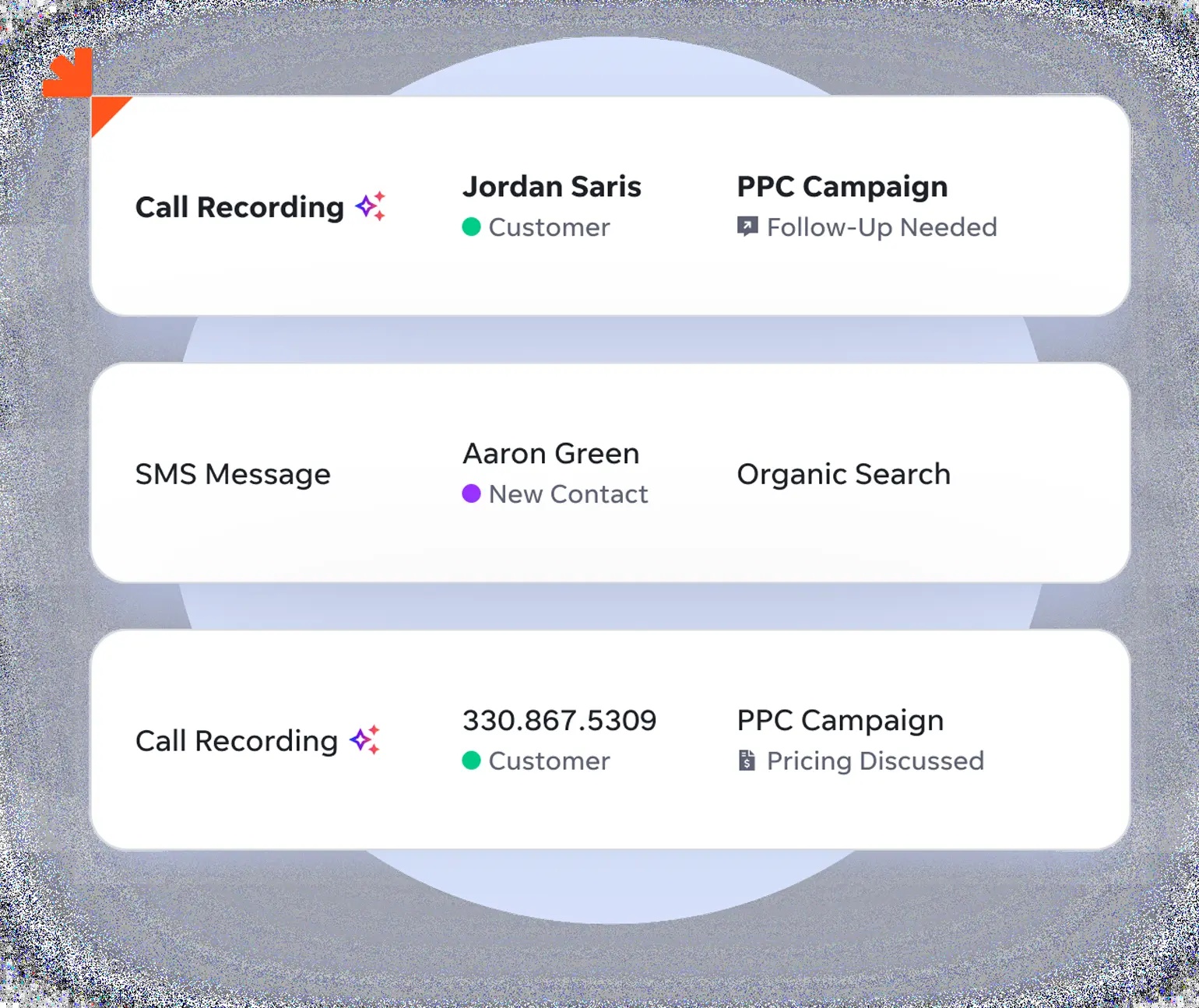
PowerLift Hydraulic Doors provides a concrete example. LocaliQ’s case study describes search and social advertising paired with Dash lead management. Staff could listen to calls, text prospects and inspect the keywords receiving advertising budget. Those are practical changes to the daily work of selling a specialized product.
The vendor reports a 46% month-over-month increase in lead-form conversions and a 145% increase in SMS leads over 60 days. These are company-published results for one customer, not a forecast for another. Amanda Bennett, PowerLift’s marketing administrator, described getting “a better understanding of how we’re getting leads”. The useful detail is the visibility into what happened next.
There is an important distinction here. A cheaper click measures the price of attracting attention. A lead measures an expression of interest. Neither tells an owner whether a job was booked, paid for and delivered profitably. Connecting those events is the harder measurement task, especially when several branches answer the phones.
05 / The price of picking up
Dash extends that logic into automated response. LocaliQ announced its AI lead-management offering in January 2025 and a conversational Voice Agent that June. Its June 2026 suite included voice, SMS, website chat and scheduling. The intended job is to capture an enquiry, qualify it and keep it moving while the owner is occupied.
LocaliQ’s June 2025 launch announcement said its analysis of customer data found roughly one in four inbound calls went unanswered. That describes its own observed customer data, not every small business. Still, it explains the product decision: spending more to make the phone ring has limited appeal when the business struggles to pick up.
“Every unanswered phone call represents not just lost revenue, but a missed relationship.”
Bill Scanlon, LocaliQ general manager, June 2025
$119Manage / month
$199Convert / month
Historically, ReachLocal bundled media, optimization, reporting and service into fixed monthly packages. Today a buyer should distinguish the managed campaign proposal from the Dash subscription. Ask how much reaches advertising platforms, what service is included, and how success will be measured. The useful comparison is the entire cost of acquiring a customer.
The lesson a reader can copy is straightforward: examine the handoff before increasing the spend. Track which enquiries become appointments, listen to missed opportunities, and assign responsibility for the next response. Evaluate cost per booked customer alongside cost per lead.
That approach depends on something worth buying, enough margin to support acquisition costs, and the capacity to deliver. Faster replies cannot manufacture demand or repair poor service. A team already managing its campaigns and follow-up effectively may get less value from another platform. ReachLocal’s long journey offers a sensible buying question: which part of getting a customer is actually failing?
LocaliQ website · Newsroom · Marketing blog · LinkedIn · X · Instagram · Facebook · YouTube · Dash product video ↗