An ice-cream cake is an unforgiving introduction to logistics. The customer wants it now, the office wants it intact, and the product has a fairly strong opinion about temperature. In 2002, while running Dairy Queen franchises, Ray Walia opened a downtown Vancouver location and worked with a friend on online ordering. Customers could have a cake delivered to their office within 30 minutes. His route into technology came with frosting.
That experiment offers a useful way into Walia’s career. He starts with an ordinary inconvenience and asks whether a better arrangement might remove it. Later, the inconvenience would be the isolation of starting a company. The arrangement would become Launch Academy, the Vancouver incubator he co-founded in 2012. Its beginnings were modest enough to fit on a furniture invoice.
A business you could learn backstage
Walia grew up around his father Peter’s construction work and Bollywood concert productions. He and his brother Sanjay helped behind the scenes. The family business supplied an education in the less glamorous parts of putting on a show: somebody has to make the occasion possible before anybody can applaud it. Walia went on to study entrepreneurship at the British Columbia Institute of Technology and qualified as a management accountant.
Entertainment, accounting and technology can look like unrelated entries on a résumé. In practice, they keep encountering the same questions. Will people turn up? Does the price cover the work? Can the next event run more smoothly? His later career would repeatedly bring audiences, business models and new technology into the same room. The spreadsheet had found somewhere sociable to go.
The desk that kept multiplying
Launch began on April 1, 2012, with Walia, Roger Patterson and Jesse Heaslip looking for fellow entrepreneurs to work alongside. Mike Edwards joined as a co-founder and offered space at GrowLab. Within two weeks, 12 entrepreneurs had joined. By the end of April, the number was above 30. Walia used desk revenue to buy more desks. Furniture was doing a respectable impression of a business plan.
Demand soon extended beyond somewhere to put a laptop. Founders wanted shared resources and opportunities to learn. Alex Chuang joined as a co-founder in September, helping develop the workspace into a hub with startup programs. In April 2013, Launch moved into a 12,000-square-foot home in Gastown. The original desire for company had become an organization with responsibilities of its own.
Entrepreneurs joining Launch. The proceeds bought more desks.
The reason for gathering them mattered as much as the address. Walia wanted founders close enough to trade experience and introductions while they were still early in the work. A company might have one pressing problem; the person nearby might have solved it last Tuesday. An incubator cannot promise that coincidence. It can make the meeting considerably less unlikely.
In its Gastown years, Launch combined desks, teaching and mentoring, with experienced entrepreneurs holding office hours. The appeal was practical: learn while making decisions that actually affect your company. Walia’s approach gave a founder permission to arrive unfinished. You could have a question before you had a polished explanation of why you were asking it.
The mentor gets a lesson, too
Walia has a pleasingly inconvenient admission for anyone who imagines mentoring as a senior person dispensing wisdom across a table. “I often learn more than I teach.” Working with founders keeps him exposed to unfamiliar industries, fresh problems and technologies that refuse to remain familiar for long. Experience is useful here, but curiosity has to keep renewing it.
“I often learn more than I teach.”
Ray Walia, on mentoring
He has described the satisfaction of helping an entrepreneur past a roadblock that feels terminal from the inside. A mentor can sometimes recognize it as part of the process. That change of perspective does not pay an invoice or win a customer, but it may help a founder return to the work with a more useful question. His advice also includes patience. Overnight success makes an efficient headline and a rather poor calendar.
There is a financial dimension to his involvement as well. Walia founded Launch Ventures, whose work spans incubators, innovation labs and investment funds. He has invested in more than 30 startups personally or through his funds. The combination puts him on several sides of the founder’s table: creating programs, backing businesses and watching what happens after the introduction.
Traction, the conference he co-founded, gave that exchange a larger audience. Its subjects include the practical machinery of growth: product decisions, raising capital and building a team. In 2020, when the annual conference moved online, the organizers chose weekly sessions rather than reproducing a two-day event on a screen. The material could arrive in smaller portions, with founders, investors and executives sharing their experience over time.
The change is a useful example of how Walia’s work travels between formats. A conference makes room for a concentrated gathering; a recurring session makes room in someone’s week. Both depend on an audience believing the next conversation will be worth attending. His entertainment background makes an interesting companion to the task of earning that attention.
Vancouver, with the doors open
The local gathering grew international ambitions. In 2015, Walia represented Canada at the G20 Young Entrepreneurs’ Alliance summit in Turkey. That year he also co-founded Victory Square Ventures. In August 2016, he was appointed chief operating officer of Fantasy 6 Sports, bringing his accounting and entertainment experience into a company building games and fan-engagement products. Sports supplied another meeting point for audiences and software.
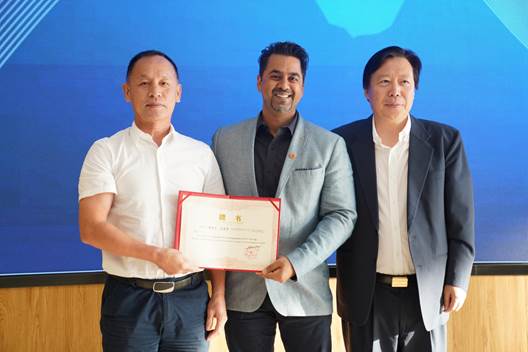
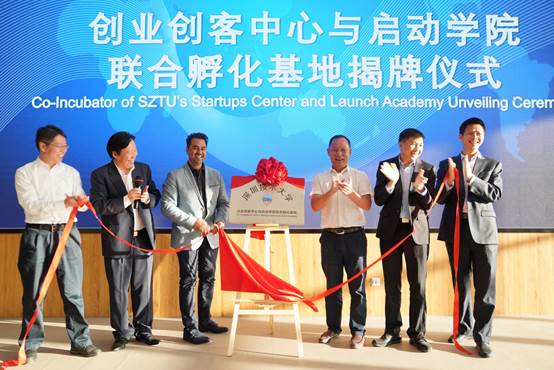
In November 2019, his work took him to Shenzhen Technology University. He was appointed a guest professor, and the university unveiled a joint incubator with Launch Academy. The partnership was intended to support students with entrepreneurship and career planning. It was a concrete extension of a familiar idea: give people somewhere to test their ambitions, with access to people who can help.
That same month, Walia visited India to promote the Maple program and discussed bringing technology companies to Canada in a filmed interview. Helping a business enter a new country involves more than making it sound welcome. It needs contacts, context and a way to understand the market. Those are recurring concerns in his work, whether the founder is crossing an ocean or simply looking beyond their own desk.
A room is useful. Keeping it is work.
Building a community also produced friction. In 2021, as LaunchPad moved fully online and Launch reduced its physical footprint, Walia spoke publicly about inadequate government support for Vancouver’s technology community. His frustration reached across municipal, provincial and federal levels. The organizer who encouraged other founders could be pointed about the conditions in which they were expected to build.
The episode complicates the cheerful version of the startup hub. A busy room has operating costs; introductions require someone’s time. The people who benefit from a local network and the people who keep it running are not always the same people. Walia’s criticism made that maintenance visible. Even a culture of helping one another needs a workable arrangement for the rent.
Launch continued widening access to its programs. In May 2021, it announced $100,000 in scholarships for up to 300 aspiring entrepreneurs to take its online startup course. It also announced $120,000 in grants, offering up to 100 technology startups a 50 percent subsidy on LaunchPad fees. The distinction between wanting to learn and being able to pay for it had become a program-design problem.
The numbers belong to the founders
In July 2024, Walia was inducted into the BC Innovators Hall of Fame. By then, Launch reported supporting more than 6,000 entrepreneurs from over 100 countries. Three hundred ventures had reached seed or Series A funding, collectively raising more than $2.5 billion. Those figures describe the businesses in Launch’s network and their fundraising. They give a sense of the distance travelled from the first month’s desk purchases.
Launch’s reported network milestones at Walia’s 2024 Hall of Fame induction.
In 2026, Launch Academy appeared in BetaKit’s Most Ambitious project, in its Community Builders category. The category is apt for a career whose results are spread across other people’s companies. An investor can point to a portfolio. An organizer must also account for the useful conversations that never become a press release. The latter are harder to display neatly, though founders tend to remember them.
There is now more than one Ray
Walia’s appetite for experiments has survived the institutional milestones. For a 2025 interview, he let an AI version of himself attempt the answers first. He then revised the draft and discarded an answer that “didn’t sound like me.” Even a digital stand-in, apparently, needs an editor. He has also connected his approach to seva, the principle of selfless service he grew up with in a South Asian immigrant household.
His public Delphi profile offers an AI counterpart trained around questions founders have asked him about companies, capital and Vancouver’s technology community. The experiment raises a practical question for a mentor: how do you make accumulated experience available when you cannot personally take every call? Walia is willing to try software as part of the answer. The human review remains a telling detail.
Recent projects keep returning to familiar needs. Launch’s May 2026 review of 2025 described a Vancouver Tech Hub partnership with Global Relay and the return of Launch Builders Demo Night. Its current offerings include buildrs, a community platform, and Revenue Factory, a growth program. On LinkedIn, Walia has been emphasizing repeatable systems and the founder’s responsibility to check AI-generated work.
Online tools, a demo night, another room full of builders: the arrangements change as the work changes. Walia keeps finding ways to place experience within reach of someone who needs it. The first entrepreneurs wanted company, and he bought more desks. Fourteen years later, that remains a remarkably legible starting point for everything that followed.