He builds the seatbelt for the AI that's about to drive your entire company.
Ravin Thambapillai runs Credal.ai, a New York company with a deceptively simple pitch: before your AI talks to OpenAI or Anthropic, it should talk to Credal first. The platform sits between a company's data and the large language models everyone wants to use, redacting secrets, enforcing who is allowed to see what, and keeping an audit log of every exchange. It is plumbing. It is also, increasingly, the thing that lets a bank, a hospital network, or a federal agency say yes to AI instead of no.
His thesis is bigger than a security feature. "What I actually believe we are building is the safe and access controlled data environment for your AI employees," he says. "Because we believe that five years from now, every company is going to have hundreds of these AI employees running around doing work." Credal is the office those employees report to - the place that decides which doors they can open.
Today Credal handles over a million model queries a month for customers including MongoDB, Wise, Checkr, Lattice, Comcast, and the US federal government. It got there on a $4.8M seed led by Spark Capital and a Y Combinator badge from the Winter 2023 batch. None of that is the interesting part. The interesting part is how a philosophy student ended up here.
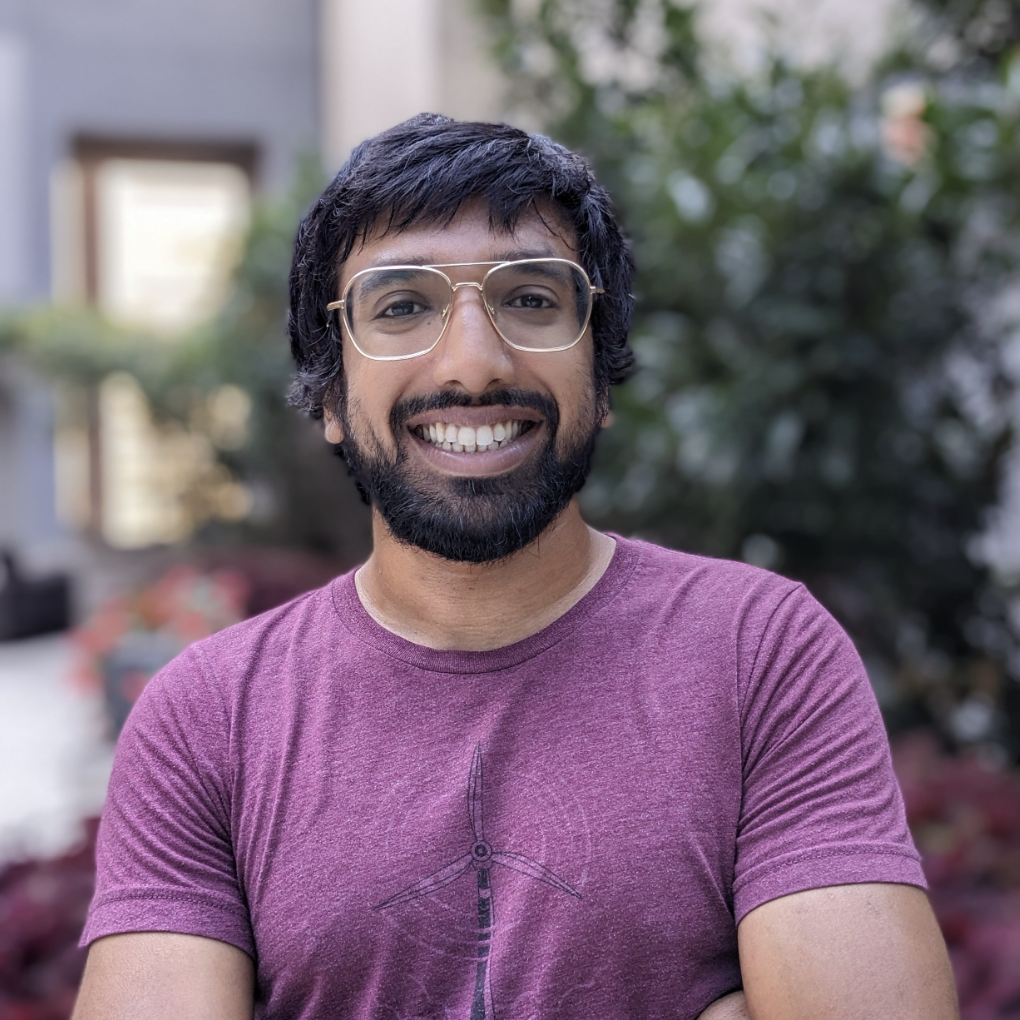
Co-Founder & CEO, Credal.ai. Started December 2022, months before ChatGPT made AI a dinner-table word.
Seven years at Palantir building AI systems for banks, life-sciences firms, and public-health institutions.
Studied Economics and Politics at Oxford, then taught himself to code well enough to get hired at Google.
"I want the AI to help brief you, but I also don't necessarily want it to accidentally reveal that I'm trying to get Ilia fired."
Credal needed its first real enterprise customer. Ravin set his sights on the CISO of Checkr.
Scrolling the CISO's LinkedIn, he noticed something most people would have skimmed past: the man listed Klingon among his languages. So Ravin wrote the outreach email in Klingon. It earned a meeting - the kind of meeting Credal was nowhere near ready for. There was no demo. The team built one overnight, walked in the next day, and walked out with a three-month pilot. That pilot became a six-figure deal.
It is a perfect tell. The lesson is not "be quirky." The lesson is that Ravin reads people closely and is willing to do the un-scalable, slightly absurd thing when it is the thing that works. He calls the discipline behind it staying "ruthlessly focused on talking to actual customers, understanding the actual pain points and solving those actual pain points."
Credal did not start as a security company. It started as an "AI chief of staff." During a pilot at a 100-to-200 person company, Ravin asked executives the only question that matters: what would you pay for this?
"$20 a month... maybe $10 a month."
That answer would have flattered a lesser founder into denial. Instead it ended the product. What kept lighting customers up was not the chief-of-staff act - it was the security layer underneath it. So Ravin pointed the whole company at the part people actually wanted. The reward for listening: 20-30% monthly growth and a real business.
Jack Fischer spent five years at Palantir - airline reliability, then defense computer vision - and ran US commercial hiring. He'd shipped models where mistakes are not abstract.
Both founders had deployed AI inside institutions where a data leak is a headline. They didn't have to imagine the security objection. They'd been the person raising it.
Credal started before ChatGPT broke containment. By the time the rest of the world panicked about enterprise AI risk, Ravin had a head start measured in months.
His LinkedIn vanity URL is, with zero subtlety, /in/ai-security. The man committed to the bit.
He broke into Google from a philosophy, politics and economics background by teaching himself to code. The non-obvious path is kind of his whole resume.
Credal is one of the few vendors of its kind registered under the EU-US Data Privacy Framework - the unglamorous paperwork that lets regulated European firms like Wise sign.
The founding moment was a dinner, not a hackathon. Two operators comparing notes on hospitals and defense, agreeing the hard part was trust.
He measures product ideas by a single brutal yardstick: would a real customer pay real money? When the answer was "$10," he killed his own product.
His default cold-outreach setting is whatever it takes. See: Klingon.
"Five years from now, every company is going to have hundreds of these AI employees running around doing work."
There is a version of the AI gold rush that's all demos and dazzle. Ravin Thambapillai is building the opposite: the audit log, the permission check, the redaction step, the registration under a privacy framework nobody tweets about. It is the least viral corner of the most viral technology of the decade.
That is the bet. If hundreds of AI agents really do end up working inside every large company, someone has to decide which files each one can open, what they're allowed to whisper to an outside model, and who gets to read the receipts. Credal wants to be that someone. Ravin spent seven years at Palantir learning that the hard institutions - the banks, the hospitals, the agencies - only adopt powerful tools when the safety is real and provable. He's spending the next stretch making that true for AI.
The grin in the photo helps. So does the willingness to learn Klingon for a single email. But the durable thing is the instinct underneath: ask people what they'd actually pay for, then go build exactly that and nothing else.