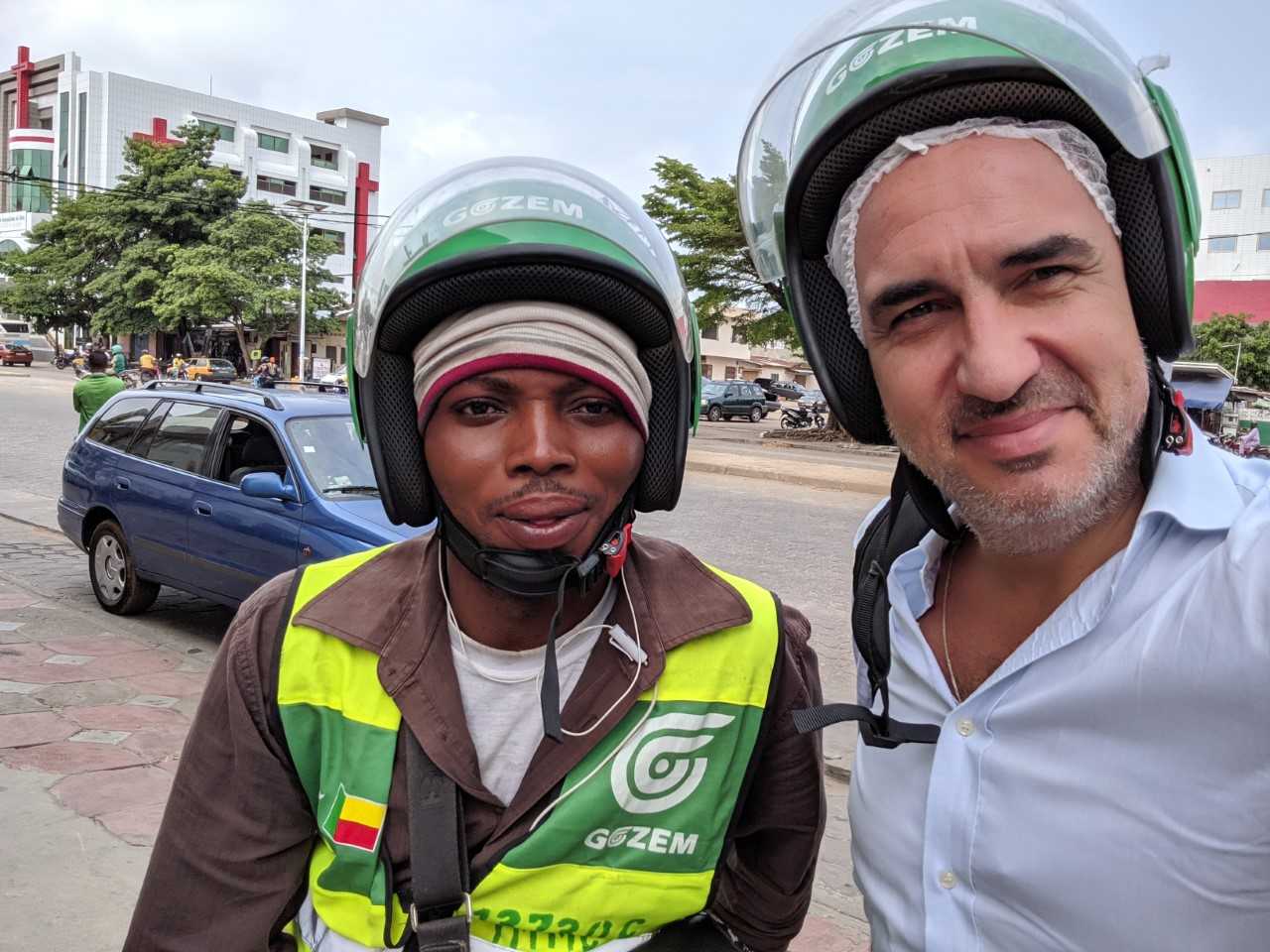
The motorcycles were already there. On a business visit to Togo and Benin in late 2017, Raphael Dana saw streets full of motorcycle taxis and recognized a possibility familiar from Southeast Asia. Someone needed a ride. Someone else had a motorcycle. A phone could bring them together. The apparently modest task of arranging that meeting would eventually lead him into deliveries, vehicle loans and mobile money.
“We thought we could use the Grab and Gojek (model),” he recalled in 2019. It is an unusually plain sentence for the birth of a technology business. No thunderbolt, no claim to have invented transport. Dana had encountered a way of organizing everyday transactions in one part of the world and wanted to see whether it could work in another.
Gozem began operating in Togo in November 2018. Dana, one of its co-founders and now its co-CEO, had already spent years building businesses across industries and borders. His next venture put a particular question to work: how much could change if the ordinary business of getting through a day became easier to arrange?
A web agency, a magazine, then a different map
Dana was born in France and grew up in Geneva. He later went to the United States to study at Northeastern University. The outline is international before Gozem ever enters the picture. Geneva provided the starting point for an entrepreneurial career that moved through the early commercial internet and into publishing.
He co-founded NetArchitects in 1996, then built a Swiss media business associated with the financial and lifestyle magazine Market. These were different kinds of work. A web agency helped other organizations establish themselves online. A magazine assembled an audience and a commercial identity around its readers. Both required finding people willing to pay for something that had to earn its place in their lives.
In 2000, the Swiss magazine Bilan named him its most promising entrepreneur of the new millennium. The millennium has since acquired considerable mileage. The more revealing point is that Dana’s entrepreneurial experience predates the smartphone era on which his present company depends.
The succession of businesses also gives his story a useful texture. He arrived at African app services with experience selling, expanding and advising. The digital product mattered, but so did the business around it: customers, partners, money and the practical task of making an idea work somewhere new.
Singapore supplied the reference points
In Singapore, Dana founded Galixo, a consultancy focused on growth and market entry. Its work included advising Viber on international expansion. He also became involved in mentoring entrepreneurs at Singapore Management University. By 2017, he had co-founded an IEG Singapore joint venture providing corporate finance advice to technology companies in Southeast Asia.
These roles put him close to the recurring problem of crossing markets. A company can carry its name, software and balance sheet across a border. Its assumptions travel less neatly. Distribution, language, payment habits and customer expectations all need attention. Dana’s work before Gozem gave him several ways of approaching that problem.
He described the attraction of Asia in terms of serving very large numbers of consumers and earning small amounts from individual transactions. That economics differs from building a narrowly targeted offering for a smaller, affluent audience. An inexpensive ride can look trivial on its own. Repeated journeys, made by many people, begin to look like a business.
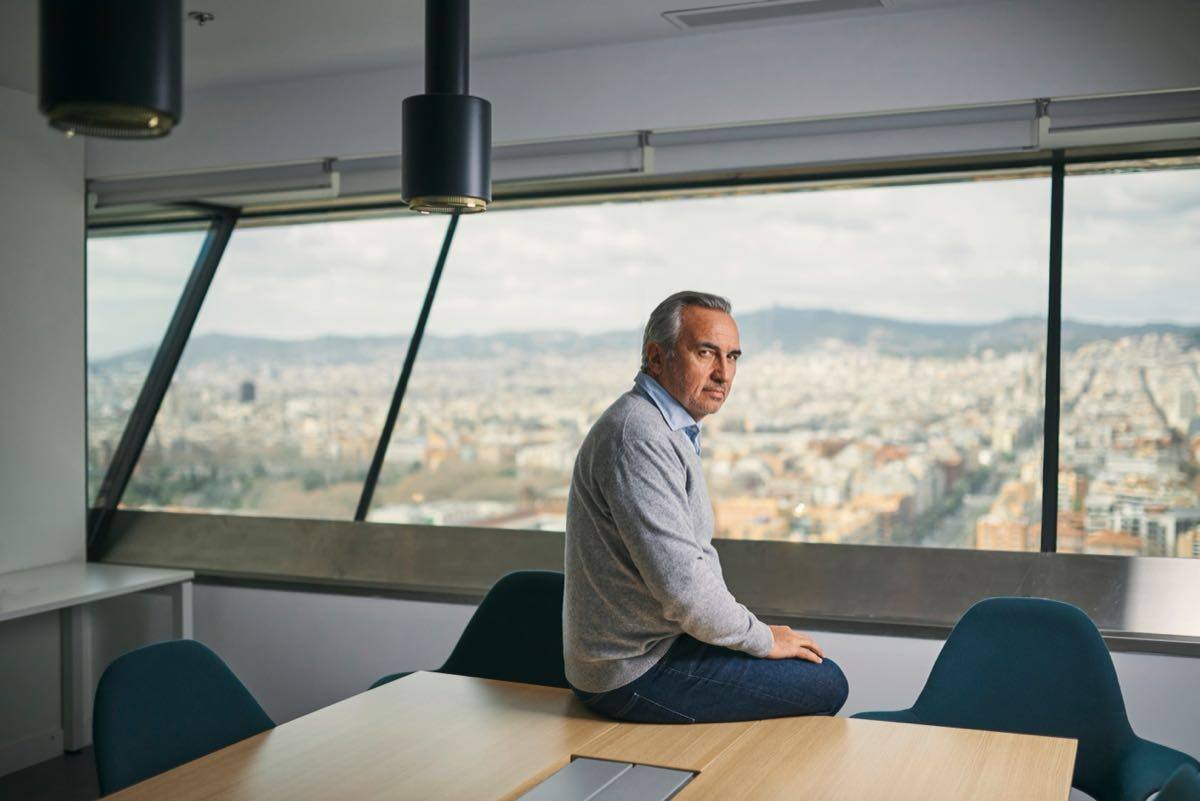
By 2023, he had moved to Barcelona to be closer to African time zones. It is a pleasingly practical detail in a career spanning continents. International ambition still has to negotiate the clock. A founder can admire the opportunities in distant markets and also prefer that meetings happen at a civilized hour.
The right conversation, the right streets
Dana’s route to Gozem also involved Emeka Ajene, who had worked at Uber and was developing a thesis about business models suited to West Africa. After Ajene shared some of his thinking publicly, the two connected. They had been looking toward Asian examples and exploring what those examples might offer African markets.
Gregory Costamagna became another co-founder. Gozem’s origins therefore belong to a group of people bringing different experience to a common opportunity. Dana’s role makes more sense within that company of collaborators than in the solitary-founder mythology that tends to gather around startup stories.
The choice of Togo gave the venture a specific beginning. Motorcycle taxis were an existing service, and Dana spoke French. Customers and drivers already knew what a journey was worth to them. The proposed change lay in how the journey was requested, priced and organized, and in what a platform might subsequently provide around it.
There is a distinction between noticing a busy street and building a business that can participate in it. The first takes a visitor’s eye. The second requires local execution. Gozem’s launch made Dana’s cross-border thesis answerable to actual riders and drivers, whose interest would be determined by the usefulness of the service rather than the elegance of the presentation.
- 1996Co-founds NetArchitects in Switzerland
- 2016Managing partner at Reengine Ventures
- 2018Gozem begins operating in Togo
- 2025Gozem raises a $30m Series B
The app had to meet the driver
The early operation involved more than installing software. In 2019, Gozem’s onboarding process included checking drivers’ documents and providing training. Smartphones, helmets and insurance formed part of the offer to registered drivers. One training session covered the work itself; another included using the technology and managing financial matters.
That list gives some weight to the word “platform.” A passenger may experience a button on a screen. The driver needs equipment, an account, instructions and a working relationship with the company. A booking interface can be simple precisely because many other arrangements sit behind it.
Dana’s current business has kept the driver close to its financial proposition. Gozem calls its drivers “Champions.” Its driver offering includes vehicle and smartphone financing, coaching and tools to track earnings. The language is cheerful; the underlying subject is a working person’s ability to obtain and manage the equipment needed to earn an income.
For Dana, this connects the growth strategy to the practical conditions of the service. More customers are useful only when drivers can serve them. A motorcycle, car or phone is an operating asset as well as a purchase. Helping someone acquire it brings Gozem into a longer relationship than the duration of a single trip.
One journey creates another question
Gozem gradually added services around transport: food and grocery delivery, shopping, event tickets and financial products. Dana’s account of the business groups these activities into four areas: ride-hailing, a marketplace, vehicle financing and Gozem Money. The variety sounds expansive. Its organizing idea is the repetition of ordinary needs.
A commute recurs. Food has to be bought again. Money needs to move between people. These activities offer different reasons to open the same application. They also make the company’s job more complicated. Each additional service needs to justify itself through use, and each adds relationships that someone has to manage.
The term “super app” can make this sound like a contest to accumulate buttons. Dana’s story is more interesting when followed through the connections between activities. Transport introduces a customer to the service. Deliveries give that customer another occasion to use it. Financing supports the driver’s equipment. Payments provide a way to settle transactions.
Motorcycles, tricycles
and cars
Food, groceries
and shopping
Vehicle financing
for drivers
Mobile money
and transfers
The connections explain his aspiration to make Gozem useful across a day. They also supply a fair test of that aspiration. A customer has little reason to care how many business divisions an application contains. The next ride or delivery still has to be worth booking.
Finance joins the ride
In 2025, Gozem raised $30 million in Series B funding, combining debt and equity. The round was led by SAS Shipping Agencies Services, an MSC subsidiary, and Al Mada Ventures. The stated priorities included expansion, financing additional vehicles and developing Gozem Money.
The investors bring connections to logistics and financial services, fields that now sit alongside the company’s transport origins. For Dana, whose earlier career included corporate finance advice, the transaction represents another stage in assembling a business that needs both operating capability and capital.
Gozem Money launched in Togo in October 2025 through a partnership with NSIA Banque Togo. Its functions include sending and receiving money and paying bills. Mobile money makes the financial side of the company visible to the customer, while vehicle financing works on the supply side of the transport service.
By June 2026, a further financing project for Gozem had been approved and signed, with disbursement still pending. The disclosed package of up to €21 million was intended to support fleet expansion in Benin, Cameroon, the Republic of Congo and Togo during 2026-2028. Those dates matter: this was a financing commitment and a forward plan, rather than evidence that every planned vehicle had reached a driver.
A traveller with a recurring destination
Dana’s self-description is economical: “Entrepreneur, traveller, kitesurfer & pilot.” His interests also include photography and design. These details add a little daylight to the record of companies, advisory roles and financing rounds. There is a person here who has interests beyond the next market-entry discussion.
“Entrepreneur, traveller, kitesurfer & pilot.”
Raphael Dana
His career has repeatedly involved movement: from Geneva to American studies, from Swiss businesses to Singapore consulting, and from Southeast Asian reference points to West and Central African operations. Across those changes, the recurring work has been identifying a market and finding a way to participate in it.
Gozem gives that pattern a concrete daily destination. The company has expanded from Togo into Benin, Gabon, Cameroon and the Republic of Congo. Its ambition extends across services as well as countries. For Dana, the question first prompted by motorcycle taxis now includes how a driver acquires a vehicle and how a customer pays.
The attraction of the story lies in its starting material. The street already contained demand, skill and people earning their living. Dana saw a business possibility in connecting them differently. Years later, with loans and payments added to the proposition, the motorcycle remains a useful reminder of where the whole enterprise began: somebody had somewhere to go.
Follow the conversation
- Gozem - services and company news
- Raphael Dana on LinkedIn
- Raphael Dana on X
- Personal profile and interests
- Dana’s writing on Medium
- Watch: Dana interviewed on CNN
- Listen: The Kevin Shee Show, episode 39
- Listen: Connecting Africa - Rise of the super app
- Alumni Voices: Dana’s path after Ecolint