NatSteel had a familiar enterprise problem: a capable software platform and a bill that made it difficult to love. The steelmaker used Salesforce Service Cloud, but only a narrow part of what it was paying for. It was considering leaving. Ranosys, brought in to assess the options, proposed a less theatrical move: change the licenses.
- What it does: builds and connects commerce and enterprise systems.
- Why it matters: expensive software still needs to fit the work.
- What to borrow: audit usage before commissioning a replacement.
The bill came before the rebuild
Ranosys’s team moved NatSteel from Service Cloud to Salesforce Platform licenses, rebuilt the relevant case functionality around a custom object, adjusted permissions and migrated records. The published case reports licensing costs fell by as much as 40%, with existing operations preserved.
The first thing that stopped making sense was the relationship between features used and licenses purchased. A technical health check offered another route. That distinction matters to a buyer: a lower recurring license bill is a specific saving, while a platform replacement brings a different set of costs and decisions.
The customer between two databases
Consider a different headache, involving flip-flops. Havaianas’s Indonesian operation, managed by Kanmo Group, had a Shopify Plus store and Capillary CRM. Staff manually synchronized customer information and loyalty points. Records became inconsistent or duplicated. The storefront could look perfectly respectable while the machinery behind it required repeated human intervention.
Ranosys built a custom application connecting the systems. It checked whether customer records already existed, linked registration flows and let shoppers redeem loyalty points through discount codes. The CRM then received the updated balance. ValueFirst handled communications such as one-time passwords.
The useful detail is the round trip. Displaying points at checkout solves only half the problem; the remaining balance must travel back. Ranosys’s account describes less manual updating and fewer inconsistencies. For a retailer, that makes integration a customer-experience decision as much as an engineering assignment.
Register + redeem⇄Capillary CRM
Record + balance
Custom application + APIs
A boutique with a long tool belt
Rameshwar Vyas founded Ranosys in Singapore in 2008. In an anniversary post, he described bootstrapping during the financial crisis. Today, its public leadership list still places him in the CEO role. Its geographical footprint connects Singapore and international customer offices with delivery operations in India.
The company calls itself “Big enough to deliver, small enough to care.” That is its positioning, rather than a measurable guarantee. Its more tangible distinction is the combination of commerce implementation, enterprise integration and ongoing support across Salesforce, Adobe, Shopify, Microsoft, OutSystems and ServiceNow.
Clients buy consulting, development, migration, integration and managed services. Ranosys also offers staff augmentation. It occupies the space between the software vendor and the customer’s actual operation, competing with specialist implementation agencies and larger consultancies. Its portfolio includes work for Under Armour, Skechers, Victoria’s Secret and Smythson; the assignment can be ongoing optimization rather than a new store.
Three birds, three starting points
Some of the work comes packaged with feathers. Phoenix is its Salesforce Commerce Cloud accelerator. Falcon sits on Adobe Commerce. Plover uses Shopify Plus. The names make a tidy collection; the commercial idea is reusable code, templates and integrations that reduce how much each engagement must rebuild.
Phoenix bundles storefront components and connections to payment, order-management and marketing systems. Falcon publishes packages ranging from four weeks to eight to ten weeks, with the longer option addressing integrations. Plover advertises a three-week launch. Those are vendor delivery propositions, with scope doing much of the heavy lifting.
A buyer can copy the underlying discipline: identify what is ordinary before paying to customize it. Product pages, payments and shipping rules often share patterns. Unusual data models, legacy connections and operational approvals can consume the time a reusable storefront saves. Ask which dependencies are included before treating any launch schedule as a promise.
First, make it work without a signal
Ranosys’s Shell case moves the scene from checkout to an equipment-repair workshop. The documented problems included inconsistent quality checks, maintenance delays and limited supervisory visibility. The solution combined equipment-specific checklists, dynamic forms, workpacks and a management application.
Field workers received a tablet interface with offline operation and synchronization when connectivity returned. QR scanning reduced manual entry of workpack details. This is the kind of design decision that disappears from a grand transformation slogan: an application has to function where the equipment is. A reliable connection cannot be an unstated prerequisite.
An application has to function where the equipment is.
Start with one department
At ComfortDelGro, the obstacle was communication. Employees with corporate email struggled to connect with workers who lacked it, while newsletters and announcements consumed paper. Ranosys developed a SharePoint Online intranet with announcements, calendars, news and galleries. Its case describes a departmental launch followed by a decision to expand across divisions and business units.
That sequence is useful: establish access, make one department’s workflow work, then widen the rollout. Installing a portal alone does little if the people it should reach remain outside the communication loop.
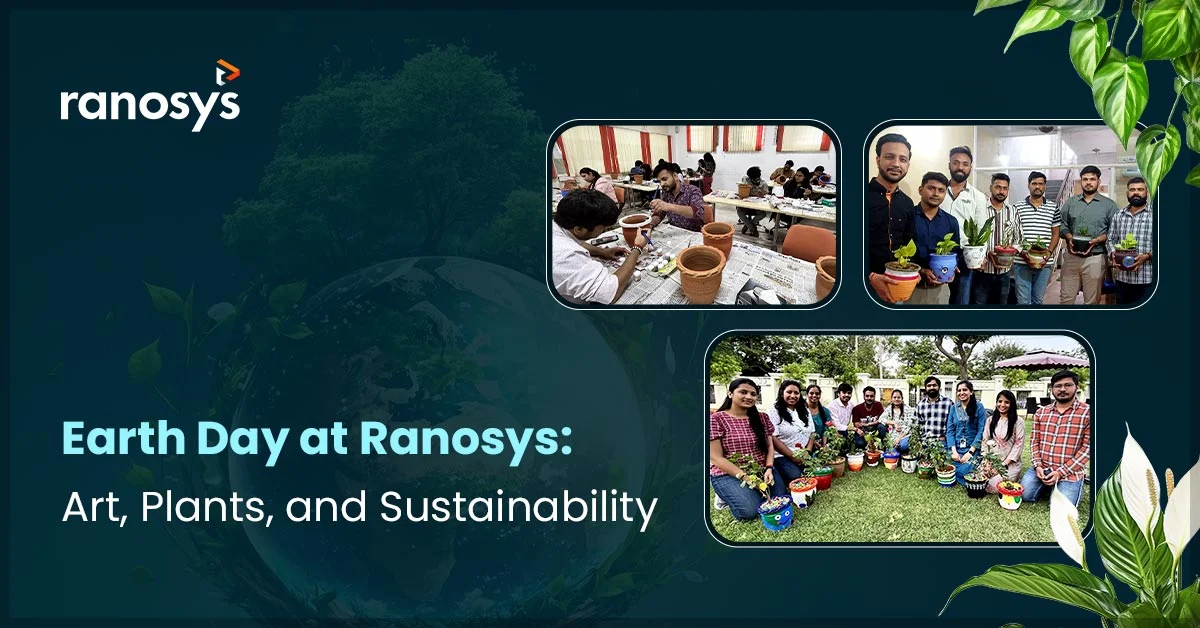
In March 2026, Ranosys announced a formal ServiceNow consulting, implementation and reseller partnership, adding more IT, HR and customer-service workflow work to its offering. Its public culture material also describes community activities and a Pledge 1% commitment. These commitments sit alongside a business whose practical test is straightforward: can the people using the system complete the task?
For the next buyer, start with one awkward handoff: an unused entitlement, a duplicate customer, an inspection waiting for connectivity. Count the repeated work. Check permissions and data ownership. Then decide what needs building. NatSteel’s example suggests the first useful change may be smaller than the replacement you had in mind.