A chief financial officer has a particular relationship with a software project. The demonstration eventually ends. The bills continue. Somewhere between the two, people must learn a different way to work. Before Rambabu (Bobby) Yarlagadda founded BPO Systems, he had responsibility for an Oracle implementation at Upside Media. He knew enterprise applications from the side of the table where the business had to live with the result.
That responsibility offers a useful opening into his career. Yarlagadda is the founder, president and CEO of the Walnut Creek, California, services firm. Its work includes implementing and supporting Oracle enterprise resource planning and customer relationship management applications. Those labels occupy little space on a business card. Inside an organization, they reach into the arrangements by which people plan, record transactions and serve customers.
His path there passed through food companies, restaurant operations, beverage sales and multimedia software. The variety is striking; the recurring work is easier to miss. Across those businesses, he held jobs concerned with how money, information and decisions moved. Read in that order, the journey into enterprise systems begins to look like a continuation of an existing conversation.
A finance education with machinery attached
Yarlagadda’s education crosses several departmental boundaries. He earned bachelor’s and master’s degrees in engineering before an MBA in finance and marketing at the University of Chicago. Engineering, finance and marketing make an interesting combination. One asks how a system works, another how its economics behave, and a third how it meets the customer. A business has to answer all three, sometimes in the same meeting.
At Beatrice Foods, he progressed from financial analyst to division controller. His responsibilities included work on cost structures and supply chains. They also included designing and overseeing business systems: sales forecasting, executive decision support and activity-based costing. The finance work already had a technical dimension. Understanding the numbers involved understanding the processes that produced them.
A forecast is a good example of the connection. It may arrive as a number in a report, but it represents expectations about customers, products and timing. Its usefulness depends on what people do with it. A system that produces a forecast therefore participates in the running of a business. It belongs in the same conversation as purchasing, distribution and the decisions a manager must make next.
His subsequent role as field finance manager at Taco Bell put business processes and supporting IT together again. He worked on changes to both. There is a practical education in that pairing: altering the way a business operates means attending to the information infrastructure underneath it. The organizational chart may separate finance from technology. The work is less obliging.
- 01Beatrice Foods → Taco BellFinance, costs and operating processes
- 02Pepsi-Cola → Sara LeePlanning, sales finance and control
- 03Consulting → Living Books → UpsideStrategy, finance leadership and applications
- 04BPO SystemsOracle implementation and support
His qualifications also include the Project Management Professional credential. It sits comfortably beside the finance and engineering education: projects involve costs, schedules, responsibilities and an agreed result. In a career that repeatedly touched business systems, the credential adds a formal project-management strand to the practical experience. Later, his professional-association service would bring that strand into view outside his own firm.
The customer at the other end of the contract
At Pepsi-Cola, Yarlagadda became group manager of planning and CFO for National Sales. The combination placed planning alongside commercial relationships. His work included developing a business-planning process for Pepsi-Cola North America and managing the annual operating-plan process. A plan in an organization of that kind must connect the intentions of the business with the practical commitments of its teams.
He also negotiated long-term contracts with retail and food-service customers, including work on agreements with Walmart and Marriott. Contracts bring a different kind of specificity to finance. The terms have consequences for both parties, and a promising sales opportunity must survive an examination of its economics. The customer’s enthusiasm is welcome. Someone still has to read the agreement.
His Pepsi work also included co-leading a sales-force automation initiative. Here, again, a finance role extended into the tools people used. Salespeople needed information that helped them work with customers. The project brought business planning, financial responsibilities and technology into the same field of view. It is a useful episode to keep in mind when considering his eventual choice of business.
A former business planner who worked under him, Laura Daigle, has described his attention to the sales team’s financial-analysis needs and his support for employee development. That perspective adds a human dimension to the succession of titles. A finance manager’s work is received by colleagues who need an answer, a decision or the room to develop. The work travels through relationships as well as reports.
A publisher, a CFO and an Oracle implementation
After Pepsi, his career included the group controller role at Sara Lee Meats and management consulting with New England Consulting Company. Consulting assignments involved businesses including Kraft, Heinz, RC Cola and RJR Nabisco. The subject matter ranged from shareholder value to distribution strategy. Products changed; questions about costs, channels and operating choices continued to follow him.
At Living Books, a multimedia software company, he served as senior vice president and CFO. His work included a shift in business strategy toward mass-merchandiser channels for an established product line. A product’s prospects depend partly on where customers can find it. Distribution gives a finance executive another reason to look beyond the ledger and into the route between a business and its buyers.
Then came Upside Media, where he held the posts of executive vice president of administration and CFO. His responsibilities included implementing Oracle 11i ERP and CRM applications. The earlier combination of finance, process and technology was now expressed in an enterprise-software project. The future founder of an Oracle services firm had an implementation to deliver inside someone else’s organization.
The connection matters without requiring an invented moment of revelation. Enterprise applications become part of a company’s working arrangements. Decisions about them can affect users, managers and the people responsible for the accounts. Yarlagadda’s move into services brought experience of those responsibilities with him. His professional route had already crossed the territory his future clients would occupy.
The practical terms of a promise
BPO Systems traces its beginnings to 2000; its California corporate registration followed in March 2001. Yarlagadda built the business around Oracle implementation and support, with operations spanning the United States and India. From Walnut Creek, the company’s work connects to offshore operations in Vijayawada. Its service range also includes database work, integration and staffing.
“Complete satisfaction or we won’t bill you for it.”BPO Systems’ service campaign
Yarlagadda helped promote that service pledge. The wording is refreshingly easy to understand. Consulting can produce elaborate proposals; this sentence gets directly to the invoice. A promise about billing also places attention on the customer’s experience of the engagement. Its interest lies in the obligation it expresses, rather than in any imagined account of how often it has been invoked.
The company’s implementation approach gives business requirements a central role. Its project work emphasizes communication, shared expectations and consultants working alongside client teams. That approach fits the problems a finance executive encounters when systems change. The people commissioning a project and the people carrying it out need a common understanding of the intended result.
Ongoing support extends the relationship beyond implementation. In its Apps DBA offering, BPO Systems describes a team-based arrangement for maintaining Oracle applications, with remote administration and onsite work as needed. The underlying concern is continuity. A working system needs attention after its launch, and an organization needs an arrangement for supplying that attention. The finish line of a project becomes the beginning of ordinary operations.
The service catalogue makes the work quite concrete. An implementation can require reports, interfaces, conversions and enhancements, each connecting the standard application to a particular organization’s needs. BPO Systems’ process includes functional specifications, technical specifications and testing documentation. Those documents describe what a change should accomplish, how it will be built and how it will be checked. They also give a later team something to consult when another change becomes necessary.
Its systems-evaluation work considers benefits, user satisfaction, operating costs and whether the technical architecture meets business requirements. That collection of questions crosses the same boundaries as Yarlagadda’s career. A system can be examined as an engineering arrangement, an expense and a tool people use. Each view supplies information the others need. For a founder who previously carried both financial and administrative responsibility, that breadth of inquiry has a practical connection to the jobs that came before.
Another ledger, closer to home
In 2008, Yarlagadda also served as CFO of the PMI San Francisco Bay Area Chapter. His election to that board took place in November 2007. It is a specific example of his finance work outside the companies in his career: a professional association needed financial oversight, and he took that responsibility.
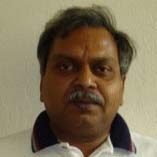
The chapter’s activities included training, conferences and dinner meetings. Its finance work dealt with the resources behind those programs. That places a modest but telling episode beside the corporate appointments. Professional communities have operating needs too. Educational events require arrangements, budgets and people prepared to account for what has been spent.
Taken together, these roles give Yarlagadda’s career a recognizable shape. He moved between industries while repeatedly working where financial decisions met operating detail. At BPO Systems, that experience sits behind a business concerned with applications that other organizations use to conduct their work. The customer’s side of the table remains a useful place from which to understand the founder.