At two in the morning, the glamorous parts of enterprise technology have usually gone home. What remains is payroll, purchasing, a database patch and the stubborn fact that Oracle software cannot be talked into waiting until breakfast. BPO Systems Inc. built its business in that hour. The Walnut Creek, California, firm implements and supports Oracle enterprise systems, designs databases, supplies technical staff and runs managed IT and back-office work through operations in California and Vijayawada, India. Its proposition is not reinvention. It is continuity.
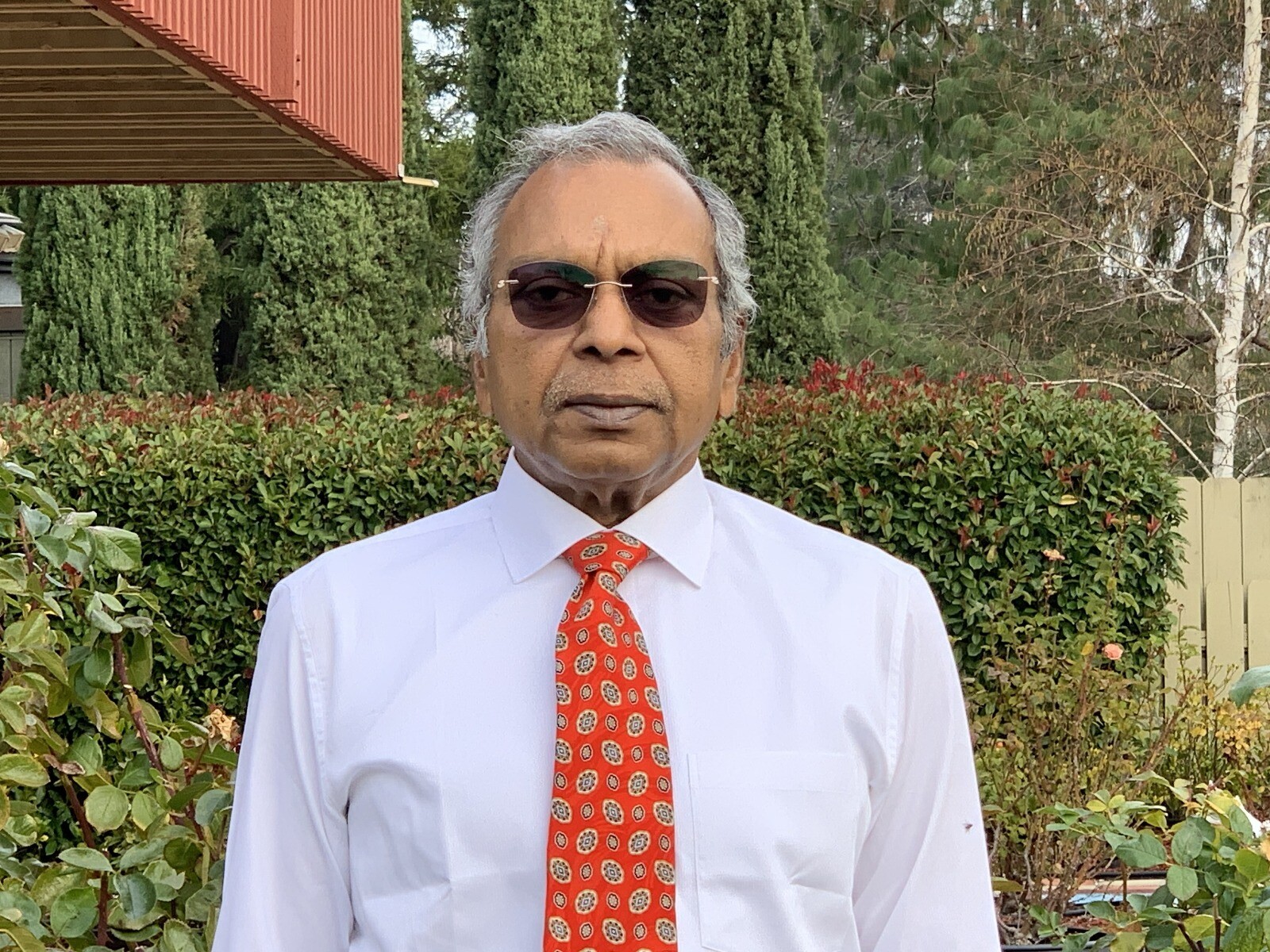
That makes BPO Systems an instructive company precisely because it is not the usual venture-funded technology story. Public records date the corporation to March 2001; its own site describes a 2000 start. Either way, founder Rambabu “Bobby” Yarlagadda has spent roughly a quarter century selling competence around software that large organizations already own. LinkedIn puts the company in the 51-to-200 employee band, while the supplied company data counts 93. There is no disclosed funding round, no public valuation and no theatrical pivot. The company appears to have grown the old-fashioned way - by billing for projects, support and people.
A finance brain in an IT market
Yarlagadda did not arrive at Oracle through the classic founder route of writing software in a dorm room. His published biography reads like a tour through corporate operating machinery: finance and planning work at Pepsi-Cola, a group controller role at Sara Lee, management consulting, and CFO posts at Living Books and Upside Media. At Upside, he was responsible for an Oracle 11i ERP and CRM implementation. The biography also credits him with business-process reengineering at Taco Bell and with systems work spanning forecasting, decision support and activity-based costing.
That résumé explains the company's most consistent line: start with a solid business process, then apply suitable technology. In the enterprise software world, this is less a slogan than a choice of sequence. A software-first consultancy begins with modules and configuration. A process-first consultancy asks how an invoice, order or approval should move, who owns it, what can break and which system should carry the load. BPO Systems says its engagements are led by former CFOs, controllers, supply-chain leaders and IT executives. The aim is to make technical work answer to operating reality.
“Complete satisfaction or we won't bill you for it.”BPO Systems' published service pledge
The guarantee is unusually blunt for enterprise consulting, where ambiguity can be a business model. It also hints at how BPO Systems tries to separate itself from bigger integrators and interchangeable contractors. The company combines senior functional knowledge, Oracle specialists and offshore delivery, then places an explicit piece of risk on its own side of the proposal. Its website says repeat customers account for more than 90 percent of revenue. That number is a company claim, but it fits the economic logic: once a services firm understands a client's customizations, integrations and month-end rituals, switching providers creates work of its own.
What they actually sell
Oracle E-Business Suite is the center of gravity. BPO Systems advertises full-lifecycle implementations, upgrades, application support, systems integration and work on the reports, interfaces, conversions and enhancements that connect a standardized ERP system to a decidedly nonstandard company. Its migration pitch includes assessing whether a client should upgrade or reimplement, identifying risky customizations, sizing infrastructure, managing test and training instances, and planning the move into production.
Oracle ERP / CRM
Implementation, R12 and 11i work, upgrades, integration, application support and managed services.
Apps DBA
Remote administration, patches, tuning and on-call coverage through a pooled specialist team.
Database work
Design, migration, security, backup and recovery across Oracle and several other database platforms.
Managed operations
IT outsourcing, staff augmentation, training, transaction processing and accounting support.
Beyond Oracle, the menu expands into database design and development, network and server management, desktop support, security reviews, backup and disaster recovery. The company says it can replace much of an internal IT department for small and midsize organizations or for divisions of up to roughly 500 employees. Its India operation also handles transactional IT and accounting tasks including invoicing, receivables and payables processing. This is a services portfolio, not a software product with one tidy price. Revenue comes from implementation projects, ongoing managed support, staff augmentation, consulting, training and outsourced operations.
What fails first: coverage
The sharpest product story is the Apps DBA Service. BPO Systems frames the alternative as a single employee or contractor responsible for an Oracle environment. The obvious vulnerability is not that person's skill. It is the operating design around them. One person has one set of working hours, one memory and one calendar. Patch work collides with production trouble. A vacation becomes a capacity problem. Technical knowledge accumulates in a head instead of a system.
BPO Systems' answer is to assign three Oracle Apps DBAs to an account, backed by a wider pool, with primary and secondary administrators working remotely and onsite when necessary. The company advertises “true 24x7 support” and savings of 30 to 40 percent against the fully loaded cost of an employee - salary, benefits, training and taxes. The public material does not provide a named customer's before-and-after bill, so the percentage should be read as the company's commercial claim. The logic is more durable than the number: customers buy available capability, not merely a résumé.
What changes a buyer's mind is the comparison. A contractor's rate can look cheaper until it is placed beside recruiting time, benefits, training, after-hours coverage and the cost of a bad outage. BPO Systems reframes the purchase from “Should we hire a DBA?” to “How much continuity do we need?” The satisfaction pledge then removes one more objection. It is basic risk reversal, attached to a service where quality is otherwise hard to inspect before the work begins.
The two-country structure supports that promise. Client-facing operations sit in Walnut Creek; delivery capacity sits partly in Vijayawada. BPO Systems makes a particular point about Vijayawada being outside India's largest technology hubs and says the location produces low employee turnover. In a support business, retention is not a soft perk. It preserves knowledge of obscure integrations and reduces the frequency with which a customer must educate a new engineer about an old system.
Who pays for the quiet
The representative client list is a time capsule of serious enterprise buyers: ActivIdentity, CamelBak, Dell, Kaiser Permanente, Kokusai Semiconductor, Macrovision, Pillar Data, Saba Software and Starbucks. The common denominator is not industry. It is operational weight. These are organizations where finance, supply chain, customer management and reporting involve many users, dependencies and controls. BPO Systems sits below strategy presentations and above raw staffing. It helps translate process into an Oracle configuration, gets that configuration into production, and remains close enough to maintain it.
Competitors come from every direction. A buyer could hire Accenture, Deloitte, Cognizant, Infosys or HCLTech; choose an Oracle support specialist such as Rimini Street; retain a smaller boutique; assemble independent contractors; or build an internal team. BPO Systems' plausible edge is intimacy plus range: senior operating experience at the front, specialized technical staff behind it and a lower-cost delivery base across time zones. The tradeoff is scale. A global integrator can bring larger benches, broader transformation programs and more proprietary tooling. An internal team can carry deeper institutional context and tighter physical control.
The five things worth stealing
- Sell the failure mode. “No single point of coverage” is clearer than “access to certified talent.”
- Compare systems, not rates. Put the service fee beside salary, benefits, training, downtime and hiring effort.
- Lead with operators. Customers trust advisers who understand the invoice before they touch the ERP module.
- Use geography deliberately. A second city should improve hours, retention or cost - preferably all three.
- Reverse some risk. A concrete guarantee makes an invisible service easier to believe.
Where the model breaks
The playbook is copyable, but not universal. It works best when a customer has a mature, mission-critical installed base, recurring support needs and enough predictable work to justify a managed relationship. It weakens when the environment is tiny, when the core problem is product innovation rather than continuity, or when highly sensitive work must remain onsite and in-house. It can also fail if handoffs are sloppy. Three administrators without documentation are not redundancy; they are three separate versions of the truth.
Downtime has a measurable operating cost.
The environment is too small to need pooled expertise.
Support demand crosses nights, weekends or time zones.
Security rules prohibit remote or offshore access.
Processes are stable enough to document and hand off.
The work depends on tacit, rapidly changing product knowledge.
Nor does offshore delivery rescue a weak service design. Cost differences can open the door, but customers stay for response, judgment and accumulated context. The hard part is building a shared operating memory: escalation rules, environment maps, patch histories, business calendars and people who know why a customization exists. BPO Systems' most useful insight is that the unit of value is not an offshore hour. It is a maintained promise.
The durable niche
Public labor records offer a mundane but revealing trail. Over the years, BPO Systems filings have repeatedly named Oracle Applications Engineers, Oracle Applications DBAs, computer systems analysts and application developers. In fiscal 2023, a public visa-data aggregator reports two H-1B petitions approved and none denied. California registry-derived records listed the corporation active and in good standing in July 2025. These are not splashy achievements. They are signs of the same specialization persisting.
There is a tendency to treat old enterprise systems as technology's waiting room - a place everyone occupies until the future arrives. BPO Systems made the opposite bet. Installed software keeps producing upgrades, patches, integrations, audits and late-night calls. Every customization adds history; every year adds another reason to value someone who already understands it. The company does not need Oracle to be fashionable. It needs Oracle to remain important and complicated.
That is the reader's payoff. A durable services company does not always require a new category. It can begin with a crowded, expensive system, locate the fragile part of how customers operate it, and package a less fragile alternative. For BPO Systems, the object happens to be Oracle. The product underneath is sleep.