In August 2024, a software user had a problem with an import file. The program appeared to run. The expected role assignment did not appear. In the diagnostic output, between the tool’s version number and its configuration messages, sat a credit: Rakesh Kapoor. A name attached to a piece of working machinery, encountered because somebody needed that machinery to work.
There is another way to encounter Kapoor: open his physics teaching pages. Here the machinery consists of springs, rotating objects and pendulums. Students are asked to calculate, predict and check. Follow his publications and the objects change again: laser beams, optical materials, the behavior of light inside matter. His professional trail runs from those problems to identity-security software at SailPoint, with Birmingham, Alabama, as his stated base.
It is an unusual career to meet through a troubleshooting thread. Yet the smallness of that entrance suits the story. A tool credit tells us something a title cannot: someone made an object other people were still trying to use.
The trouble with a tidy beam
At the Center for Advanced Technology in Indore, Kapoor’s work included questions about the practical behavior of lasers. A laser beam is an obliging diagram: draw a straight arrow, label it, move on. A working laser is considerably less accommodating. Its shape, its alignment and the way it deposits energy all matter. The arrow has neglected to mention the engineering.
In September 1999, Kapoor, P. K. Mukhopadhyay and Jogy George published a method for computing overlap efficiency in axially pumped solid-state lasers. The subject sounds like a specialist’s specialist subject. Its underlying concern is more familiar: how well do two things that must work together actually fit?
Their calculation addressed the spatial overlap involved in a pumped laser system. They computed the inverse of an overlap integral numerically above the laser threshold, then used a linear fit to obtain the efficiency. Their treatment also accounted for beam quality. This was a mathematical route to a practical design quantity, rather than an invitation to admire an equation from a safe distance.
The laboratory’s publication list places that paper beside other work involving Kapoor on thermal-lens measurement and measuring the spot size of a multimode laser beam. These are questions about what an apparatus is doing, and how to describe it accurately enough to improve the next decision. A beam may look tidy to the eye while keeping plenty of complications for the calculation.
Light that changes the terms
Another collaboration produced a result with a more immediately visible payoff. In March 2000, Kapoor, Christopher S. Friend, Abani Biswas and Paras N. Prasad published work on infrared-to-visible energy upconversion in erbium-doped yttrium oxide. Infrared excitation produced green and red emission at room temperature. The abstract reports fluorescence visible to the naked eye even with 27 milliwatts of excitation power.
That detail is a welcome guest in a technical paper. Much of the language concerns energy levels and excitation; suddenly there is a result a person can simply see. It gives the reader a physical foothold without making the experiment any less exact. The color does not excuse the numbers. It gives the numbers something to illuminate.
Excitation power at which the 2000 upconversion paper reported fluorescence visible to the naked eye. A result from the coauthored experiment, not a career performance metric.
A month later, a paper with G. S. Agarwal examined electromagnetically induced waveguides. Published in Physical Review A on April 17, 2000, it used a density-matrix framework and a propagation equation to study a waveguide induced by an electromagnetic field in atomic vapor. The authors explained earlier experimental results involving waveguiding in rubidium vapor.
The distinction between those two papers matters. One concerns changing the observed emission through an optical material; the other concerns understanding how a field can guide light through vapor. They belong to related scientific territory, but they ask different questions. Taken together, they show Kapoor working across measurement, materials and theoretical explanation, with collaborators rather than a solitary inventor’s stage set.
A pendulum earns its place
Kapoor’s personal website identifies him as a former faculty member at the University of Alabama at Birmingham. It also preserves a teaching presence: calculus-based general physics notes, organized around the progression from measurements and motion to energy, rotation, oscillations and waves. The sequence has the sturdy architecture of an introductory course. Before the interesting complications, learn what the quantities mean.
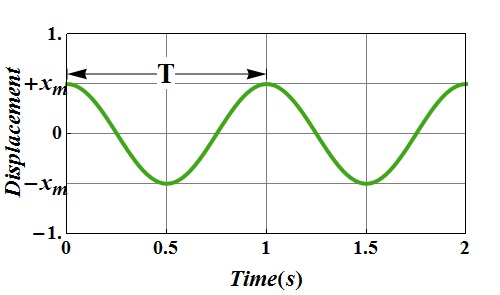
The oscillations chapter is especially revealing as a piece of work. It begins with learning objectives, establishes frequency and period, then asks students to use the relationship between them. A spring-block system completes 25 oscillations in ten seconds. The reader must determine its frequency and period. The numbers are modest; the requirement to turn words into a calculation is the point.
The chapter then develops displacement, velocity and acceleration, and connects the motion to forces. Later questions ask how to measure an unknown spring constant or the rotational inertia of an oddly shaped object. These are useful teaching turns: begin with an observable motion, then work backward to a property that is less easy to inspect directly.
There are checkpoints and quizzes as well as explanations. A reader who has nodded comfortably through a formula is periodically asked to commit to an answer. The page makes room for the distinctly educational discovery that recognition and understanding can be rather distant acquaintances.
“Can you suggest a method to measure its spring constant?”A question in Kapoor’s oscillations teaching notes
That question is small enough to overlook. It asks for a method, placing the student in the position of someone who must decide what to measure. As an editorial reading of the notes, it is a useful companion to the laser research: the answer matters, and so does the route that makes the answer obtainable.
The name inside the tool
In software, the public record becomes particularly concrete around bulk operations for SailPoint’s identity products. A July 2024 developer-community discussion describes a Ruby script attributed to Kapoor for requesting access profiles or removing access in bulk. The user describes a CSV file carrying an identifier, a role name, notes and an instruction to grant or revoke access.
It is an unglamorous list with an important job. A CSV turns a set of intended operations into something a program can process. Its usefulness depends on agreement about the fields, the identifiers and the operation being requested. The convenience of repetition brings an accompanying obligation: every repeated instruction must mean what the operator thinks it means.
The July discussion also records the upkeep that surrounds such tools. Participants examined API usage, shared a script and discussed endpoints after an older interface stopped serving their needs. One participant spotted a legacy endpoint that another had missed. The exchange offers a view of software after delivery, when changing interfaces and actual input files join the original design.
A separate August discussion concerned the Bulk Access Profiles and Roles Importer. Its posted diagnostic output credited Kapoor as author and Christophe Chazeau as modifier. The record names a version dated August 2023. This distinction deserves to survive the telling: the software had a history of contributions, and its original authorship did not make later maintenance disappear.
The user eventually reported getting the import to work after examining the script and identifying the value needed in the input file. In that environment, the required alias corresponded to an employee number. The solution hinged on the meaning of an identifier. Enterprise software had arrived at a very ordinary question: which value, exactly, belongs in this box?
What survives a change of field
Read the physics work beside those software discussions and a possible connection emerges. Each involves a representation that has to remain faithful to something outside itself: a calculation to a laser system, a lesson to a physical motion, an input file to a person’s intended access. This is an interpretation of the work, rather than an account of Kapoor’s private reasons for changing fields.
The difference between the fields is equally worth preserving. A paper about atomic vapor does not explain an access-import script, and the publication of one is no credential for the other. What the sequence offers is a broader picture of technical work: research, explanation and implementation can all appear in one person’s professional life.
His public LinkedIn introduction calls him “a creative, analytically-minded problem solver with a passion for technology.” The description is broad. The artifacts give it edges: numerical work on laser efficiency, a classroom question about measuring a spring, a program that other practitioners use to process roles. Each lets a reader inspect a particular task instead of accepting a general adjective.
The 2024 discussions are especially human because they contain friction. There are questions, corrections and a reported resolution. Nobody needs to invent a dramatic scene around the keyboard. The useful detail is already there: a field that seemed plausible was insufficiently precise, and someone kept looking until the operation worked.
Kapoor’s story, across these public pieces of work, has room for both the visible fluorescence and the nearly invisible software credit. One result catches the eye; another waits in a log until somebody needs it. Both leave something tangible behind. A reader can open the paper, try the lesson or examine the tool. That is a satisfying way for a technical career to become legible: through things people can use, question and understand.