A good negotiation can leave a peculiar souvenir: the suspicion that it could have been better. Rajesh Kalidindi’s experience on the buying side of the table gave him a reason to look closer. At Cisco, a general manager wanted more cost savings from a business with a billion-dollar spend. The team had already been working on costs. Another demand for improvement called for a different approach.
Kalidindi gathered internal information and outside market intelligence. The exercise took three months. In his telling, bringing those pieces together exposed opportunities the team had previously missed. The interesting discovery was the possibility of repeating the exercise continuously. A laborious project might become a service. There, in the unglamorous work of assembling information, was the beginning of a company.
There is a pleasing indignity in this origin. The answer to a difficult business problem involved finding out more about the business. Procurement is unusually good at making that sound obvious after the fact. Before the fact, someone must decide which information matters, persuade people to gather it, and put it to use before the market changes again.
An education in the parts beneath the product
Kalidindi’s background runs through Cisco and Palm, companies whose products depended on the buying decisions made underneath them. His work included strategic sourcing, supplier management and third-party manufacturing operations. He also earned an MBA at Michigan State University, concentrating on supply chain management and information systems. The pairing makes sense: the movement of goods and the movement of information belonged in the same conversation.
A finished device encourages a flattering illusion of simplicity. You see one object. A buyer sees components, suppliers, commitments and dependencies. The object has a name; the dependencies have spreadsheets. Much of the work that makes a product possible happens far from the moment someone unwraps it.
This matters to his story because he approached software from an operational problem. The attraction was practical. A system had to help somebody decide which supplier to call, what to question and where to look next. Experience at the negotiating table supplied a demanding audience for any promises made at a software demonstration.
The customer gets a vote
Before leaving his employer, Kalidindi tested his idea with procurement leaders in his network. Two said they would buy the product if he built it. He later said they did. Early encouragement acquired the one accessory that makes it useful to a founder: a purchase.
The anecdote has more substance than the familiar advice to talk to customers. A polite conversation costs little. Buying asks someone to spend money, time and a portion of their professional reputation. A prospective customer can enjoy an idea without wanting the responsibility of introducing it to colleagues.
Kalidindi also described a lesson in choosing people. Managing an established team had not fully prepared him for assembling one from the ground up. His emphasis was on finding people who would commit to the journey, then giving teams responsibility and holding them accountable. That connects the two tests. Customers had to care enough to pay. Employees had to care enough to build. Neither commitment could be supplied by an attractive presentation alone.
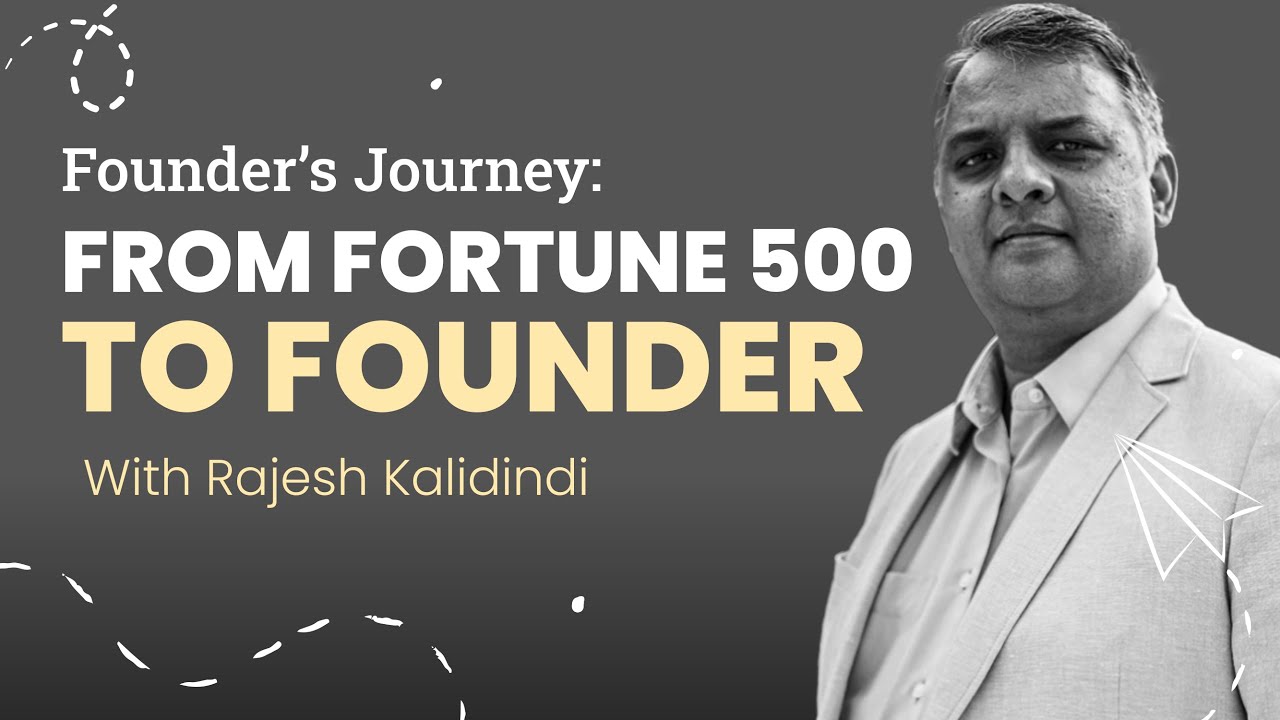
A spreadsheet with excellent manners
In a 2018 essay, Kalidindi described sourcing teams preparing for occasional negotiations with manually processed spreadsheets, old forecasts and personal relationships. The difficulty was keeping up with a changing stream of supplier information. He argued for tools that could keep analyzing conditions between negotiations, making opportunities visible more often.
A spreadsheet can be immaculately arranged and still tell you about yesterday. Its tidy appearance is part of the charm. Columns line up. Totals behave. The outside world has agreed to none of these courtesies.
The distinction matters when considering Kalidindi’s ambition for procurement. A useful buying system must help people revisit their assumptions. An orderly record of a past decision has value, but a new decision needs a fresh look. His argument put attention on the interval between formal reviews: the ordinary days when conditions change and a team has plenty of other things to do.
It is an argument about the calendar as much as the computer. A negotiation scheduled for next quarter does not stop a supplier’s circumstances from changing this week.
“People make companies.”Rajesh Kalidindi
The news has to reach the right part
By 2019, Kalidindi was discussing supply-chain uncertainty alongside Resilinc founder Bindiya Vakil. Their subject included supplier disruptions, shifting business relationships and shortages. LevaData’s approach was to collect relevant information and rank it by its impact, so a manager could decide where to act.
The ranking is the consequential bit. More information can make a working day worse. A buyer who is already occupied does not need a second occupation reading every possible warning. The value lies in connecting an event to something the business actually buys.
Consider the difference between learning that a market is unsettled and knowing which purchase deserves another look. The first observation makes an interesting conversation. The second can change a decision. Kalidindi’s work lived in that gap, where broad intelligence has to become specific enough for someone to use.
This also explains why cost and risk keep appearing together in his account of sourcing. A price belongs to a set of circumstances. The numbers look different when the circumstances shift. Keeping those circumstances visible is a less theatrical ambition than predicting everything, and a more useful one.
Designing for the next decision
Kalidindi’s writing extended beyond the immediate supplier conversation. His Forbes Technology Council contributions addressed winning corporate support for AI, moving toward AI-enabled sourcing and improving new product introduction. He wrote about increasingly complex products and shorter life cycles, concerns that bring purchasing into a product’s development rather than leaving it at the end.
That is an inviting change of perspective. A component chosen early can shape later options. By the time a buyer is asked to negotiate, some of the useful choices may already have been made elsewhere. Procurement’s influence depends partly on when it enters the conversation.
In a January 2019 IndustryWeek article, he also argued for scenario planning and stronger digital skills. Moving production between countries could change availability and quality considerations as well as exposure to tariffs. He saw predictive tools as a step toward more informed decisions.
These are proposals for a working habit: examine possibilities while alternatives are still available. The habit is easy to admire. Practising it requires people in different roles to ask awkward questions before everyone has become fond of the plan.
A company needs more than a clever answer
LevaData’s October 2020 partnership with Bain & Company brought its Cognitive Supply Management platform into the consultancy’s services for procurement and supply-chain clients. For a founder selling a change in how teams work, that kind of connection matters. Software must find a place inside an organization with existing responsibilities and routines.
A product demonstration occupies a neat hour. Adoption occupies the rest of the week. Someone has to decide how the output fits a meeting, who can act on it and what happens when it disagrees with an existing assumption. There is no shortage of software that has won applause and then lost the argument with Tuesday.
The following September, LevaData announced a $47 million Series C led by Banneker Partners, with participation from Tola Capital. Its stated plans included developing the platform, expanding its presence in global markets and growing its partnerships.
Capital gave the company more room to pursue the idea. The everyday test remained with the buyer. An investment round can finance the next version of a product; usefulness has to be earned each time somebody opens it.
Banneker Partners led the round.
Tola Capital also participated.
The founder changes seats
On November 8, 2022, LevaData announced Keith Hartley as its new CEO. Hartley took over day-to-day leadership and joined the board. Kalidindi remained involved as a director. Chairman Angel Mendez credited the foundation Kalidindi and the team had built.
A founder’s story often gets told as a continuous ascent through ever larger responsibilities. This one includes a change of seat. The business could continue with another person running its daily operations, while the person who began it remained involved through the board.
The distinction is useful because founding and leading are verbs with different time horizons. Founding describes an event that stays in a biography. Leading describes work that changes hands. A title can end without erasing the decisions that gave the company its direction.
Kalidindi’s public LinkedIn profile now lists Few Degrees and Austin, Texas. It adds another organizational name to a career most readily associated with LevaData. The earlier company remains a substantial chapter, but a person’s working life need not stop at the edge of the business they founded.
- Before LevaDataSourcing experience at Cisco and Palm
- 2020Bain & Company partnership announced
- 2021$47 million Series C announced
- 2022CEO handover; Kalidindi remains on the board
Enough information to move
In an Art of Procurement conversation with Philip Ideson, Kalidindi argued for keeping supply-chain information fresh and acting on available insight, rather than spending all the effort pursuing ever deeper visibility. The practical point was to make information useful at the depth a team could manage.
That advice brings the story back to the original buying problem. A person cannot wait indefinitely for a perfect view. Neither can a business. Decisions arrive with deadlines attached, usually without an apology.
The lesson is particularly apt for a founder whose company grew from an intensive exercise in gathering information. The exercise mattered because it led somewhere. A beautiful collection of facts, left untouched, would have made an expensive scrapbook.
Kalidindi’s career offers a quieter way to think about applied AI. Start with a decision that deserves better information. Find out whether anyone cares enough to change their habits. Build something they can use. Keep asking whether it helps when the next decision arrives. The drama is in the consequences: a purchase made with clearer eyes, an assumption challenged in time, a team with a little more room to think.