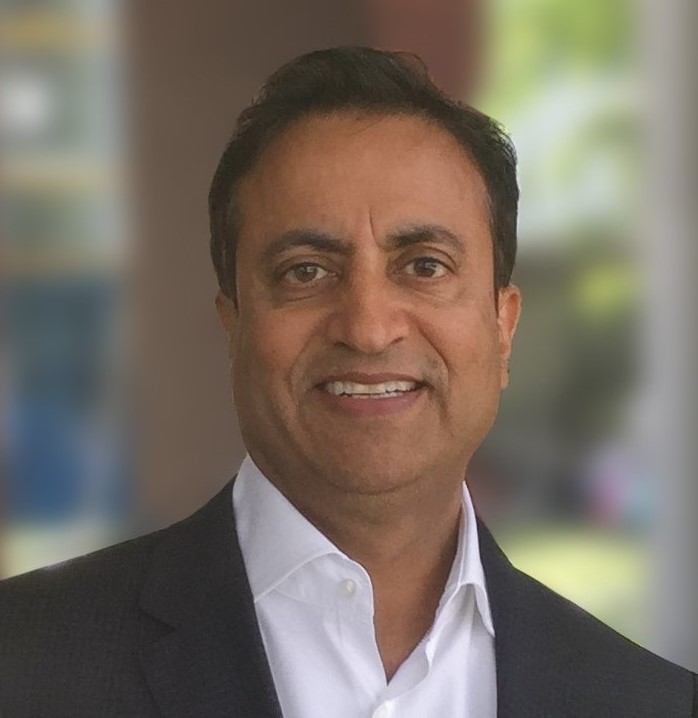
The Coder Who Became the Capital
Raj Sandhu logged his first lines of code at Metaphor Computer Systems in 1983 - years before venture capital was a career path anyone planned for. He was a software developer. Then a product manager. Then he went to Yale, double-majored in Computer Science and Economics (cum laude), went on to Harvard Business School, and spent a decade moving between technology banking at Cowen & Co. and private equity at the Chatterjee-Soros Group, where the portfolio was measured in billions.
None of that is the interesting part. The interesting part is that somewhere in the middle of all of it, he co-founded a company: Modulus Video, a carrier-grade video compression startup. He was the seed investor and chairman. In 2007, Motorola bought it. That exit did something to his investment philosophy that no amount of HBS coursework could: it gave him the founder's clock, the specific way operators sense when a market is early and a product is real.
Since then, Raj has been at Great Oaks Venture Capital, one of the quietly prolific seed firms in the country. The portfolio numbers require a second look: 421+ investments. 345 active companies. 14 unicorns. 105+ exits. The numbers suggest a machine. The checks suggest something more surgical - $50K to $500K per deal, with a sweet spot at exactly $275K. Not round. Not arbitrary. The product of calibration.
"VRM is the 'Salesforce for the Buyer' - sales organizations spend 20-35% of gross revenue on sophisticated tools, while procurement leaders are still on spreadsheets."- Raj Sandhu on investing in Terzo
The analogy is precise in the way Sandhu tends to be precise. His investment logic typically moves in two directions at once: the immediate and the structural. A product has to solve a real pain point right now - not a hypothetical future pain - and the category it sits in has to have genuine upside potential as a strategic business function, not just a point solution. Both conditions have to be true. One isn't enough.
He applied that lens to enterprise software long before "enterprise" became the VC word of the decade. His portfolio reflects a generalist sensibility - healthcare (Flatiron Health, Virta Health, Maven Health), fintech (Acorns, Ibotta), consumer (Allbirds, Hinge, Fetch Rewards), logistics (EquipmentShare, Workrise), and B2B platforms across every vertical. What the companies share isn't a sector - it's a position. Each one was making a credible case, at seed stage, that its category could become foundational.
The Two-Question Framework
Raj Sandhu evaluates every potential investment through two lenses. First: what pain points does the product actually address - not theoretically, but today, for a specific customer with a specific problem? Second: can the category itself elevate to a strategic position within the enterprise software landscape? Both have to be true. Pain without strategic upside is a feature. Strategy without pain is a slide deck.
What He's Actually Looking For
Immediate Pain
The product must address a real, present problem - not a future hypothesis. Market demand has to be demonstrable, not projected.
Strategic Ceiling
The category needs potential to become foundational infrastructure, not a niche tool. Category-defining, not best-in-breed.
Earliest Entry
Pre-seed through Series A. Sandhu's position is before the obvious. $50K-$500K checks into companies before the consensus forms.
Generalist Coverage
No sector bias. Enterprise, consumer, health, fintech, marketplace - the investment thesis is stage and founder quality, not vertical.
14 Unicorns and Counting
Great Oaks VC's portfolio reads like a list of companies that weren't obviously going to matter - until they did. Hinge was a dating app in a market Tinder owned. Allbirds was a shoe company in a category defined by giants. Acorns was asking millennials to save money. Bolt was building checkout infrastructure. None of these were obvious at seed. That's precisely the point.
The Track Record
The exits span three decades of technology waves - from networking infrastructure in the 1990s to consumer apps in the 2010s to healthcare platforms today. The through-line is timing. Each exit represents a company that was right about the direction before the direction was obvious.
Four Decades of Building and Backing
Why the Operator Background Matters
There's a version of Raj Sandhu's career that reads as a clean progression: code, Yale, Harvard, banking, PE, VC. The resume arc that fills itself in. But the detail that actually shapes his investing is smaller and stranger than the arc: he built Modulus Video during the years he was also learning to invest. He didn't sequence founder and investor - he ran both tracks simultaneously.
That overlap produces a specific kind of empathy. Sandhu knows what it costs to be the person in the room who actually has to ship something. He knows the difference between a venture capitalist's timeline and an operator's timeline. When he says he's looking for founders building "category-defining platforms," he's not using VC vocabulary as decoration - he's applying the same lens he used when he was raising capital himself.
At Great Oaks, the fund size ($40M) is small relative to the ambition. The check size ($275K typical) is small relative to the outcomes. That's the bet: that getting in early, with conviction and operational credibility, compounds in ways that larger checks at later stages can't replicate. The 14 unicorns in the portfolio suggest the bet is working.
"We see Terzo as a category leader, not just a best-in-breed procurement platform."- Raj Sandhu, on the distinction between a point solution and a category
The procurement analogy - Terzo as the "Salesforce for the Buyer" - is a useful window into how Sandhu spots opportunities. He's looking for the structural imbalance: in this case, the gap between what sellers have (Salesforce, complex CRMs, 20-35% of revenue in tooling) and what buyers have (spreadsheets, disconnected point solutions, nothing). The market for sophisticated procurement software is real, large, and underserved. That's a category waiting to be defined.
He's made that call repeatedly across verticals - healthcare platforms, marketplace infrastructure, financial technology, consumer apps. The sectors change. The underlying pattern stays the same: a real buyer with a real problem, and a product positioned to own the category rather than just serve a niche within it.
Great Oaks' portfolio has a long tail of active companies - 345+, across healthcare, enterprise software, fintech, consumer, logistics. The fund is generalist by design. Sandhu's CS background lets him evaluate technical architecture. His PE background lets him model outcomes. His founder experience lets him ask whether the person in front of him can actually execute. The combination is unusual enough to be a genuine edge at the stage where most decisions come down to judgment calls.