A cash register has enough to do. It must add up a basket, apply the right price and help a queue move along. Rahul Mutha has spent a substantial part of his working life asking whether it also needs to know a customer’s card details. In his payment architecture, that question leads somewhere useful: let the register participate in the sale while keeping sensitive information on a separate route.
It is an unshowy idea with an appealing consequence. The shopper gets to finish shopping. The retailer has fewer systems involved in handling card data. Mutha, founder and CEO of Aurus, works in the space between those two experiences. From the customer’s side, success may look like absolutely nothing happening.
A home address, then a network
Mutha started the business in 2000, at home. The company that became Aurus was previously called TalentBeat. Its subsequent work would take it into retail payment infrastructure, linking the apparently simple act of buying something to the less visible business of getting a transaction authorized.
His preparation was technical. He studied electronics engineering at the University of Pune and earned a master’s in electrical and computer engineering at the University of Massachusetts. Before Aurus, he worked as a principal consultant at Emergent, focusing on large data warehouses and high-density computing. Emergent was acquired by Keane Consulting.
There is an unexpected detour in that education: research involving semiconductor degradation in outer space, undertaken during his master’s program with NASA and JPL. Space hardware and a shop counter make an odd pair of settings. Both, however, invite attention to the workings beneath an ordinary-looking surface. The connection is a useful way of reading his later career, rather than a claim about what inspired it.
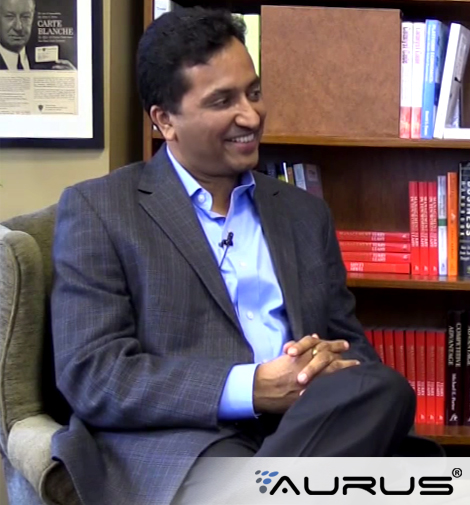
The company also has an operational counterpart to its engineering work. Co-founder Punam Mutha, its president and chief operating officer, oversees finance, human resources, legal and compliance across the US and India offices. Behind the payment platform sits another set of connections: people and responsibilities spread across two countries, with different work to keep in step.
Give the cash register less to worry about
In September 2013, Mutha received US patent 8,543,461. Its subject was removing point-of-sale processing from PCI scope. The title is unlikely to sell cinema tickets. It does, however, contain a business problem: when systems handle sensitive payment information, they bring security obligations with them.
The design separates jobs. A card terminal communicates with a remote payment server; the retail system can receive what it needs to complete the transaction without receiving the underlying card information. Keeping that information away from components that do not need it can reduce the extent of the retailer’s payment-security burden.
Imagine the arrangement as a conversation with fewer people copied in. The cash register needs an answer about the transaction. It need not receive every confidential detail used to obtain that answer. The distinction sounds almost too polite to be an engineering principle. Its usefulness lies in being precise about who gets to hear what.
In 2014, Mutha described the retail challenge in three parts: chip-card adoption, security breaches and competition from online shopping. A store could hardly put two of those on hold while it addressed the third. His response was to put much of the complexity behind the counter, preserving a manageable experience for the merchant.
“Anything we deploy has to be easy for retail chains to adopt.”
Rahul Mutha, 2014
That sentence is a useful check on the whole enterprise. New machinery has to enter a working business. The till cannot become an extended philosophical discussion every time someone wants to buy socks.
The chip card crosses a border
By February 2014, Aurus had completed American Express EMV processing certification for the United States. Mutha pointed to earlier chip-card work in Europe and Asia, followed by Canada in 2012 and Mexico in 2013. The American rollout belonged to a sequence of deployments across markets.
These dates give the career some practical texture. Payment technology travels through certifications and integrations as well as product announcements. A capability that works in one setting still has to be made usable in another. Geography enters the engineering schedule.
Aurus’s announcement described plans to extend its EMV platform across existing US deployments. A plan carries a different meaning from a completed rollout, but it reveals the assignment Mutha had taken on: helping retailers move their payment systems while continuing to operate them. The new card still had to meet the old counter.
A phone, a pump and a carefully routed payment
The counter was only one setting. US patent 9,424,577, granted in August 2016, names Mutha as inventor on a system for processing payments at fuel dispensing stations. Here the proposed customer interface is a mobile phone.
The design describes remotely stored payment information, a mobile application and authorization that allows the fueling location to be activated. The customer can initiate the process without physically presenting sensitive card information at the retail location. Location information helps connect the phone to the relevant place.
A fuel stop makes the coordination problem easy to picture. A person, a device, a payment account and a particular pump need to agree on the same transaction. Convenience depends on that agreement. A very attractive screen would be little consolation if the wrong piece of equipment received the instruction.
The patent also describes loyalty and promotional functions. Payment is part of a wider retail encounter: where the customer is, what the customer wants and how the merchant recognizes the visit. Mutha’s work keeps returning to these boundaries between systems, where one small action needs several participants to cooperate.
- 2013Separate card handling from the retail POS.
- 2016Connect mobile payment with fuel dispensing.
- 2026Automate validation using a proxy card.
The sale acquires more doorways
In April 2021, Aurus and Veras Retail announced a partnership connecting retail software with payment and digital-wallet options. Veras’s work included store, mobile and remote selling. The arrangement addressed a merchant whose customer might enter through several different doors.
The payment choices extended beyond conventional cards to wallets and other methods. For Mutha, the operational question remained recognizable: how can the merchant offer those choices through a unified framework? A longer menu is appealing to customers. Someone still has to run the kitchen.
Another partnership followed with Riskified in August 2022. It gave Aurus merchants access to Riskified’s automated fraud decisions and a chargeback guarantee. Payment acceptance and assessment of fraud risk were being brought together in the merchant’s workflow.
The distinction matters. Receiving a request to pay and deciding how to treat its risk are related tasks with different demands. The partnership brought in another specialist rather than asking the retailer to assemble every part alone. Mutha’s stated emphasis was the merchant’s return on investment, a fairly stern test for any pleasing diagram.
The terminal is only the beginning
In July 2025, Ingenico and Aurus announced their AXIUM collaboration. Ingenico supplied the terminal platform; Aurus brought payment software. The announced availability covered the United States, Canada, Mexico, the United Kingdom and India.
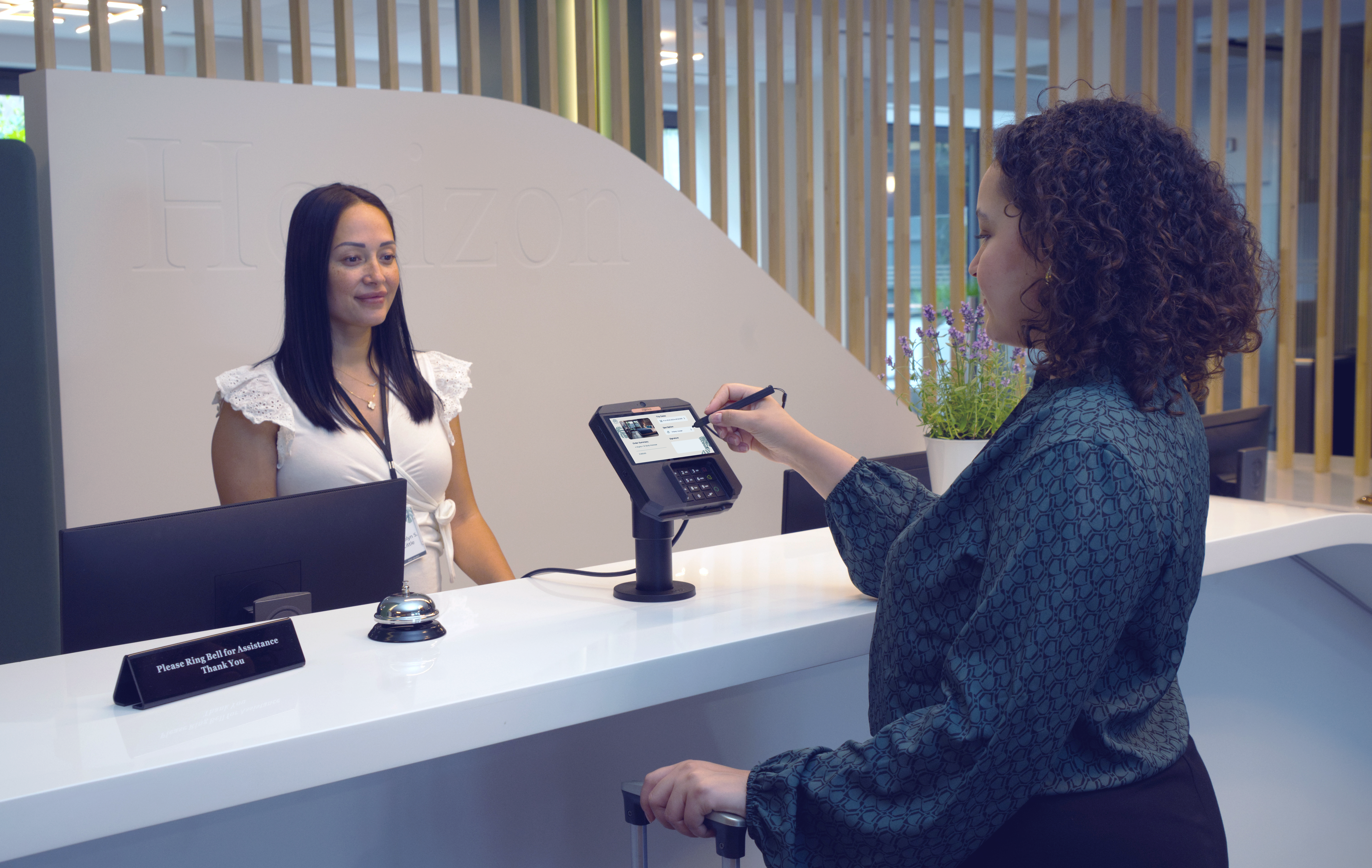
Mutha’s comments focused partly on monitoring and solving field issues during trials and development. That detail is revealing in its practicality. A terminal has to live outside a presentation: at an actual counter, among other equipment, doing a job repeatedly.
The collaboration also addressed connections between in-person and online commerce, including loyalty functions and digital receipts. From the shopper’s perspective, these can look like small conveniences. From the merchant’s perspective, they require different systems to preserve a coherent account of the sale. The terminal is the visible tip of a longer working relationship.
There is a more personal clue in the advice Mutha offered young innovators in 2014: “always double the amount of time you think it should take”. He also urged them to pick a real problem and begin with a tightly focused part of it. The grand idea could survive a modest first assignment.
The calendar advice puts some welcome friction into a founder’s story. A development schedule has to accommodate the uncooperative detail, the dependency and the discovery that arrives after everyone thought the question was settled. Doubling the time is hardly a glamorous instruction. It is memorable precisely because it gives the ambition somewhere practical to live.
Even the rehearsal needs engineering
Mutha’s online-payment work has its own entry in that relationship. A January 2024 patent, 11,861,601, concerns electronic-commerce authentication using a session identifier and a one-time token. The design aims to obtain payment authorization without sharing the user’s payment data with the e-commerce host system.
The setting has changed from the store, but the boundary question persists. A website can participate in a purchase without possessing every sensitive detail involved. The work is about deciding what must cross the boundary and what can stay elsewhere.
Then comes the rehearsal. A September 2026 patent, 12,749,066, names Mutha on a proxy-card validation system. It describes selecting an integrated-circuit card, using a proxy card and running a scripted synthetic transaction to determine validation status. Even the transaction that precedes a real transaction has acquired its own machinery.
Read together, these inventions offer a concrete portrait of Mutha’s working life. His subjects move from checkout security to fueling, authentication and testing. The recurring interest is the transaction’s route: what each participant does, what it needs to know and whether the arrangement works.
A customer may never have a reason to think about any of this. That is a respectable outcome for a career in payment infrastructure. The sale completes, the receipt appears and the shopper leaves with the purchase. Behind that small departure sits the kind of problem Rahul Mutha has kept choosing to solve.