Consider the radio dial. A phone can summon almost any song, yet somebody still wants a wooden-looking box with a knob. For RadioShack, that small preference has become a business proposition. The company that once sold Americans the parts to assemble their electronic lives is finding an audience for objects that make those lives feel a little less abstract.
- RadioShack now sells everyday electronics, with retro audio giving the familiar name a fresh purpose.
- Unicomer owns the brand across most global territories; the U.S. return uses marketplaces and independent dealers.
- The lesson: test what customers miss before rebuilding what a company used to own.
This is a curious return because RadioShack never disappeared everywhere. Its American corporate-store collapse became the dominant story, while stores elsewhere kept trading. The present owner, Unicomer Group, brought experience from Latin America and the Caribbean. The comeback has an unusual starting advantage: another part of the business had already been doing the work.
A shop for the unfinished idea
Theodore and Milton Deutschmann opened their Boston radio business in 1921. Retail and mail order served people who needed equipment and components. Radio was something an enthusiast might understand, adjust, even construct. A merchant could sell the pieces and, in doing so, make a complicated technology feel available to an ordinary person.
By 1963, the business was struggling. Charles Tandy bought it for $300,000. The Fort Worth Library’s company history records nine northeastern stores before the acquisition. Here was a chain with recognizable expertise and financial trouble, a combination that would recur. Tandy’s answer included a tighter inventory and incentives that gave store managers a stake in selling it.
The Texas State Historical Association describes a business that became profitable within two years of the purchase. By 1988, locations exceeded 7,000. The practical genius was proximity. A resistor is a tiny purchase; a resistor available nearby can rescue an afternoon. RadioShack fitted itself into that gap between having a project and getting it to work.
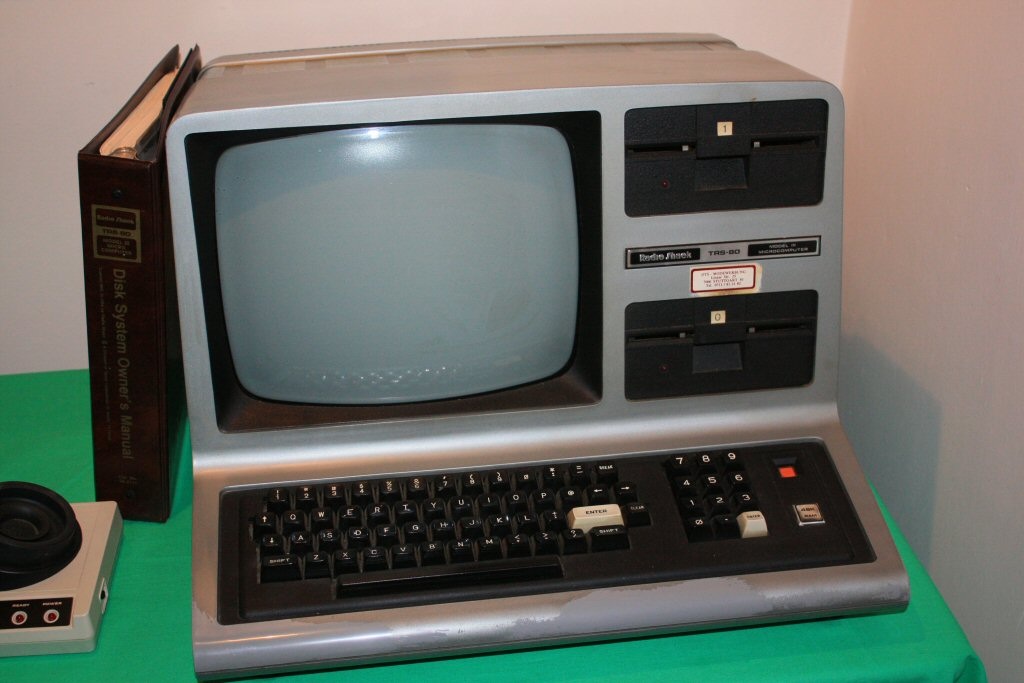
The computer came with a way in
In August 1977, RadioShack introduced the TRS-80. The $599.95 system included a display and cassette storage. Its manuals assumed no previous knowledge. These details belong together. A price tag could get a computer into a home; clear instructions could get someone to use it. The product extended the store’s old promise from radio equipment into personal computing.
The original TRS-80 system’s launch price. Display, cassette storage and a route into BASIC programming included.
The Smithsonian now holds a Model I. That museum status can make the machine seem inevitable. At launch, it was a bet that ordinary customers would buy a computer through an electronics retailer. RadioShack had somewhere to demonstrate one and a familiar counter across which to sell it. Distribution made an unfamiliar product less intimidating.
The rescue that needed another rescue
Then the customer’s alternatives multiplied. Best Buy offered the larger electronics destination. Amazon made selection and price comparison available without a trip. RadioShack tried to become a destination for mobile-phone buyers, but the pivot did not repair its finances. When it filed for bankruptcy in February 2015, Reuters reported eleven consecutive unprofitable quarters.
The first collapse was financial, before the name vanished from shopfronts. The rescue put surviving stores under General Wireless and paired many with Sprint. Court approval covered a plan for roughly 1,740 locations, with Sprint occupying about a third of the co-branded space. The arrangement promised a reason for customers to keep walking in.
In March 2017, the successor business filed for bankruptcy too. Reuters described both a difficult retail environment and a disappointing Sprint partnership. The sequence matters: changing the ownership and sharing the floor did not guarantee enough demand. Store access had once helped RadioShack sell the future. Store access alone could no longer pay for itself.
A familiar face on somebody else’s shelf
Unicomer bought regional RadioShack rights in 2015 and broader intellectual property and domains in approximately seventy countries in May 2023. Its U.S. online entry followed in 2024. Customers could buy through RadioShack.com, Amazon and Walmart. At CES 2026, Unicomer said the American catalog had passed 500 SKUs and added further online sales channels.
Today’s assortment includes batteries, cables, headphones, chargers, gaming accessories and smart-home products. These solve modest, recurring problems: connect a device, replace its power source, hear something, charge something. Retro radios and turntables add a more emotional purchase. On the storefront reviewed for this profile, a three-band vintage radio was $39.99; a vintage turntable was $119.99.
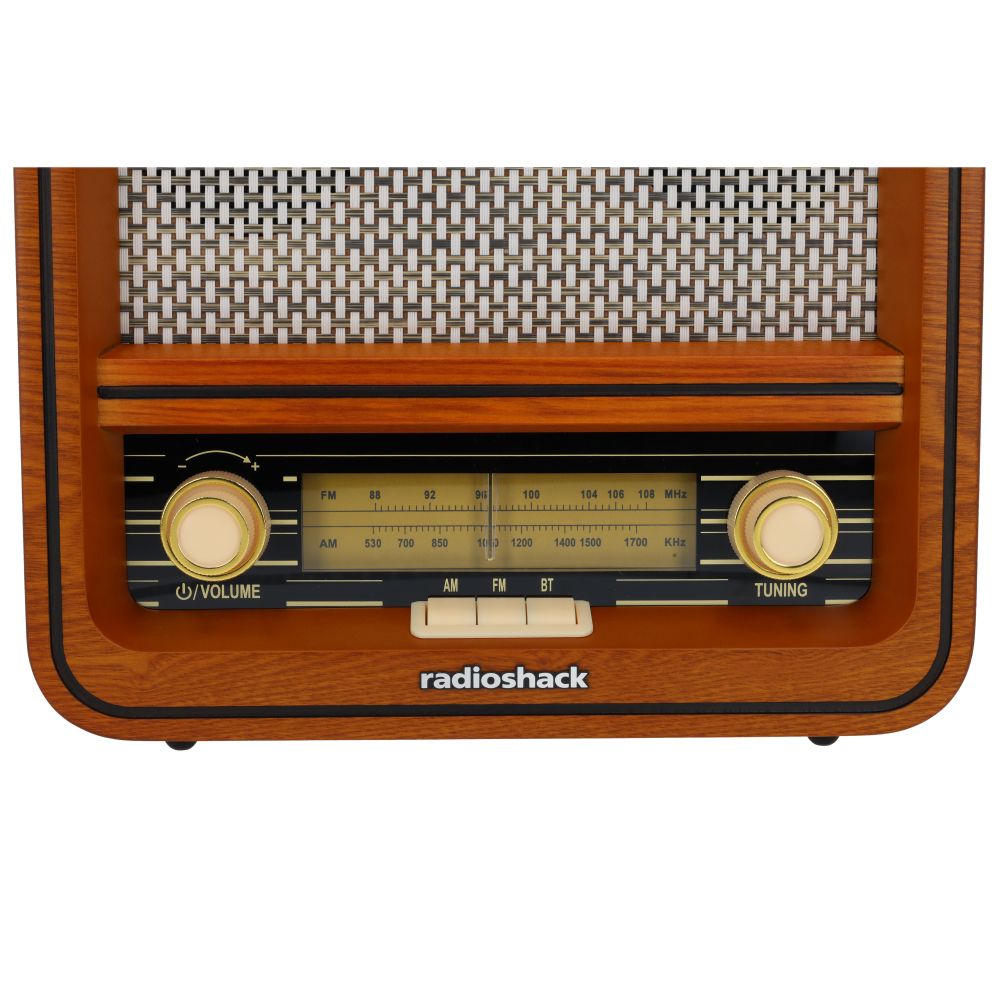
The business earns money selling products directly and supplying retailers. Independent dealers provide a physical presence. Target and Macy’s relationships were strictly online marketplace arrangements when managing director Kevin Hamann explained them in August 2026. A listing on a retailer’s website should not be mistaken for a nationwide installation of RadioShack counters.
“Heritage is our biggest asset, but only if we don’t let it freeze us in time.”Kevin Hamann · Managing director, RadioShack USA · August 2026
What the dial tells you
Hamann said vintage products were attracting both longtime customers and Gen Z. That response helped shape the strategy. By October, management was discussing further DIY, STEM and component expansion. The distinction is useful: selling a radio today and rebuilding a hobbyist’s entire parts drawer are different commitments. Buyers should inspect the actual assortment.
A business owner can copy the order of operations: find a product people want, use existing channels, then learn from the people selling it. The approach needs recognizable strengths, viable margins and dealers who can help. In a market that only rewards the cheapest interchangeable accessory, affection for a logo offers little protection.
RadioShack’s future turns on repeat purchases. A turntable can bring someone back through the door, physical or digital. The next cable, battery or useful answer has to justify the visit. The interesting part of that wooden radio is the customer reaching for its dial.