Rachel Bryant has found a tidy way to make a software budget sound like a moral document. In her telling, every dollar placed on a famous face is a dollar unavailable to the engineers fixing search, reports or the export bug that greets a tired customer late on Friday. The trade is not abstract. Somebody gets the money. Somebody else waits.
This was the argument she began making publicly during her first year leading marketing at Actionstep, the practice-management and legal-accounting software company. Legal technology is hardly short of theater. Conference floors can resemble county fairs with better lanyards. Bryant’s campaign chose a less photogenic subject: the wiring behind the wall.
She knows about walls, too. Between leaving her previous job and announcing the next, Bryant described a pause filled with house projects, Bible study and actual rest. She watches renovation shows and borrowed their best recurring plot for her marketing metaphor. Backsplashes earn compliments. Foundations keep the house standing. Product work, in this construction, is foundation work.
“Substance over spectacle.”Rachel Bryant’s shorthand for Actionstep’s choice
The player-coach was once an actual player
“Player-coach” is one of business language’s more exhausted pieces of furniture. Bryant has a sturdier claim to it than most. She spent four years on Western Michigan University’s women’s basketball team, earning a varsity letter each year. The team reached the Women’s NIT. Her studies, meanwhile, followed a pre-med track with a chemistry minor. She graduated in 1999 with a résumé pointed toward science and sport, then built a career in marketing software.
The apparent swerve makes more sense at close range. Basketball supplies drills, roles, film, adjustments and a score. Chemistry supplies systems and reactions. Revenue marketing borrows from both, then adds a meeting about attribution. At Inverta, the B2B growth consultancy where Bryant later worked, her biography called her “Coach Rachel.” It described someone comfortable building a team from nothing, stepping onto the floor herself and changing the plan when it failed to move the business.
Her public career begins in the less glamorous districts of enterprise software. In 2008 she handled corporate marketing at Manatron, a Portage, Michigan company that made property-tax systems for local governments. When Thoma Cressey Bravo acquired Manatron for about $66 million, Bryant was one of the media contacts on the announcement. By 2010, news coverage identified her as the marketing director, answering questions about the difficult replacement of old, complicated county systems.
That is serious software in the literal sense: records, assessments, bills, public offices and citizens waiting for answers. Manatron was later folded into Thomson Reuters, and by 2012 Bryant was speaking for Thomson Reuters about how county departments used technology to improve productivity and service. Long before “legal tech” became a conference category with its own lighting design, she was learning what happens when a software promise meets a complicated workplace.
Leaves Western Michigan with four basketball letters and a pre-med education.
Handles corporate marketing at property-tax software maker Manatron during its acquisition.
Joins Inverta, advising B2B teams on the connection between strategy and pipeline.
Moves into Actionstep’s leadership team as Senior Vice President, Marketing.
Thirty episodes in the room where revenue happens
Inverta gave Bryant a different view of the field. For roughly four and a half years, beginning in 2021, she worked as a client partner. Her task was to help B2B leaders join marketing strategy to pipeline impact. Consulting exposed her to companies of different sizes and stages. Hosting The RevRoom exposed the working arguments underneath them.
The show ran for 30 episodes across 2024 and 2025. Its subject was not inspiration in the mist. Guests discussed buying groups, account-based marketing, partner programs, customer advocacy, events, direct mail, AI and the lingering corporate affection for the marketing-qualified lead. Bryant’s interview style prized usable examples. The show promised private-room candor for marketers who still roll up their sleeves, a description that fits its host rather neatly.
She could be playful without letting the premise drift. One guest remembered Bryant’s recurring question about a favorite drinking vessel. Another episode title compared partner marketing to the awkward cousin at the demand-generation table. The jokes opened the door; the conversation walked through it carrying measurement, organizational design and revenue.
The podcast also sharpened a position Bryant would carry into her next job: buyers do not behave like rows in a lead spreadsheet. In one discussion, she amplified the argument that several people from one account are not duplicate leads to be tidied away. They are a buying group displaying interest. In another, she argued that events should build relationships rather than merely collect email addresses. Her favored noun was trust, not traffic.
When Bryant left Inverta in early 2026, her farewell avoided the customary victory parade. She thanked colleagues for making her a better strategist, partner and marketer. She wrote about Slack threads, clever emoji use, shared life over Zoom and time spent pausing before the next chapter. The post read less like a departure memo than a roll call of relationships.
Back inside the machine
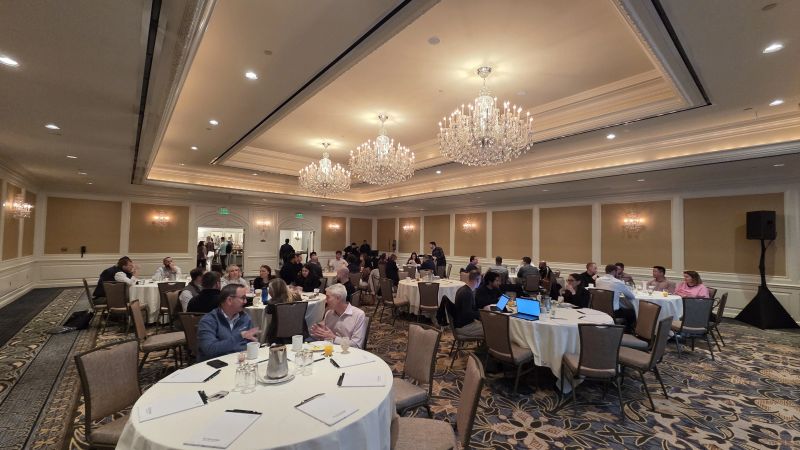
Three months after joining Actionstep as Senior Vice President of Marketing, Bryant stood at the company’s sales kickoff in San Francisco and explained what she believed the department was for. Marketing, she said, was not a promotional factory. Its work was to earn trust, create memorable moments, build pipeline and empower growth.
The sequence matters. Trust comes before pipeline in that sentence. It also makes the later attack on celebrity endorsements more than an attention-getting campaign. Bryant was drawing a line between the promise made during selection and the experience after the contract. When those disagree, the brand does not merely suffer in some gauzy reputational sense. Customers buy less, acquisition becomes more expensive and growth becomes harder.
Actionstep sells to midsize law firms, where the product sits in the daily traffic of matters, time, billing, accounting, documents, intake and client communication. These are not background details to the user. They are the day. A search function that behaves on a messy matter file may lack the charm of a red carpet, but it returns minutes to a paralegal who has no spare ones.
Bryant’s choice of examples reveals the kind of marketer she wants to be. She talks about reports that do not require a support ticket and software basics that take years to get right. She talks about conference booths, beer gardens and haircuts chiefly to ask what they displaced. This is a marketer criticizing marketing’s favorite toys from inside the toy shop.
“Marketing isn’t a promotional factory.”Her message to Actionstep’s global team
A career that keeps returning to the team
Bryant has remained rooted in the Greater Kalamazoo area while her work widened from Michigan software companies to a global consultancy, a podcast guest list and an international legal-tech business. Her community record is similarly local. She served on the board of Western Michigan’s W Club, which connects former letter winners to the athletic program. She was secretary of the Southwest Michigan chapter of the American Marketing Association. Since 2018, she has served on the leadership board of Renovation Church in Portage.
Her former company biography mentioned a husband, two children, a sports-loving family that prefers to be outside and busy, and coffee as lifeblood. These are small details, but they keep the executive portrait from hardening into a collection of funnel diagrams. So does the unmistakable energy of her public writing: exclamation marks arrive in groups, green hearts travel with Actionstep, and congratulations are distributed freely.
Colleagues’ recommendations describe an optimistic leader who redesigns teams, experiments with new methods and treats relationships as part of the work rather than the pleasant residue after it. That picture agrees with Bryant’s own public record. She talks about culture becoming tangible when people finally meet off-screen. She describes a marketing department as an engine but thanks it like a locker room.
The wager at Actionstep is now visible. Bryant has moved from interviewing operators to being accountable for the operating result. She must make a global marketing system produce memory without gimmick, pipeline without becoming a factory, and promises the product can keep. The scoreboard is no longer a metaphor reserved for podcast conversation.
There is a quiet audacity in choosing the boring option and then marketing it well. Foundations rarely trend. Clean data does not pose for photographs. A fixed export bug has no agent. Bryant’s job is to make those choices legible without turning their plainness into another stunt. For a player-coach, that sounds like familiar work: run the system, pass to the open teammate, and let the result make the noise.