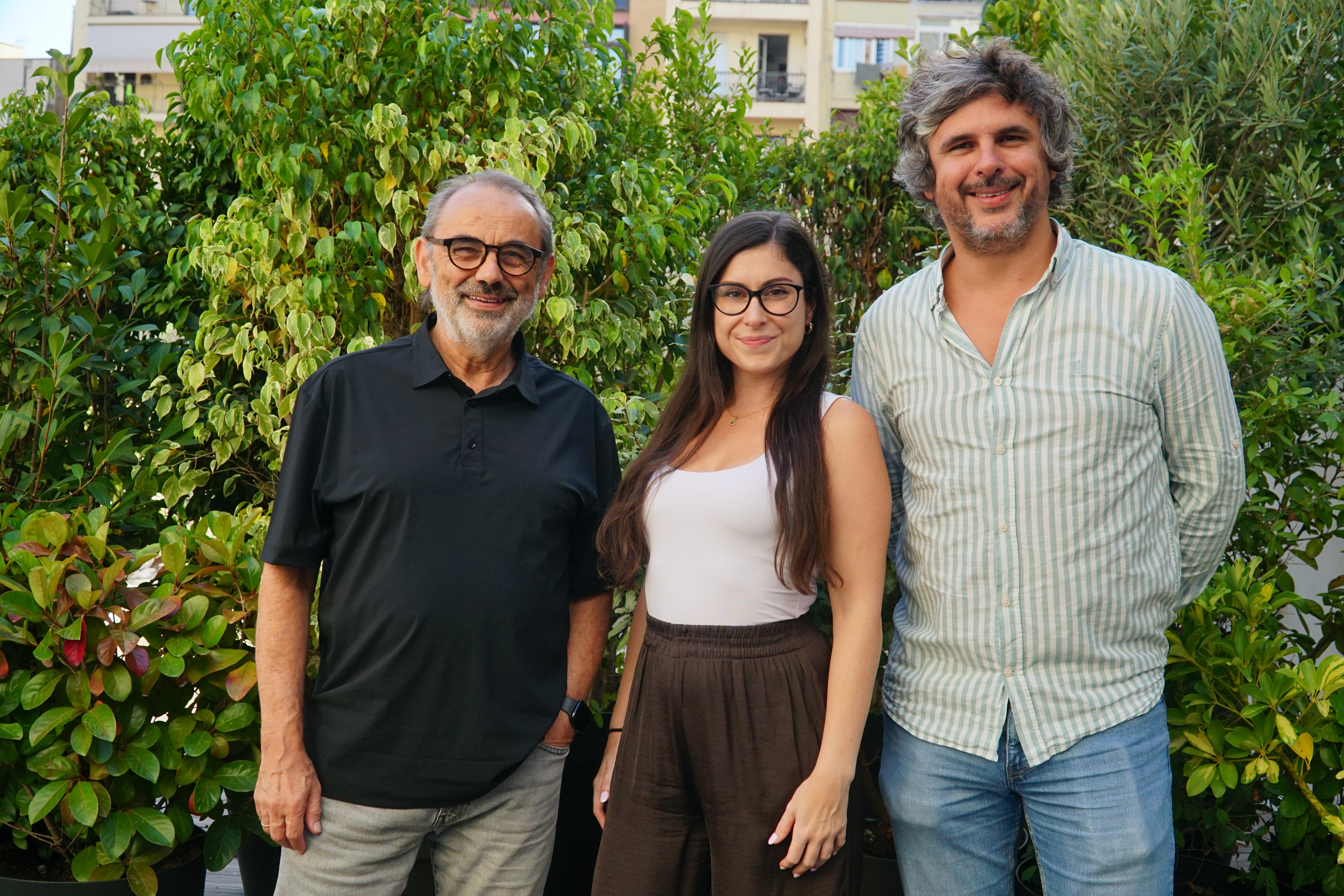
Quino Fernández has a useful story for anyone tempted to confuse experience with clairvoyance. When Glovo came through Conector, he did not find it especially interesting. He later gave another mentor, David Tomás, credit for having the better nose. In a business where people polish their predictions after the result is known, this is an agreeable thing to hear. The successful company gets its applause. The adviser keeps his mistake.
That admission belongs near the beginning of his story because so much of his work now involves judgement: which founder needs help, which introduction might matter, which business deserves another look. Fernández is a founder, former accelerator CEO, teacher and investor. Since September 2026, he has been president of ĀticcoLab. His career offers plenty of credentials. The Glovo anecdote gives those credentials something more useful than shine: a limit.
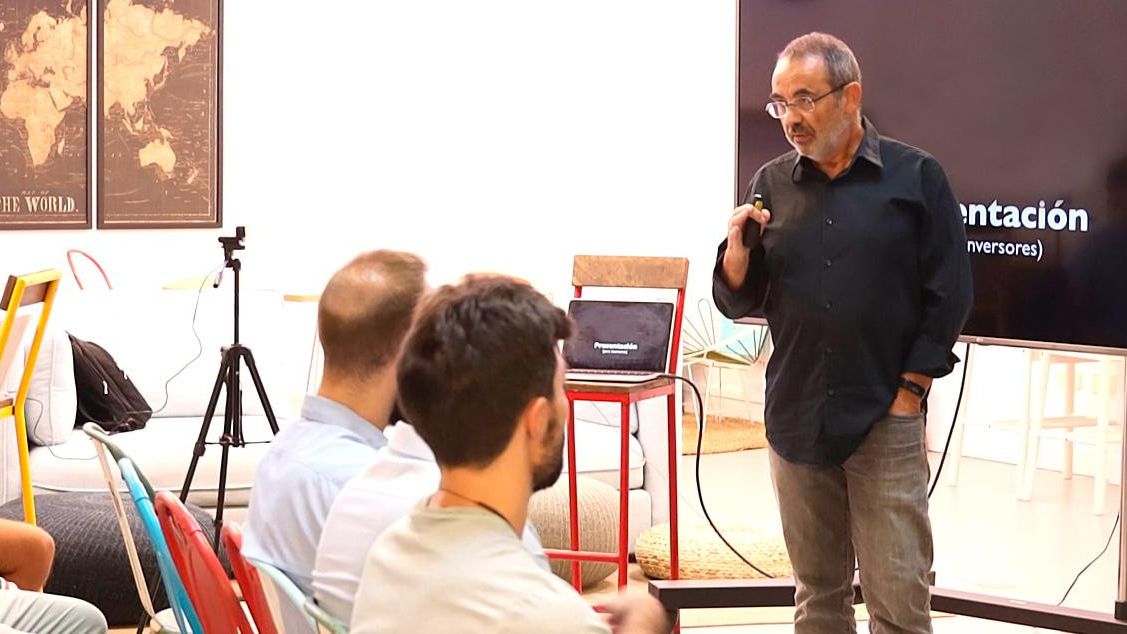
Before the web needed a pitch deck
His working life began in information technology, including banking systems. He then spent five years at Apple Spain as Technology Services Manager. After Apple came QSystems, developing technology for newspapers and magazines. The connection between technology and publishing was there before the browser became the obvious place to put everything.
At the beginning of 1996, he co-founded Briefing, one of Spain’s early interactive agencies. The phrase itself now feels like an exhibit: an agency had to announce that it was interactive. Fernández’s first businesses sat at a moment when established organisations were working out what digital communication could become. ĀticcoLab’s account of his career records that QSystems and Briefing were acquired by Agbar.
The sequence matters more than the fashionable vocabulary attached to it. He had worked inside a technology company, built tools for a particular industry, and helped turn a new medium into something businesses could use. These are different seats at the same table. Each gives a person a different view of why a promising piece of technology can still be difficult to sell.
- Before 1996Apple Spain, then QSystems
- 1996Briefing and the early commercial web
- 2020Co-founding ĀticcoLab
- 2026From CEO to President
A founder with more than one medium
Selling companies did not end his involvement in building them. He co-founded Quin Team, later called Won, serving as CEO from 2008 to 2011 and continuing to lead its interactive business until 2016. Advertising and digital communication remained part of his professional life long after that first burst of commercial internet activity.
His interests also spread into less predictable corners. He helped found Trickon, combining editorial material and social activity around freestyle sports. His early angel investments included PopPlaces, a marketplace for renting spaces by the day, and Conductr, an iPad controller for Ableton music software. A newspaper system, a place to rent, a music interface: the products vary considerably. The recurring question is how people use a medium or a market once somebody makes it accessible.
Teaching gave him another way to work on that question. His teaching has included digital communication at Blanquerna and La Salle. His writing extended to television’s changing relationship with the internet. Technology, in this career, rarely stays confined to the technology department.
Advice becomes the day job
Conector turned mentoring into a larger responsibility. Carlos Blanco brought him into that accelerator’s orbit, and Fernández went on to lead it before co-founding ĀticcoLab in 2020. The change put him alongside founders at the stage when a company’s assumptions are still being tested and the consequences of getting them wrong are arriving quickly.
His areas of mentoring include business planning, strategy, communication and investment. The range makes sense beside his earlier jobs. Someone who has sold digital work has something to say about communicating it; someone who has built businesses has encountered the gap between an attractive plan and a working company. An adviser’s past becomes useful when a founder can borrow the relevant piece without having to repeat the whole experiment.
Thirty hours, then the pitch
There is a practical example in Barcelona’s SportsTech bootcamp in June 2021. Fernández and ĀticcoLab programme manager Alex Caudet mentored the participating startups alongside Anna Busquets Carpena, Ana Guasch Seculi and Lucía Horvilleur. This was a week of work on businesses, with funding, business models and value propositions on the agenda.
The format began with 20 startups and led to a six-month programme for 12 selected projects. After 30 hours of group work, the bootcamp ended with a Demo Day at Aticco Bogatell. The continuing programme passed to INDESCAT. Fernández’s contribution occupied a specific part of that sequence: helping founders prepare, think and present before the next selection.
The numbers describe a useful antidote to the vague promise of access. A week has an end. A pitch has an audience. A founder must decide which parts of an idea can survive being explained aloud. There is only so much room for mist in a timetable.
One week to prepare. Six months of continued support for the selected projects.
The work beyond the laptop
By 2024, Fernández was arguing for attention to industrial startups as well as digital ones. Energy and telecommunications were among the areas he considered important. His work with ERIA, linked to the energy group Estabanell, gave that argument a setting: young businesses could develop their projects around an industry’s actual problems and operating environment.
The appeal is straightforward. A corporate partner can bring contacts and sector knowledge that a general discussion cannot supply. For a young company, access to a real setting can change the questions being asked of a product. Can it work here? Who would use it? What would have to change for a customer to adopt it?
Fernández’s own retrospective is pleasingly plain: “Como emprendedor buscaría más ayuda.” As an entrepreneur, he would seek more help. He has also stressed talking to customers. Both points make advice less ceremonial. Help has to arrive while a decision can still change; a customer conversation has to be capable of disturbing a founder’s favourite assumption.
“Como emprendedor buscaría más ayuda.”
Quino Fernández · June 2024“As an entrepreneur, I would seek more help.”
A financial hub with neighbours
At Barcelona Finance Hub, which he directs, the unit of organisation becomes a community. In July 2024 he described a physical presence across five floors in Barcelona’s stock-exchange building alongside a virtual community whose members could participate from elsewhere. The ambition was to bring financial organisations and innovators into closer contact.
His explanation was refreshingly specific about institutional arrangements. The Generalitat promoted the initiative, Aticco won the public competition to execute it, and the stock exchange was a neighbour in the building. Banks, startups, investment funds and training organisations could share activities without becoming the same sort of institution.
That is the interesting difficulty in a hub. A bank and a young financial business may both want innovation while meaning quite different things by it. Events, training and acceleration provide occasions to discover where their interests meet. Fernández’s ambition was to help Barcelona become a reference point for financial innovation, while acknowledging that such a position would take time to build.

Let the investor ask questions, too
Funding Place brings another participant into the picture: the person interested in backing a startup who has little experience of the process. In April 2025, Fernández described opening access to opportunities that smaller investors might otherwise miss because of minimum investment amounts or simply because they never encountered them.
He was equally clear about the difficulty of assessing a young business. A persuasive founder and an appealing presentation can draw attention away from valuation, risk and the terms attached to an investment. His account allowed for uncertainty even among people already familiar with the field. Experience does not abolish the homework.
That concern fits the earlier Glovo admission. Judgement becomes more credible when the person offering it can explain where it might fail. Funding Place’s present description distinguishes its community and campaign support from the authorised crowdfunding provider through which investments are carried out. Access needs an intelligible process as well as an invitation.
Please translate the startup dialect
In June 2025, Fernández joined Adrián Escabias, Adrián Gallardo and Francesc Puigdemont for the opening episode of Founders Place. The podcast gave the people around ĀticcoLab and Funding Place room to discuss entrepreneurship and investment in conversation, rather than reduce every experience to a pitch.
When introducing it, Fernández set a particularly useful ambition: explain the English startup terminology and avoid remarks that only insiders would understand. Anyone who has sat through a business conversation apparently conducted in airport abbreviations can appreciate the courtesy. Knowing a term should never become the price of admission to understanding a company.
His own route helps explain the interest. He has worked across software, publishing, advertising, teaching and startup support. Different professions bring different vocabularies. Explaining a business clearly to somebody outside its immediate circle is a form of respect, and a fairly demanding test of whether the explanation works at all.
A new title, a wider brief
September 2026 brought the integration of ĀticcoLab and Muutos, the consultancy founded by Anna Busquets. The combined organisation retained the Aticco Lab brand. Busquets became CEO; Fernández moved from CEO to president. The new arrangement joined startup acceleration and investment connections with strategic consulting and business transformation.
It also widened the constituency. Support would extend to conventional entrepreneurs and established organisations, including businesses that do not follow the usual startup growth model. For Fernández, the stated purpose was practical: “La innovación ha de producir resultados reales.” Innovation must produce real results. The sentence leaves rather little room to hide behind a lively launch event.
There is a continuity beneath the change of title. He has spent much of his career moving between people who make technology, people who explain it, and people who might put it to work. The presidency gives that habit a broader organisational brief. The test remains whether an encounter produces something the participants can use.
His story is most engaging when certainty gives way to curiosity: the early publishing tools, the unfamiliar business models, the willingness to admit a missed opportunity. For a founder seeking advice, that may be a sensible quality to look for. Someone can have travelled a long way and still be willing to reconsider the map.