A grocery order worth ₹99 is an unassuming place to look for an investor’s philosophy. Yet Kishore Ganji’s online supermarket, Zip.in, once offered free delivery above that threshold. The invitation was deliberately easy to accept. Order something small. See whether it arrives. Decide whether to trust the business with the next shopping list.
Ganji had already worked in corporate technology and built an IT services business in the United States. In Hyderabad, the transaction became more personal. A customer could pay on delivery and return an unwanted product without an interrogation. The website might be the entrance, but the test happened at the doorstep. A customer with a disappointing bag of groceries is unlikely to be consoled by the elegance of the software.
That episode offers a useful way into a career with several apparently unrelated chapters. Ganji is the co-founder and CEO of Astir IT Solutions, an investor and mentor at Astir Ventures, and a co-founder of the New Jersey venture studio A Foundery. He has also produced a Telugu film. Across those pursuits, a practical question keeps returning: what must happen before an interesting proposition earns somebody else’s commitment?
The business education before the basket
His formal education combined engineering at Osmania University with an MBA from the University of Georgia’s Terry College of Business, completed in 2003. His work included Hewlett-Packard, PricewaterhouseCoopers, IBM and Pfizer. Business intelligence and customer analytics were part of that professional formation: helping organizations understand their operations and the people buying from them.
At Astir, Ganji’s partner was Srilalitha Bhattaram, the company’s co-founder and president. She brought consulting experience of her own. The company credits her with helping it become revenue positive. That division of credit matters in a profile of a chief executive. A company may have a recognizable public face while its ability to earn money depends on a partnership.
Astir’s work covered IT consulting, software development and business intelligence. The proposition was practical: clients needed systems that helped them run their businesses. Ganji also became associated with Astir Services and Astir Analytics. Each extension kept him close to the business of supplying useful technical work to other organizations.
The scale arrived incrementally. By 2019, Astir had grown from two employees to 250. It appeared six times on the University of Georgia’s Bulldog 100 list between 2011 and 2017. Ganji received NJBIZ’s Forty Under 40 recognition in 2008 and was an Ernst & Young Entrepreneur of the Year finalist in 2010. The more revealing detail may be those first two employees: a reminder that an established services company once had very little room to hide a missed promise.
MBA completed
University of Georgia
First film venture
and NJBIZ recognition
Zip.in enters
online groceries
A Foundery focuses
on first customers
An essay, an email, a film
Then there is the cinema chapter, which begins with a surprisingly modest piece of internet behavior. Ganji read an article. Its author, Hari Yelleti, wanted to become a filmmaker and had left a technical career to try. Ganji, a regular reader of the film website where the essay appeared, was interested enough to send him an email.
He later explained that he understood how difficult it could be to pursue an ambition once earning dollars became the organizing principle of a life. Yelleti had already made the uncomfortable move. Their correspondence became a friendship; a script followed. Ganji agreed to produce the debut film, Ankith Pallavi & Friends.
The story has the appealing untidiness of an actual career. An engineering graduate working in American business discovers a prospective director through an essay, and a film emerges from the exchange. Ganji described a longstanding interest in cinema’s technical aspects. His enthusiasm found a particular person and a project to support.
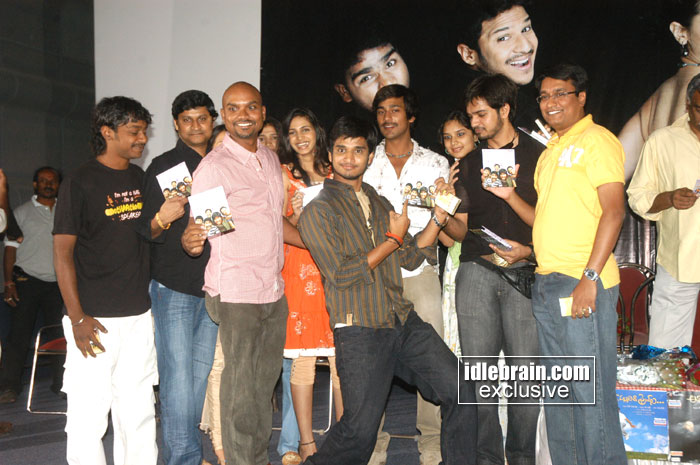
At the music launch in Hyderabad in May 2008, the film’s team gathered at Prasad Labs. By August, Ganji was announcing a September release with 35 prints. Cinema had supplied a new vocabulary for an old obligation: assemble a team, finish the work, put it in front of an audience. Investors can discuss the quality of an idea indefinitely. A release date has less patience.
The warehouse gets a vote
Zip.in brought another change of setting. Launched in late 2014, the grocery venture operated in Hyderabad and subsequently Visakhapatnam. Ganji saw a large, fragmented market and a recurring household chore. The appeal was ordinary enough to be widely understood: fewer trips, less time at a checkout, and groceries delivered when promised.
By January 2016, the business was described as bootstrapped, with a catalog of 8,500 products. Orders placed before 1 p.m. could receive same-day delivery. These were the terms of that period’s service, before today’s familiar language of minute-by-minute grocery promises. Ganji was discussing freshness during transit and the lasting impression of the delivery itself.
Asked about the operating model, he answered plainly: “Yes, we have our own warehouse.” Zip.in combined inventory with just-in-time procurement. Products were graded, separated and packed in-house; temperature-controlled vehicles handled delivery. By February 2016, he put daily orders at around 200. Each number belonged to a system of purchases, storage, people and routes.
“Yes, we have our own warehouse.”
Kishore Ganji, on Zip.in’s operating model, 2016
That choice gave the company responsibility for more of the experience. It also gave it more work. A list of products on a screen could be expanded quickly; handling those products properly demanded space, coordination and reliable information from suppliers. His explanation placed the unglamorous mechanics beside the customer promise, where they belonged.
- 01ProcureCoordinate supply
- 02Grade & packHandle in-house
- 03DeliverKeep the promise
Earlier, Ganji had called Zip.in his seventh startup. He said experience helping other young companies with software had informed his own technology choices. The grocery business supplied a rather literal examination of those choices. Whatever a dashboard said about an order, dinner still required the ingredients.
A wider circle of founders
Through Astir Ventures, Ganji moved further into backing other people’s businesses. The firm’s founders include Bhattaram, extending a partnership already present at Astir IT. Its stated work combines early-stage capital with mentoring and strategic support, across countries and sectors. Silicon Valley, New Jersey and Hyderabad form part of its geographic footprint.
By October 2019, Astir Ventures had backed and mentored more than 80 seed-stage companies. The range included Vahdam Teas, the corporate responsibility platform Goodera and battery developer Gegadyne Energy. Those examples capture the variety without making every investment sound like the same technological bet. Tea, enterprise operations and batteries ask rather different questions of a founder.
Ganji also wrote about opportunities that could be overlooked. In a 2019 agriculture essay, he urged startups to consider farmer returns and education, and imagined better connections among farmers, consumer goods companies and buyers. The interest fits his grocery experience: a purchase at one end of the chain depends on arrangements much further back.
His investing relationships continued to broaden. In 2024, he and Sri Myneni were named as founders of a newly announced Hyderabad Angels Fund, with a ₹100 crore corpus and a ₹50 crore greenshoe option. Its plans emphasized technology, AI and support from experienced entrepreneurs. Hyderabad Angels’ current leadership also lists Ganji as vice chairman.
In 2021, his Startup Grind conversation was organized around the practicalities of fundraising: when to raise, how to approach a seed round, how to build a team and how to scale. These were questions for people preparing to ask for money, alongside people learning to supply it. The two audiences had a reason to listen together. A founder’s financing decision becomes an investor’s waiting period. Ganji has described that wait with a memorable phrase: “a decade of pain for a shot at magic.” Even an enthusiastic backer needs a calendar.
The ninety-day question
For all the variety, Ganji’s published advice can be quite direct. In a 2022 essay on investment decisions, he emphasized the founding team, a distinctive offering and customer validation. The questions sit comfortably beside his operating history. Can these people execute? Why should a buyer choose this business? What evidence suggests the buyer already wants it?
His latest venture gives those questions a timetable. With entrepreneur Krishna Lakamsani, he co-founded A Foundery in Princeton, New Jersey. In describing its origins, the partners have discussed the costs of pursuing valuations that never became money they could actually use. Their answer is a studio organized around building businesses that generate revenue.
The program offers practical infrastructure: office space, operating support, funding and mentorship. Ganji’s description of the founder-in-residence model centers on getting from an idea to a paying customer within ninety days. It is a useful deadline because the result is legible. A founder must persuade somebody outside the founding team to make a purchase.
a first paying customer
A program objective, with operating support behind it.
The Harvard Alumni Entrepreneurs partnership makes the arrangement concrete. Its published 2026 cohort schedule runs from August 16 to November 15 in Princeton. Living expenses and launch capital are covered in exchange for equity under a founder agreement. Graduation requires at least one paying customer. A separate six-week remote bootcamp also focuses on first revenue.
One purchase does not settle the economics of a company. It does bring the discussion down to a recognizable human exchange. Somebody had a problem, considered an offer and chose to pay. There is room after that for repetition, better margins and growth. Before it, even an articulate founder is still making a case.
Ganji’s career has given that exchange several forms: a consulting client, a grocery customer, an audience, a founder seeking backing. The settings keep changing. The obligation to deliver follows him. At the beginning of this story was a small grocery order designed to make trying the service easy. In the latest chapter, the assignment is to earn that first order again.
Follow the work
- Astir IT leadership
- Astir Ventures
- Twitter / X
- A Foundery
- The 2008 film interview
- Zip.in interview, 2016
- His investment essay
- Harvard Alumni Entrepreneurs program
- Startup Grind conversation listing
Photograph: Idlebrain event coverage