The first thing to understand about Propel is that a food-stamp card does not come with the experience most people expect from a bank. For years, learning how much remained meant finding a receipt or calling a number. Imagine performing that little ritual before deciding what goes into your shopping basket. A balance is a number. Getting the number can become a job.
- The product: a free app for EBT balances, benefits information, savings, and security controls.
- The audience: more than 5 million users, according to Propel.
- The business: advertisers pay to reach people who already have a reason to return.
The fax machine was the clue
Jimmy Chen left Facebook and founded Propel in 2014 through a fellowship at Robin Hood’s Blue Ridge Labs. His early target was applying for food stamps. In New York, he built a mobile form that produced an application for fax submission. He initially carried those applications to FedEx himself. The future had a paper tray.
In a later interview, Chen described operational trouble, cities asking the company to stop, and an unresolved business model. The application service ended in 2015. Its weakness was instructive: a smoother form could only accomplish so much when the process on the other end belonged to government.
“It’s really hard to do that from the outside as a third party company.”
Jimmy Chen
On the early enrollment project
Checking an existing balance offered a different opening. People needed it repeatedly, and the company could work through existing account interfaces. Propel dates its app launch to 2015. That narrower task gave users a reason to come back after the first download. An application happens occasionally. A grocery decision happens again and again. That distinction matters for a small company: repeated usefulness creates more chances to learn what people need, and more opportunities for a new feature to be discovered without asking someone to install another app.

A habit with a business attached
The app’s names trace its expanding ambitions: Fresh EBT, then Providers, then Propel in August 2024. Balance checks acquired company - a jobs board, benefits explanations, savings offers, and, in 2021, the Providers cash debit card. The cash card is separate from the government-issued EBT card used for food benefits.
Today, with a user’s permission, Propel connects to the state’s EBT portal and presents account information in a readable form. Users can review purchases, see deposit information, and follow changes to benefits. Its expertise sits at the meeting point of consumer software, public-benefits policy, and the practical business of making a household budget last.
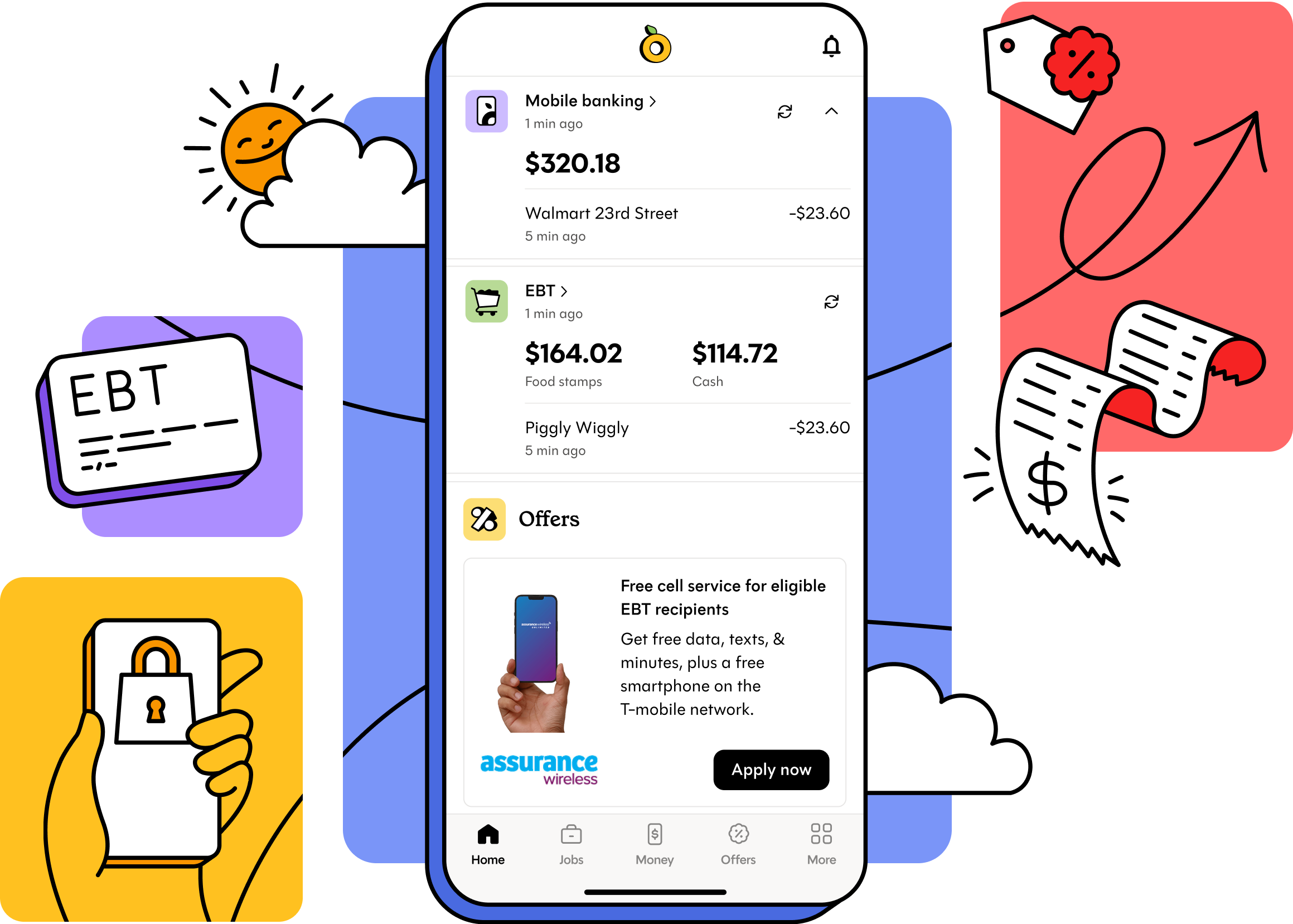
Consumers pay nothing to use the app. Advertisers pay for access to the audience. Grocery businesses, telecom providers, utilities, and healthcare organizations have reasons to reach households receiving benefits. Propel offers them a channel built around a financial task, with offers that might include cheaper internet or grocery savings.
That creates a test the company must keep passing: an offer should earn its place beside someone’s balance. Propel says it selects advertising partners for relevance. This is also a recognizable media business. Its inventory is attention, earned while doing something valuable. The question for a reader assessing Propel is whether the commercial messages help with the same household problem that brought the user there. The economic argument is straightforward. Serving people with little spare money does not require charging them for every useful interaction.
Investors have financed that bet. Nyca Partners led a $50 million Series B announced in March 2022, with backers including Andreessen Horowitz, Kleiner Perkins, and Flourish Ventures. That is capital raised, rather than a disclosed bill for building the app. Separately, a July 2024 Gates Foundation grant committed about $3.53 million to testing generative AI for benefits navigation.
The button people actually press
Security reveals what a familiar interface can accomplish. In a June 2026 retrospective, Propel described reminders before deposits, recommendations suited to shopping habits, and simpler controls. It reported the share of users enabling at least one security feature rising from 16% to 56% during 2025.
+40 percentage points · Propel’s reported results
States and processors built the underlying protections. Propel helped people use them. Its reported $225 million in blocked transactions includes suspected theft and other purchases; it is not a tally of proven theft prevented. The practical lesson: make the useful action visible, short, and timely, then measure whether people take it.
The state comes back into the picture
A recurring consumer habit also interests organizations struggling to reach the same households. Propel for Plans pitches member engagement to health insurers. Propel for States offers agencies help with communication and client action. An app someone opens for a balance can carry a message they would otherwise miss.
Arizona supplies a wonderfully unglamorous example. Propel and the Department of Economic Security encouraged people to save the agency’s phone number, so a benefits call would be recognizable. A June 2026 brief reported 1,900 contacts saved. Another campaign produced 1,012 new MyFamilyBenefits accounts. Those are concrete actions, although they do not establish how many households ultimately kept coverage.
The working method matches a published company value: listen first. Propel’s remote team combines technical work with policy research and user feedback. Its advantage depends on understanding the people an agency or advertiser hopes to reach, then offering something useful enough to keep their attention.
A better screen still needs a working system
Alternatives include ebtEDGE, ConnectEBT, and state apps. Some official tools handle casework, such as document submission or recertification, beyond viewing an account. Propel competes through its consumer experience and the combination of information, offers, and services around it. The choice depends on the task and the state.
There are practical limits. Propel currently excludes Iowa from balance checking. Security options vary by location. A locked card must be unlocked to shop; blocking out-of-state purchases requires thought when traveling. The app relies on the infrastructure underneath it, and eligibility decisions remain with public agencies.
That boundary helps explain another use for the audience. In October 2026, Propel and GiveDirectly announced a $1 million bridge fund for selected SNAP users missing an October deposit, with $100 payments and limited funding. A familiar app can help relief reach people. It can also make the next balance check easier. Both uses begin with taking that small, recurring question seriously.