Five hundred rupees is a small sum to build a banking strategy around. Yet that was the invitation behind Jan Dhan Plus: start putting a little money into an account you already own. Women’s World Banking and Bank of Baroda had identified a problem that an account-opening campaign could easily miss. Access existed. A dependable savings habit did not necessarily follow.
- It helps banks, insurers and policymakers serve low-income women.
- Its tools include customer research, product design, leadership training and investment.
- The recurring lesson: measure what customers do after they sign up.
The ₹500 invitation
India’s Jan Dhan infrastructure gave the partners somewhere to begin. Their savings program encouraged small, regular deposits, explained the benefits attached to an account, and worked through banking correspondents, including women agents known as BC Sakhis. These were people close enough to make banking part of an ordinary day. A distant branch can turn a small deposit into an expensive errand.
The rural and peri-urban pilot ran across 69 branches in the Shahjahanpur region between September 2021 and January 2022. It enrolled 47,567 women and men. Among enrolled women, average balances rose from ₹5,095 to ₹7,806. Across the broader portfolio of women’s Jan Dhan accounts, balances rose from ₹3,072 to ₹3,421.
That is evidence worth a bank manager’s attention, although it cannot establish how much of the difference the program caused. People who enroll may already be more inclined to save. By March 2022, the partners considered the business case strong enough for wider rollout. The ₹500 was the customer’s own saving, not a fee paid to Women’s World Banking.
Four women, one stubborn question
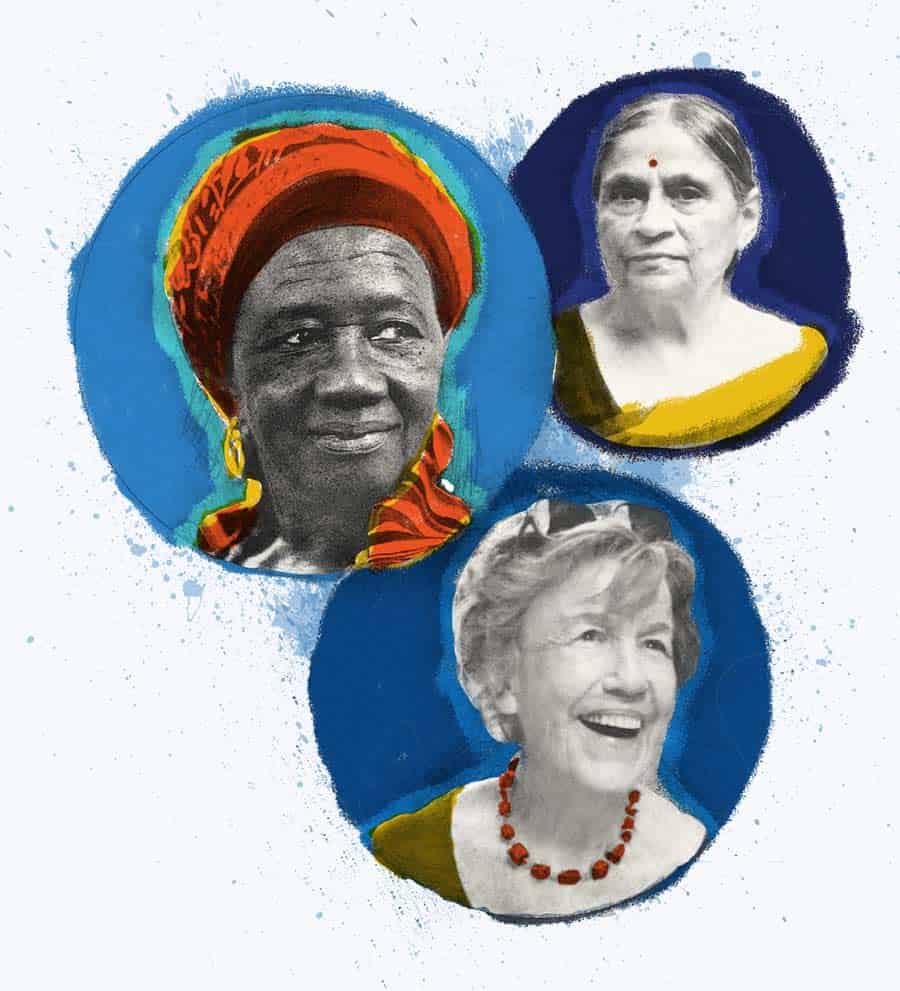
The organization’s origins run through the first UN World Conference on Women in Mexico City in 1975. Michaela Walsh, Esther Ocloo, Ela Bhatt and Mary Okelo connected women’s rights with a practical obstacle: access to money. Women’s World Banking was established in 1979, with Walsh as its first president.
Today, it sits between financial providers, policymakers and the women those institutions struggle to serve. Its institutional partners are banks, insurers, microfinance providers and fintechs. Its intended beneficiaries are women managing households, running small businesses and earning incomes that conventional financial products can fit poorly.
The name needs a little unpacking. This is a nonprofit with an advisory operation and an asset management business. A reader does not visit its website to open a current account. A bank can work with it to understand customers, redesign delivery and test a service. A regulator can draw on its research and leadership programs.
Its move beyond microfinance involved real internal debate. Mary Ellen Iskenderian, president and CEO since 2006, has described repeated board discussions about broadening the approach. Digital delivery offered lower costs and greater reach. Loans alone could not supply safe savings, everyday payments and protection against emergencies.
“If we were really going to reach as many low-income women as possible, we had to go beyond microfinance.”
Mary Ellen Iskenderian · 45th-anniversary reflection
The bill behind the bill
Consider Caregiver, developed with Jordan’s Microfund for Women and piloted in 2010. Hospitalization creates expenses beyond treatment: transport, disrupted work, the money a closed business stops earning. A cash benefit gives a customer room to decide which hole needs filling first.
The 2012 annual report listed a monthly premium of US$1.50 and a benefit of US$14 per hospital night, up to 30 nights. Those are historical terms. Pregnancy coverage mattered: pregnancy-related health issues represented nearly half of claims. Client education mattered too; the partners adjusted materials during the pilot so customers understood the product and claims process.
The lesson traveled with qualifications. Research for a proposed Peruvian product found that more than 60 percent of the partner’s clients lacked any health insurance. Supplementary cash works differently where basic medical coverage is missing. Copying the Jordan product required reconsidering what it actually needed to cover.
Who pays for the experiment?
Women’s World Banking combines grant support with earned service income. Its audited 2024 consolidated accounts reported approximately $18 million in revenues and support, including $2.3 million in service fees, against $21.3 million in expenses. Net assets fell by about $3.4 million. Research, staff and implementation carry costs before an institution has a service ready to expand.
Visa Foundation’s five-year commitment of up to $20 million, announced in 2017, supported that kind of development. Separately, Women’s World Banking Asset Management invests in inclusive businesses and helps them examine how they serve and employ women. Investment capital and nonprofit operating revenue belong in different columns.
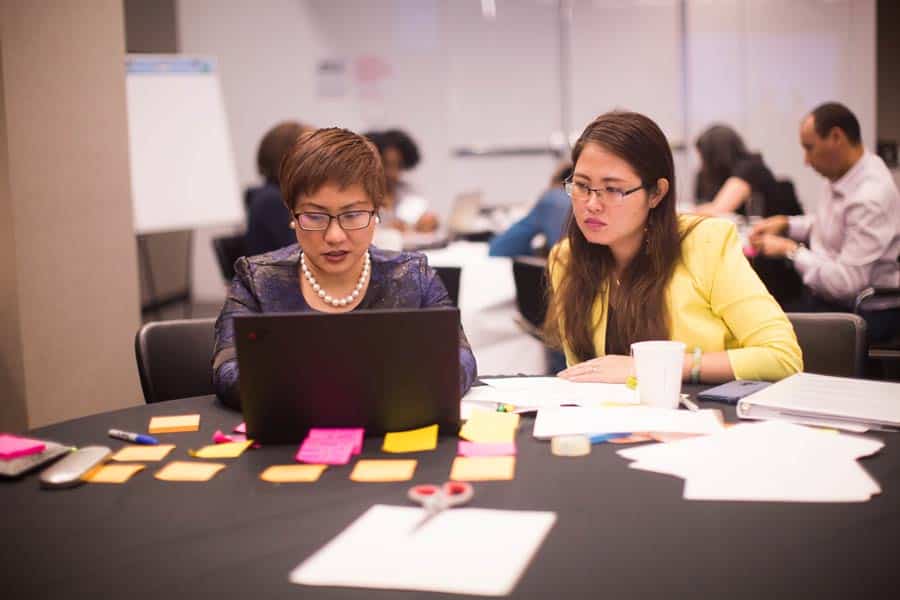
That institutional work includes the workplace itself. On its careers page, the nonprofit describes a culture of curiosity, accountability and sharing information across teams. It advertises professional development, flexible work where possible and two organization-wide paid rejuvenation weeks. These are its stated practices; they also reveal an organization that treats the people delivering a service as part of the machinery that makes it function.
Copy the investigation
The useful distinction in this market is its combination of field research, institutional advice, policy work and investment. Inclusive-finance organizations such as Accion and banking networks such as Financial Alliance for Women occupy overlapping territory. Women’s World Banking concentrates those methods on low-income women and the institutions shaping their choices.
Product teams can borrow a practical sequence: investigate routines, make the first action manageable, equip trusted intermediaries, and measure repeat use. The conditions matter. An agent needs to be accessible. A savings goal needs spare cash behind it. An insurer needs claims processes customers can navigate. A clever prompt cannot remove those constraints.
In 2026, a new Uganda pilot with Pula and Ripple proposes shock-responsive support for approximately 3,000 farmers, focusing on women in refugee and host communities. Recipients would receive Ugandan shillings through mobile money; digital-asset settlement would operate behind the scenes. Results remain to be tested.
There are ways to look beyond enrollment totals. The 2025 impact report describes a partnership with Indonesia’s PT Permodalan Nasional Madani that integrated savings into group lending meetings. Frontline staff reinforced small deposits and account use. The reported comparison examined both money saved and worry about monthly bills. For a product team, that pairing is useful: a balance can reveal behavior, while a household question can help explain whether the behavior matters.
The organization now reports more than 118 million women reached since 2018. Its definition includes access and projected benefits from policy and investment influence, alongside direct product work. That makes it a measure of breadth. Whether a woman can use her money when she needs it remains the more personal test.