Relay.app was for the person whose job lived between five tabs. The marketing operator moving leads from a form to HubSpot. The support lead who wanted AI to draft a reply but not send it unsupervised. The founder who needed a briefing before every call and did not want to hire an engineer to maintain it. Relay gave those people a clean visual canvas, connected it to more than 200 work apps, and put a remarkably sensible object in the middle: a human being.
That last part was the point. Most automation software treats a person as the unfortunate source of latency. Relay treated judgment as an actual workflow primitive. A run could pause for an approval, a missing date, a completed phone call, a choice between paths, or a review of what an AI model had written. The reviewer could approve, edit, stop, or re-prompt. Slack and email carried the request. Deadlines, reminders, and escalation rules kept it from becoming a digital oubliette.
Now the useful product is leaving. Relay.app announced on July 16 that new signups and upgrades were over. Free workspaces closed on August 15. Paying customers retain access until September 14 at 23:59 Pacific, then their accounts and unexported data are scheduled for deletion. This is no longer a review about whether to buy Relay. It is a review of what worked, why people cared, and how to get out without leaving your business logic behind.
Paying-customer deadline. Relay says workflows will keep running through 23:59 PT. Export and rebuild before then. Do not make the final evening your migration plan.
Who Relay was really for
Relay was strongest for a small team with familiar SaaS tools and work that sat in the gray zone between mechanical and consequential. Think lead qualification, customer onboarding, monthly reporting, meeting prep, support triage, content review, recruiting handoffs, or invoice follow-up. If the task could be diagrammed as “when this happens, gather that, ask the model, let Maya check it, then update the system,” Relay spoke the language.
It was also unusually approachable. The company’s later pitch was that plain English could become a visual, reliable workflow. The AI Assistant proposed the structure; the editor kept the machinery inspectable. In early 2026 Relay bundled related workflows under named “Agents,” complete with a job, activity history, and chat. The agent idea was friendlier packaging, but predictability still came from the workflow underneath. That distinction mattered. A cheerful agent avatar cannot rescue an invisible chain of side effects.
The brake pedal was the feature
Relay’s human-in-the-loop system had four basic moves: approval, data input, task completion, and path selection. The AI review layer added more nuance. You could demand review every time, only when an output field was empty, or only when the model failed to produce valid output. That let a team reserve attention for the uncertain cases instead of pretending every model response deserved either blind trust or constant babysitting.
That design made Relay fit the awkward reality of office work. A customer may need a kind reply, not merely a fast one. A candidate may need a recruiter to notice context that never entered the form. A sales discount may need an owner. Automation is often sold as the removal of people; Relay was better when it choreographed where people re-entered.
“Easy automation that my whole team can build.”Lincoln T., small-business owner, G2 review, December 2025
The praise was not only sentimental. G2 listed Relay at 4.9 from 88 reviews in 2026, while Product Hunt showed a perfect 5.0 from 43 reviews and 2,100 followers. Reviewers repeatedly liked the interface and responsive support. The complaints were practical: plan differences could be confusing, pricing looked steep beside n8n, and complex workflows could still require a technical marketer or engineer. Friendly does not mean frictionless, especially after the tenth branch.
What you could actually build
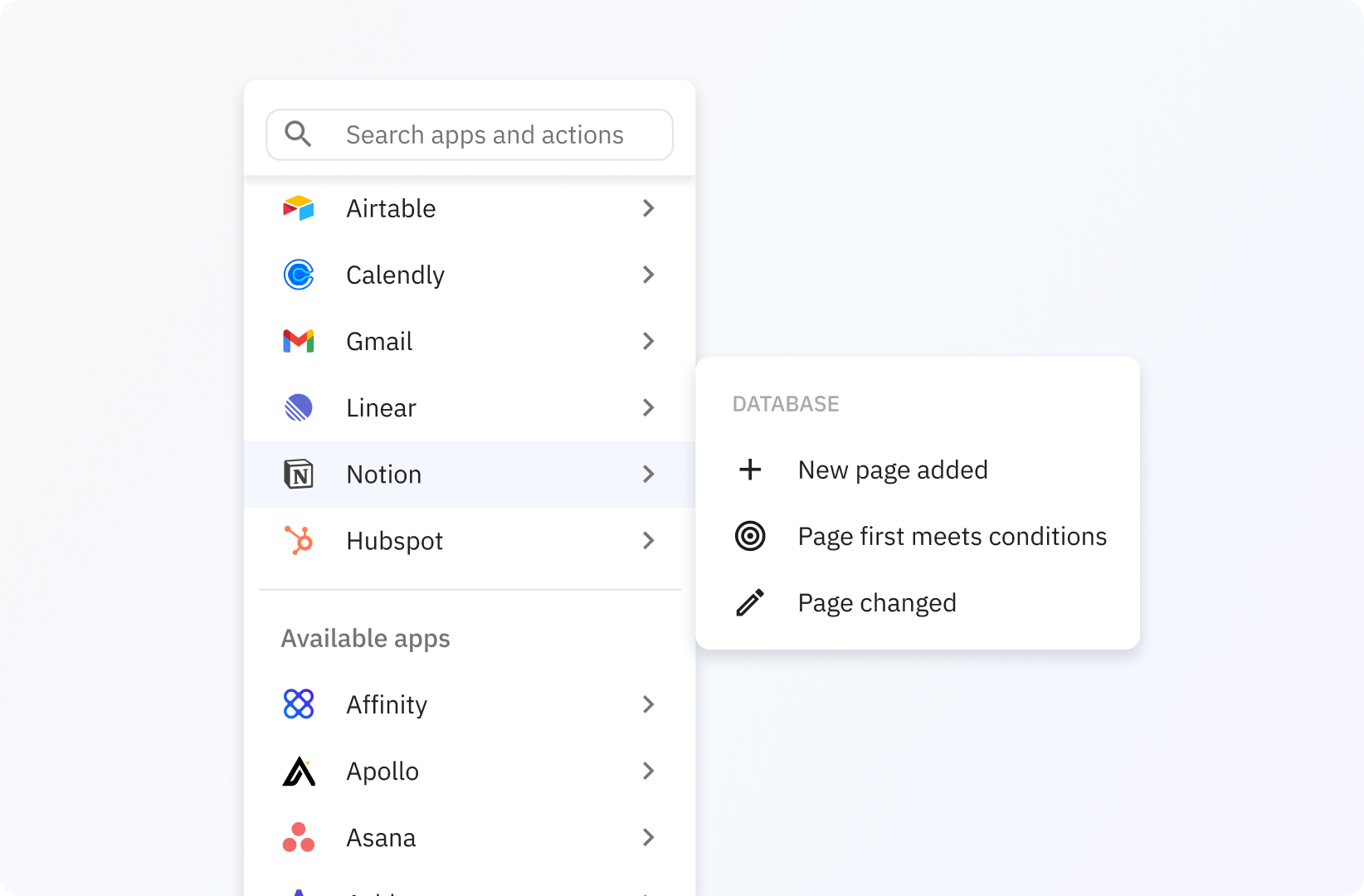
The ingredients covered a lot of ground. Triggers watched email, calendars, CRMs, databases, forms, support desks, stores, and schedules. Actions created records, sent drafts, updated contacts, moved files, posted messages, and called webhooks. Built-in AI could summarize, extract, translate, transcribe, browse, or return structured fields. Agentic steps could choose among permitted tools. Users could bring an OpenAI, Anthropic, or Google connection or spend Relay’s bundled AI credits.
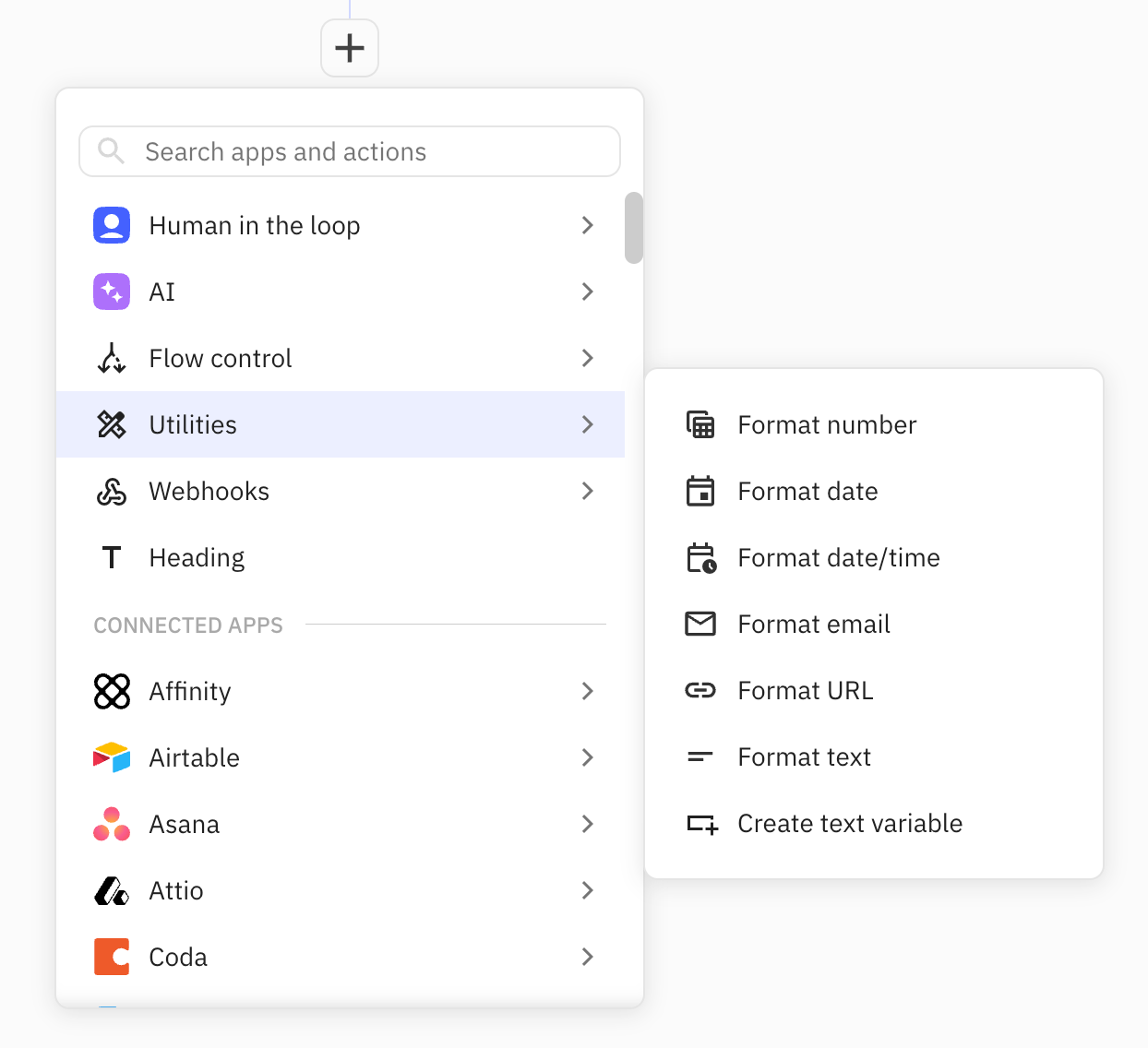
Native Tables, introduced late in 2025, reduced dependence on a stray Google Sheet for lookups and logs. Backfill mode could run a new workflow against older records. Shared connections let teams automate through a common service account. Roles could dynamically assign a review or run an action as the right colleague. MCP support eventually let a Relay-built tool appear inside products such as Claude or Cursor, and let Relay call remote MCP tools in return.
| Job | Relay’s useful move | Watch-out |
|---|---|---|
| Support triage | Classify, draft, route uncertain cases to a person | Never let confidence scores replace escalation policy |
| Sales follow-up | Enrich lead, draft response, approve in Slack, log in CRM | Connection ownership must survive staff changes |
| Meeting brief | Gather calendar, CRM, and recent communications on schedule | Check data access and stale context |
| Content ops | Transform notes into structured drafts with editorial review | Model credits and review volume can climb together |
The founder’s second calendar problem
Relay came from Jacob Bank, whose earlier smart-calendar company Timeful was acquired by Google in 2015. He later led product work for Gmail and Google Calendar, then left Google in 2021. The first version of Relay focused on operational playbooks, somewhere between task management and automation. The company spent roughly a year and a half feeling out the problem before AI gave the product a sharper story.
The pedigree explains some of the polish. Several early colleagues had worked together at Google, and the remote team spread across North America and Europe. It also explains the obsession with the seams between tools. Calendar products teach a brutal lesson: the hard part is rarely a single event. It is coordinating the invitation, people, context, reminders, and aftermath.
Investors bought the argument. Relay announced a $5 million seed round led by Khosla Ventures in 2022 and another $3.1 million led by Andreessen Horowitz alongside the October 2023 public launch. Product Hunt ranked that launch second for the day and fourth for the week. By 2025, Bank said changing one homepage line from automation toward AI agents increased conversion by 25 percent. The new language found an audience. It did not produce a permanent business.
The shutdown changes the verdict
The old buying verdict would have been simple. Choose Relay when ease, readable workflows, AI steps, and human review matter more than having every obscure connector. Choose something else when you need self-hosting, very high volume at a low marginal cost, or a connector catalog broad enough to swallow a procurement spreadsheet.
The current verdict is harsher: do not begin new work in Relay, because you cannot sign up and the service is closing. Existing paying customers should use the remaining access as a controlled evacuation window. Relay canceled subscriptions, promised prorated refunds for unused annual terms, and added 25,000 steps plus 10,000 AI credits per month during wind-down. Generous capacity is helpful. It is not a reason to postpone.
| Migration path | Best when | Trade-off to test |
|---|---|---|
| Zapier | You need a wide connector catalog and familiar no-code setup | Rebuild human review and check task economics |
| Make | You like visual branching and detailed data mapping | Scenarios can become dense; train the owner |
| n8n | You want technical control or a self-hosting route | Budget for operations, credentials, and maintenance |
| Power Automate | Your company already lives in Microsoft 365 | Test non-Microsoft connectors and maker experience |
| Workato | You need enterprise governance and orchestration | Expect enterprise procurement and implementation |
Export the thinking, not just the rows
Relay’s shutdown export is better than a pile of CSVs. It includes workflows, Sequences, and MCP servers as machine-readable JSON plus plain-language prompts; run history and individual run data; and Tables as CSV. Download it all. Then document what the archive cannot fully explain: who owns each connection, what wakes the flow, which person approves what, which alerts matter, and how the team recognizes a bad result.
- Export every workspace now. Store two copies in places with different failure modes.
- Inventory live triggers. Record schedules, webhook URLs, polling sources, backfills, and business owners.
- Map credentials and identities. Note shared connections, service accounts, role assignments, and who can reauthorize them.
- Rank by consequence. Rebuild revenue, customer, payroll, security, and compliance flows before convenience automations.
- Run both systems briefly. Compare outputs, branches, review requests, retries, and failure notifications.
- Cut over deliberately. Disable the old trigger only after the replacement has handled real cases and an owner has signed off.
Connected credentials and tokens will be deleted with the account, according to Relay. That is good privacy hygiene, but teams should still revoke old authorizations directly in each connected app after cutover. Webhooks deserve the same attention. A dead endpoint can fail quietly while everyone assumes another system picked up the work.
The keepsake
Relay’s product lesson is worth carrying to whichever tool comes next: automate the obvious, expose the logic, and give consequential decisions a named human owner. The company is closing. The better mental model does not have to close with it.
Quick answers
Is Relay.app still operating?
Free accounts have closed. Paying customers retain wind-down access through September 14, 2026 at 23:59 PT.
Can I create a new account?
No. New signups and free-to-paid upgrades ended July 16, 2026.
What can I export?
Workflow, Sequence, and MCP server prompts and JSON; run history and per-run JSON; and Tables as CSV.
What was Relay’s clearest advantage?
Human approvals, inputs, tasks, path choices, and editable AI reviews were native parts of the workflow rather than awkward add-ons.
Where should customers migrate?
Shortlist Zapier, Make, n8n, Power Automate, and Workato, then test your actual connectors, approval logic, volume, governance, and failure handling.