The uncomfortable question arrives in a meeting before anyone has agreed on the vocabulary: “Do we show up in ChatGPT?” The SEO lead has rankings. The content team has traffic. The brand manager has share-of-voice slides. None of them can say, with a straight face, which company an answer engine recommends when a buyer asks for “the best payroll software for a twenty-person studio.” OtterlyAI exists for that gap. Give it the questions that matter, the brands you compete with, and the countries you sell in. It checks the answers repeatedly and turns a slippery set of conversations into something a marketing team can inspect.
This is most useful for teams that already understand search and content, but now suspect their familiar dashboards are watching the wrong door. Agencies can track several clients. In-house marketers can compare product lines or regions. A solo operator can use the $29 Lite plan as an early-warning system. If nobody on your team publishes content, earns mentions, fixes crawl problems, or follows up on findings, however, the dashboard will become a handsome weather report.
First, the little animal in the room
OtterlyAI is easy to confuse with Otter.ai, the meeting-transcription company. They are unrelated. This Otterly is an Austrian software business founded in 2024 by Thomas Peham, Klaus-M. Schremser, and Josef Trauner. Peham had been VP of marketing at Storyblok. Schremser and Trauner came from Usersnap, which they sold in 2023. The founders chose to bootstrap, and the name came with a tidy thesis: otters are intelligent, agile, humble, and rather good in difficult environments.
The origin story is refreshingly specific. Peham wanted to understand what ChatGPT was doing to search from a brand marketer's point of view. The team launched an early version on Product Hunt in April 2024, ranked second for the day, and then Google introduced AI Overviews. They rebuilt the product from scratch. By its December 2024 exit from stealth, the service had passed 1,000 users. The public product now says it is trusted by more than 40,000 marketing professionals.
What the machine actually watches
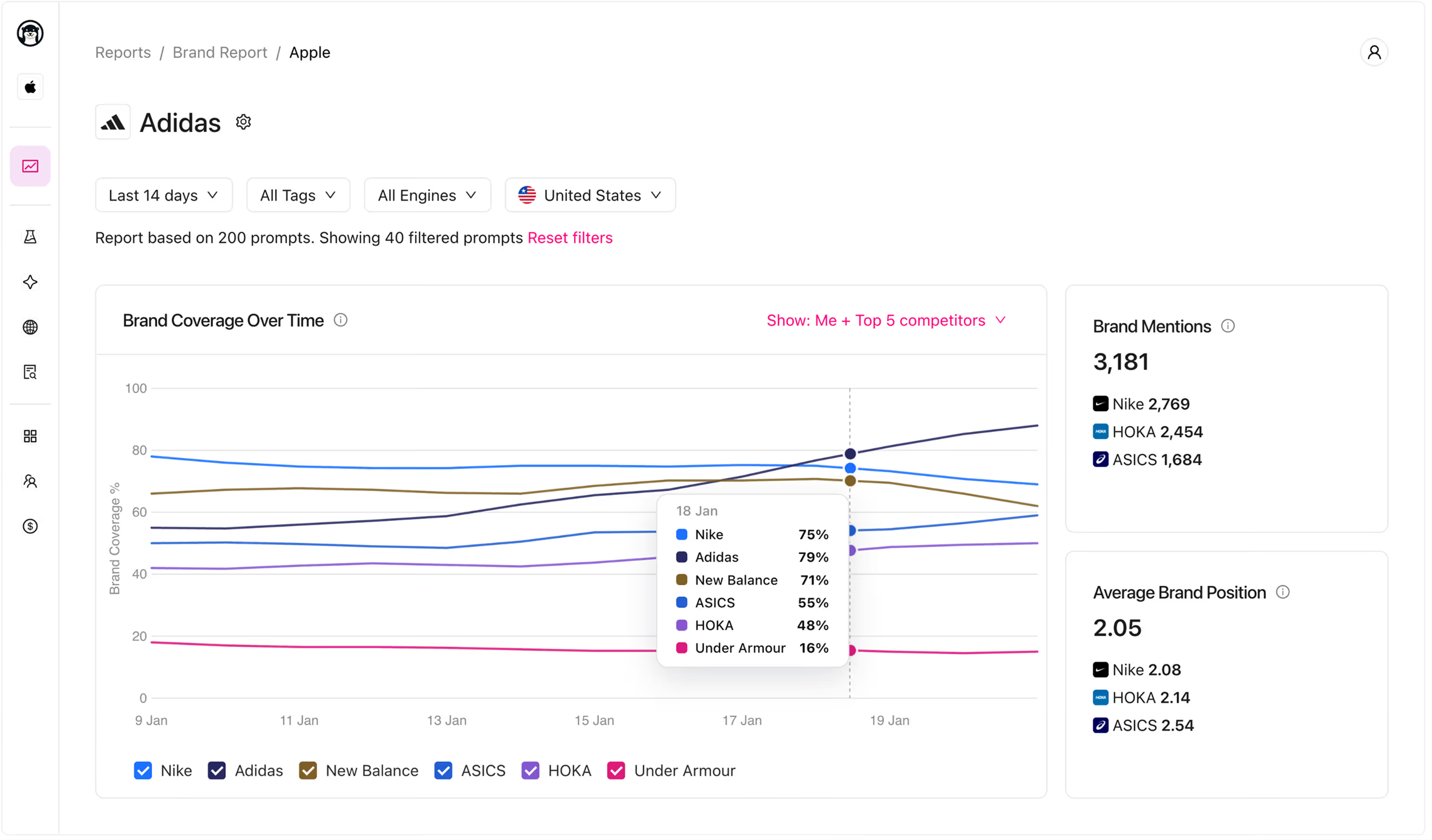
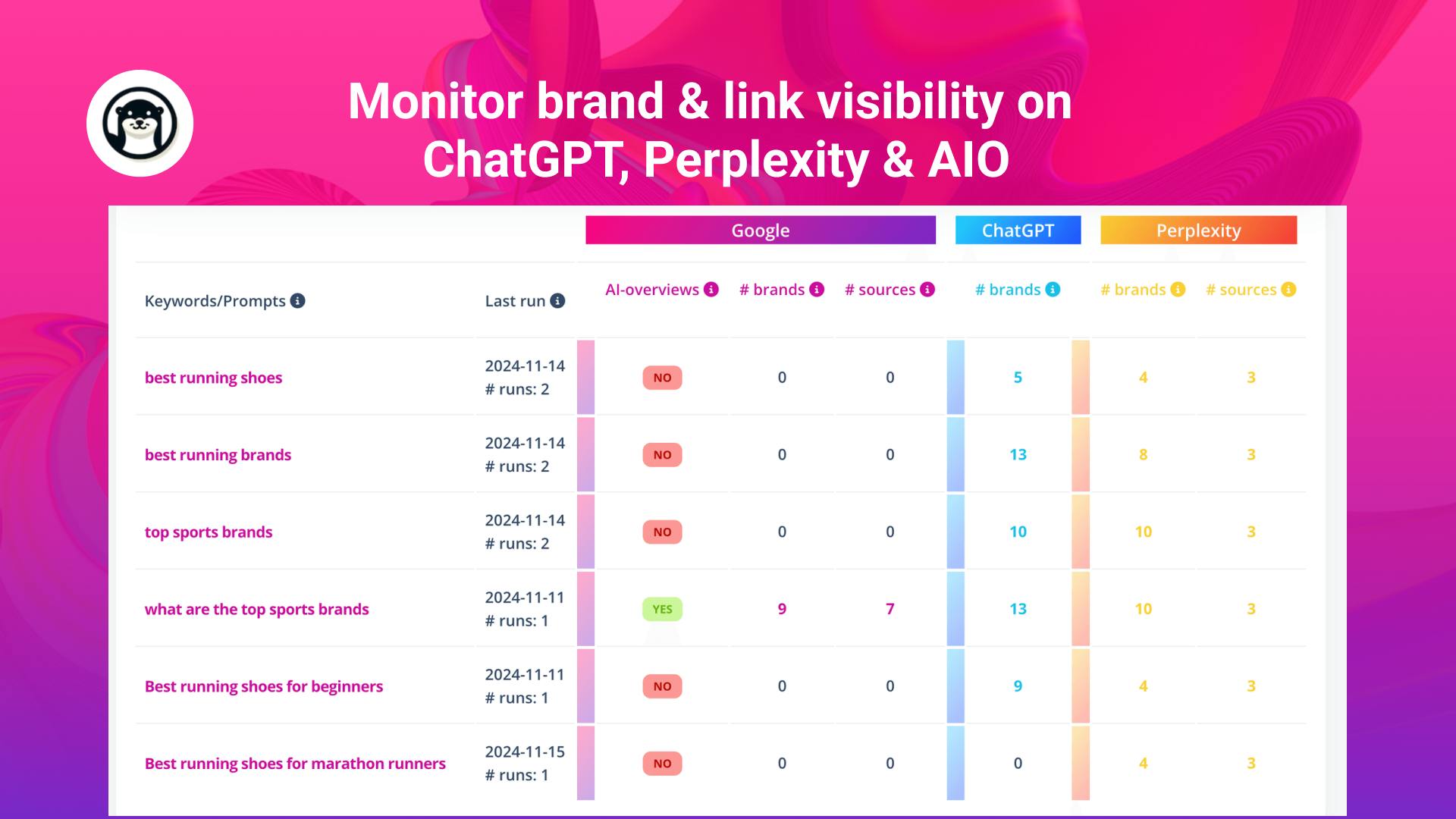
At the center is a prompt set: the questions real or hypothetical buyers might ask an AI service. OtterlyAI runs those prompts daily across ChatGPT, Google AI Overviews, Perplexity, and Microsoft Copilot on every listed paid plan. Gemini, Google AI Mode, and Claude are paid add-ons. The platform stores the answers and scores brand coverage, mention count, average position, sentiment, competitor share of voice, and the cited sources behind the response.
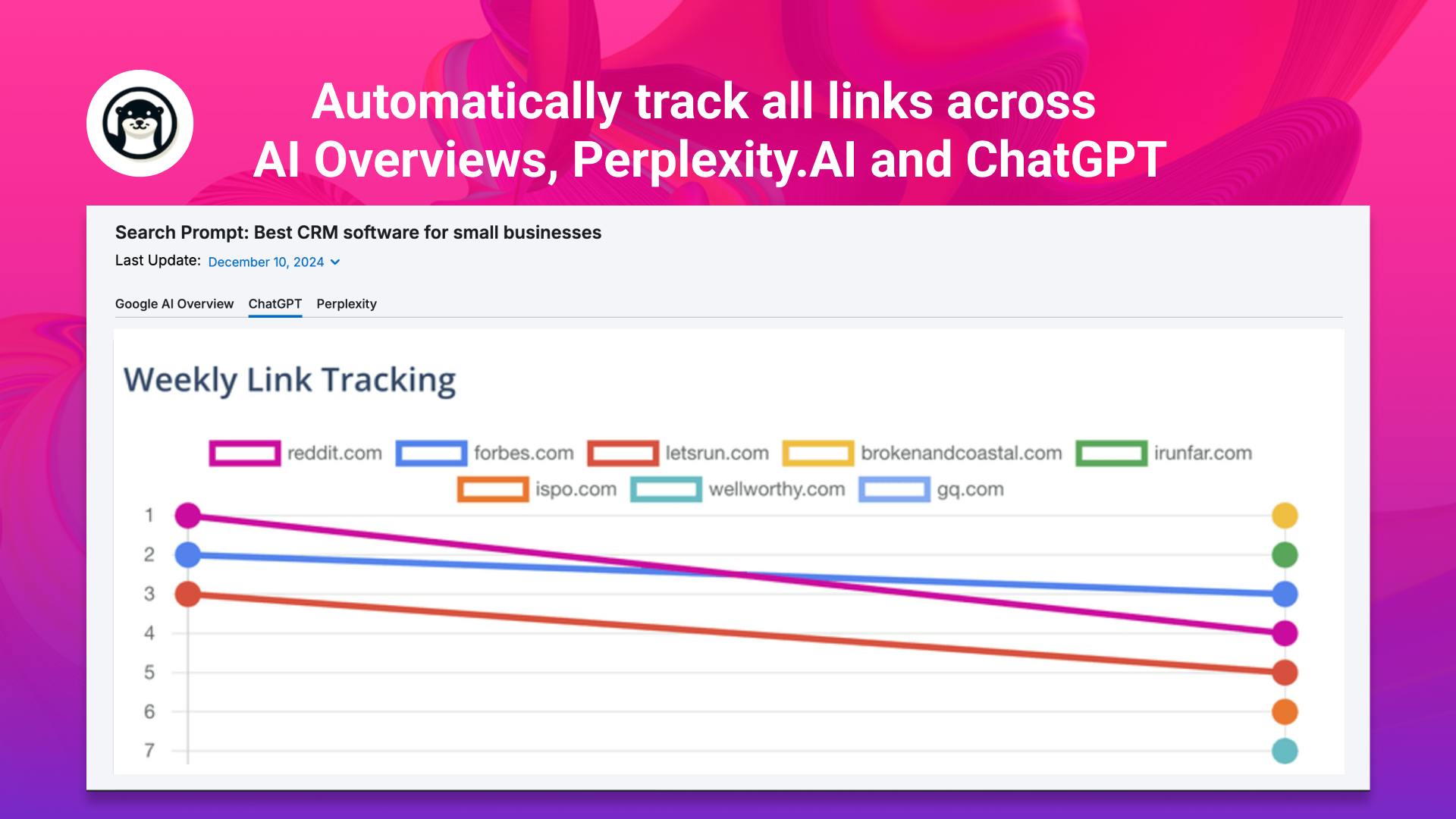
That last piece matters. A mention tells you the result; a citation offers a clue about the route. If Perplexity cites a trade publication whenever it recommends your rival, the editorial opportunity is visible. If an answer engine repeatedly cites a competitor's guide, your content gap has an address. OtterlyAI also segments prompts by engine, country, topic, and funnel stage, making it possible to separate a broad awareness problem from a late-stage comparison problem.
Finds questions, themes, and likely intent patterns worth monitoring before the meter starts running.
Turns daily answers into trends for visibility, position, sentiment, competitors, and sources.
Checks whether pages can be crawled and whether their structure gives an answer engine something usable.
Suggests content, technical, PR, and off-page actions based on the report evidence, then tracks the work.
PDF reports, Looker Studio, REST API, Claude Skill, and MCP access move data beyond the dashboard.
Reads server traffic to show which AI crawlers and on-demand agents reached which pages.
The best trick is knowing where it stops
The Recommendations feature, released in April 2026, is OtterlyAI's answer to the dashboard shrug. It examines cited sites, successful competitors, and missing brand signals, then proposes work with an explanation attached. A team can filter by engine, country, action type, and impact, move suggestions into a shared to-do list, and archive completed changes. This is a sound bridge from observation to a Monday-morning plan.
It is still a bridge. The software cannot negotiate a mention in a respected trade journal, supply an expert worth quoting, or turn a thin product page into the page a model should trust. Nor can any tracker make generative answers perfectly stable. Model versions change, live retrieval varies, location matters, and repeated runs can differ. Read a visibility index as a controlled measurement of a prompt set, not as a census of every private conversation happening inside an AI assistant.
Independent user signals are encouraging, with the normal caveat that review platforms show a self-selecting crowd. G2 displayed a 4.7 out of 5 rating across 54 reviews when checked in September 2026. Reviewers repeatedly praised the clean dashboards, time to value, competitor comparisons, and clearer next steps. Product Hunt showed two reviews and a 5.0 score. Reddit commentary was more mixed in the useful way: OtterlyAI is often described as an affordable, focused monitor, while people running larger programs note that monitoring does not replace a broader SEO, PR, and content workflow.
The price of asking the same question every day
The Lite plan costs $29 a month for 15 prompts. Standard jumps to $189 for 100 prompts and adds API, MCP, and Agent Analytics. Premium is $489 for 400 prompts. Enterprise starts at $1,000, with custom limits and account support. Annual billing is advertised at 15 percent off. Unlimited team members and daily tracking appear across the listed plans, which is generous compared with products that meter seats as well as queries.
The catch lives in scope. Fifteen prompts can answer one narrow brand question, but it disappears quickly across products, funnel stages, countries, and engines. The three extra engines are add-ons, so the $29 headline is not a complete seven-engine price. Standard is a substantial leap for a small team. Before buying, write down the smallest prompt set that would change a decision, then price that set across the engines and markets you actually need.
| Plan | Monthly | Prompts | Good fit | Watch for |
|---|---|---|---|---|
| Lite | $29 | 15 | One brand, a focused test | Add-on engines and a tight prompt ceiling |
| Standard | $189 | 100 | Small team using integrations | A steep step up from Lite |
| Premium | $489 | 400 | Agencies and multi-market teams | Prompt planning still matters |
| Enterprise | From $1,000 | Custom | Large organizations | Requires a sales conversation |
Run the seven-day trial as an experiment, not a tour. Bring 15 buying questions, three competitors, and one market. Save the baseline. Inspect every cited domain. If the output does not produce at least three defensible actions, another hundred prompts will mostly buy a larger fog bank.
Who should choose it - and who should keep shopping
Choose OtterlyAI if your immediate problem is visibility: you need to know whether major AI answers mention your brand, which competitors appear instead, and which web sources shape the response. It suits an SEO or content team that can act on a citation gap, and an agency that needs a legible report for clients. The low entry tier is particularly useful for proving that the discipline belongs in the budget before buying a larger platform.
Keep comparing if you need audience-level prompt-volume estimates, a huge international prompt program, native content publishing, or enterprise research depth from day one. Profound tends to enter conversations around enterprise analysis; Peec AI around polished marketing analytics; Scrunch around brand presence and agent experience; Semrush, Ahrefs, and Writesonic around suites that connect AI visibility to existing SEO or production work. Feature lists move quickly, so compare the exact engines, regions, retrieval methods, export rights, and prompt accounting in a live trial.
Agent Analytics is the most interesting sign of where OtterlyAI is going. Launched in August 2026, it ingests server-log data by file upload, webhook, Cloudflare connection, or WordPress plugin, then categorizes traffic from search indexes, training crawlers, and on-demand AI fetchers. OtterlyAI says it strips IP addresses before storing events. By the end of August, that data was available through its API and MCP server. It does not prove that a crawl caused a citation, but it puts another observable step between publishing a page and discovering that an answer engine noticed it.
The verdict
OtterlyAI makes a young marketing problem feel usefully ordinary. Set up a report. Check the trend. Open the answer. Inspect the sources. Compare the rival. Assign the work. That sequence is more valuable than another grand prediction about the death of search, and the interface is built around it.
Its limits are healthy to understand. The product measures chosen prompts, not the whole market. Recommendations need judgment. Add-ons complicate the entry price. Visibility without distribution, authority, and better content remains a number. Yet for a team staring at an empty cell beneath “AI search performance,” OtterlyAI offers a credible first line - and enough pipes, exports, and crawler data to stay useful after the first report lands.