Lemlist is for the person who has a decent offer, a defined buyer, and a recurring suspicion that five sales tools are conspiring to become six. It finds prospects, enriches their records, arranges email and LinkedIn steps, adds calls and messages, watches sender health, and funnels replies back into one inbox. The attraction is coordination. A lead can move from a buying signal to a researched opener to an email, a connection request, and a call task without taking the scenic route through three CSV files.
That makes it a sensible candidate for founder-led sales, small SDR teams, outbound agencies, and revenue operators who value one workflow more than the lowest possible sending cost. It is less convincing for a team still guessing at its market, or for a volume shop whose only requirement is rotating many inboxes cheaply. Automation magnifies a working motion. It also magnifies a dull pitch, only faster and with better charts.
The original trick still explains the product
Guillaume Moubeche came to software after chemical engineering, work at Procter & Gamble and Hermès, and a lead-generation agency. Cold-email products frustrated him because they made personalization feel like mail merge wearing a tie. In 2018, he built Lemlist with technical co-founders Vianney and François Lecroart. The early hook was visual personalization: put a prospect's name, company logo, or website inside an image and make a templated message look hand-finished.
The trio launched on Product Hunt and finished as product of the day. An AppSumo deal reportedly added more than 3,300 early customers and just under $50,000. Two years in, the company had reached roughly $1 million in annual recurring revenue. Lemlist's public personality became part tutorial, part bootstrapping diary, part cheerful rebellion against the stiff sales-software world.
The personalized picture was never the whole point. It was proof that a machine-made message could carry evidence of attention.YesPress view
The modern product is wider and more sober. Lemlist says it now serves more than 20,000 companies, remains bootstrapped and profitable, and reached $50 million in annual recurring revenue. Those are company-reported figures, but the arc is plain: this is no longer a novelty email editor. In 2025, Lemlist bought conversation-intelligence company Claap in an eight-figure, self-financed deal. The stated aim is to feed what happened in calls back into the next sales action.
What you can actually do
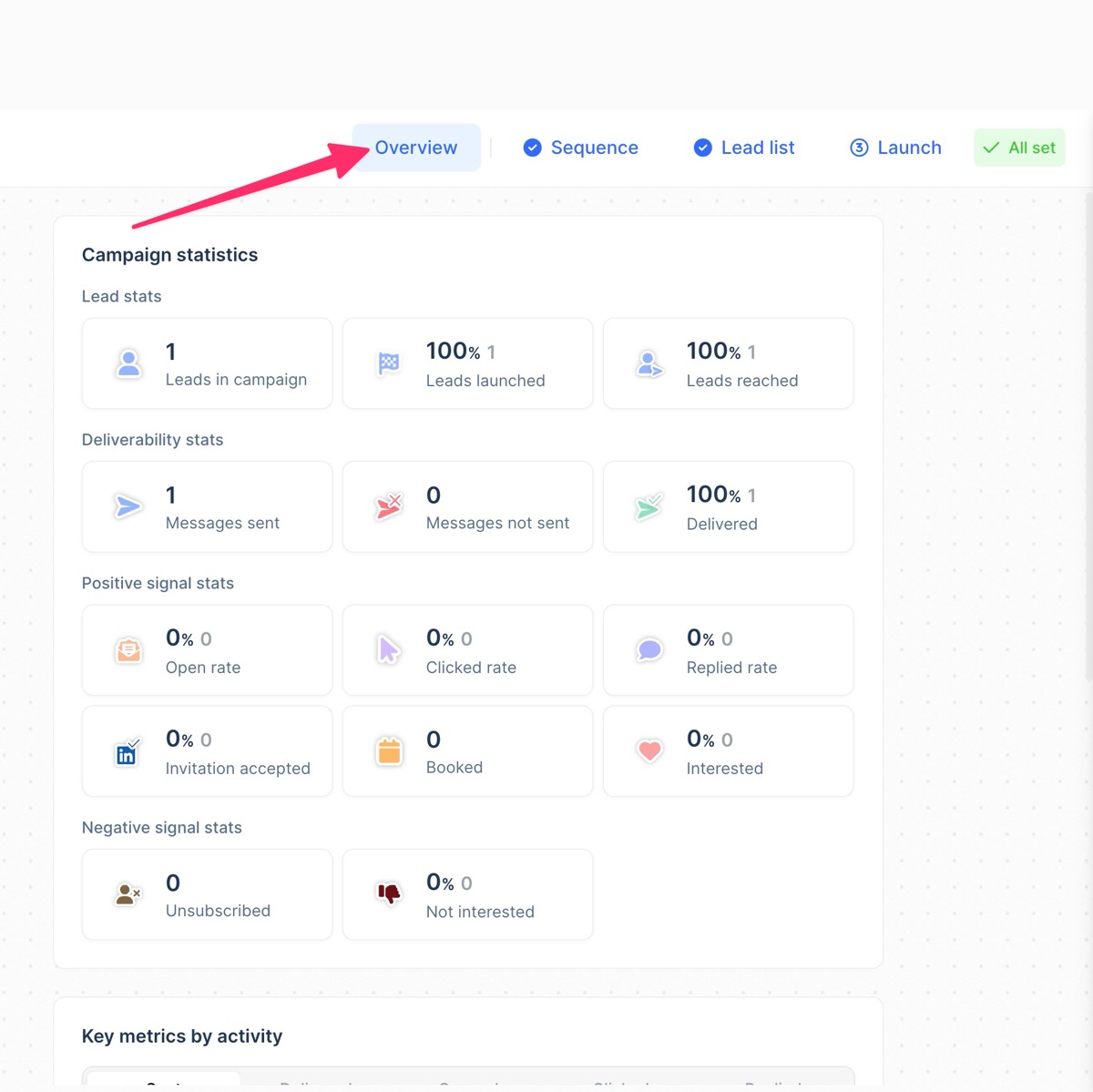
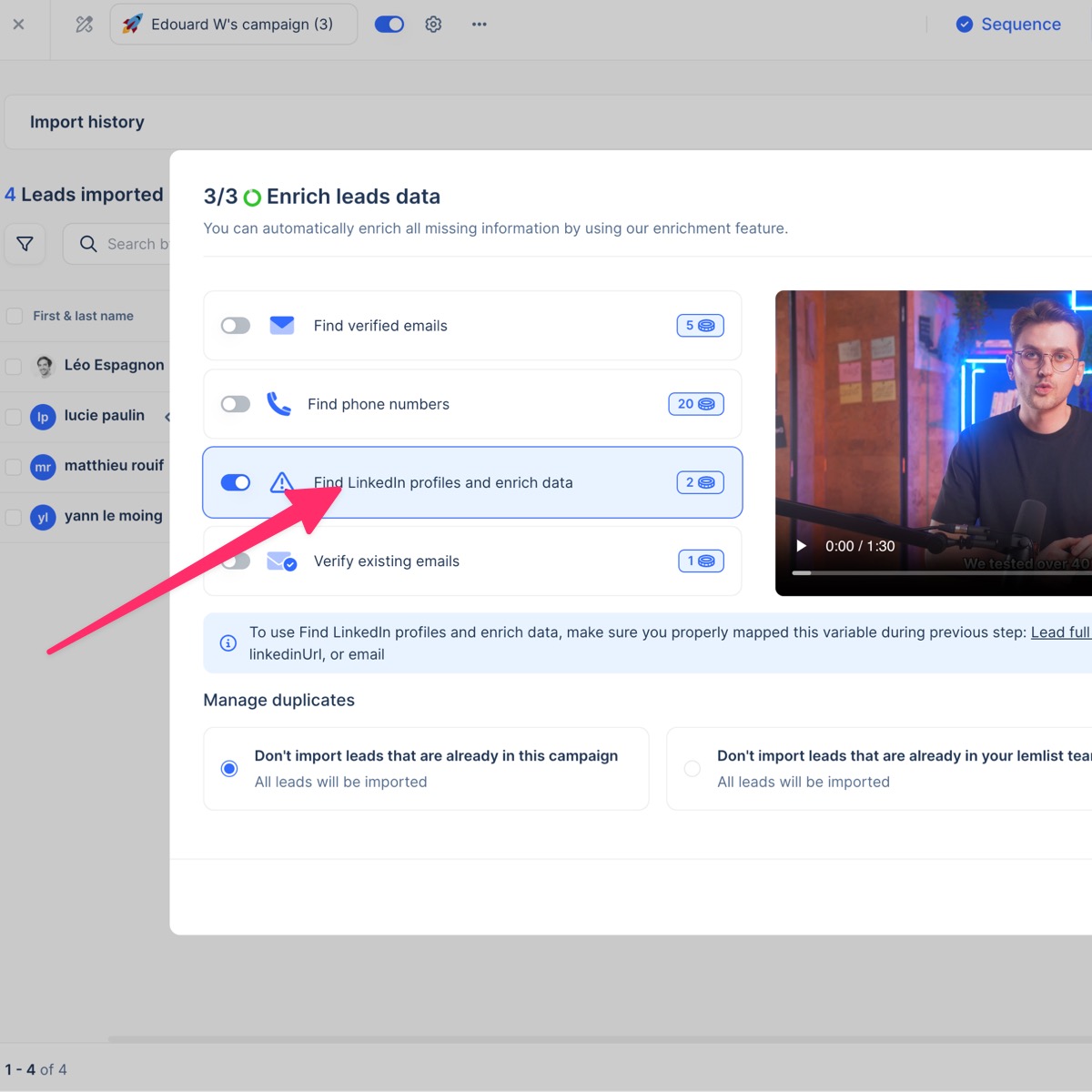
Start with the database, advertised at more than 650 million leads. Filters identify companies and people; enrichment looks for verified emails and phone numbers across multiple providers. Lemlist charges only for successful results. That is the good news. The footnote is that data is never magically complete. Sample your market, inspect titles and companies, and compare match rates before moving a whole prospecting operation.
Campaigns combine automated email with LinkedIn profile visits, invitations, messages, and InMails. Calls, SMS, WhatsApp, manual tasks, and API actions can join the sequence. Branches can react to available data or behavior: whether a lead has an email, accepted an invitation, clicked, booked, or replied. The unified inbox then gives reps one place to handle the human part.
Personalization ranges from sensible to theatrical. Dynamic fields and conditional text are practical. AI-generated icebreakers can save research time if someone checks them. Personalized images and video thumbnails are memorable in the right campaign and party tricks in the wrong one. One candid Reddit reviewer said prospects did not care about the customized screenshots. That is not a verdict on the feature; it is a warning that novelty cannot rescue irrelevance.
AI with several engines under the hood
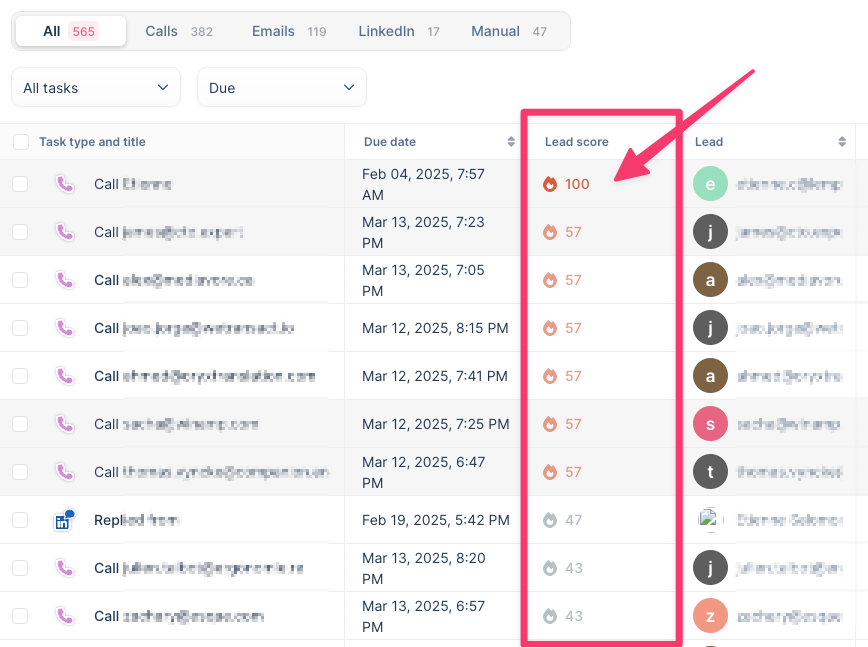
Lemlist's Copilot uses Anthropic's Claude to build campaigns from a description of an ideal customer and offer. AI Columns can call OpenAI, Perplexity, Claude, or Gemini to turn lead data into research, scores, summaries, and message variables. Chained workflows can visit a website, summarize it, judge fit, and draft an opening line. There is also a REST API, a People Database API, a command-line interface, and an MCP server for agent-driven workflows.
This breadth matters to GTM engineers, but it changes the job from writing messages to supervising a small assembly line. Set a factual source for every generated field. Review a sample before launch. Keep claims short enough to verify at a glance. If a model invents a company initiative and the sequence repeats it 500 times, the automation worked perfectly and the campaign failed.
Deliverability is a discipline, not a button
All paid plans include lemwarm and deliverability protection. Lemlist also offers sending limits, inbox rotation, placement tests, monitoring, and a Deliverability Hub. The company says customer data is stored in the European Economic Area on OVH servers in France, holds SOC 2 Type II certification, and supports GDPR and CCPA compliance. Users remain responsible for lawful targeting, honest identity, and workable opt-outs.
Treat warm-up as one instrument, not permission to send anything. Domain history, authentication, list quality, complaint rates, copy, volume, and mailbox-provider rules all matter. Reddit contains complaints about damaged sender scores and uneven enrichment UX; review sites contain praise for ease of use and responsive support alongside sharp complaints about support resolution and removed features. The fair reading is ordinary SaaS reality: test the exact setup you plan to run, and make support solve a real issue during the trial.
“I use Lemlist myself, it's a bit pricey, but the built-in warmup and UI are good.”Reddit, r/salesdevelopment
The bill: seats, senders, and tiny coins
At the time of writing, Email costs $69 month to month or $55 per month billed yearly. It includes unlimited users and email senders, with a 50,000-email monthly allowance. Multichannel costs $109 per user monthly or $87 per user monthly on annual billing. It includes five senders per user plus LinkedIn automation, SMS, calling, and task management. Enterprise pricing is custom, annual, and starts at five seats. A 14-day Multichannel trial requires no card.
Credits are the second meter. Each costs one cent. A verified email is five credits, a phone number twenty, SMS six, and intent signals vary. Some plans include monthly credits; purchased credits roll over, included credits do not. WhatsApp is an add-on. Model a real campaign with your expected enrichment and calling before comparing sticker prices. A suite can look expensive beside one specialist and economical beside four.
Which rival belongs on the trial list?
| Need | Put on the shortlist | Why |
|---|---|---|
| Joined-up multichannel | Lemlist, Amplemarket, Outreach, Salesloft | Compare sequence depth, CRM governance, calling, and rep workflow. |
| Email volume first | Instantly, Smartlead | Often favored by operators optimizing many sending inboxes and infrastructure. |
| Database plus basic sequencing | Apollo.io, Snov.io | Useful when contact data is the primary purchase and outreach is secondary. |
| LinkedIn-heavy motion | HeyReach, Expandi | Worth testing when LinkedIn depth matters more than an all-in-one workspace. |
| Straightforward email campaigns | Mailshake, Reply.io | Potentially simpler when calls, signals, agents, and elaborate branching are excess baggage. |
Do not compare checkmarks alone. Import the same 100 accounts into two tools. Measure valid contacts found, time to launch, reply handling, CRM accuracy, and the ease of stopping a lead everywhere after a response. Ask one rep to run the test without the buyer watching. The winning interface is the one the team can operate on a tired Thursday.
Lemlist earns a trial when your sales motion genuinely crosses channels and your stack has become a handoff problem. Its personality is welcome, but integration is the sturdier reason to buy. Founders and lean teams can grow into it; agencies and RevOps teams can exploit its branches, data, and APIs. Pure email-volume operators may find cheaper specialists. Beginners should spend their first week sharpening audience and offer, then let the software help.
A seven-day trial plan
Days one and two: connect a secondary sending domain correctly, sync the CRM, and import a small known list. Day three: compare enrichment results against records you trust. Day four: build one short email-only sequence and one restrained multichannel version. Day five: test reply routing, suppression, and CRM updates with colleagues. Day six: ask support to diagnose a real setup question. Day seven: calculate annual seat, credit, add-on, and migration costs. No giant launch is required to learn whether the machinery fits.
The final test is philosophical. Lemlist's own newer language favors “Smartbound”: using signals and conversation context to contact the right person at a plausible moment. That is a healthier direction than spray-and-pray, and the Claap acquisition makes it more than a slogan. Still, no platform can manufacture consideration. The best Lemlist campaign will feel less like a sequence and more like someone noticed.