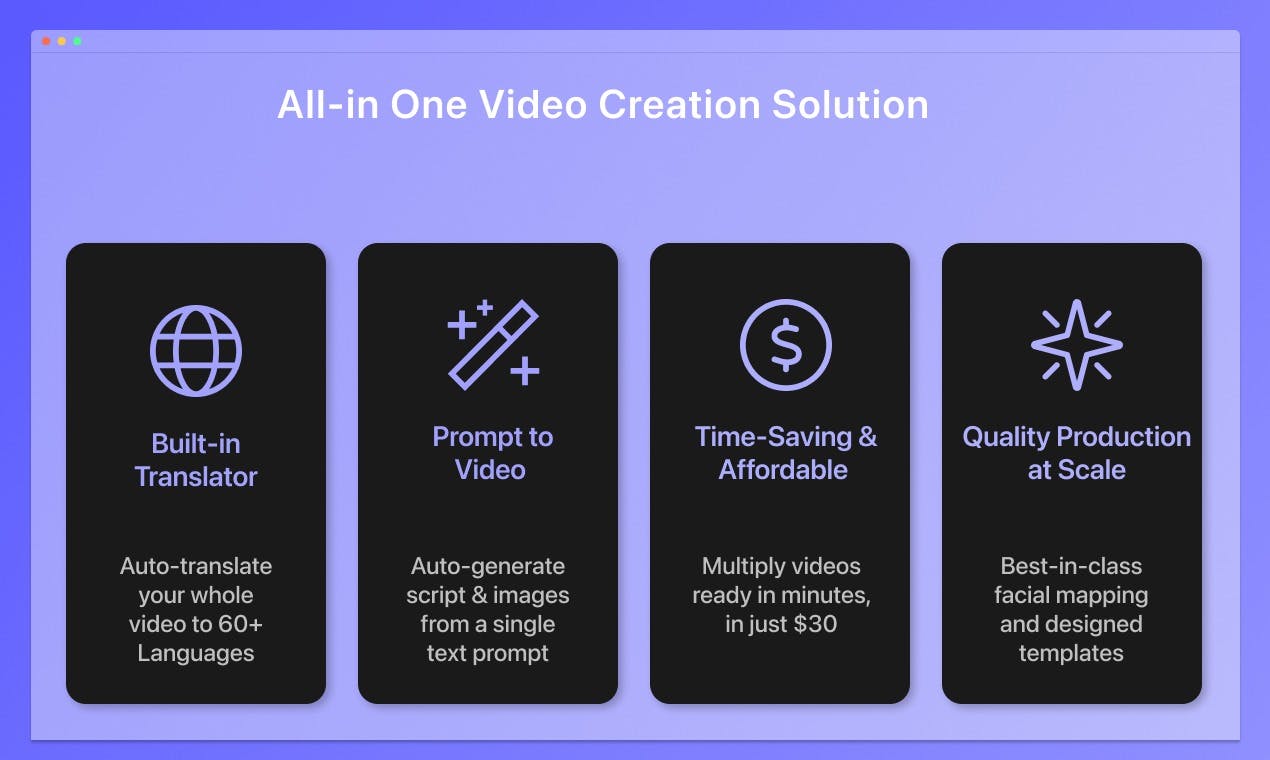
Most companies do not need another video tool. They need a tolerable way to update the same safety lesson, product walkthrough, sales introduction or policy memo in six languages without summoning lights, microphones and half the marketing department. Hour One is built for precisely that recurring chore. Give it a prompt, script, Word document, PDF or slide deck; choose a synthetic presenter and voice; adjust scenes and branding; then let the cloud render a finished video.
That makes Hour One easiest to recommend to learning teams, HR departments, enablement leads and distributed marketing groups. Their problem is not a shortage of cinematic ambition. It is volume. A course changes, a feature ships, a regulation moves, and suddenly yesterday's polished recording is stale. An avatar does not have to clear its calendar for a reshoot.
Creators whose appeal depends on spontaneity, comedy, physical demonstration or a recognizably human point of view should be more cautious. Hour One can deliver a script neatly. It cannot decide whether the script deserves anyone's attention. The camera disappears, but the editor's judgment remains stubbornly employed.
Why it exists: the reshoot tax
Founded in 2019 by Oren Aharon, Lior Hakim and Arnon Kahani, Hour One began with the idea of turning real people into licensed virtual characters. A short recording could become a reusable presenter, activated later by text. The early pitch even imagined the humans behind those characters earning income when their likeness appeared in commercial content. It was an unusual mixture of talent agency and rendering engine.
The company soon pushed the technology into a self-service product called Reals. In 2022 it raised a $20 million Series A led by Insight Partners. Berlitz was already using Hour One to create virtual-instructor material across thousands of videos, while the company named NBCUniversal, DreamWorks and Cameo among its partners or customers. In June 2023, Reals landed at number two for the day on Product Hunt.
The biggest corporate turn arrived in May 2025, when Wix acquired Hour One. Wix described the underlying machinery as proprietary cloud infrastructure joining generative AI inference with advanced 3D rendering. The founders and team moved into Wix. That is more than a line in a startup timeline: prospective enterprise buyers should now ask how Hour One's standalone roadmap, support and contracting fit inside Wix's longer plan.
What happens after you paste the words
Hour One's Video Wizard can generate a 15 to 75 second draft from a guided prompt. You choose a purpose such as marketing, sales or training; select landscape, vertical or square; pick a corporate, fun or basic style; and specify an audience and key points. The system proposes a transcript, titles and media. It is a first cut, not a sacred text: each scene can still be edited.
You can also import PowerPoint, Word or PDF files, or paste a finished script. PowerPoint animations do not survive the trip. The documented import caps are six slides on Free, ten on Lite and fifteen on Business; Word and PDF input is capped at 3,250 characters. These are exactly the small-print details that matter when someone proposes converting a 96-slide compliance deck before lunch.
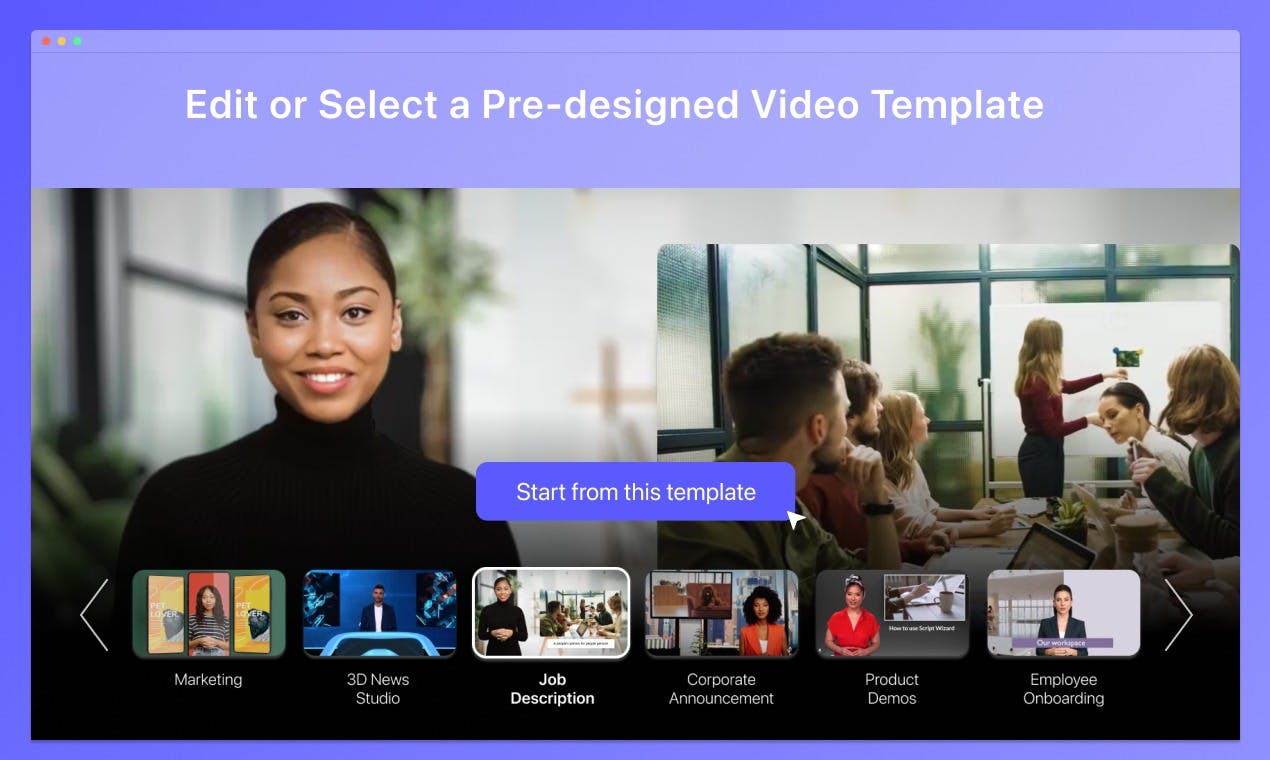
Inside the editor are templates, captions, music, uploaded media, logos, colors, intros, outros and pronunciation controls. Templates can be swapped without rebuilding scenes, although media and title placement may shift. Hour One's help center recommends two to three minute videos and limits each scene to 500 text characters. Final files can be MP4, MOV or WebM. Its documented resolution ladder runs from 720p on trial access, through 1080p on Lite and Business, to 4K on Enterprise.
“In an afternoon, I can craft a story, quickly upload my b-roll and still shots, and hit render.”Ian Beacraft, Product Hunt review, 2023
That review captures the product's best rhythm: make a coherent story first, then use the avatar to remove production friction. Another Product Hunt reviewer praised its educational and inbound-marketing workflow, character variety and responsive support. Product Hunt currently displays a 5.0 score from seven reviews, while G2's AI catalog lists 4.5 from 123 reviews. Those are encouraging signals, but they are snapshots, not laboratory measurements.
The negative record matters too. Trustpilot shows only three reviews and warns that the sample may not be representative, but all three are one-star accounts. Complaints mention crashes, trouble downloading, plan restrictions and an inability to preview enough before payment. The fair conclusion is not that either side has solved the product for you. It is that the end-to-end trial matters: create, revise, render and download your own material before approving a team rollout.
The avatars: useful, still uncanny
Hour One's catalog passed 100 virtual characters by its 2023 Reals launch, along with more than 60 voices and 100 templates. The platform supports a long list of languages and regional variants, from Arabic and Canadian French to Hindi, Japanese, Portuguese and Swahili. Translation can make a training library much cheaper to maintain, but pronunciation, pacing and cultural fit still need a native speaker's ear.
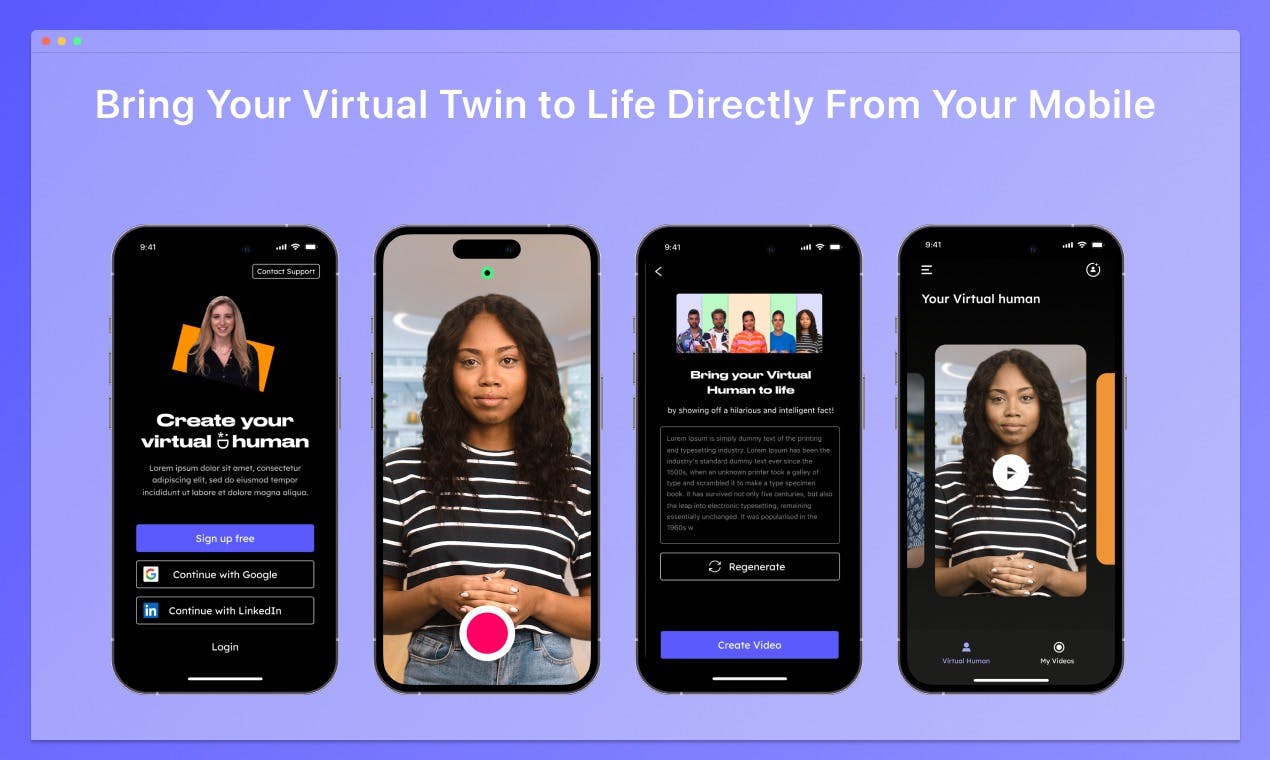
A personal avatar can be captured through Hour One's iOS app. The documented flow is almost comically brief: good front lighting, a plain background, a steady phone, then six seconds looking toward a marker. Android was not supported when that help article was published. Enterprise customers can commission a studio-grade avatar after a directed shoot, with roughly 20 to 30 minutes of recording per outfit and around 30 days of processing. Voice cloning is separate.
Hour One recommends identifying Reals content as computer-generated when publishing it. That is sound editorial hygiene, especially when a recognizable person's face or cloned voice is involved.
Even good avatars invite a peculiar form of scrutiny. Viewers notice a mouth that lands half a beat late, hands that repeat, or a smile that does not belong to the sentence. Keep scenes short, vary the visual field with diagrams or screen recordings, and do not ask a virtual presenter to carry a 20-minute lecture alone. AI delivery can be consistent; consistent is not automatically interesting.
The buying decision, without the fog machine
| Need | Hour One fit | Watch closely |
|---|---|---|
| Training and onboarding | Strong for short, repeatable modules and policy updates | Learner fatigue, disclosure and pronunciation |
| Localized explainers | Broad language and voice catalog, reusable scenes | Native review and regional phrasing |
| Sales personalization | Enterprise API can vary names, roles, media and script | Consent, data handling and per-video economics |
| Social creator content | Fast vertical templates and a personal presenter | Generic delivery can flatten personality |
| Brand film | Useful for drafts or presenter segments | Not a replacement for direction, performance or location work |
Capterra listed a free plan and paid pricing from $30 per month in 2026. Hour One's own documentation names Free, Lite, Business and Enterprise tiers, with different slide caps, AI credits and output resolutions. The Enterprise tier adds the REST API, SSO, 4K output and eligibility for a studio-grade avatar. Because public pricing pages and help documents can drift apart, treat any number as a starting point and confirm the live allowance for video minutes, wizard credits, seats, storage and revisions.
The API is the interesting dividing line. It can customize character, voice, colors, titles, media, transcript, music and logo from a Studio template. That makes Hour One less a single video editor and more a production component: a learning platform could generate role-specific lessons, or a sales system could produce personalized follow-ups. Automation also multiplies mistakes. One mangled product name becomes a hundred mangled product names at impressive speed.
On infrastructure, the company has disclosed more than most glossy product pages do. NVIDIA's customer story says Hour One uses professional GPUs, CUDA and cuDNN for model training, inference, media pipelines and 3D rendering in cloud clusters. Hour One says its servers and data are hosted on AWS in a private network, with enterprise SSO and separated customer assets. Curiously, the help center labels its security level “IS02700,” which appears to be a typo rather than the formal name of a certification. Ask for the current security packet rather than interpreting a help-center sentence generously.
Hour One removes the reshoot. It does not remove the responsibility to make the next version worth watching.
Who should choose it?
Choose Hour One when your organization already knows what it needs to say and must say it often, consistently and in many places. A five-person enablement team updating global product lessons is a good match. So is an HR group producing brief onboarding chapters, or a media operation that needs a recurring virtual news format. RAN used Hour One's 3D templates for sports news; DeFiance Media created a synthetic host for a 24-hour channel.
Look at Synthesia, HeyGen, Colossyan, D-ID, DeepBrain AI and VEED alongside it. Do not compare landing-page avatars alone. Give every finalist the same awkward script: names, acronyms, numbers, pauses, a brand term, a second language and one late edit. Measure time to a downloadable revision. Then show the results to the people who will watch them, not only the people buying the software.
YesPress verdict
Hour One is a sensible video factory for organizations drowning in repeatable presenter work. Its template, import, localization and API tools address real production costs, and the Wix acquisition gives its technology a consequential new home.
Buy for throughput, not wonder. Pilot a complete workflow, inspect the contract after the acquisition, and keep a human editor between the prompt and the audience.