A whale-watching business has an awkward supplier relationship. Its principal attraction cannot be booked, briefed, or persuaded to surface again because somebody had a finger over the lens. The boat can leave on time. The whale has other arrangements. Look closely at Princess Monterey Whale Watching and an apparently simple holiday purchase becomes a useful study in what a company can control when the thing people came to see is beyond its control.
The clue is in the amenities. Heated cabins. Windows. Restrooms. Somewhere to sit. These sound like modest ambitions for an encounter with a marine mammal. They are also the infrastructure that makes the encounter approachable. An ocean excursion asks passengers to accept uncertainty; a comfortable boat gives them somewhere to put themselves while they do.
The other attraction is the boat
Princess Monterey operates from Old Fisherman’s Wharf in Monterey, selling narrated trips into the bay. Its dedicated fleet page describes a 110-foot Princess Monterey and a 100-foot Atlantis Monterey. Their listed capacities are 250 and 150 passengers respectively. Capacity describes the vessels, not the number of people who will necessarily share your departure.
Both have indoor and outdoor seating, a heated lounge, a snack bar, and a walk-around deck. That combination suggests a particular customer: someone who wants to meet the Pacific without spending the entire trip exposed to it. A family’s enthusiasm for wildlife does not necessarily imply a family’s enthusiasm for standing in the wind.
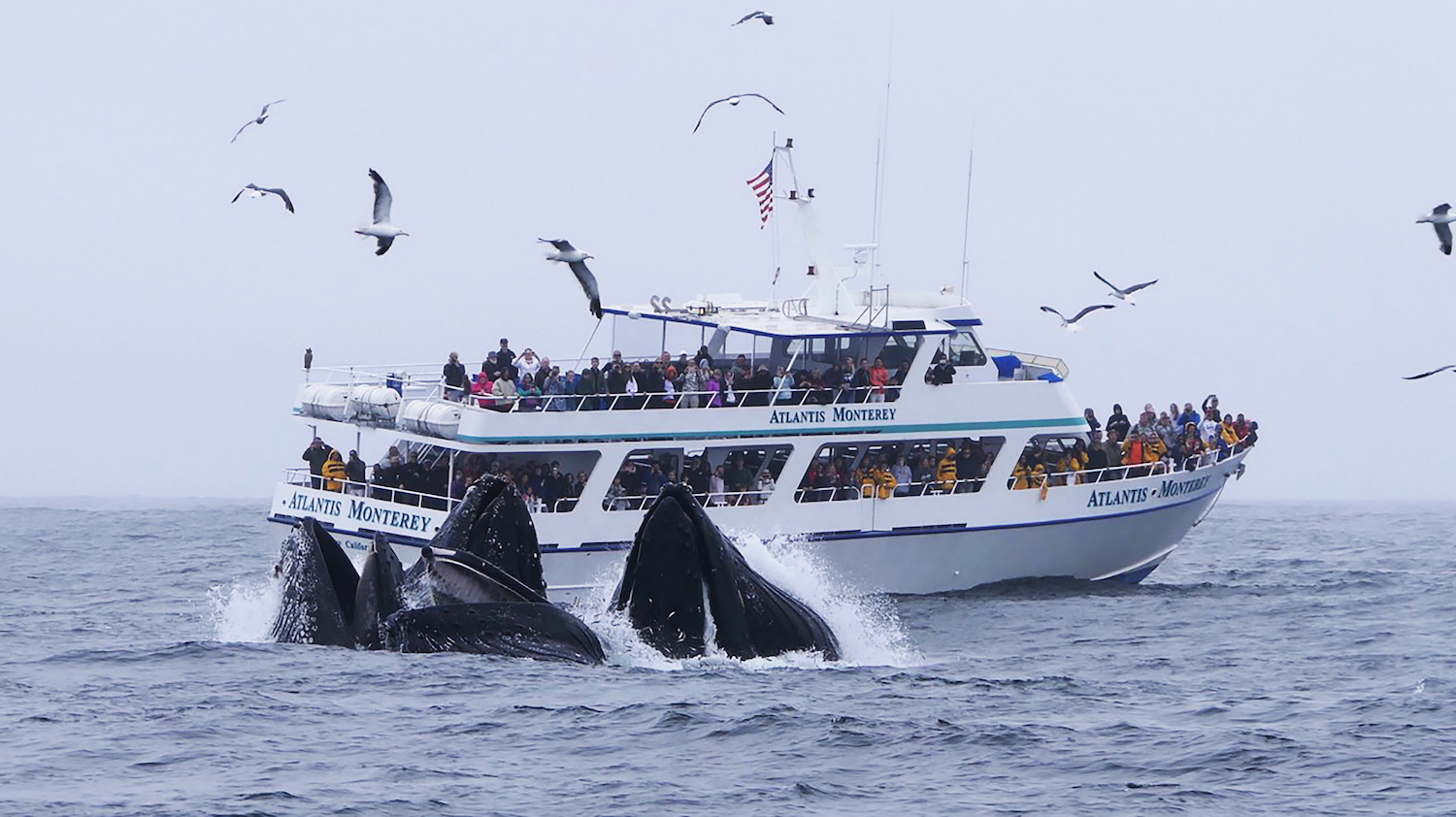
The company’s own crew biography supplies an unusually economical explanation. Captain William “Bill” Williamson says, “In a word, people like our boats.” The observation has none of the grandeur usually attached to wildlife tourism. That is why it is useful. The animal may be the reason to book, but the vessel occupies every minute between boarding and returning.
Twenty-one dollars and twenty cents upstairs
The standard whale-watching trip is advertised at approximately two and a half to three hours. The published adult fare is $79.50, including taxes and fees. Adult VIP upper-deck access costs $100.70. For children aged three to eleven, the corresponding prices are $53 and $74.20. Both upgrades cost exactly $21.20.
+$21.20 for optional upper-deck access
Published adult fares, including taxes and fees. Checked September 13, 2026; booking prices may change.It is a tidy piece of product design. The premium buys access to a particular part of the boat. It does not buy a different ocean. There is no reason to imagine that a whale distinguishes between ticket classes, and the company does not sell the upgrade as a separate wildlife itinerary.
For a visitor, the useful question is whether that vantage point matters enough to pay for it. For someone studying businesses, the useful observation is how legible the choice is. The customer can understand what the extra money purchases before boarding. An upgrade with a physical location needs very little explanation.
Someone has to explain the splash
Transport alone leaves a gap between seeing an animal and understanding its behavior. Princess Monterey’s offer includes narration by experienced crew, including naturalists and marine biologists. The guide helps turn a glimpse into something a passenger can recognize and remember.
Gina Thomas, identified on the company’s crew page as manager and naturalist, has worked with Princess Monterey since 2006. Her academic background is in anthropology, with a psychology minor and a focus on animal behavior. The same biography describes her pleasure in passengers seeing whales for the first time. This is a job with two subjects: the animals outside and the people trying to make sense of them.
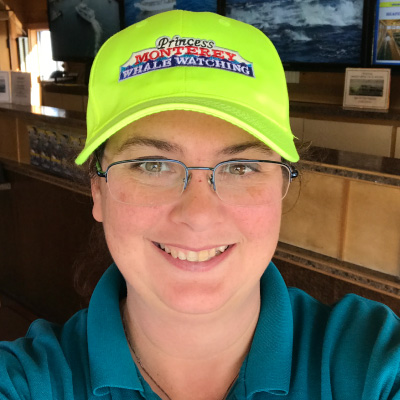
Owner and captain Benji Shake grew up on Fisherman’s Wharf, according to his company biography. That local background is part of the service’s texture. Running an excursion here involves the practical knowledge of boats and visitors as well as an interest in wildlife.
The company also offers private groups and marine education field trips for K-12 students. A school booking makes the interpretive function particularly clear. The trip provides a setting for learning about animals in their habitat, with a person aboard whose job is to direct attention. For a tourist, that same expertise can help a brief sighting outlast the photograph.
The bay does some of the work
Monterey Bay’s ecology gives this business its setting. Seasonal coastal upwelling brings cold, nutrient-rich water toward the surface, supporting the food web. The submarine canyon and the bay’s varied habitats help explain why a relatively short excursion can offer so much to look for. The company’s marine education material makes this connection between physical geography and animal life central to its account of the bay.
That advantage belongs to other operators too. Monterey Bay Whale Watch emphasizes founder Nancy Black’s marine-science background and research on killer whales. Sanctuary Cruises, departing from Moss Landing, presents a small-boat experience. Princess Monterey’s large-vessel amenities give it a clear place among those alternatives. The choice depends partly on what sort of afternoon the passenger wants.
The animal may be the reason to book, but the vessel occupies every minute between boarding and returning.
The passenger experience
There is a broader lesson here for local experience businesses. A shared attraction leaves room for different services around it. Visitors can value space, interpretation, departure location, or the character of the boat differently. A company does not need exclusive access to the landscape to make a distinct offer.
A shorter evening, a different purchase
The sunset bay cruise illustrates another choice. Its dedicated listing advertises a ninety-minute outing, with adult admission at $35 and children at $25, including taxes and fees. The emphasis is on the coastline and nearshore animals such as sea lions, sea otters, and harbor seals. Departure times follow the sunset and the available calendar.
For someone arranging a day in Monterey, that is a materially different commitment from the longer whale trip. It offers time on the water without making an extended wildlife search the center of the afternoon. The same basic hospitality assets can serve a visitor with a different appetite for time and expense.
Ticket sales underpin the offer, with additional spending available through upper-deck upgrades and onboard refreshments. Private charters extend it to group bookings. The visible business model is straightforward enough to understand from the menu: sell access to an equipped boat, a crew, and a particular kind of excursion.
The fine print belongs in the holiday plan
Comfort has limits. The company’s FAQ says departures depend on weather, excludes children under three and pregnant passengers, and recommends checking in thirty minutes early. It also says sightings are not guaranteed. If neither whales nor dolphins are found, the stated remedy is a rain check for a future trip.
That last condition deserves attention. A return trip can suit someone who lives nearby or visits regularly. It is less useful to somebody leaving California the next morning. Before choosing a wildlife outing, it pays to consider the time available for a second attempt as carefully as the time reserved for the first.
The copyable business lesson is practical: make the controllable parts of an uncertain experience easy to understand and comfortable to use. Princess Monterey’s offer makes those parts visible. A boat, a seat, a guide, a departure window. Then the passengers look out over the water, where the next decision belongs to something with no interest in the booking calendar.
Take a closer look
Official website · Tours & booking · Sightings log · Trip planning