Pramod Bhasin had an awkward product to sell: dependable work from a country whose telephone connections could be decidedly undependable. In the mid-1990s, he was asking General Electric executives to let people in India handle work for businesses thousands of miles away. A dropped line was an unusually concise objection. The proposal required a little imagination from the customer and rather more practical effort from the people promising to deliver it.
GE’s consumer finance business agreed to a small trial. There would be 20 people, a satellite link and work updating customer records. Then came the recruitment advertisement. Eight thousand people applied. For a venture built around the possibility that India had more capable people than suitable opportunities, the postbag was a useful early review.
Genpact dates its beginning to 1997. Bhasin remained its president and chief executive until 2011. Between those two dates, an internal GE operation became an independent company and reached the New York Stock Exchange. But start with the small experiment. Its appeal lies in how ordinary the ingredients were: records, telephones, training, graduates. Bhasin’s career makes a case for paying closer attention to ordinary things.
A school gate, left open
His education in delegation began before he had anyone to delegate to. At Cathedral School in Bombay, he was startled to discover that students could leave through open gates at lunchtime. He had attended schools where that freedom was unfamiliar. At first he expected someone to stop them. Eventually he understood the arrangement: the school was trusting its pupils.
Years later, he connected that memory to the design of Clix Capital’s office and his belief that people respond to responsibility. He has said that an entrepreneur who cannot trust others will struggle to scale. This is an unusually economical management philosophy. It also explains why an entrepreneur might find a school gate more instructive than a locked executive suite.
Bhasin studied commerce at Shri Ram College of Commerce and trained as a chartered accountant in London. His professional life extended across Britain, the United States and Asia. Those were useful places to learn the machinery of financial services before attempting to move some of its work elsewhere. An accountant understands what happens after a promising idea reaches the ledger. Bhasin was born on 9 January 1952; his subsequent career would carry him through several corporate settings before the GE experiment that made his name.
“If you don’t trust people, you can never scale.”Pramod Bhasin
The briefcase had room for clothes
In 1994, Jack Welch sent him to India to build GE Capital’s business. Bhasin remembers travelling with a bag that accommodated both his briefcase and his clothes, ready for the next meeting with a prospective partner. It is a pleasingly literal picture of the job: business development with an overnight compartment.
His work included financial services partnerships with institutions such as SBI and HDFC. He brought the experience of an international corporation to a market opening to private and foreign investment. He also had to contend with local infrastructure and regulation. A plan prepared inside GE still needed somewhere to sit, someone to staff it and a connection that stayed connected.
The move to Gurugram, then commonly called Gurgaon, required its own persuasion. Bhasin recalled employees questioning a relocation to what they considered a village. He expected Indian cities to spread into their surrounding districts. Today’s office towers can make that decision seem obvious. The people being asked to move were looking at a different landscape.
Twenty desks, then a company
The initial business carried the name GE Capital International Services, or GECIS. Its customer was also its parent. That relationship provided work to begin with; it also meant the experiment had to prove itself inside a demanding organization. Sending a process overseas did not make its deadlines, customers or consequences disappear.
Bhasin’s explanation of the early recruitment is refreshingly specific. The team looked to hotels for customer service experience, schools for English speakers, banks for finance and accounting, and local logistics businesses for supply chain knowledge. A ready-made workforce for this new industry was unavailable. Adjacent skills had to be identified and turned into the skills the operation needed.
Hiring and training became part of the business itself. Each new assignment brought another requirement for people who could perform it. In Bhasin’s telling, the expanding operation continually needed fresh capabilities. The familiar phrase “back office” makes this sound tidier than it was. Somebody still had to build the office, assemble the team and teach it the work.
By 2005, Genpact had spun off from GE and was building an independent business. In 2007 it went public in New York under the ticker G, with 26,500 employees across nine countries. The distance from 20 employees is considerable. So is the distance from serving a parent company to earning the confidence of customers who have no family obligation to buy.
The founder’s interest in the plumbing
Ask Bhasin about growth and he tends to bring the conversation back to organizational structure, systems and culture. In a 2012 interview, he argued that founders should think about those matters themselves. Treating them as somebody else’s housekeeping misses their importance to a business trying to expand.
He also asks entrepreneurs to explain their competitive differentiator clearly and show why it can endure. The question is less romantic than a request for a vision. It is also harder to bluff. A growing company needs a reason for customers to keep choosing it after the novelty of its existence has worn off.
His account of Genpact’s beginnings leaves room for uncertainty. He has said he did not anticipate the eventual scale. Conviction, in this telling, meant being willing to attempt the idea despite the constraints. That is a useful distinction for a founder’s story: the finished company should not be allowed to pretend that its early days came with a map.
He handed the chief executive’s role to N. V. “Tiger” Tyagarajan in 2011. His next chapters kept him close to the questions of building, funding and training. Leaving an operating role gave him other ways to participate in businesses, including as an investor and adviser.
Buying into a familiar beginning
In 2016, Bhasin and former colleague Anil Chawla, backed by AION, acquired GE Capital’s commercial lending and leasing business in India. It became Clix Capital. For someone who had arrived to build GE Capital in the country, this was a return with a change of seating: the corporate executive was now on the acquiring side.
In discussing the new venture, Bhasin emphasized technology, platforms and customer service, along with the need to find a niche in a competitive financial market. The intended customers included businesses and consumers. He was returning to finance with a familiar concern about how services reach people who can use them.
That interest also runs through Asha Impact, which he co-founded with Vikram Gandhi in 2014. The platform combined investment in social enterprises with policy advocacy. Gandhi has described their shared wish to help enterprises grow and to take practical lessons from that work into discussions with government. Capital would come with experience, contacts and attention to the conditions around a business.
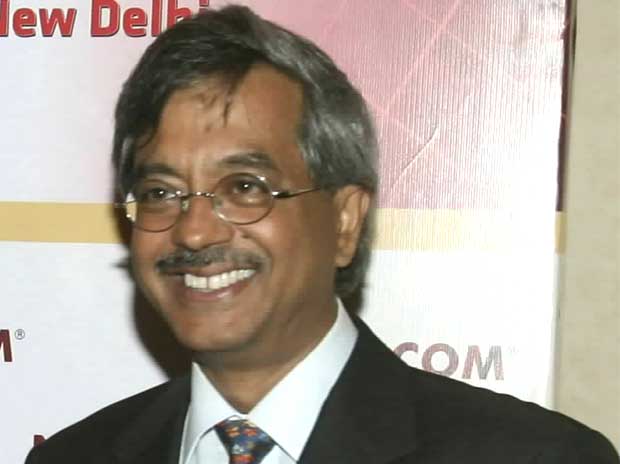
What happens to the applicants outside?
There is a second way to read the story of thousands applying for a handful of jobs. It raises a question about everyone who was not hired. Bhasin later described seeing bright, energetic candidates who lacked the final preparation needed for employment. Some needed help with things as basic as a résumé or an interview.
He co-founded the Skills Academy to provide vocational training, including for young people in rural and semi-urban India. His argument for training was directed at employers as well as applicants. Companies, he said, devoted too little money and time to developing people. He challenged the assumption that a trained employee would immediately leave; his experience at Genpact suggested employees valued the investment.
Education remains part of his work. He is a founder and trustee of Plaksha University and is also among Ashoka University’s founders. He has worked on Punjab’s startup ecosystem through Innovation Mission Punjab. In explaining that mission in 2022, he focused on helping emerging businesses grow through access to investment and networks. The settings differ, but they all concern the practical conditions in which ability gets a chance.
- Capital
- Clix Capital
Asha Impact - Capability
- Skills Academy
Plaksha University - Conditions
- ICRIER
DSCI
Still asking where work will go
Bhasin became chairman of ICRIER in 2020 and took the chair at the Data Security Council of India effective April 2023. Those roles place economic policy and trust in digital systems alongside his business interests. In September 2026, he appeared in an ICRIER conversation with Puja Mehra titled “AI: Where Is the Jobs Apocalypse?” The changing organization of work remains on his agenda.
His philanthropy includes founding Aparajita, which works on preventing sexual harassment and gender-based violence with support from J-PAL South Asia’s Gender and Policy team. It funds practical pilots and seeks evidence about what works across public spaces, workplaces and educational institutions. The emphasis on testing and learning is recognizable, though the stakes and the work are different from those of a commercial venture.
On his Plaksha profile sits a brief injunction: “Never lose that edge of Impatience”. It fits a career spent attempting to shorten the distance between available talent and useful work. A gate opens. A call connects. A young applicant learns what an employer expects. Bhasin’s story has room for stock exchanges and acquisitions, but these smaller moments explain why the larger ones happened.
Conversations worth staying for
Hear Bhasin discuss the next venture, revisit the early years, and follow his current work.
- AI and the future of work - ICRIER, September 2026
- The Appointment - Zee Business, 2016 (YouTube)
- Walk the Talk with Shekhar Gupta - NDTV, 2011
- Pramod Bhasin on LinkedIn
- Founder and trustee profile - Plaksha University
- His work at ICRIER
- Aparajita’s approach and current work
- Vikram Gandhi on building Asha Impact
- The return to finance - Mint’s 2018 interview
- Trust and the open school gate - Outlook Business